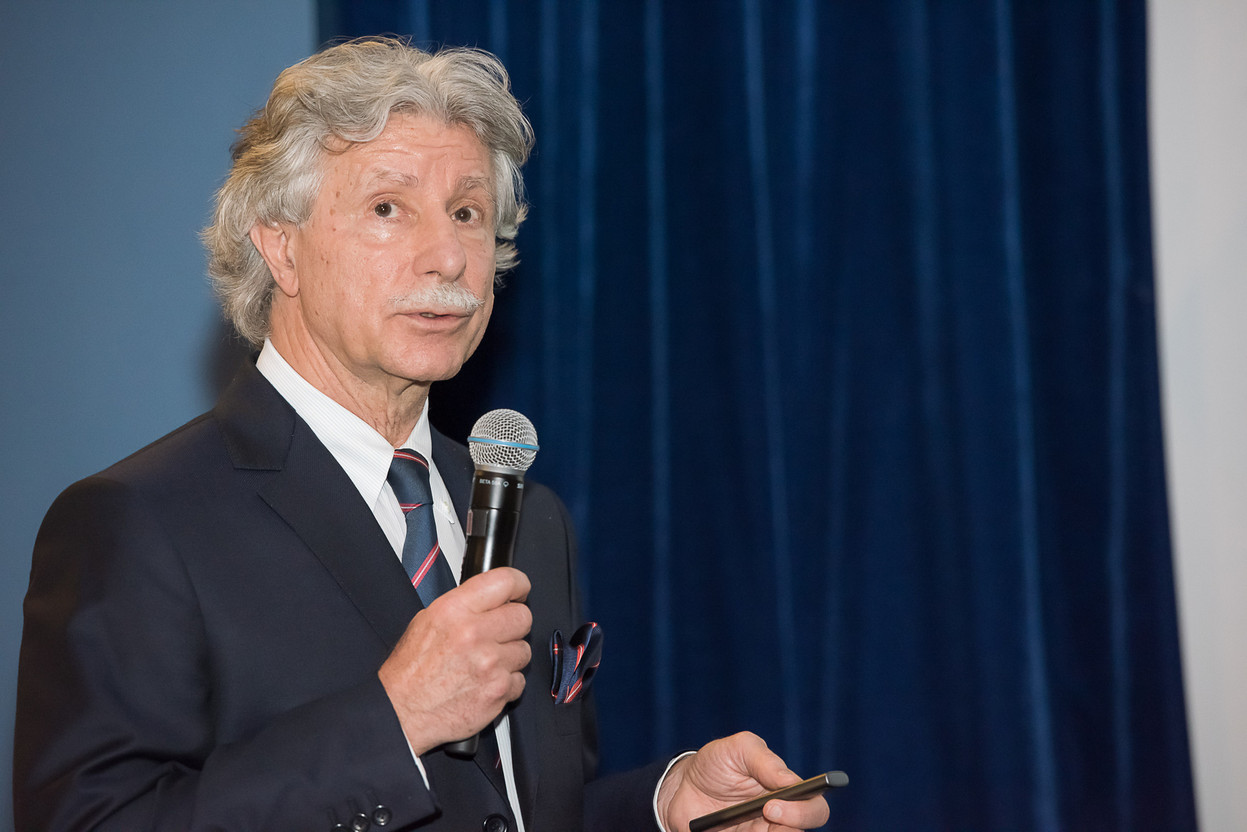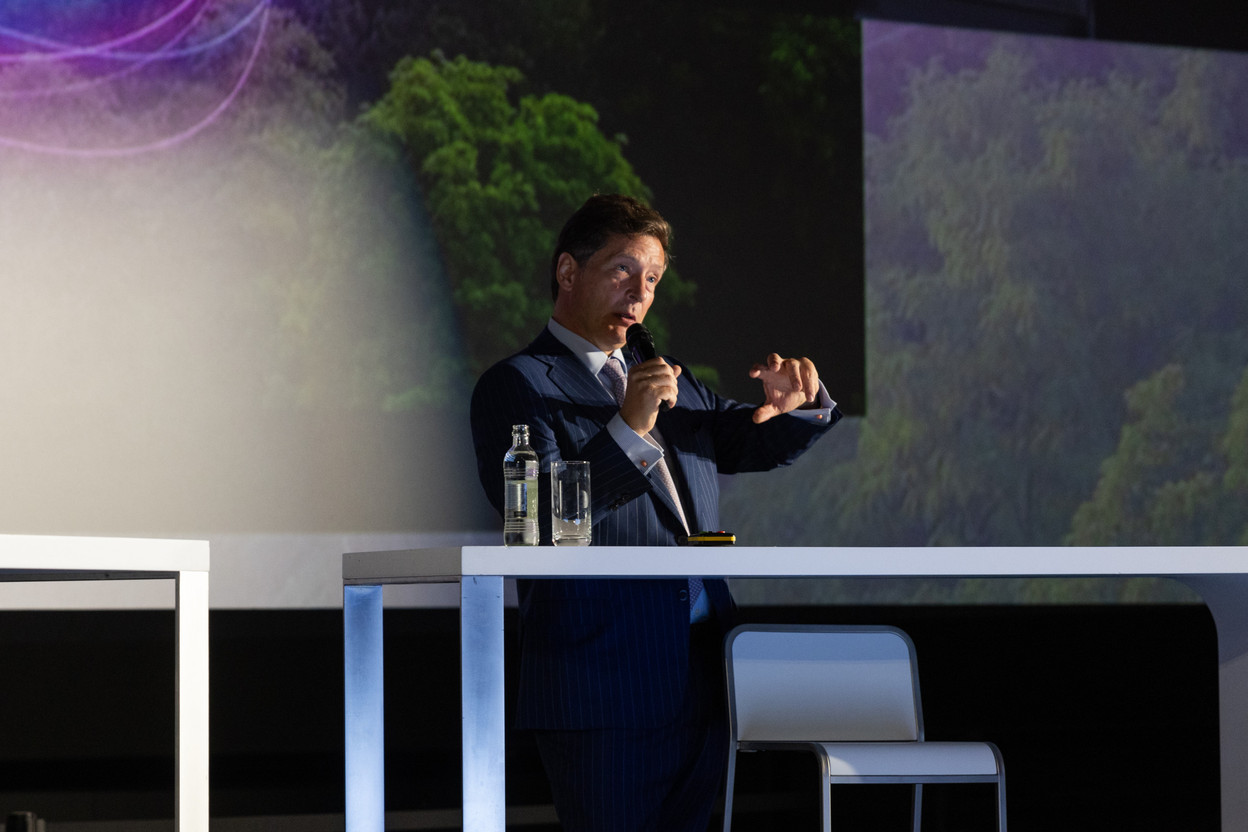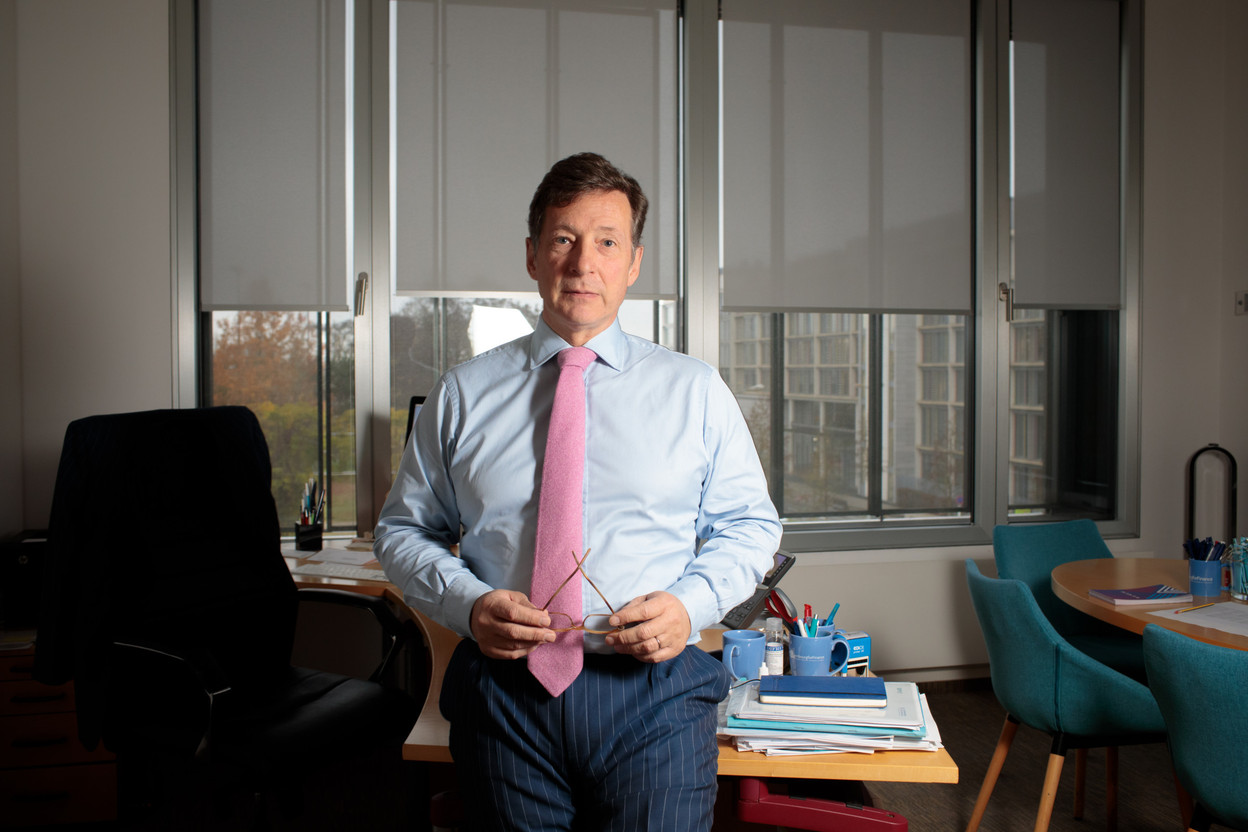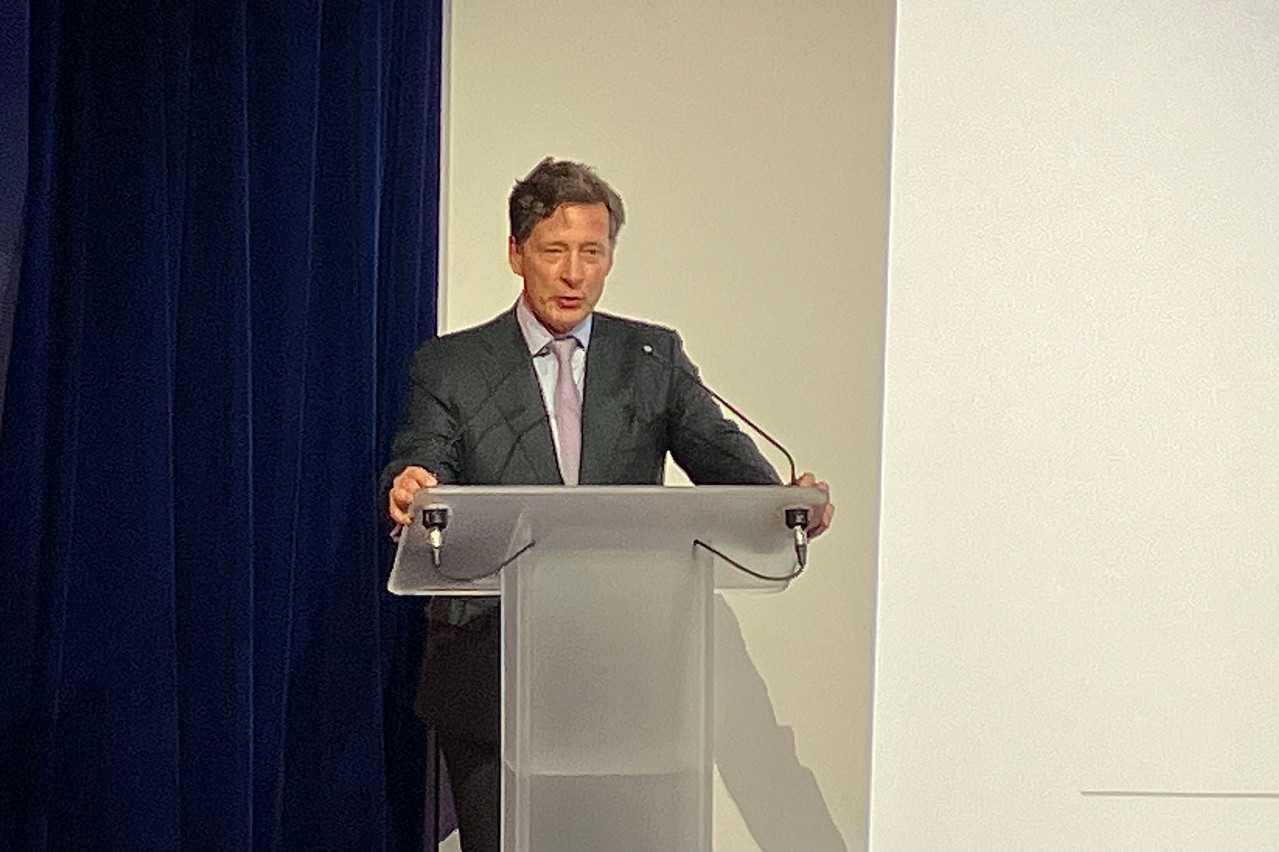

He’s returning to diplomacy--where he “actually” comes from--and his opening remarks reflected that shift. Mackel last spoke at the funds trophy event two years ago, just a few weeks after Vladimir Putin “unleashed his armies on Ukraine.” “Obviously, my speech was relatively sombre,” he noted, “and afterwards, one of the gentlemen in the audience commented that he found me very pessimistic.”
Still pessimistic
“I am not sure there is today much less cause for pessimism,” Mackel argued. Russia’s full-scale invasion of Ukraine has been going on for the last two years, “notwithstanding the bravery demonstrated by our Ukrainian friends,” he said. It’s been “two long years, with lots of suffering.”
“But [the Ukrainians] are holding on strong,” said Mackel. “So we should hope that we and our American friends would continue to support them, because I really do not want to test whether Mr Putin actually wants to stop with Ukraine or not.”
A $60bn support package for Ukraine has been held up in the US congress for the past several weeks; though the EU in early February agreed on a €50bn package of financial support for Ukraine and an initiative led by the Czech Republic to purchase ammunition outside of the EU to send to Ukraine secured the necessary financing, as announced on 7 March by the Czech president. A communiqué from Luxembourg’s defence ministry released on 7 March noted that Luxembourg has participated--“within the framework of the Benelux countries”--in the Czech initiative. The same press statement also noted that Luxembourg had “recently” delivered 6,000 155mm shells to Ukraine.
There’s also the “unspeakable” attack of Hamas on Israel on 7 October, added Mackel, which shows that events can happen that even the “best intelligence services” have not foreseen, and has brought “a lot of human suffering on all sides.”
Looking to the rest of the world, Houthi attacks are disrupting shipping traffic in the Red Sea, and while tensions in Asia may have “disappeared from the front pages,” but “they are still there.”
“I think what we are living is--what I described two years ago--probably the most dangerous times we’ve ever gone through since the Cuban missile crisis,” said Mackel.
And those are just the issues on the geopolitical side.
Rise of nationalism, populism, anti-globalisation
On the “purely political side, we are all watching--with a certain degree of horror--how our American friends seem to be sleepwalking into a second Trump term,” said Mackel. And the consequences don’t “seem to have any sort of effect on the American electorate.” Trump’s re-election could have “very dire consequences for all of us.”
We are waking up to what is probably a new reality for Europeans

The world has seen multiple crises in recent years. Besides the covid-19 pandemic, “we have seen the rise of nationalism, we have seen the rise of anti-globalisation, we are seeing continued and strengthened protectionism, and the cost of living crisis that the energy caused by Russia’s aggression has also strengthened populist movements in our own countries.” It’s already happening, with the election of far-right politician Geert Wilders in the Netherlands, Mackel pointed out. There is, therefore, “a bit of anxiety” around the upcoming European elections, scheduled to take place in June.
“All of that, I think, draws a picture of a certain, valid pessimism.”
But there’s light at the end of the tunnel
Things seem pretty bleak. “Nevertheless, with all this, I think there is also a certain light at the end of the tunnel,” said Mackel. With all that has been going on, “I think Europeans have started to really come together. We are waking up to what is probably a new reality for Europeans--we realise, whether it is on the political, military front--that we need to do things.”
Europe is also “coming together on the market side,” he continued. “Everybody in the industry is complaining about the regulatory burden.” But this brings positive aspects. By creating comprehensive regulatory frameworks for sustainable finance and digital finance that are “continental in scope,” “it has helped create the transparency that produces the trust that allows investors to actually put their money in these products.”
The EU, for instance, has come up with the Sustainable Finance Disclosure Regulation (SFDR), which involves mandatory ESG disclosure obligations for financial market players, or the digital finance package, which aims to boost digital resilience, support innovation and set rules on cryptoassets.
Read also
By creating a regulatory framework, the EU is also “creating a market that can leverage the depth and the size of the single market and thus enable European investors also to invest in these assets and the firms that create them.”
“When there is no European regulation, we are stuck with 27 different markets. It is in those areas where European regulation is really, truly integrated, that we actually also have European unicorns. And that is why this is so important,” said Mackel.
“Twenty-seven different markets means fragmentation. One single market--that is truly a single market--means that we can actually use those use those 450m reasonably affluent consumers. And that is a very, very strong proposition.”
Ambition for sustainable future
“The last point that Mackel highlighted was Europe’s continued “unabated” ambition to move towards sustainability. “I think that many of you here [referring to the asset managers present] are to be commended for contributing to that.”
“In Europe, we continue that believe that science is actually a good basis to take decisions,” he said. “Global warming is a reality. And the only way we can do something about it is by investing in renewable energy, investing in new infrastructure, upgrading our buildings and so forth.”