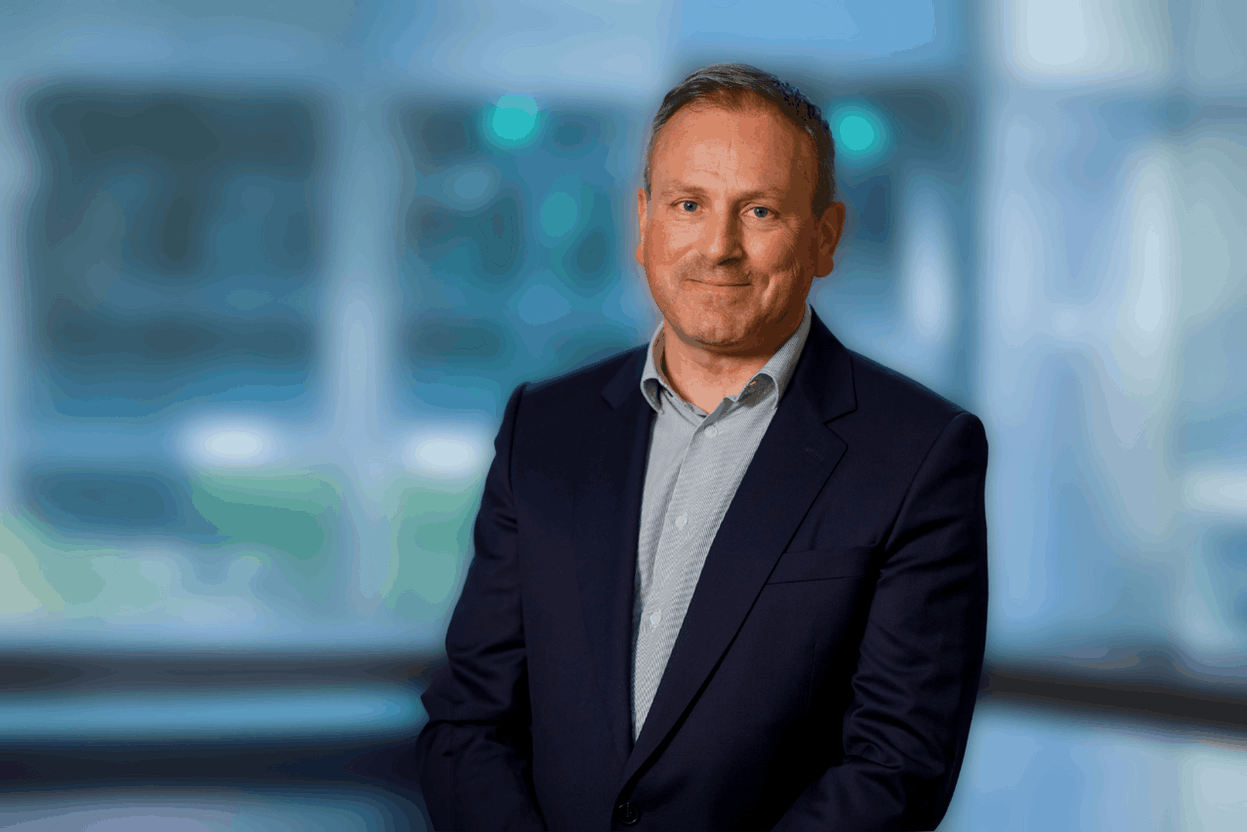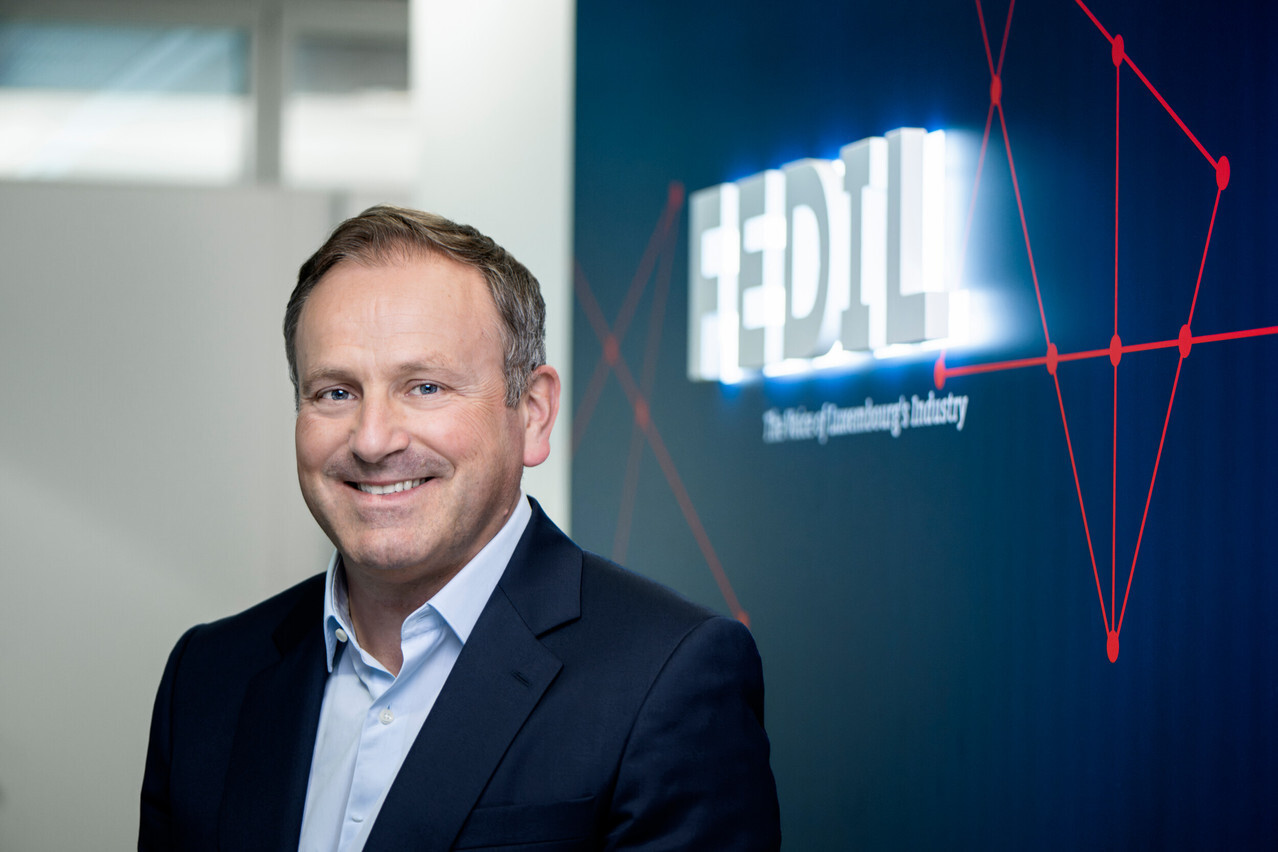
Having only just taken up his post as president of Fedil, Alex Schumann is already setting out his approach: “Listen, prioritise, act and report.” Behind this motto, the production director at Goodyear Luxembourg aims to reposition the employers’ organisation as a more active player in the country’s economic and industrial decision-making.
It is true that the current situation is fuelling manufacturers’ concerns. “The real economy is facing a series of shocks,” sums up the new president of Fedil, citing geopolitical tensions, the war in Ukraine, energy crises, skills shortages and new trade tensions between major powers. In this environment, “uncertainty is becoming a risk factor in its own right”.
But Alex Schumann rejects a purely defensive stance. “Fedil’s role must not be limited to pointing out what isn’t working or succumbing to pessimism,” he asserts. On the contrary, he believes that Europe now has “a second or third chance” to rebuild its industrial, technological and energy capabilities.
Three key areas and one constant: administrative simplification
His programme is now structured around three key areas: industrial investment, human resources and Luxembourg’s international standing. And there is one constant: administrative simplification. “Businesses must be able to focus their energy on production and innovation,” he insists.
On this issue, the head of Fedil clearly singles out the administrative delays that are holding back industrial projects. “Without the ability to invest, there can be no transformation, decarbonisation or digitalisation,” he insists. He highlights the availability of land, the “overly fragmented” management of business parks and, above all, the length of authorisation procedures, which he believes have become “an economic risk in themselves”.
The president of Fedil wants to push for several concrete measures: ‘standardised approval processes’, a ‘genuine one-stop coordination service’ for industrial projects, and ‘transparent target deadlines’. “Uncertainty comes at a cost, even when the project is sound,” he warns.
The issue of energy, moreover, is a recurring theme in his remarks. For Alex Schumann, access to “competitive, stable and low-carbon” electricity will largely determine future industrial and digital developments. The development of artificial intelligence, cloud infrastructure and digital sovereignty technologies will, in his view, have “significant industrial implications”.
Funding instruments that are not widely known
In this regard, he sees the European Commission’s recent award of two sovereign cloud contracts to consortia including Luxembourg-based companies as proof that the country can still establish itself in certain strategic value chains.
The new president of Fedil also wants to strengthen the organisation’s role in supporting businesses with financing issues. He believes that existing schemes – such as the SNCI, the Office du Ducroire, state aid and the European Investment Bank – are still not widely known among manufacturers.
Tax competitiveness also remains one of its top priorities. “The competitiveness of the national tax framework and the search for effective tax levers will continue to guide our actions,” he explains, as Fedil has just relaunched a platform dedicated to these issues with its members.
But it is probably on the issues of work and organisation that Alex Schumann’s comments are most critical. The executive discusses recruitment difficulties, the appeal of industrial careers, and continuing professional development, but also “absenteeism in the broadest sense” and “the many opportunities for contracts to be terminated, which create gaps that are difficult to fill”.
Flexibility and clarity
The president of Fedil is calling for “greater flexibility where necessary” and “greater clarity where the rules are complex”. He also criticises certain European regulations, such as the directive on pay transparency or certain posting rules, which are considered too burdensome for cross-border businesses.
Alex Schumann also takes direct aim at the Luxembourg government. “Our members complain about the unfair competition that the public sector exerts on the labour market,” he says. In his view, the administration should speed up its own automation and digitalisation in order to reduce its labour requirements, which “are growing far too quickly compared to the country’s general economic development”.
In his view, housing is another major obstacle to Luxembourg’s economic attractiveness. “The housing issue has a direct impact on our ability to attract and retain skilled workers,” he says, describing the matter as both a social and an economic problem.
On international issues, the Fedil president advocates a stance in favour of open trade and integration into global value chains. He remains cautious in the face of protectionist tendencies. As for ‘Buy European’, Fedil regards this principle ‘as an exception in a few areas and under certain well-defined conditions’.
Beyond its core policies, Alex Schumann also wants to strengthen Fedil’s internal operations and its role as an influential body. He promises more direct contact with member companies, a revival of regional meetings and a “systematic and continuous” flow of information. “The coming years will be challenging,” he acknowledges. But he believes that Luxembourg can still “reindustrialise intelligently” and strengthen its competitiveness, provided it acts more quickly and more simply.