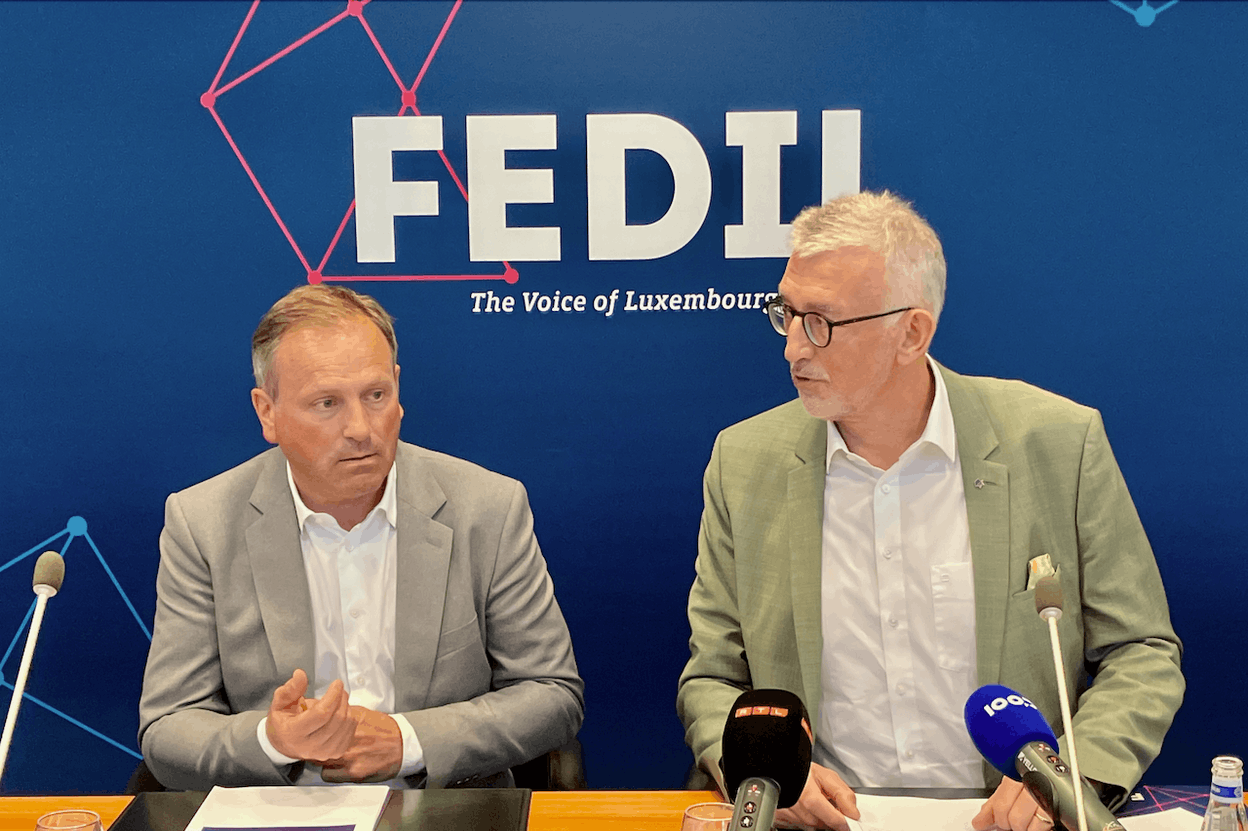
The appointment of Alex Schumann as head of Fedil for a three-year term had been announced on 19 March. He replaces 
According to the director of Fedil, 
Tripartite talks: Fedil remains confident
A decline exacerbated by the Iranian crisis, then. A crisis that could eventually lead to shortages of fuel and, above all, petrochemical products, “which are essential to many specialised industries here for their processing”. For the time being, Alex Schumann and René Winkin do not anticipate any impact on employment. “Although deindustrialisation has taken its toll, Luxembourg’s industrial sector has remained stable in terms of workforce numbers, despite the succession of crises in recent years.” “We need to become more resilient in terms of energy and reindustrialise. But we won’t be able to do that if we continue to over-regulate,” adds Alex Schumann.
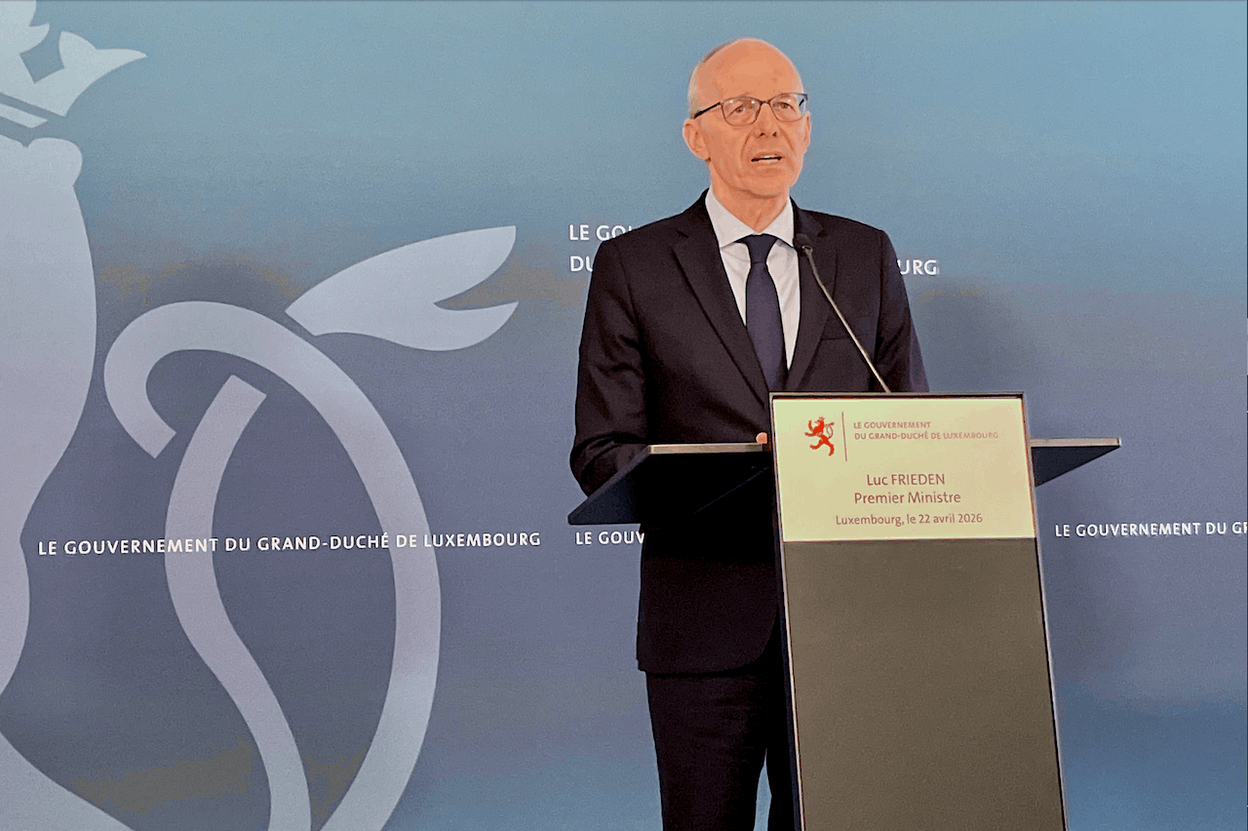
Against this backdrop, Fedil is preparing, within the UEL, the tripartite energy forum announced by the Prime Minister, 
From a more strategic or long-term perspective, Fedil has three priorities, which will be championed by its new president.
Facilitating investment
The top priority is to facilitate and accelerate industrial investment and the roll-out of new technologies. “Without the capacity to invest, there can be no transformation, decarbonisation or digitalisation,” explains Alex Schumann. He notes that businesses must – as always – contend with major constraints regarding the availability of land, fragmented management of business parks, and lengthy and complex authorisation procedures.
In light of this situation, Fedil and its new president are calling for a proactive and better-coordinated approach focused on a ‘drastic’ reduction in processing times, enhanced planning for business parks and a streamlined authorisation process. This process should include a single point of contact and transparent deadlines. ‘It’s not just Google,’ adds René Winkin. “In the past, we have managed to attract some excellent projects. We could attract even more. Many of our members would like to expand their activities, but are unable to do so because of these constraints. It is a pity.”
Making labour law more flexible
The second priority concerns attracting talent and the organisation of work. Whilst the availability of skills remains a major challenge, Fedil highlights the growing imbalances in the labour market, linked in particular to competition from the public sector. In response to this challenge, Fedil is calling for the acceleration of digitalisation and automation within the public sector, which would reduce its need for human resources.
Alex Schumann also believes that labour law needs to evolve towards greater flexibility and clarity. He highlights a trend he finds worrying: the decline in actual working hours. “These actual working hours have not returned to pre-Covid levels.” He attributes this decline to both rising absenteeism and the proliferation of special leave schemes in recent years. “This is becoming a real problem for businesses, particularly the smallest ones.” He would like to see the labour law framework become more flexible and is specifically considering an adjustment to reference periods. “Simplifying the rules, particularly in the implementation of European legislation, is a key lever.”
The energy challenge
His third priority is to strengthen Luxembourg’s position within European and global value chains. “In an open but increasingly fragmented economic environment, businesses must be able to rely on favourable framework conditions, particularly regarding access to energy, digital technology and international trade.” In his view, “the energy transition must be based on a balance between security of supply, competitive prices and realistic decarbonisation pathways.” Fedil also expresses concern about the energy cost gap compared to its international competitors. “Energy competitiveness remains a strategic challenge.”