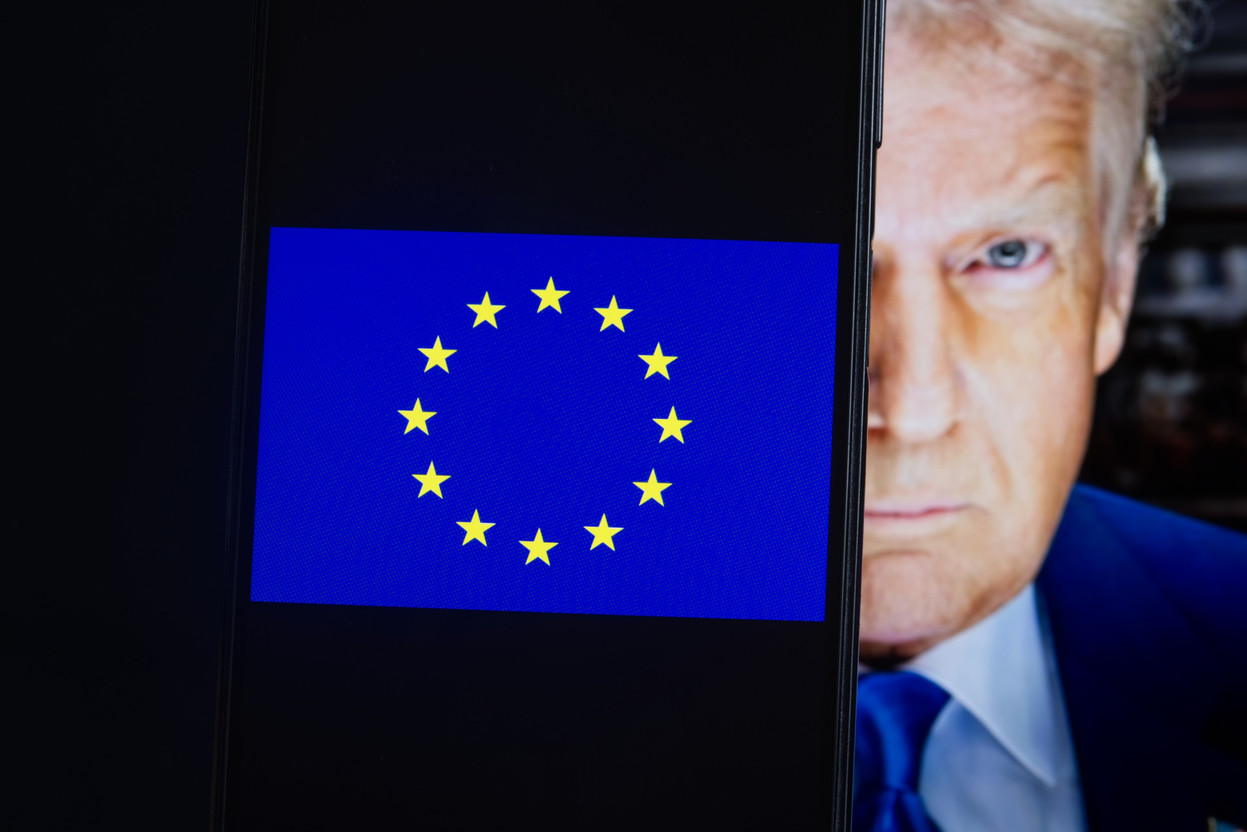
A political decision taken in Washington could have the same immediate impact as a cyberattack. No more access to emails, files, collaboration tools or authentication systems: for the majority of European companies, paralysis would soon set in.
Nearly 74% of executives surveyed by Proton say they are concerned about the possibility of a US technology provider cutting off their access to its services. This figure rises to 75% when the issue is cyberattacks or ransomware. Both risks rank almost equally high on companies’ lists of concerns.
The survey was carried out between 15 and 24 July amongst 1,500 business leaders in the United Kingdom, Germany and France, with 500 respondents from each country. All were involved, to varying degrees, in decisions concerning technology, data backup, security or business continuity within their organisations.
One day of disruption threatens businesses
This concern goes beyond the mere scenario of a disruption imposed by a government. 86% of the companies surveyed reported having experienced at least one disruption over the past twelve months, whether it be a system failure, a cyberattack or the loss of access to a service. For 56% of respondents, geopolitical risk is already a factor in their choice of technology suppliers.
This dependence is particularly evident in the time companies would have to respond. More than 54% believe they would be unable to continue their operations for more than one working day if they lost their digital services. Any disruption would primarily affect customer relations, staff productivity, communications and the ability to issue invoices or receive payments.
The cost is said to rise rapidly as the organisation grows. Among the large companies surveyed, 29% estimate that a single day’s disruption would result in a loss of more than 100,000 euros. Size therefore offers no protection against technological dependency: it increases the value of the activities at risk.
Only two in five companies can truly ensure business continuity
However, companies are not entirely without contingency plans. According to Proton, 94% have some form of business continuity plan. However, only 44% have a documented plan that is regularly tested. 36% have formalised a plan without testing it regularly, whilst 13% rely on informal procedures.
Coverage also remains fragmented. Only a third of respondents have a fallback solution for email, ahead of cloud file storage, authentication systems and password managers. Yet a geopolitical disruption could simultaneously affect several services falling under the same jurisdiction.
Diversification is therefore not simply a matter of replacing one supplier with another. A company that uses two US service providers remains subject to US law and decisions, even when its data is hosted in Europe. Proton therefore recommends implementing solutions based on different infrastructures and jurisdictions. This conclusion is directly in line with the commercial interests of the Swiss company, which itself offers European messaging, storage and business continuity services that are independent of the infrastructures of Google, Microsoft and Amazon. The findings should therefore be viewed as those of a survey commissioned by an industry provider, rather than as the results of an independent academic study. Proton does not publish the raw data, the full questionnaire or the margins of error.