One million euros a year for 24 years and the very famous “Churchillplein 1”, which housed the former headquarters of the International Criminal Tribunal for the former Yugoslavia and is currently used by the United Nations International Residual Mechanism of Criminal Tribunals, right in the centre of The Hague near the international institutions. In the immediate vicinity of Europol and Eurojust. The building would offer 14,949m² of floor space, extendable by a further 4,200m², with an initial capacity of 300 workstations, increased to 450 in the event of an extension.
But the adaptation work would start in January 2027 and last an estimated 66 months, with final availability scheduled for 1er July 2032. During this transitional phase, the Netherlands is proposing a temporary site at Churchillplein 5 (“The Statesman”) right next door, offering around 6,000m² that can be mobilised immediately, extendable by 1,000m², and able to accommodate 250 to 300 agents within a twelve-month adaptation period.
This is the Dutch proposal, which they have begun to defend across Europe, against eight candidate cities, all of which already went before the European Parliament last week and which are now waiting for the rules of the game - sorry, of the vote - to be set by the European authorities.
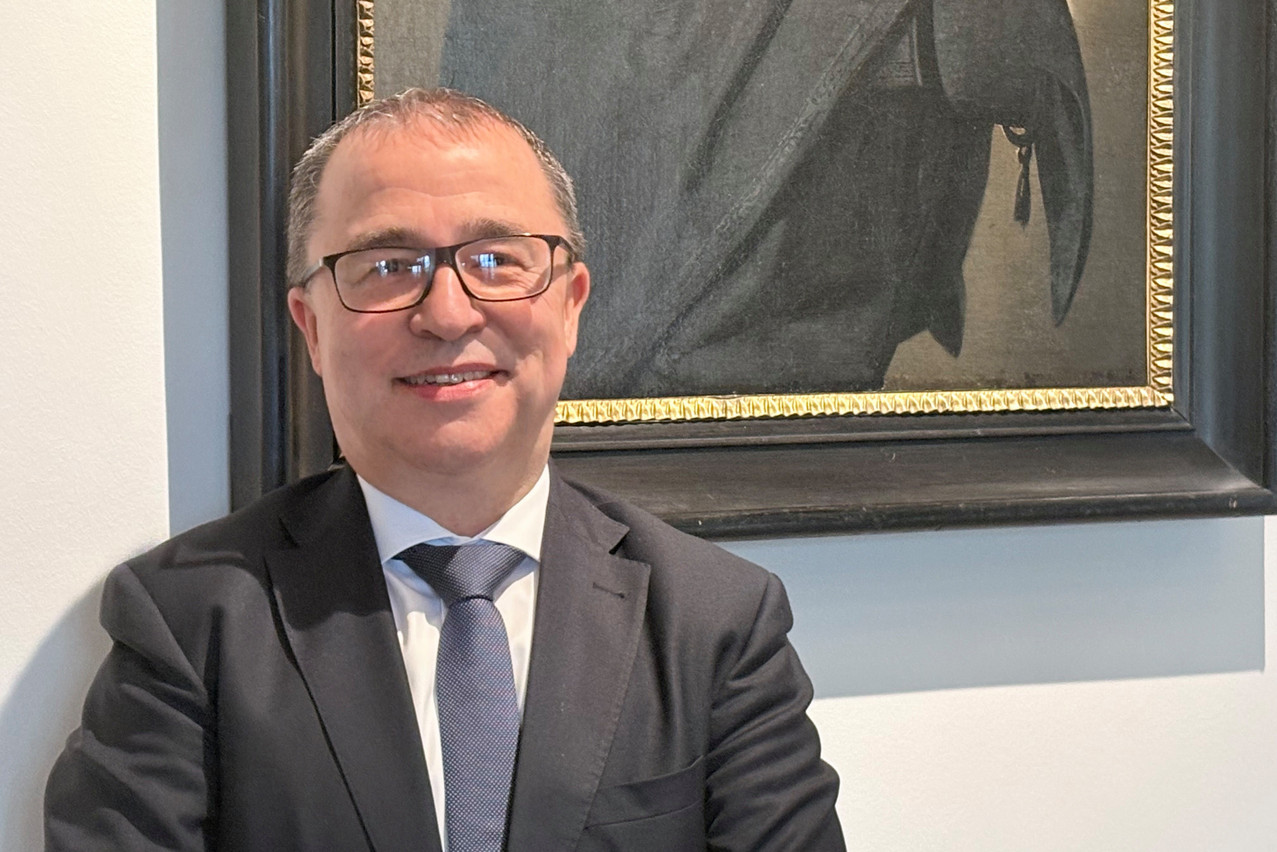
On Monday, the Dutch State Secretary for Finance, Tax Authorities and Customs, Eugène Heijnen, visited the Chief Prosecutor of the European Public Prosecutor’s Office, Laura Codruța Kövesi, and the Luxembourg Minister of Finance, 
Let’s start with an overview. What is your vision for this agency?
Eugène Heijnen. - “A new European Customs Authority will be created. This is a very important agency for Europe, and the Netherlands is one of nine candidate countries to host it. Our current project is to convince the other Member States that The Hague is the best host city for this agency. We have a lot of competition, but I think that as the Netherlands and with The Hague, we have a very strong bid on the merits.
Dutch customs have enormous experience in handling all kinds of imports. The other aspect of the ecosystem is that, if we win, the Authority will be located close to Europol and Eurojust.

Why do you think you are better than the other eight cities?
“I’m not saying we’re 'better'. I think we’re good, and I leave it to others to judge and compare. However, we have some very strong points. The Hague’s bid is judged on a triple E: ecosystem, commitment and environment.
Firstly, the ecosystem. The Hague is located in the centre, between the port of Rotterdam and Amsterdam-Schiphol airport. Through these two locations, a third of all EU imports and all parcels enter the Union - around 1 million parcels a day. This means that Dutch customs have enormous experience in handling all kinds of imports. The other aspect of the ecosystem is that, if we win, the Authority will be located close to Europol and Eurojust. I’ve just met the head of the European Public Prosecutor’s Office (EPPO), and she confirmed that it was important to connect to the Europol ecosystem, because the new Authority (EUCA) will have to work closely with them.
Secondly, commitment. It’s important at both national and city level to do everything we can to host this agency.
What does it mean in concrete terms to be fully committed?
“We’ve taken a lot of initiatives. We have presented what I believe to be the best building, which will be ready before 2028. But we also have an excellent temporary building available immediately. The national government is also prepared to invest properly in the new agency.
Thirdly, the environment. An organisation is made up of people; this is the most important part. It’s vital that staff feel safe and at home. We have a great deal of experience with expatriates in The Hague and have developed a 'soft landing' programme to help people settle in quickly. We are targeting 250-300 people from all over Europe. We offer excellent affordable accommodation, schools, good transport links and even a beach.
Location should not be the deciding factor for such an important agency.

Who do you see as your main competitor? I’ve heard a lot about Bucharest. In recent years, Europe has often tried to divide agencies geographically. Could this logic decide the outcome?
“We’ve heard that the Netherlands, France, Poland and Spain (Malaga) make up the top four. I’m only judging our own bid, which is strong on content. But politics also plays a role. However, we don’t think geographical location should be the deciding factor for such an important agency.
With a maximum of 300 people, is that enough? If you look at the workload - drug trafficking, Chinese imports, e-commerce, VAT fraud - will it be enough?
“We’ll see. We are ready if the number of staff needs to go up to 450.
But first we need to agree on the agency’s tasks. Most Member States believe that the agency should be a coordinating and service body, not an operational or directive entity. Our credo is 'by and for the Member States'.
Which version of the agency do you think will win out?
“I think our vision will be the one... generally retained by Europe. I have discussed this with other finance ministers. The European Public Prosecutor’s Office may want a stricter role, but I think it’s crucial to coordinate, train and analyse data. The operational side should be left to the countries themselves.
With regard to drug trafficking and security - major issues in Belgium and France - what is your government’s vision of the problems the agency will have to face?
“We believe, as does Luxembourg, that these problems should be dealt with at EU level and not at national level. For example, if you regulate strictly in Rotterdam, the traffic moves to Antwerp. If you are strict there, it goes to Piraeus or Athens. This is what we call the “waterbed effect”. So we need to do it at EU level. The agency can help standardise this.
How are we going to decide on common rules? Who makes them?
“We already have European rules in place for VAT and customs. The agency will not be creating rules, but helping Member States to apply them. However, a new Customs Code is planned. Cyprus, which holds the rotating presidency of the EU Council of Ministers, plans to implement it this year, and the Netherlands is very much in favour. The agency will help implement the rules of this code.
It’s not about the rules, it’s how you follow them that counts. It’s always a challenge with 27 Member States.

Over the past 20 years, customs rules have been relatively ineffective because of fraud. Why do you hope it will be more effective this time?
“Personally, I think the new code is excellent. But it’s not about the rules, it’s how you follow them that counts. That’s always a challenge with 27 Member States.
Is efficiency a human or technological issue? If we only check 1% of packages coming from China, we can’t expect good results.
“It’s a combination of both. It is important to increase the number of parcels checked - the Netherlands is in the process of doing this. We also need to use available technology, such as X-rays. And thirdly, we need to restructure the processes: we want parcels to enter via bulk warehouses. If you have 10,000 identical parcels, you check a few to validate the batch, rather than checking them individually.
Do you think the agency will be able to play its role or will it remain political?
“I am very confident that it will play its role as intended. There is a broad political understanding of the need for it. And in the Netherlands, everything is in place to start immediately.
Do you envisage a specific customs prosecutor, along the lines of the European Public Prosecutor’s Office?
“No, I don’t think so. The European Public Prosecutor’s Office (EPPO) already does an excellent job and works closely with customs. In the Netherlands, for example, we have 25 customs officers trained by the EPPO. I imagine a direct link between the new Authority and the Public Prosecutor’s Office, but not a new judicial authority.
Do you have an official slogan?
“NL: The Perfect Fit.
Do you have official support from Luxembourg?
“You should ask Luxembourg!
Are you hoping to get their support?
“I understand that it is difficult for Luxembourg to choose who to support, as Belgium is also a candidate!”