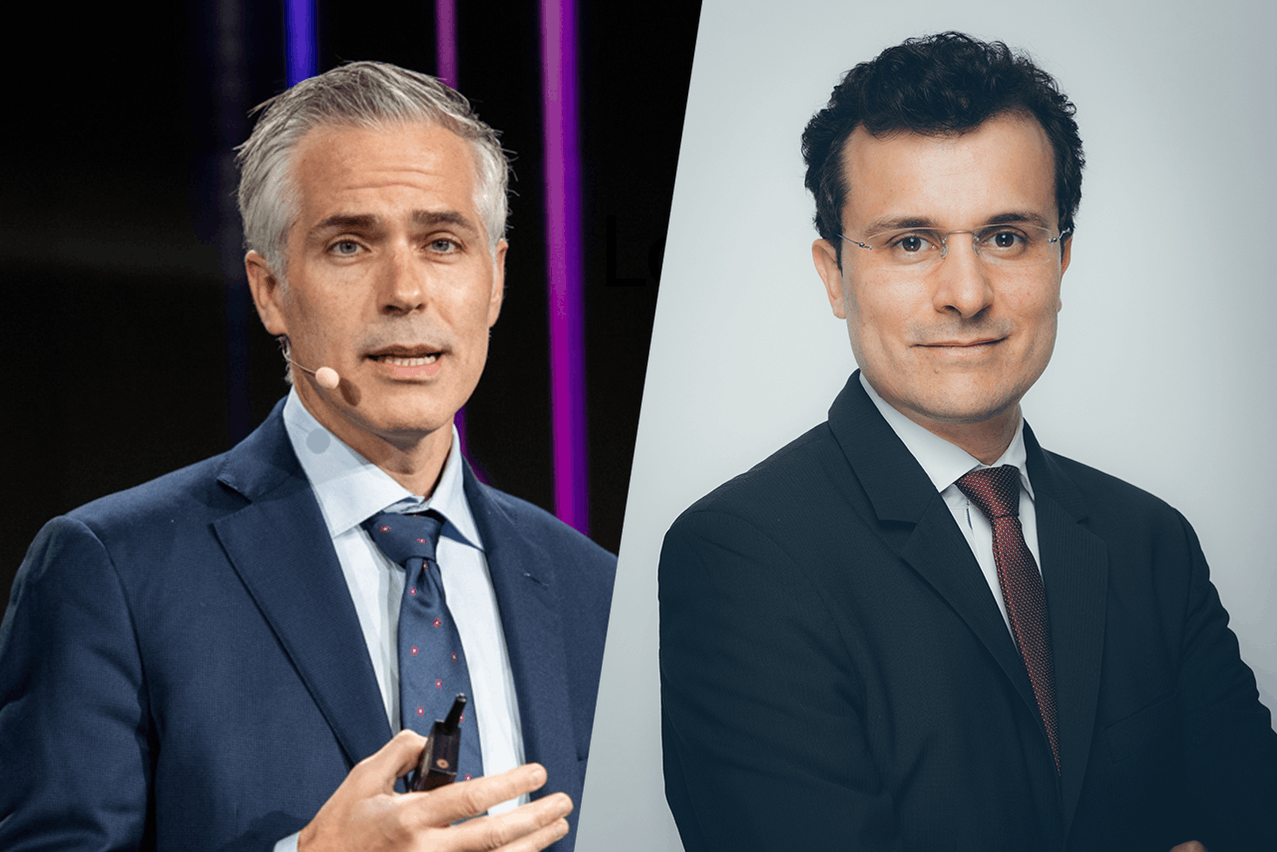
On 18 February 2026, Paperjam interviewed Patrick Augustin and Sébastien Betermier, associate professors of finance at McGill University, about the structural challenges facing Europe’s pension systems and pragmatic pathways for reform.
With demographic pressures mounting and public pension sustainability increasingly questioned, their research offers concrete reform options for Europe. In their research, they argue that Europe faces a structural capital gap — but also outline realistic pathways to address it.
Sylvain Barrette: In the section “Possible Pathways for Europe” of your research note, you discussed the difficulty of convincing workers to contribute to a new capitalisation scheme. Given the public sector’s struggles with pension sustainability, why isn't this viewed as an obvious necessity by the public?
Patrick Augustin: It’s a matter of where the money goes. At a recent private asset conference at Deloitte in Luxembourg attended by German-speaking investors — Swiss, Austrian, German and Luxembourgish — almost all participants reported having less than 60% of their savings in market-based investments.
Even in Luxembourg, which is very wealthy per capita, we see one of the lowest fractions of market-based investment globally. Regarding the state itself, when you look at the Fond de Compensation, it actually represents one of the lowest proportions of productive capital among the countries we’ve analysed — and likely one of the lowest globally as well.
It requires deeper institutional reform to make this viable. People are busy or suffer from inertia, which is why default options are so critical to overcoming these behavioural biases.
Sébastien Betermier: There is also a structural hurdle. In many European countries with PAYG, what people think of as "pension contributions" are actually direct transfers to current retirees; no or little actual saving is being accumulated for the contributor’s own future.
If you move to a capitalised system, workers face a “double burden” — effectively paying twice: once to finance current retirees and again to build their own retirement savings. That is a very difficult political sell.
Your first “pathway” suggests a voluntary Pan-European “Super-Default” Defined Contribution (DC) fund. Why opt for a voluntary system over a mandatory one? Should Europe establish a European-level entity to manage such a DC fund?
S.B.: Mandatory reforms often trigger significant public pushback from those demanding individual freedom of choice. We look at the UK’s National Employment Savings Trust (NEST) as a model: employers are mandated to offer a plan, but employees can choose to opt out.
Because of the “nudge” of auto-enrolment, most people stay in. This has resulted in an 80% coverage ratio in the UK, compared to a 90% ratio in Australia’s strictly mandatory system.
P.A.: The “opt-out” mechanism is the key. It preserves freedom while leveraging inertia to ensure high participation. Whether managed through a single European “super fund” or several large national funds is less important than adhering to core principles: scale, cost efficiency, professional management, governance and portability. Canada has a federal plan, while the province of Québec has carved out its own system. More broadly, those are common themes in all these successful pension reforms.
Smaller member states may lack the scale to build efficient national vehicles. In that context, could a European-level entity be more efficient for countries like Malta to ensure a level playing field and to help young professionals to move between countries?
P.A.: Portability is a major issue; the fear of losing pension benefits often prevents people from moving between EU member states. However, some competition between a few large-scale plans might be healthy to keep them efficient.
On the second pathway for Europe, Sweden is often referred to as a model. Are individuals able to choose financial products directly through an independently run platform?
S.B.: Yes. More generally, our approach focuses on the principles—like those seen in Sweden’s AP7 fund—where a central body vets and selects approved investment products to negotiate lower fees and ensure high governance standards.
Should Europe pursue a "Big Bang" reform—immediately opening the system to individual stocks and bonds—rather than choosing only funds?
P.A.: While the need for reform is urgent, a "Big Bang" might be politically unfeasible and risky. Successful models in Canada, Australia, and Sweden were implemented incrementally over 20 to 30 years.
The Swedish AP7 fund uses a default option with 125% equity exposure for younger participants, which is managed professionally. Furthermore, trading individual securities in Europe is often much more expensive than in North America. A default option—like a broad, low-fee ETF—is usually the most efficient path for the average person. The longer reform is delayed, the harder it becomes to implement — especially as demographic pressures intensify.
How do different nations handle the long-term solvency of these systems?
P.A.: There is no single path. Denmark has a constitutional requirement to automatically adjust the retirement age based on sustainability. Because the public pillar is largely de-risked and not invested in growth assets, sustainability relies more heavily on demographic adjustments — including a steadily rising retirement age, currently set to reach 70. The public pillar should be risk-free to have a minimum pension guaranteed for everyone.
“[Australian “Salary Sacrifice” model] is so popular that people are oversaving
Sweden, by contrast, operates a more growth-orientated capital model, with automatic mechanisms that adjust contribution rates or funding ratios when sustainability thresholds are breached.
Could you explain how voluntary savings can evolve by expanding on the Australian “salary sacrifice” model?
P.A.: We need to stop thinking in "silos" like public versus private or Pillar 1, 2 or 3. In Australia, additional private savings are channelled through the employer network with “highly attractive tax incentives,” often called “salary sacrifices.” They are so popular that people are oversaving.
This allows individual savings to benefit from the same institutional scale as major pension funds, giving ordinary savers access to large-scale infrastructure and private market investments that would otherwise be out of reach.