Often criticised for being slow and disorganised, Luxembourg Inland Revenue (Administration des contributions directes or ACD) has recently gotten a new director in 
1,038,543 tax forms issued
The ACD collected €13.87bn in revenue in 2023, including €1.3bn in business tax on behalf of local authorities. Revenues from direct taxes (income tax, wealth tax and withholding tax on capital income) amounted to €11.64bn (+13.2% compared with 2022). Income from wages and salaries (RTS) accounted for 51.39% of the various direct taxes. The audit department carried out 48 in-depth audits, resulting in tax adjustments of €1.351bn. Of these, €921.313m related to personal and corporate income tax. Three cases were referred to the public prosecutor.
Currently, 1,063 agents are employed by the ACD, spread across 63 departments in 24 locations. They managed 348,068 individual files and 121,279 corporate files in 2023, issued 1,038,543 tax forms and processed 3.7m reports sent and received under the exchange of information between tax administrations. The ACD also handles 7,848 calls per month and 118,000 visits to its website (with a peak of 161,391 visits in March 2023). Remarkably, of the 1,038,543 tax forms issued, 570,607 were issued by the RTS non-resident office.
355,000 invoiced for rulings activity
The ACD has often been in the spotlight for its practice of issuing advance tax rulings. There are two types of advance rulings: general advance tax rulings (or ATRs for short) and specific advance rulings relating to transfer pricing requests made by companies carrying out intra-group transactions (or APAs for short). In 2023, the ACD issued 36 rulings, versus 67 the year before. Of these, 35 were ATRs. This is a profitable business: each request for an advance tax ruling is accompanied by a fee set by the director of taxes. The fee, which is non-refundable, varies between €3,000 and €10,000 depending on the complexity and volume of the work. This fee gave rise to €355,000 of invoicing for 2023.
The champion of indirect taxes: VAT
The Registration Duties, Estates and VAT Authority (Administration de l’enregistrement, des domaines et de la TVA or AED) has been headed by Romain Heinen since 2006. Heinen will be retiring later this year, however.
The AED has 471 employees. In 2023, it collected €7bn in revenue, including €88.6m in VAT adjustments. Compared with the draft budget, the administration realised 91.7% of the revenue forecast, a shortfall of €345m. “This trend is not at all unusual given the stagnation of the economy, the crisis in the property market and, as far as investment funds are concerned, a total net asset value that has not returned to the levels seen in the past,” says the report.
In 2023, VAT accounted for €5.102bn in revenue (+0.1% over one year) and subscription tax for €1.119bn (-6.4% for 7,812 entities subject to it). These are by far the two largest indirect tax receipts: registration duties came third with €232.473m (-52.1%, a sharp fall of €252.925m attributable to the rise in interest rates on property loans in Luxembourg, which was reflected in a very significant fall in the number of deeds, given that notarial deeds account for almost half of all deeds registered). Inheritance tax brought in €139.775m (down 5%, partly due to a drop in the number of inheritances with taxes in excess of €1m).
Boom in tobacco, decline in motor fuels
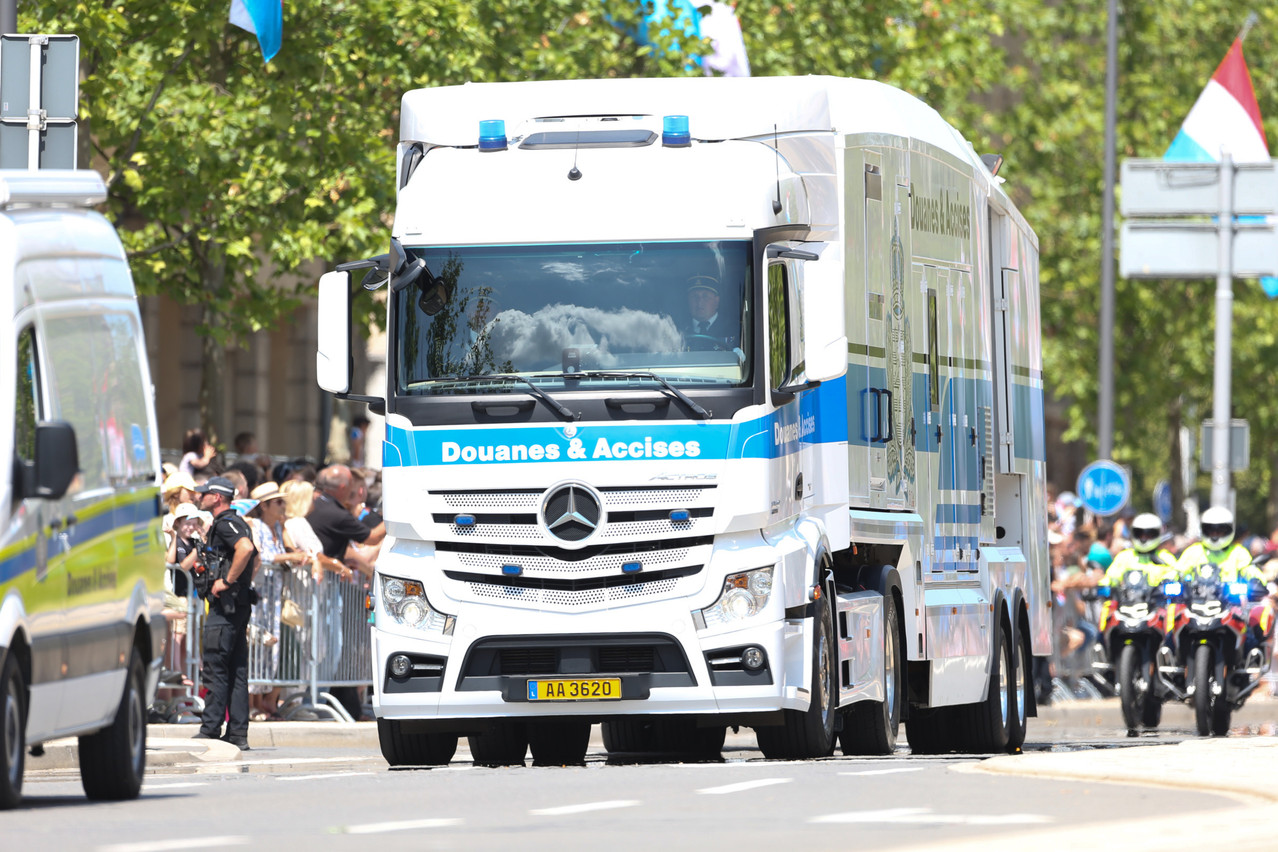
The Customs and Excise Agency (Administration des douanes et accises or ADA) is the third tax authority under the finance ministry. It is unique in that, in addition to its tax duties--the collection of excise duties and customs duties--it also carries out security and police duties. In 2023, it employed 448 civil servants, 15 employees and 14 salaried staff.
Excise duties are indirect taxes on the sale or use of certain products, notably alcohol, tobacco and energy. The authority’s figures show how consumption and production habits are changing. One column shows that domestic beer production in 2023 was 252,828.43 hl, down 25,934.57 hl on the previous year. In the same year, annual production of wines and crémants totalled 98,789.53 hl, including 21,223.53 hl of crémants and other sparkling wines.
Another habit in flux is tobacco: in 2023, 4.442bn cigarettes and 6.158 tonnes of tobacco were sold in the grand duchy, versus 3.032bn cigarettes and 3.805 tonnes of tobacco in 2019. But while tobacco consumption is rising, fuel consumption is falling. Diesel consumption fell, in 2023, from 2.179bn litres to 1.383bn in 2023. This sharp decrease was not be offset by the increase in consumption of unleaded petrol, from 486.7m litres in 2019 to 518.178m litres in 2023. In the end, 1.9bn litres were consumed in 2023, versus 2.666bn in 2019.
All this brings in revenue: €1.027bn from tobacco and €848.471m from motor fuels. the CO2 tax brought in €114.780m.
All in all, the ADA collected €2.127bn in revenue, including €1.120bn from the grand duchy’s participation in the common customs and excise revenue of the Belgo-Luxembourg Economic Union (UEBL).
This article was originally published in Paperjam. It has been translated and edited for Delano.