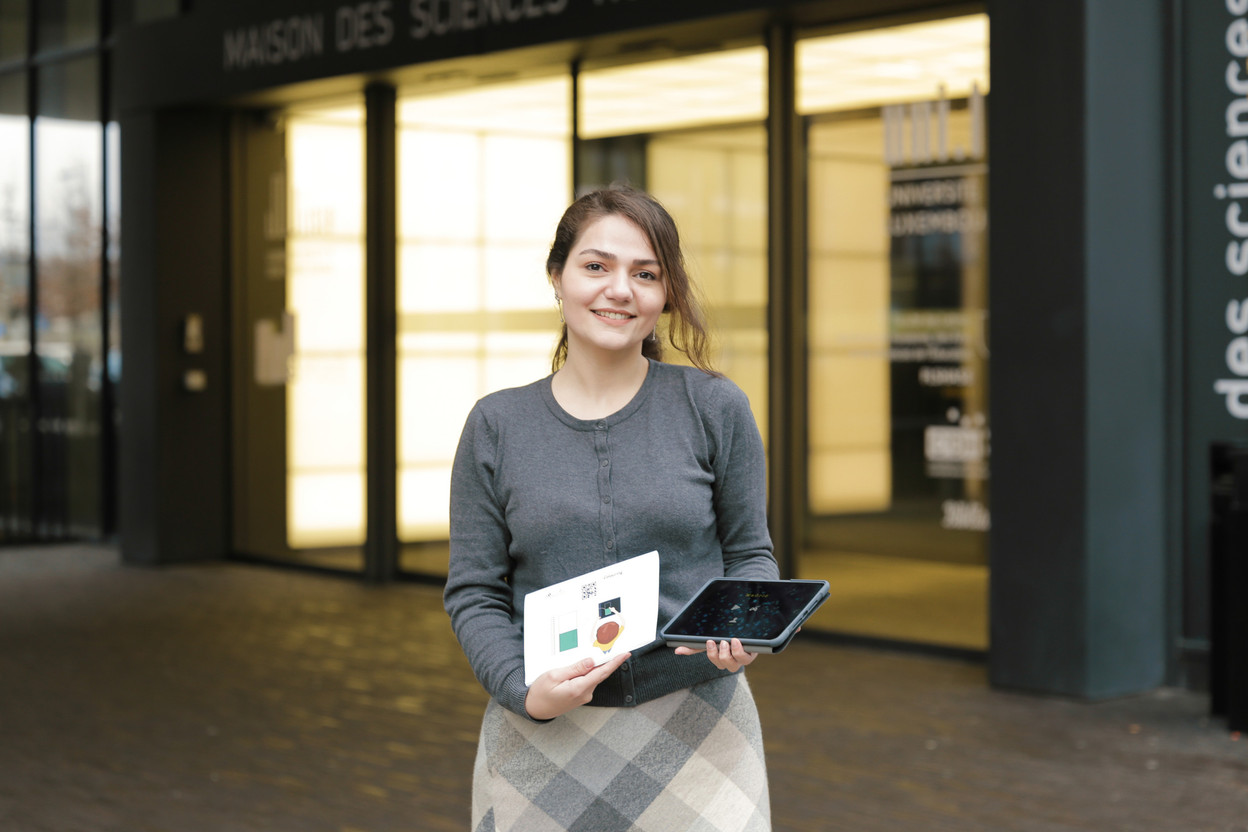
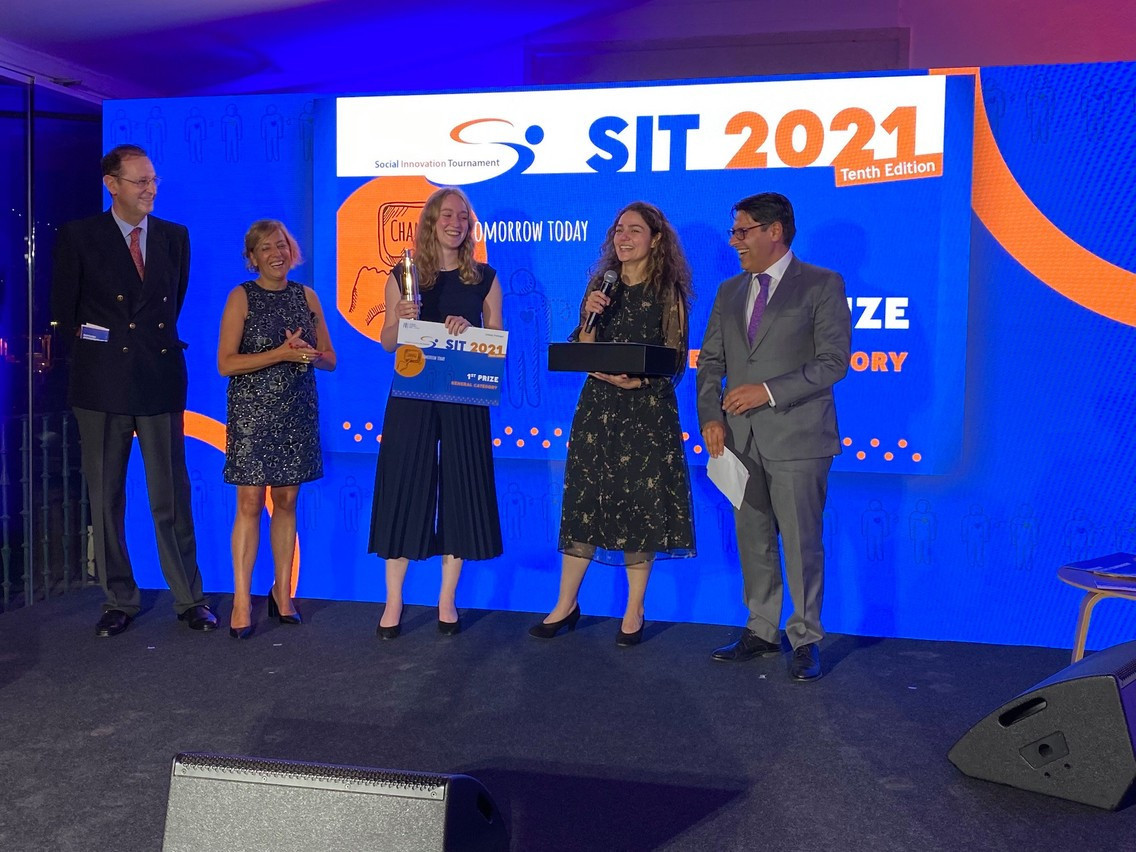
It was in 2019 that Magrid came to the fore when the education ministry announced that the set of language-free and grid-based exercises was going to be rolled out across Luxembourg schools. In recent years Pazouki has made headlines by winning the World Summit Awards, the European Investment Bank’s social innovation prize, the Creative Young Entrepreneur award and most recently landing in the MIT Solve’s top 40. But the young Iranian academic turned entrepreneur had her sights on creating Magrid much earlier.
Opening wider the doors of STEM
Sitting in a neatly arranged conference room in the University of Luxembourg’s start-ups incubator--her new company LetzMath’s home--she tells me: “In Iran the older child is responsible for the education of the younger one. My brother had special education needs and I was always drawing for him, especially in maths because if I would have explained something to him, he couldn't understand it. I was seeing it kind of worked with him so I thought why shouldn’t it work for others too.” From its first iteration Magrid has been successful among children on the autism spectrum, those with special learning needs including language disorders but also among those with a migratory background, of which Luxembourg has many.
Confidence is everything. When you think you cannot do it, then you stop trying. And that's what we are trying to do--bring back this lost confidence

Her early steps as an eldest child and tutor are the first iteration of Pazouki’s understanding of the utility of alternative teaching methods. She adds, however, that the gender gap in the STEM fields was the other half of the motivation that propelled her to turn her PhD project Magrid into the start-up LetzMath, which is now entirely independent from the university.
She recalls doing testing for Magrid in a kindergarten and monitoring the reactions of the children. “When a girl was doing an exercise and was thinking for a second, a boy would come in and say ‘Oh, I can do it for you’ and then she would feel like she is not that good at it”. Pazouki has a quiet self-confidence that puts her at ease with those she meets. And while she may appear reserved to some, her eyes lit up when talking about children and providing them with guidance. “Confidence is everything. When you think you cannot do it, then you stop trying. And that's what we are trying to do--bring back this lost confidence,” she adds.
In the beginning it was sometimes difficult to figure out if she had a question because she would not even ask. It was never any problem, but I think she saw that you can be a little bit more upfront
Fleshing out the Magrid programme during her PhD studies was a challenge for Pazouki who had already had to make the jump from computer science to doing doctoral research in psychology. The then-academic angling to get her start-up going had left a strong impression on her supervising professors, one of whom--Christine Schiltz--was struck by Pazouki’s dedication. “She was always very proactive, trying to figure out [solutions] by herself, and she was doing a tremendous amount of work in developing the tool [Magrid],” the University of Luxembourg’s psychology professor tells me.
This part of Pazouki’s development was also a way of diosco she didn’t always have to figure it all out by herself. For Schiltz, the cultural difference between Iran and Luxembourg meant that the future Magrid founder was often more discreet than she needed to be: “In the beginning it was sometimes difficult to figure out if she had a question because she would not even ask. It was never any problem, but I think she saw that you can be a little bit more upfront.”
Delivering the product is the endgame
Now at the helm of her own team at LetzMath, Pazouki has put to use her interpersonal, computer science and psychology skills to lead her start-up, which has clients in Luxembourg, Portugal, Belgium and the US. She is surrounded by fresh-faced software developers--two of whom she proudly says are women--and a few other people in administrative roles that make the business trick. Cíntia Ertel, customer enablement specialist at Magrid is one of them, acting as a bridge between LetzMath and the teachers implementing the programme. “They are all easy people to work with. Tahereh gives me a lot of freedom and she trusts my guts and my work,” she tells me over the phone. While as of March 2021 Magrid was a one-woman team with Pazouki running everything, the key to moving the project forward lies in making this team tick.
Read also
Portugal is currently the main focus for Magrid’s operations with pilot projects started in 400 schools as of September. LetzMath’s current aim is for 100,000 students in the country to benefit from the maths-learning programme after which the US will be the next market to be prioritised. In terms of functionality, Magrid is evolving, with the help of AI, to be able to assess the progress of those using it. Pazouki’s goals are strong evidence of her ambition and despite racking up multiple awards there is no trace of bravado in her attitude which is a breath of fresh air in an ever more ruthless business world.
This portrait piece is part of the Under 35 series which Delano will continue publishing on the first Tuesday of every month.