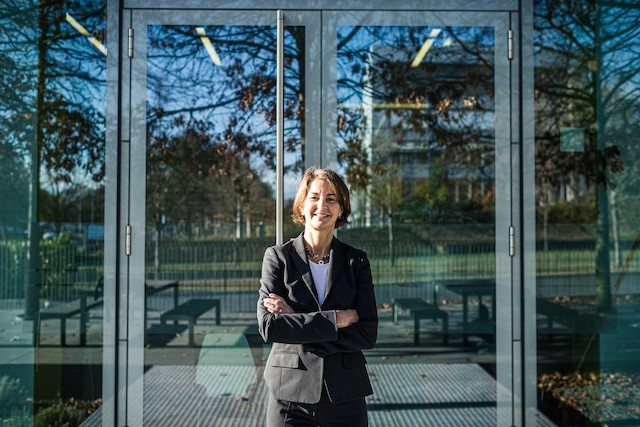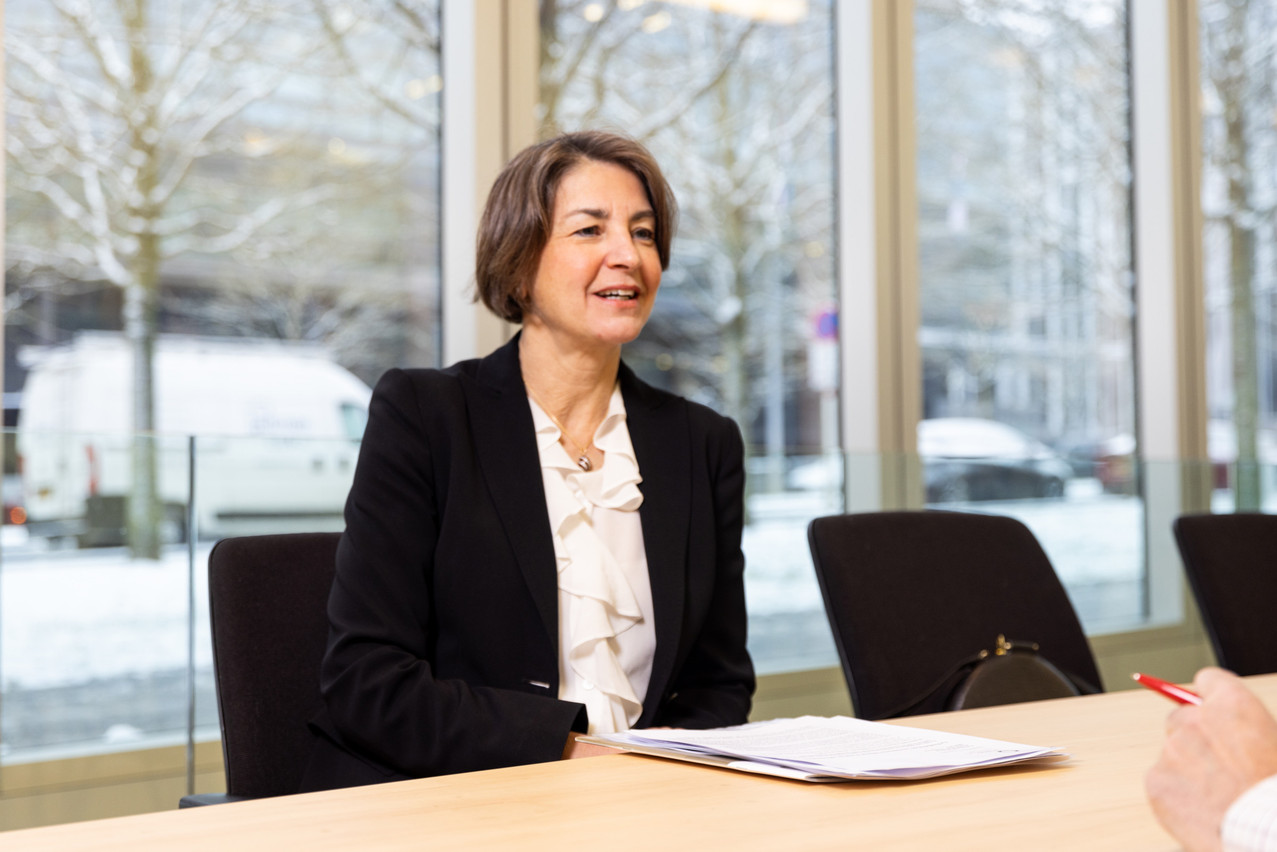
Managing director 
This--helping people structure and develop foundations of their own--is the mission of the Fondation de Luxembourg. And now, over 100 foundations later (107 to be exact), nearly all of them still operational, it would be hard to argue that the mission isn’t going well. “We have proved that the desire to commit oneself to others is constant,” says the managing director. “And that philanthropy has been able to evolve and adapt to changing times and needs.”
Personal, collaborative, international
Hirdman captures the Fondation’s success in three adjectives.
The first is personal. “Each foundation, each project is personal. And we offer everyone personalised support.”
The second is collaborative. “The essence of the Fondation de Luxembourg is collaboration. We have a structure that enables different donors to pool the resources needed to monitor and support projects. This collaborative approach is also reflected in our partnerships with beneficiary organisations. Let me give you an example: when we launched the Covid-19 Foundation at the very start of the crisis, we relied on the network of our beneficiary organisations to direct the donations of our corporate donors to where they were most needed.”
The third is international. “While our roots are in Luxembourg, our ambition from the outset was to support donors from all over Europe who wanted to support international causes. Since our creation, we have been active in 80 countries. Some of these are in complicated contexts, such as Afghanistan, Yemen, Syria and Ukraine. We want to be wherever there are needs, and in the most intelligent way possible. The Fondation de Luxembourg offers a simplified approach to philanthropy. The foundations we host have no legal personality; they depend on the legal status of the Fondation de Luxembourg. And they are financial foundations; in other words, they aren’t operational. To take action in the field, we choose the best possible partner (NGO, beneficiary institution, etc.) with whom we sign an agreement. As far as monitoring is concerned, we can’t afford to go on site, although we do it when we must. The project is monitored in relation to the agreement signed and the funding is released tranche by tranche according to the reports received. Here, each foundation is supervised and steered by a management committee made up of the founder, an independent member and myself, as representative of the Fondation de Luxembourg. And it is this committee that takes all the decisions.”
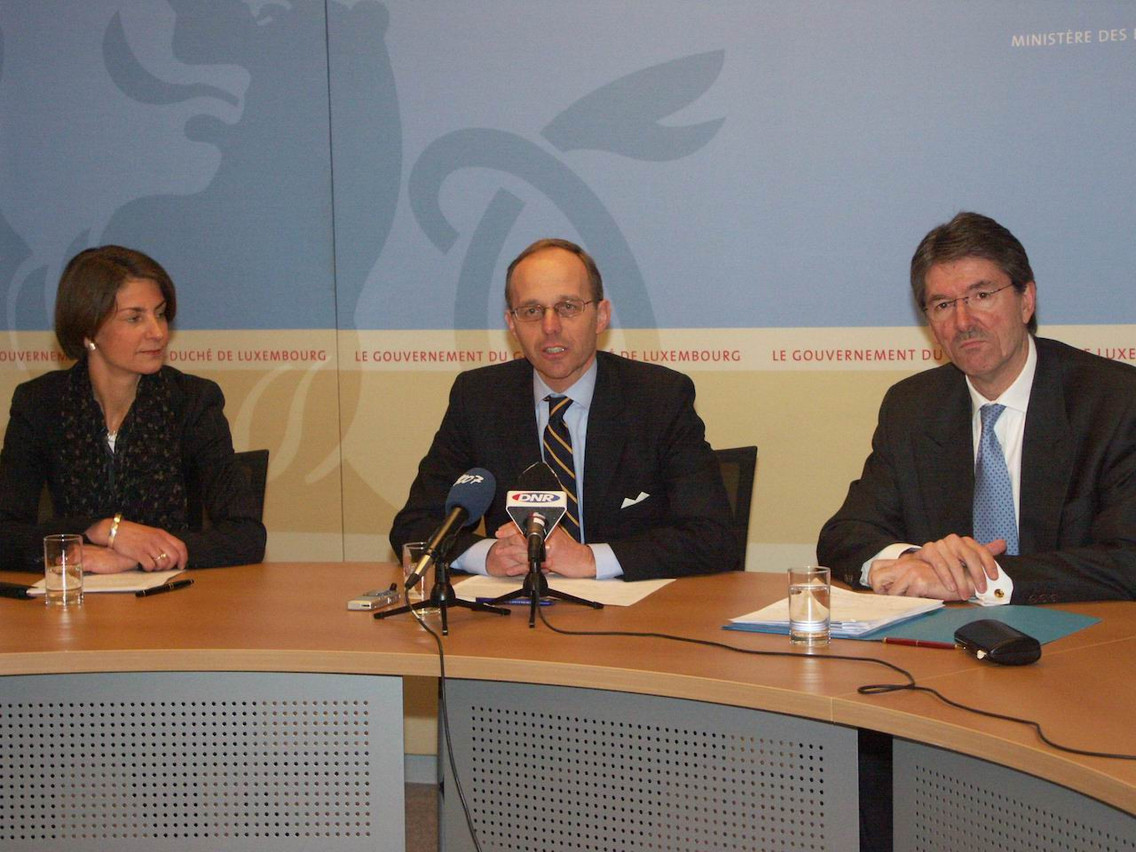
Luc Frieden (centre)--flanked by Tonika Hirdman and Pierre Bley--announces the launch of the Fondation de Luxembourg 15 years ago. Photo: Fondation de Luxembourg
Philanthropy by example
What is the typical profile of a foundation founder? There are three main types, says Hirdman. “Firstly, elderly people who may not have children and who want the fruits of their labour to be used for something close to their hearts. Then there are businesspeople, entrepreneurs who have succeeded in their professional lives and who want to give opportunities to others. And then there are the families who see philanthropy as a way of sharing their values.”
Hirdman provides three corresponding examples, all of them local.
First: the generous elder. “[The Schleich-Lentz Foundation] was dormant when it was created by its founder, Antoinette Schleich-Lentz, who was 90 at the time. When she passed away, it became active. She was an artist who had the vision to transform her house in Limpertsberg into a home for students. It took two years to transform the house into a student hostel for eight people. The premises are managed by the University and her studio is used by a local ceramics association that organises workshops. Last year, we launched two art grants that depend on and bear the name of this foundation.”
Second: the successful entrepreneur. “The Fondation du Pélican was founded by Pierre Hippert-Faber, a pharmacist who also owned a large property portfolio. He set up his foundation when he was around 80 years old. He was very inspired by biomedicine and, to encourage research, he awarded grants to doctoral students in this field in Luxembourg. He spent €2.5m. Active right up to the end, he followed up and met the prize-winners. When he died, he bequeathed his property to his foundation. We are currently preparing a flagship project in biomedical scientific research with the University, which should be launched by the summer.”
Third: the family foundation. “The Fondation La Violette was created by 
Creation of a climate foundation
Since its launch, the Fondation de Luxembourg has collected €330m in assets, €75m of which have been allocated to projects of general interest. All of the funds raised will be dedicated to philanthropy, but once the projects have been financed, they still need to be set up. And that takes time.
In 2022, 75% of funding went to support causes in Europe, of which 47% were in Luxembourg. “Luxembourg is where most donors live, and it’s also the country that receives the most.” Within the grand duchy, it is the fields of research and health that receive the most support--a trend accelerated by the covid-19 pandemic--with 48.6% of funding. Next come the fights against poverty and for social cohesion (21.6%); education (18.2%); culture and diversity (7.8%); and biodiversity and the fight against climate change (3.8%).
This lattermost percentage is in fact higher than the global average, which has induced the Fondation de Luxembourg to work on a climate foundation, which it took the occasion of its 15th birthday to announce. “The idea is to enable companies to contribute to projects that will be pre-selected and monitored. It will be an open foundation modelled on those dedicated to the covid-19 and Ukraine crises. While these two foundations were set up in a hurry, this project is the result of two years of preparatory work. Today, we already have a financial commitment of around €250,000, which is the minimum required to start up activities. It’s a major initiative that we're committed to, and we think It’s highly relevant.”
The Climate Foundation is due to begin operations in the next few months.
This article was originally published in Paperjam. It has been translated and edited for Delano.