You set up the company in 2014. How did that come about, and why did you decide to go for it?

Were you on your own for a long time at the start?
S.D. – “No, a year. The team then grew. We took on our first employee, then another person joined me as a partner. Some people left afterwards, whilst others joined us.
Roxane and Isabelle, you joined Stéphanie afterwards. Why?

Isabelle Spannagel. – “I set up as a self-employed professional in 2021 and immediately began working with Qualia as a freelancer and subcontractor. The collaboration quickly became more fruitful, with an increasing number of assignments. My business was also growing, and I began to subcontract work myself. There were several possible scenarios. I finally joined Qualia as a partner in September 2023.
In your view, what are the advantages of a small organisation, and what challenges does this entail?
S.D. – “In a small organisation, we have the freedom to choose which assignments we accept or turn down. Saying ‘no’ to a client sometimes means recognising that their request does not match what they actually need. It also means deciding not to work in environments where we don’t feel at home and setting rates that reflect our expertise, whereas large organisations operate on the basis of fixed price lists. We can be flexible and choose the services we provide, without having things imposed on us against our will. There is a great deal of freedom, but within the framework of business ethics.
We must learn to live with uncertainty.

R.F. – “The difficulty lies in the challenges of entrepreneurship, particularly fluctuations in turnover and everything to do with uncertainty. You have to learn to live with it.
S.D. – “A small organisation doesn’t have the critical mass needed to have access to all the necessary support services. We therefore have to manage a large part of the administrative, accounting and marketing work ourselves, even though we are supported by assistants, an accountancy firm or consultants. You have to be very resourceful to keep everything under control without getting overwhelmed. It’s a constant search for balance and a process of continuous adjustment.
I.S. – “This makes the quality of the bond between the partners all the more valuable. We are driven by the richness of our exchanges, the way we complement one another, and the trust we share. We communicate a great deal: it is essential.
How do the three of you divide up the roles? Does each of you have a specific role?
I.S. – “The division of tasks happens quite naturally, based on our backgrounds and areas of interest. Roxane is more focused on finance and managing figures. As for me, I enjoy communication. When it comes to the services we provide, it also depends on our experience, what we enjoy doing and the training we’ve undertaken. Our complementary skills work very well together. We often ask each other whether we fancy taking on an assignment or not. We challenge each other’s thinking. In the way we work, it’s important that we’re on the same page. And if we don’t particularly fancy doing something, we know why we’re doing it anyway.
You also work with a network of freelancers. How does this collaboration work?
S.D. – “We work with a network of around ten freelancers. When we have too much work or a project isn’t quite in line with our skills, we can offer it to them. This isn’t about impersonal subcontracting or ‘body shopping’. These are people we’ve been in contact with for years, sometimes decades.
We share our expertise extensively. We ensure that those who work with us benefit from what we have to offer and develop their skills. This also ensures that the work is delivered in line with Qualia’s standards. There’s also a vibrant social life: we organise get-togethers at Christmas and in the summer. These aren’t just contractual relationships, but a genuine community.
I.S. – “Using freelancers allows us to adapt to fluctuations in business. It also gives us the opportunity to take on certain projects that do not fall directly within our area of expertise, or for which we do not have the time. That is where the flexibility lies.
Going it alone can be risky.
R.F. – “In our line of work, being able to exchange ideas, discuss matters and develop solutions collectively is essential. Going it alone can be risky when faced with challenging, complex and demanding assignments. Working as a team of three enriches our working practices and provides greater security. Freelancers tell us, in fact, that this helps them break out of isolation.
Has your job changed much in recent years? How have you adapted?
S.D. – “Previously, we were mainly asked to provide training or consultancy in human resources to set up performance and skills management processes. The field has shifted significantly towards leadership development and leadership approaches.
Organisations are looking for leaders capable of adopting the right approach to the challenges they face. They also turn to us to support major transformations: the transformation of HR functions, cultural changes, empowering staff or encouraging them to take the initiative. Our role, therefore, is to orchestrate and steer these changes in the right direction.
I.S. – “We carry out organisational assessments based on systemic thinking and a systemic approach, in order to understand how the entire system works. These activities have really come to the fore over the last five or six years. We have moved on from simply implementing processes or delivering training to more comprehensive and holistic approaches. Clients, too, have a broader understanding of the issues and of the support they require. They no longer necessarily come to us with just a single symptom: they already understand that there is something more extensive at play.
How do you see your profession evolving over the next five or ten years? Will artificial intelligence (AI) have an impact on your work?
R.F. – “Organisations will be under even greater pressure to transform, and roles will continue to evolve. Responsible leadership – capable of supporting people through these transformations – will become even more important, particularly in helping people navigate what can sometimes be major career transitions.
S.D. – “AI also intersects with demographic challenges within organisations. Age structures no longer function as they once did. We need to devise transitional solutions: managing older employees, encouraging internal or external mobility, and supporting those who are developing a career path within the company before taking it forward elsewhere. We are genuine partners in these transitions in roles and skills. These are structural challenges. Previously, companies faced more short-term challenges, such as digitalisation. With AI, the situation has changed completely. Organisations need support as they undergo this transformation: this is a major challenge.
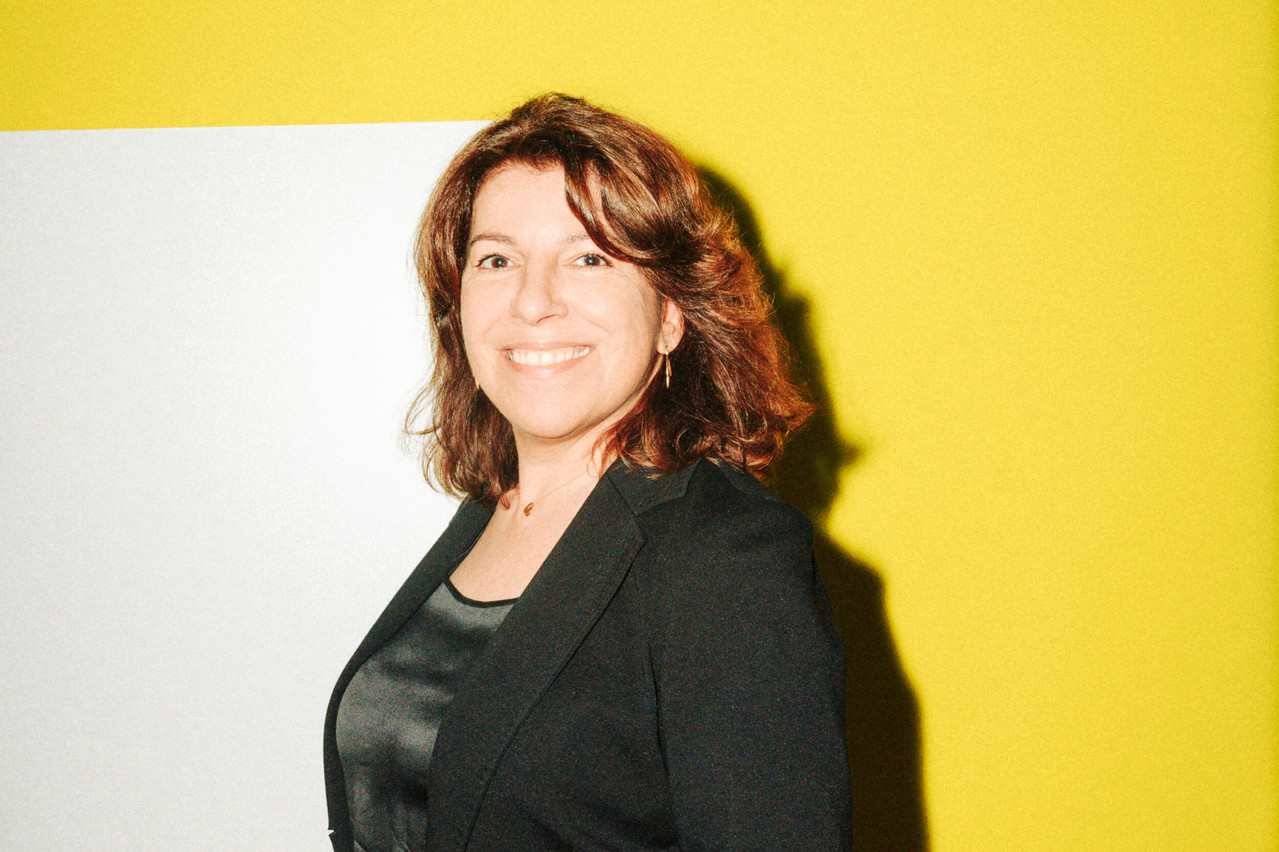
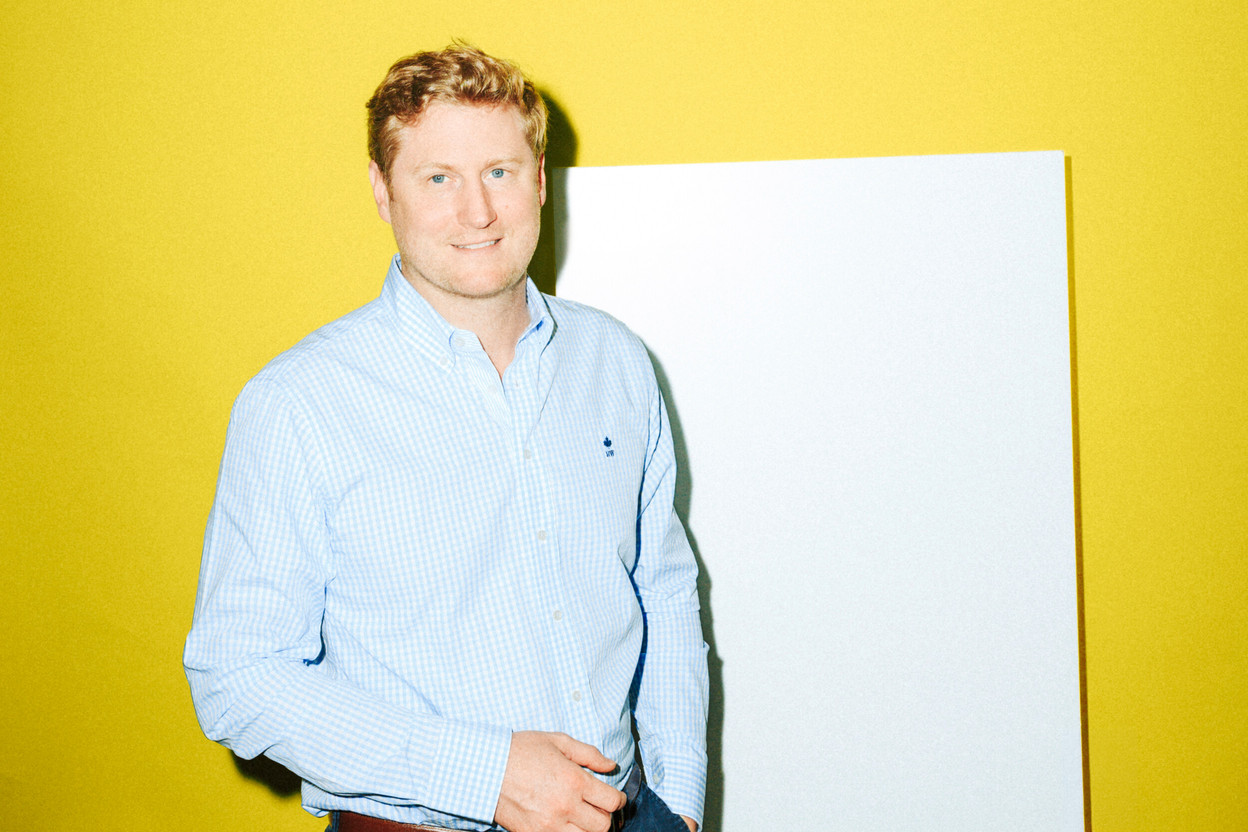
Stéphanie Dadoun founded Qualia Consulting in 2014. (Photo: Julian Pierrot/Paperjam)
Do you continue to learn as these developments emerge?
S.D. – “Yes. We receive training, we are supervised, and professional development is an integral part of how we operate.
I.S. – “This is essential in our line of work. On the technological front, we are also testing small tools that incorporate AI. We have been using virtual reality for several years and are continuing to explore innovative techniques and tools. The idea is to put AI and technology at the service of people.
Planning for succession begins well before it takes place.

A new chapter is beginning with the handover of the business. How was this decision reached?
S.D. – “It all happened quite naturally. I’ve always wanted to know when it was time to step down and hand over the reins. Whether due to my age or personal maturity, I wanted to go through this stage with a clear mind and not find myself one day thinking I should have left sooner. The transition process began three or four years ago. I’m proud that we started this process so early, whereas companies often talk about succession plans with a one- or two-year timeframe. For us, succession is prepared well before it takes place. Isabelle’s arrival was also part of this approach. My aim was to pass on as much as possible so that, beyond the company’s name, its mission could continue. At its core lies a sincere approach: to bring something fair and positive to organisations. It is a joy to know that this will continue, whilst giving Roxane and Isabelle the opportunity to make their own mark.
Are resignations and succession still taboo subjects in companies?
R.F. – “We’ve noticed among our clients that leaving the organisation, retirement and career transitions remain very taboo subjects, which organisations struggle to address because they are daunting. Departures are often topics that people don’t dare to bring up, on either side. Internally, we’ve adopted a deliberately different approach: we’ve chosen to discuss these matters at a very early stage. This facilitates a transition that can become painful if it isn’t handled transparently or is rushed. People who are leaving may feel frustrated when they do not have the opportunity to pass on their knowledge and bring their career journey to a close. Some decisions are made without involving those affected. They are then forced to follow a particular approach or pace that meets neither their needs nor their need for recognition. Experiencing this transition from the inside is very interesting for us.
How do you envisage the next stage of this transition?
I.S. – “We have mapped out the various stages. Management is set to change hands shortly. A roadmap has gradually taken shape, allowing everyone to find their place. The system is evolving: decisions, roles and what Qualia will become in the future are also changing. The company is very much embodied by Stéphanie, as these are roles where people matter a great deal. We have, therefore, also been working on the transition with our clients. We are taking ownership of things over varying timeframes. This doesn’t happen at the snap of a finger. It is a collective process, but also an individual one, with challenges specific to each person.
Stéphanie, will you stay with the company after all?
S.D. – “I will continue to lead projects relating to knowledge transfer, training, coaching and consultancy, either directly for Qualia or in collaboration with Qualia. I’ll remain with the company, but take a more behind-the-scenes role, so that Roxane and Isabelle can really make their mark. The idea is to continue to contribute, but from a bit of a distance.
Will the handover lead to a fundamental change in the company’s strategy?
R.F. – “There won’t be a ‘big bang’. What has brought us together over time is a shared vision, shared values and an already solid business model. There may be new directions – some more specific, others more marginal – depending on our clients’ needs, but we share a common foundation and core principles.
S.D. – “With the advent of AI and other societal changes, it is important to remain open to new partnerships and collaborations. The prevention of psychosocial risks, for example, is becoming increasingly important. On such a topic, the contribution of complementary skills and methods can be particularly valuable.
What would you most like to preserve as the story of Qualia unfolds?
I.S. – “What matters most to me in this transition process is maintaining the strong bond we have built with our clients and our ecosystem. It’s part of our DNA: to work closely with our clients to meet their needs. We’ve had clients since the very beginning, and our relationships are built to last. This applies both to our clients and to the partners we work with.
S.D. – “This closeness isn’t just down to our size. We give a great deal and share our knowledge with our clients and partners. We connect people without always expecting something in return. This creates a bond, and that bond nurtures the long-term relationship. We are not stingy with our time or with the goodwill we put into things. Sometimes a client calls us because they need to discuss an important matter for an hour. We make time for this without necessarily charging for it, as we consider it part of the client relationship. We also help people who are just starting out. It’s about finding the right balance, but this ethos is part of our DNA and is recognised as such.”
This article was written for the October 2026 issue of Paperjam magazine, published on 16 September. The content is produced exclusively for the magazine. It is published on the site to contribute to Paperjam’s comprehensive archive. Click on this link to subscribe to the magazine.
Is your company a member of the Paperjam Club? You can request a subscription in your name. Please let us know via club@paperjam.lu.