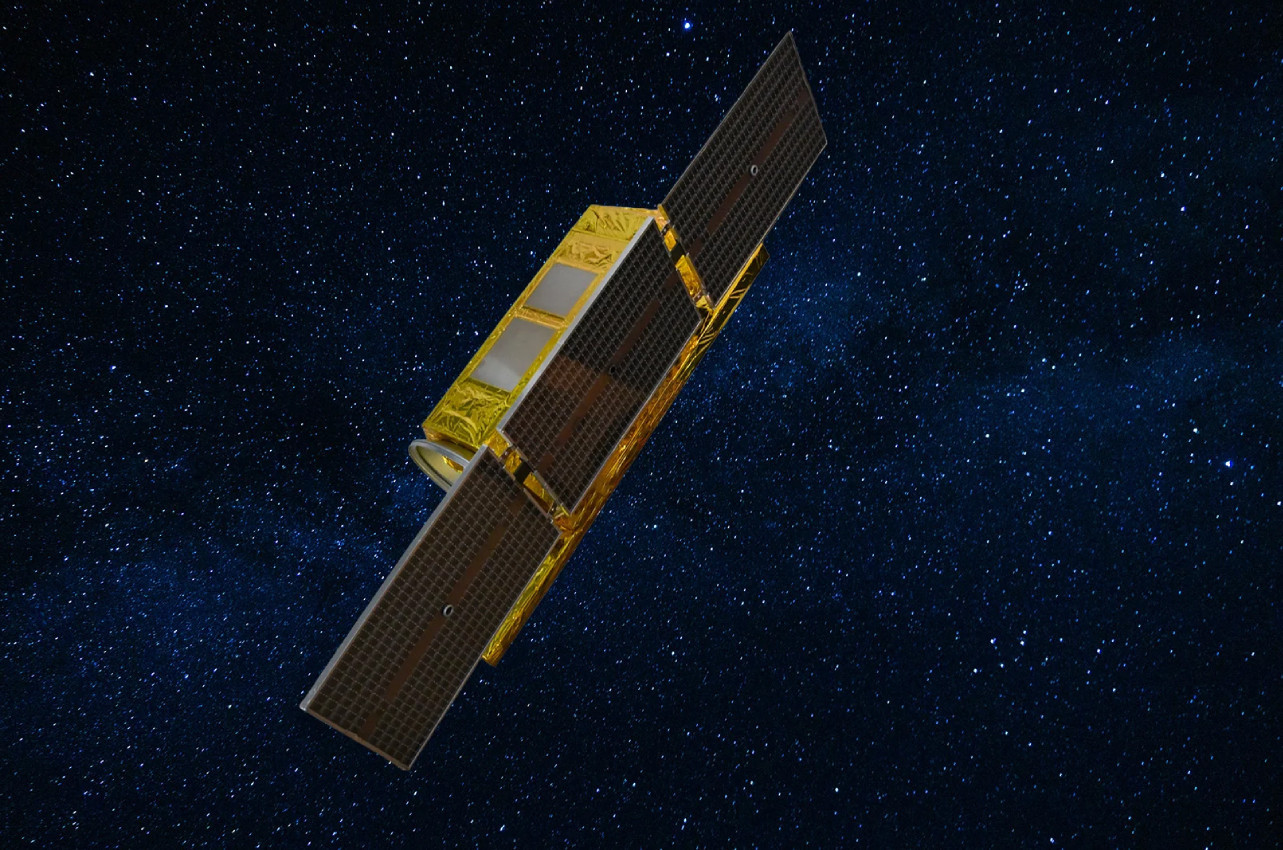
The European Defence Agency (EDA) signed a €15.65m research contract on 13 March to launch VLEO-DEF, a project to design a new generation of military satellites capable of operating in Very Low Earth Orbit (VLEO), an orbit between around 250 and 350 kilometres above the Earth.
The programme brings together five participating states - Spain, France, Luxembourg, Portugal and Slovenia - and a consortium of 17 European companies and research centres responsible for defining the technological architecture of the future system. These partners include seven companies based in Luxembourg, a significant level of representation for the Grand Duchy's space ecosystem. The consortium includes Integrasys, Sparc Industries, the Luxembourg Institute of Science and Technology (List), Rafinex, Emtronix, Gradel and GomSpace, alongside major European aerospace groups.
The project is coordinated by the Spanish company Sener, a specialist in space engineering, and also involves major players in the sector such as Airbus Defence and Space, Thales Alenia Space France, Deimos and Satlantis.
The aim of the VLEO-DEF programme is to study the feasibility of military satellites operating at very low altitudes. At these orbital levels, proximity to the Earth's surface enables more detailed images to be obtained and faster data transmissions, two crucial characteristics for intelligence, surveillance and reconnaissance missions.
This orbit does, however, present significant technical constraints. The residual presence of the atmosphere creates resistance that slows down the satellites and reduces their life in orbit. The project must therefore develop new propulsion systems, more resistant materials and adapted satellite architectures to enable sustainable operation in these conditions.
Scheduled to last 36 months, the programme should lead to the complete definition of a satellite concept and prepare a future in-orbit demonstration designed to test several critical technologies.

