Before you started out as a market gardener, were you already working in this sector?
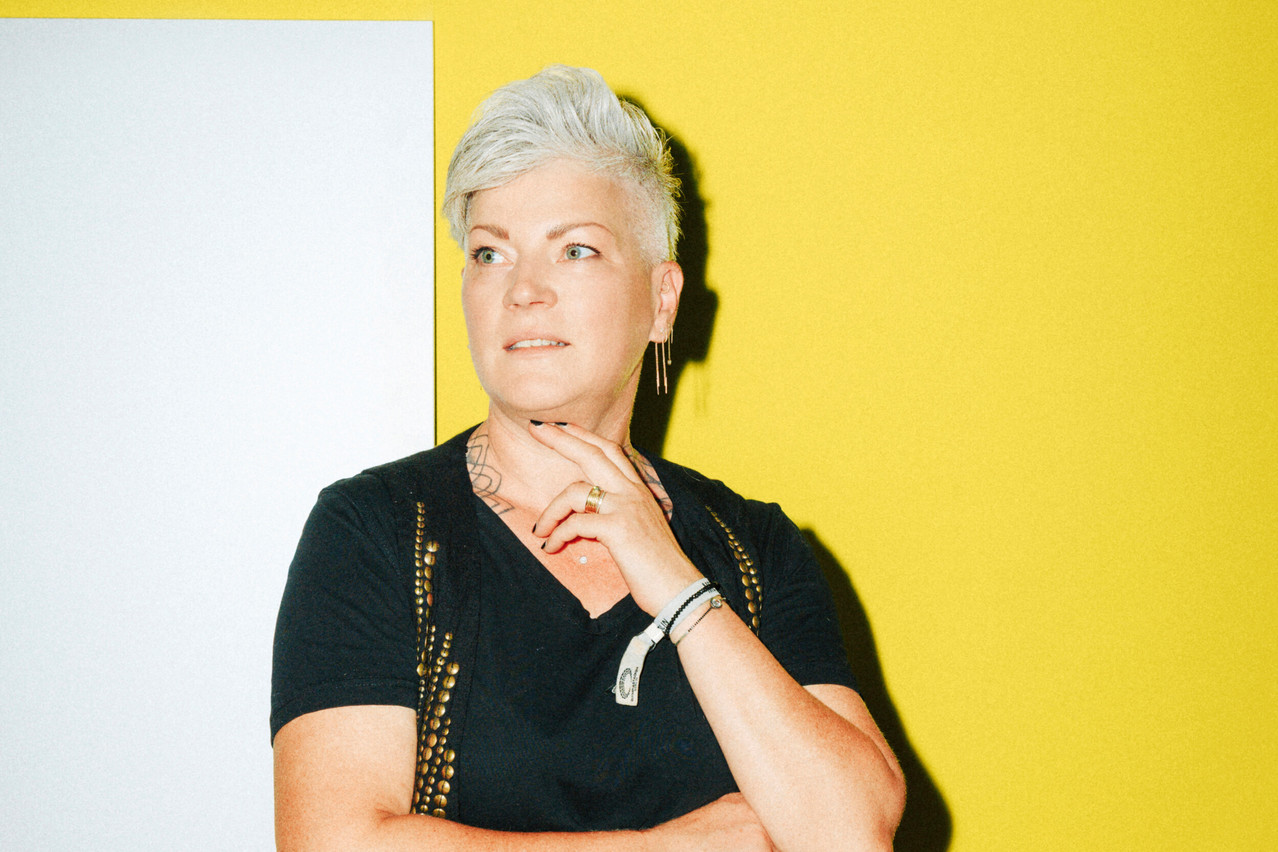
Sandrine Pingeon. — “Yes, I used to work at Co-Labor. Among other things, I introduced a range of meal box options there that are still in use today. At the time, my daughters’ father was a farmer. Before setting up my own business, I spent nearly ten years carefully planning the project.
Would you do it again today?
“I don’t think so. Initially, my plan was simply to buy and resell produce, not to grow it myself. But a plot of land nearby was made available to me. It was a great opportunity. When you start growing your own produce, it’s hard to choose what to plant from the vast array of options. I was immediately hooked.”
I also had the benefit of a perfect first year: it wasn’t too hot, it rained at night, and all the conditions were just right. If that first year had been anything like the one we’re experiencing today, I’m not sure I would have carried on. (This interview was conducted at the end of June, editor’s note.)
How do you notice, year after year, that the climate is changing?
“What we’re seeing in Luxembourg – and which is very difficult to manage – is a yo-yo effect. It’s 15 degrees, then suddenly 30, with high temperatures that can persist for 15 days. That’s quite extreme for Luxembourg. Then we drop back down to 20 degrees. These fluctuations make production difficult. Unless we grow crops in greenhouses or other structures where we can regulate the temperature, we have no control over outdoor conditions. We can still adapt, for example by putting up shade sails or watering in the evening or very early in the morning.
But when you employ a team, the organisation needs to be adapted accordingly. Today, for example, staff are finishing at midday because of the exceptional heat. They will make up the hours, or some will come back in the evening to help out. We’re taking it almost day by day, depending on the circumstances.
The weather remains our main challenge. Another issue is the level of overheads: staff, wages, energy, and also water. We find it very difficult to pass these costs on to the price of vegetables. That is my main problem. For a staple food, we can’t just decide that carrots should cost six euros a kilo! We therefore have to align ourselves with market prices. But we’re up against competition from supermarkets, which can drive prices down by buying from industrial producers. They can sell carrots for just a few tens of cents per kilo. I could never produce at that price.
Are consumers really prepared to pay a little more for better-quality products?
“I’ve noticed this, but it quickly reaches its limits. The situation has changed a great deal since the pandemic. Rents and all other expenses have gone up. People who were still managing to get by on two incomes close to, or even slightly above, the minimum wage are now finding life much harder. So they’re keeping a closer eye on their food spending. Nevertheless, we’re fortunate to grow vegetables that are recognised for their quality. People sometimes tell me they’re exceptional. I grew up with this sort of produce, so I don’t always realise it myself.
What range of fruit and vegetables do you grow?
“We try to grow everything that can be grown in Luxembourg, apart from potatoes. I grow a small quantity of early potatoes, but not for storage. We also grow herbs and edible flowers, as we work with restaurants. This year, we’ve tried growing christophine, also known as chayote. What interests me is diversity: if I sow orange carrots, I also want to have red, yellow and purple ones.
That is also one of the main reasons why I gave up on organic certification. In my view, ‘organic’ must first and foremost be synonymous with biodiversity. I didn’t give it up because the certification was too restrictive, but because I felt that we no longer really knew what we were eating. Many varieties are hybrids. For my part, I work mainly with heirloom varieties. This year, we’re growing around fifty varieties of tomatoes, perhaps even more.
What is it about your job that still inspires you?
“My clients, whether they’re private individuals or chefs. When I feel like giving up, they put their arms round my shoulders and say, ‘Come on, Sandrine!’ They help me a lot.
I’ve started to wonder what sort of customers I’ll still have in ten years’ time… With the way we live nowadays, lots of people don’t cook any more. I’m wondering about the future of this business model.

The project is celebrating its 14th anniversary this year. Some customers have become friends and we’re very close. They also understand our situation, because I’m always there when the shop is open.
What changes have you noticed in consumer behaviour?
“What worried me was the post-Covid period. During the pandemic, consumers seemed to be becoming more sensible. They took an interest in producers, in what they were eating, and in the possibility of growing their own vegetables. Then that interest fizzled out almost immediately. These trends are very short-lived. I’ve come to wonder which customers I’ll still have in ten years’ time.
A large proportion of my customers are over 40. I also welcome younger customers who are more health-conscious, particularly vegans and vegetarians, who are looking for good-quality products. But the bulk of my customer base is still made up of ordinary people. However, with our current lifestyles, many people no longer cook for themselves. So I’m really wondering about the future of this business model. Home delivery could be one option, as could expanding our range of meal kits. It’s something we need to think about.
If you had to change one thing to improve the situation for market gardeners or farmers, what would it be?
“I would particularly mention staff costs. One of my market gardeners has been on sick leave since October. Once the protection period had expired, I was able to make her redundant. For a small business, the prolonged absence of an employee is extremely difficult to manage. We cannot replace her straight away, as we are still paying her salary. We are reimbursed, but not in full. Meanwhile, she also continues to accrue holiday entitlement.
Once the process is complete and the notice period has ended, this situation represents a significant cost. The little we manage to set aside should be used for reinvestment, as there is always equipment that needs replacing. The plastic sheeting on my greenhouses, for example, has a lifespan of around ten years, depending on the weather conditions. Some need replacing, but we’re still repairing them this year due to a lack of funds. With this sort of business, I’ll never be a millionaire.
Is it difficult to find people with the necessary skills?
“Whenever I’ve tried to recruit staff, it’s been very difficult. Candidates often lack the necessary training. Some people think that growing three plants on a balcony is enough to be a gardener, but we’re a long way from that. The job is also physically demanding. In winter, it’s cold and you’re working in the mud; at the moment, it’s 40 degrees. When you visit the garden, everything looks lovely, but nothing happens by itself. People don’t always realise the scale of the work involved. That’s what makes recruitment particularly difficult.
Do you think the profession will change in the coming years?
“I think this transformation is already underway and that the organisations are growing in size. Small businesses are facing greater difficulties because their costs are very high. Some organisations manage to grow their operations because they have access to land or premises provided free of charge. For my part, when I add up the rent and all the other expenses, the situation is quite different.
Could farming methods also change?
“If I had the means, I could invest in a range of machines designed to reduce staffing requirements. But they come at a significant cost. Technology is evolving, of course.
We still use fairly traditional methods. We start with our own seeds, press the seed plugs ourselves, place them in the trays and carry out every stage of the process on site. I could make my work easier by ordering my seedlings directly from a supplier.
But my staff are here almost all year round. Growing our own seedlings means we can keep them busy at the start of the season and get all our crops off to a good start in-house. Otherwise, I wouldn’t know what to set them on in the garden during that period.
This approach also enables us to source exactly the varieties we want. No other supplier of seedlings could offer me around fifty varieties of heirloom tomatoes.”
This article was written for the October 2026 issue of Paperjam magazine, published on 16 September. The content is produced exclusively for the magazine. It is published on the site to contribute to Paperjam’s comprehensive archive. Click on this link to subscribe to the magazine.
Is your company a member of the Paperjam Club? You can apply for a subscription in your name. Please let us know via club@paperjam.lu.