Established in a former mill in Pfaffenthal, the Moutarderie de Luxembourg embodies a rare form of industrial continuity at a local level. More than a century later, the company is still in operation, driven by a clear guiding principle: passing on traditions and adapting to change.
A turning point came in 1976, when Raymond Munhowen took over the business. The company expanded, production became more organised, and the mustard factory established a firm foothold in Luxembourg’s economic landscape. Today, Roland Munhowen and his son Yann represent the third and fourth generations. This is a typical family business setup, where the transition takes place through gradual integration rather than a sudden break.
The move to Munsbach in 2008 marked a new, more industrial phase, which has recently been extended through an expansion of production capacity. At every stage, the same approach has prevailed: modernising without altering the core of the business model. In a sector largely dominated by international players, the Moutarderie de Luxembourg has maintained a unique trajectory: that of a deeply rooted company, which evolves with the times without changing its nature, simply by adapting its model.

The company has expanded its range from two to ten products over the past ten years. (Photo:Guy Wolff/Archives)
In your view, what is the main lesson you have learnt from your experience with succession planning and engaging the next generation within your company?
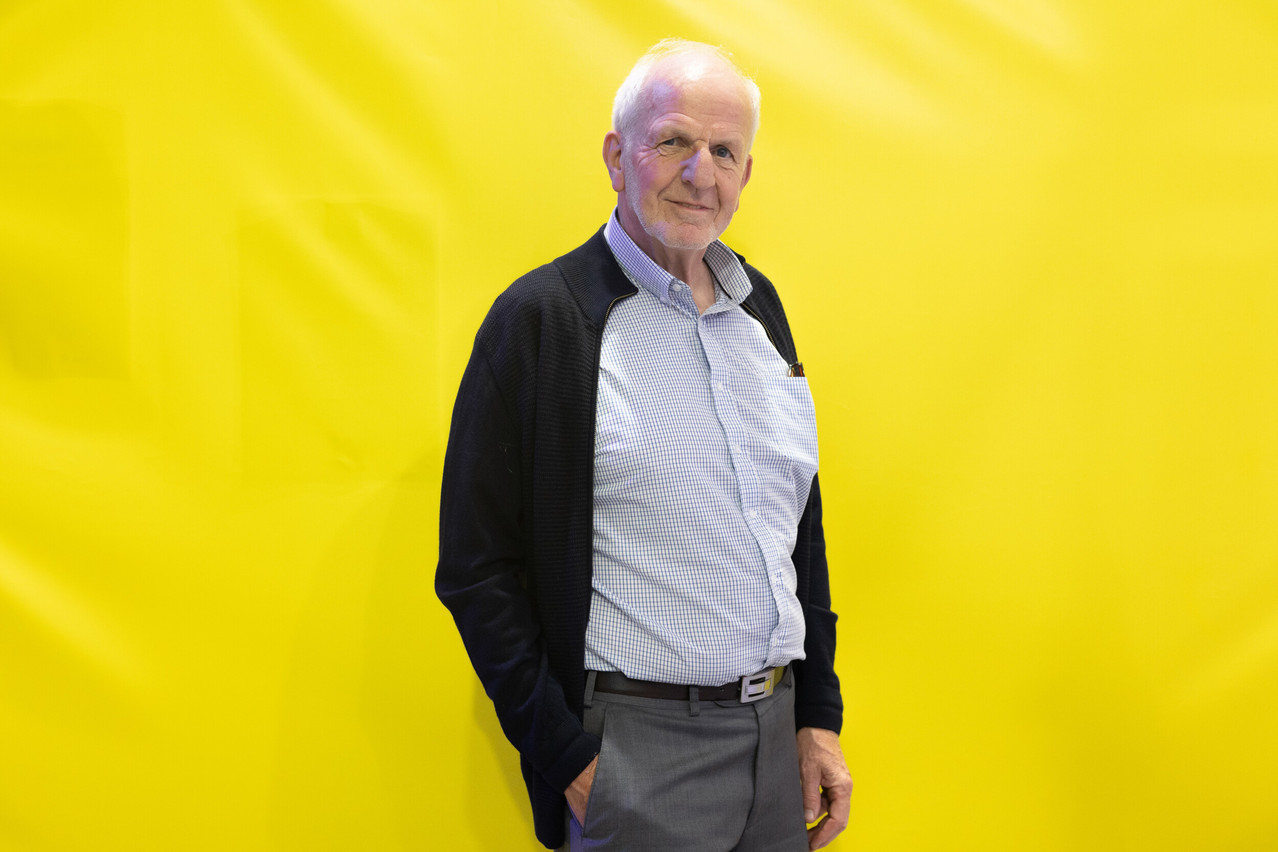
Roland Munhowen. – “After 18 years of working alongside my son in the family business, and with the agreement of both my children, I have transferred the majority of the shares in the business to my son.
In this context, how do you manage to balance the family’s expectations with the company’s economic and strategic imperatives?
“Following an assessment of the family’s various assets by our trustee, and in order to ensure the long-term viability of the business, a financially equitable division was reached amicably among the family members through a division of assets based on seniority.
Which decisions or developments relating to governance or the professionalisation of management have had the most significant impact on your company?
“Control must remain primarily with one person, both in relation to the business operations and the premises.
How does your company balance the need to honour its heritage with the need to innovate or transform itself in order to remain competitive?
“In 2014, the younger generation embarked on a rebranding exercise and significantly diversified its products and production methods.
What were the most decisive choices made regarding the financing of growth?
“Thanks to the property investments made by the founder of the family business between 1908 and 1968, and even after the property was divided amongst several family members, the capital gains from the property made it possible to finance the business’s operational assets.
What strategies have been most effective in developing your product or service offering whilst remaining true to the company’s core values?
“Attending local fairs, such as the Agricultural Fair, to engage with and gather feedback from the local community; modern social media; collaboration with specialist laboratories in the agri-food sector.
It is important for an SME to first establish a firm foothold in its home country, the local market, before venturing into international markets.

At what point did you feel it was necessary to accelerate the company’s growth?
“Between 2000 and 2014, with just two products, turnover remained largely unchanged. After the younger generation took over: rebranding and product diversification, around ten new products were launched over ten years, investment in equipment, followed by a significant increase in turnover and… results.
What were the main drivers — and the main challenges — of your internationalisation strategy?
“On the contrary, it is important for an SME to first establish a firm foothold in its home country, the local market, before venturing into regions with large populations and dietary habits that differ from those at home. Price competition from large corporations makes exporting unprofitable.
How can a family business attract and retain key talent in an increasingly competitive environment?
“By keeping the business on a human scale – fewer than 15 people – where it is easier to interact with staff.
How has increased international competition in your domestic market changed your positioning, organisation or strategy?
“Highlighting our unique character, visual appeal and local quality, even though our prices are rarely lower than those of our competitors from the major chains. Making sure we’re present at all local events.”
This article was written for the June 2026 issue of Paperjam magazine, published on 20 May. The content is produced exclusively for the magazine. It is published on the website to contribute to Paperjam’s comprehensive archive. Click on this link to subscribe to the magazine.
Is your company a member of the Paperjam Club? You can request a subscription in your name. Please let us know via club@paperjam.lu