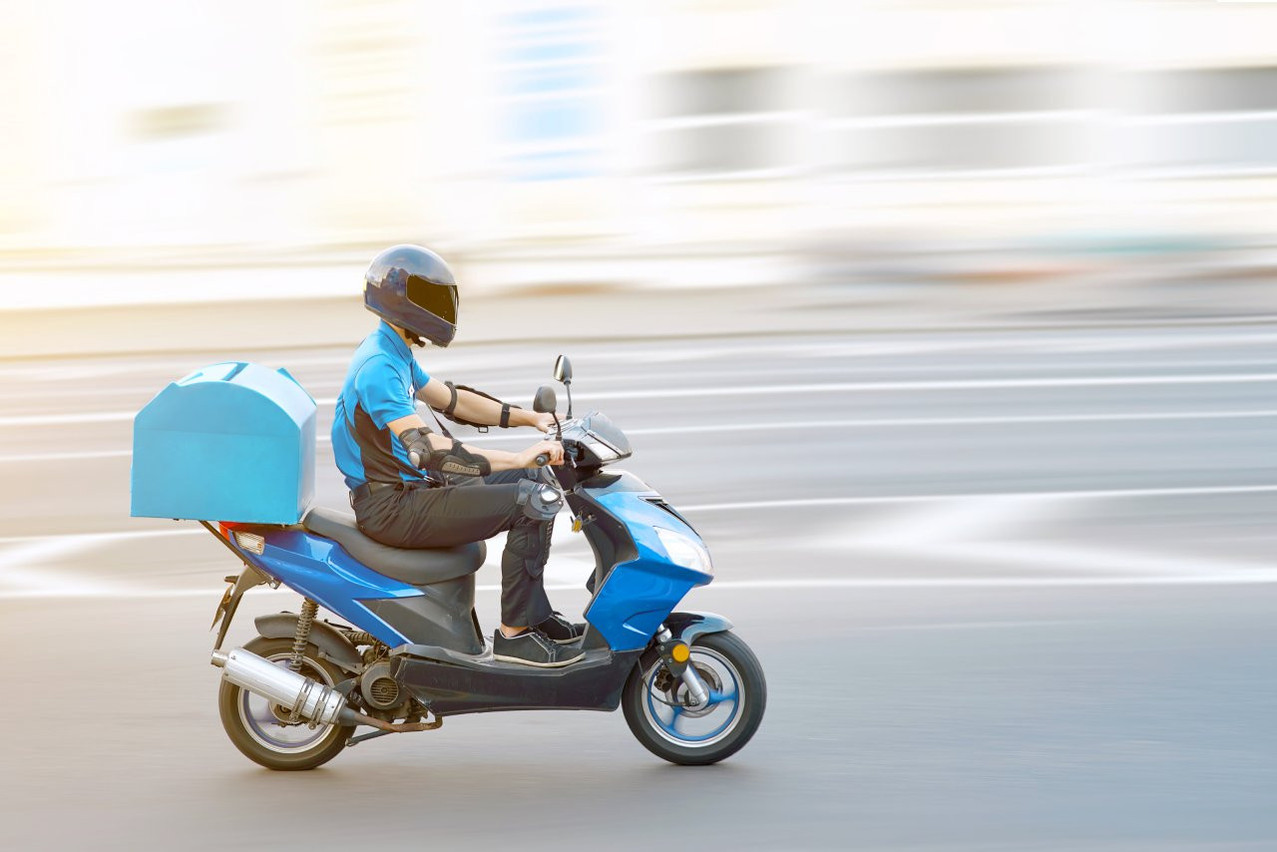
Bicycles going the wrong way on cycle paths. Traffic lights ignored, pedestrian zones ignored. Scooters slaloming headlong through traffic. Smartphones hooked to the handlebars of bicycles that hold the attention of the rider in the saddle more surely than the traffic conditions ahead. A non-exhaustive list…
“In recent months, there have been numerous reports of risky behaviour by delivery drivers… often under time pressure,” stated MP 

The head elsewhere
In support of this point, Sehovic cites a 2022 study by the European Transport Safety Council (ETSC) which concludes that “gig economy delivery drivers have a significantly higher risk of accident than other professional road users, due to precarious working conditions, time pressures and a lack of road safety training.”
Accessible online, this survey conducted by University College London (UCL) mentions that “self-employed delivery drivers are more likely to report that time pressure from their employer causes them to speed (56% compared to 39%) or run red lights (21% compared to 12%). Moreover, “they are also more likely to be distracted by their phone, via which they accept assignments (57% versus 21%),” reports theUCL.
No bikes or scooters at Wedely
What do the main people involved think? “We actively discourage dangerous driving. Safety comes first,” says Wolt Luxembourg’s head of PR & communications, Christian Kamhaug. The company’s delivery drivers are either self-employed or employees of fleet companies.
When asked about the risks taken on a bike or scooter, the executive from the Scandinavian platform--which arrived in Luxembourg in early 2024--maintains that “the messages in the app and training materials clearly emphasise that no rewards are given for risky and reckless behaviour, and that delays are understandable when safety is at stake.”
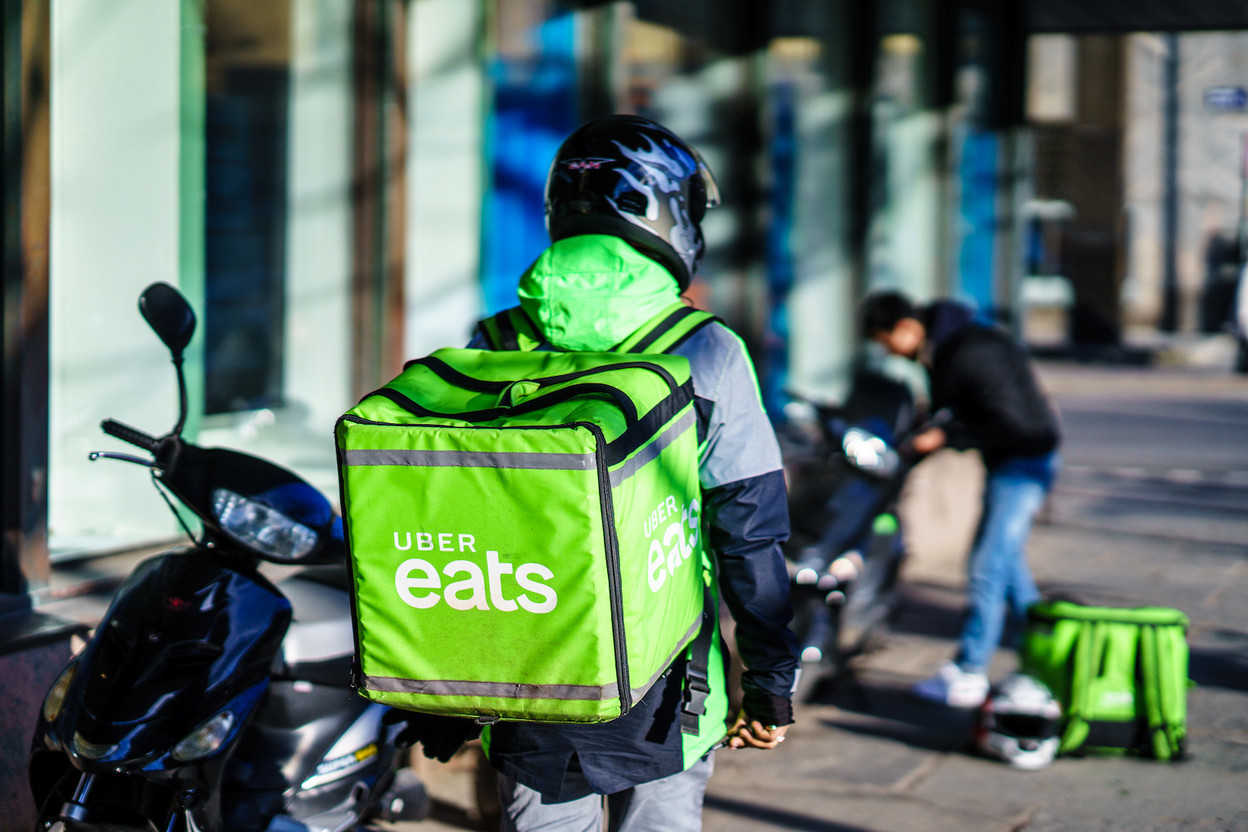
For its part, Wedely says it is “fundamental to clarify that [the chain] works exclusively with independent delivery companies and self-employed people who use motor vehicles with a valid driving licence (motorbikes, cars and vans). We do not work with delivery drivers who use bicycles, electric scooters or similar means of transport. The presence of boxes with our brand does not necessarily indicate that a delivery is being made for our platform,” says managing director and co-founder, Emanuele Chichi.
Wolt “does not rate on speed”
Wolt’s Kamhaug assures that “the platform does not offer any incentives that would push delivery drivers to prioritise speed over safety.” “Our algorithms take account of real conditions, such as traffic or weather, and adjust delivery expectations accordingly,” he explains. “Delivery drivers are not assessed on the speed of their deliveries. Runs are allocated to the person closest to the restaurant, depending on the mode of transport.”
While Wolt refuses to “publicly disclose data specific to the platform,” the chain states that “the number of accidents or incidents reported in Luxembourg remains relatively low.”
All new delivery staff have to go through an induction programme before they can start.

At Wedely, “regarding our motorised partners, we have not received any reports of incidents or incorrect behaviour,” says Chichi. “As our employees hold driving licences, they have already received the full training on traffic rules required by Luxembourg law. Our operating system is also designed to guarantee maximum autonomy: there are no bonuses, evaluation systems or algorithms to encourage speed at the expense of safety. Each partner manages its own deliveries according to the times it deems appropriate and safe, with no time pressure from us.”
“Safety first”
“Compliance with the highway code and parking regulations is mandatory. Any failure to do so may result in termination of the contract between the delivery driver and Wolt,” explains Kamhaug, who points out that Wolt “provides all partner delivery drivers with safety instructions and educational material.” He points out: “These include good practices in urban environments, such as the use of cycle lanes, respect for the highway code and safe delivery behaviour.”
“All new delivery drivers have to complete an induction programme before they can start. This programme covers road safety, delivery routines and the rules for using the application. We are constantly seeking to improve the safety of couriers using our platform, in particular through access to online training modules and practical guides, awareness campaigns and reminders via the app, and the collection of courier feedback to identify risk areas,” concludes Kamhaug. Via the app’s chat function, a dedicated email address and an online alert channel, Wolt is encouraging users who witness “non-compliant behaviour” to report it.
The same tone applies at Wedely. “We believe that safety should always come first, regardless of the type of vehicle used,” says co-founder Chichi.
All around cooperation
In his question to minister Backes, MP Sehovic asks whether “the government plans to launch specific information or awareness campaigns, in collaboration with the municipalities and platforms concerned, to ensure compliance with the highway code and prevent dangerous behaviour.”
Each operator has its own specific features and its own operating model, which, in our case, differs significantly from that of major international platforms

“We are already in regular contact with the local Luxembourg authorities and are ready to intensify these collaborations,” Chichi notes. “Wedely has been operating in Luxembourg for almost 10 years as a local company, having grown up with the area and its high standards of quality and safety. Our approach reflects the values of the Luxembourg community, with a particular focus on quality of service and respect for all those involved. We understand that in the public debate it is natural to make generalisations about the delivery sector, but it is important to emphasise that each operator has its own specificities and its own operating model, which, in our case, is significantly different from that of major international platforms. Although we operate with a model that by its nature excludes the issues raised in the parliamentary question, we fully understand the importance of the road safety debate.”
“Where possible, we work with the relevant authorities to promote greater awareness of traffic rules,” says Wolt, for its part. “We are also open to working with local authorities to improve infrastructure and road safety in urban areas. We see ourselves as a full player in the towns and cities in which we operate, and are ready to cooperate with all stakeholders to improve safety for all.”
This article was originally published in French.