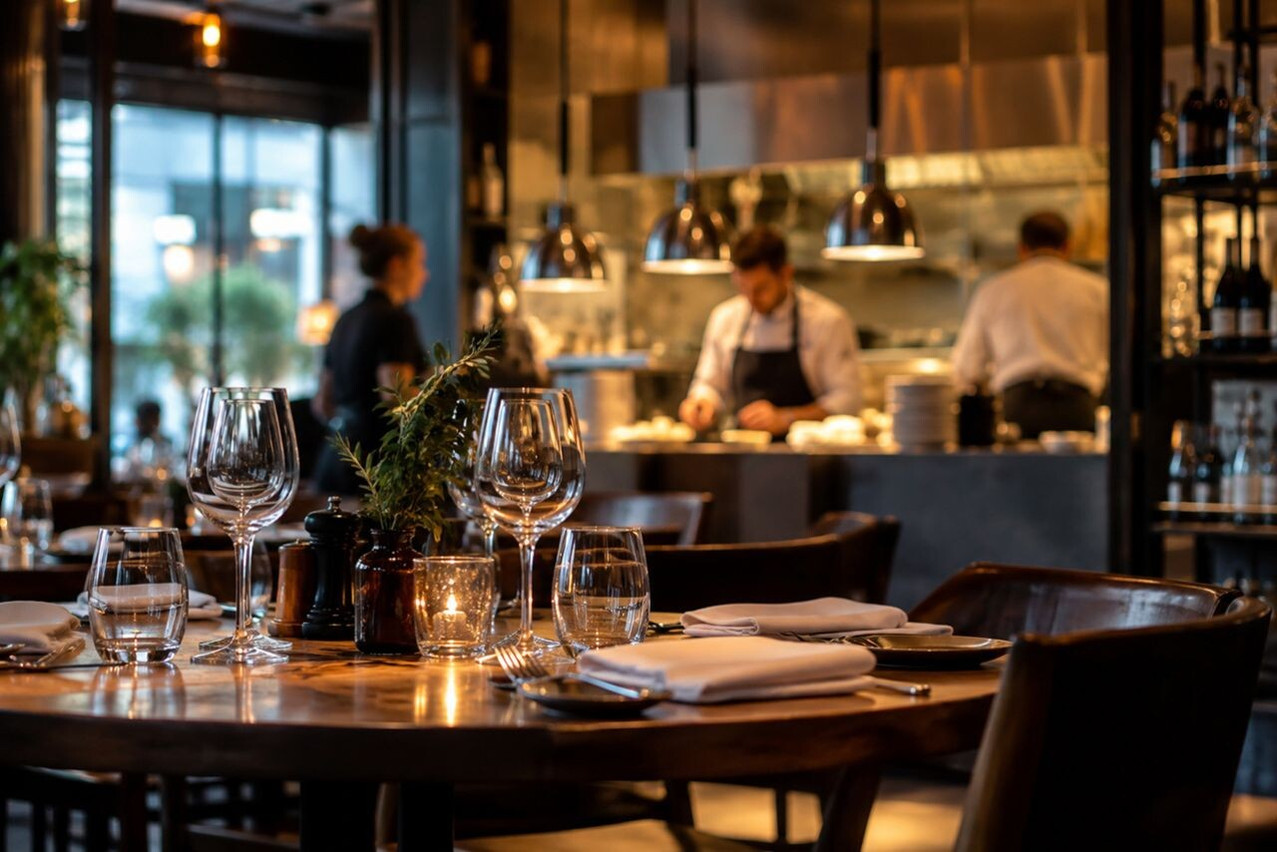
For several years now, the hospitality sector has been described using the same terms: labour shortages, inflation, rising costs, constraints, bankruptcies. All of these describe a reality. None of these, on its own, explains what is actually happening. For the hospitality sector is not merely going through a difficult period. It is undergoing a fundamental shift in its business model.
Price isn’t the whole story
When a customer looks at the price of a dish, they naturally compare it with what they find on their plate. This is a logical reaction. The comparison, however, is incomplete.
A restaurant does not simply sell processed ingredients. It draws on staff, skills, premises, equipment, energy and hours of preparation even before the first customer takes a seat.
Above all, its operations are governed by a simple constraint: demand is concentrated over just a few hours, whilst the company has to organise a whole day’s work.
At midday, you have to be ready. In the evening, too. In between, the workload doesn’t disappear. This reality partly explains the split shifts, recruitment pressures and a way of organising work that is becoming increasingly difficult to reconcile with employees’ legitimate expectations.
And any unused capacity is wasted. A table that is empty today cannot be set aside for tomorrow. In the hospitality industry, time is a perishable commodity.
From price to value
That does not mean that every price increase is justified. Customers are right to compare, weigh up their options and demand an experience that matches what they are paying for.
That is precisely where the entrepreneur’s work begins.
In a more cost-intensive environment, the solution cannot be based solely on pricing. It requires more coherent service plans, better-managed processes, a more intelligent organisation of work, technologies selected for their genuine utility, and a positioning that is clear enough for the customer to understand the value on offer.
So the real question is no longer simply: how much does a restaurant cost?
It becomes: what value does it create, and how is that value perceived?
Making the restaurant of the future viable
Catering will, by its very nature, remain a profoundly human activity. It is precisely this that limits its standardisation – and that is what gives it its value.
Technology can streamline bookings, anticipate purchases, simplify administrative tasks or improve scheduling. It can boost productivity. However, it cannot replace a warm welcome, attentive service, expert cooking, or that ability to turn a meal into an experience one would like to repeat.
The debate on prices will continue. It is a legitimate one. But it will remain incomplete as long as we do not also discuss organisation, productivity and value creation.
The aim is not to preserve the restaurant of the past. It is to ensure the viability of the restaurant of the future.
This promotional article was written by Horesca as part of the company's membership with the Paperjam Club. If you would like to become a member of the Club, please contact us at club@paperjam.lu.