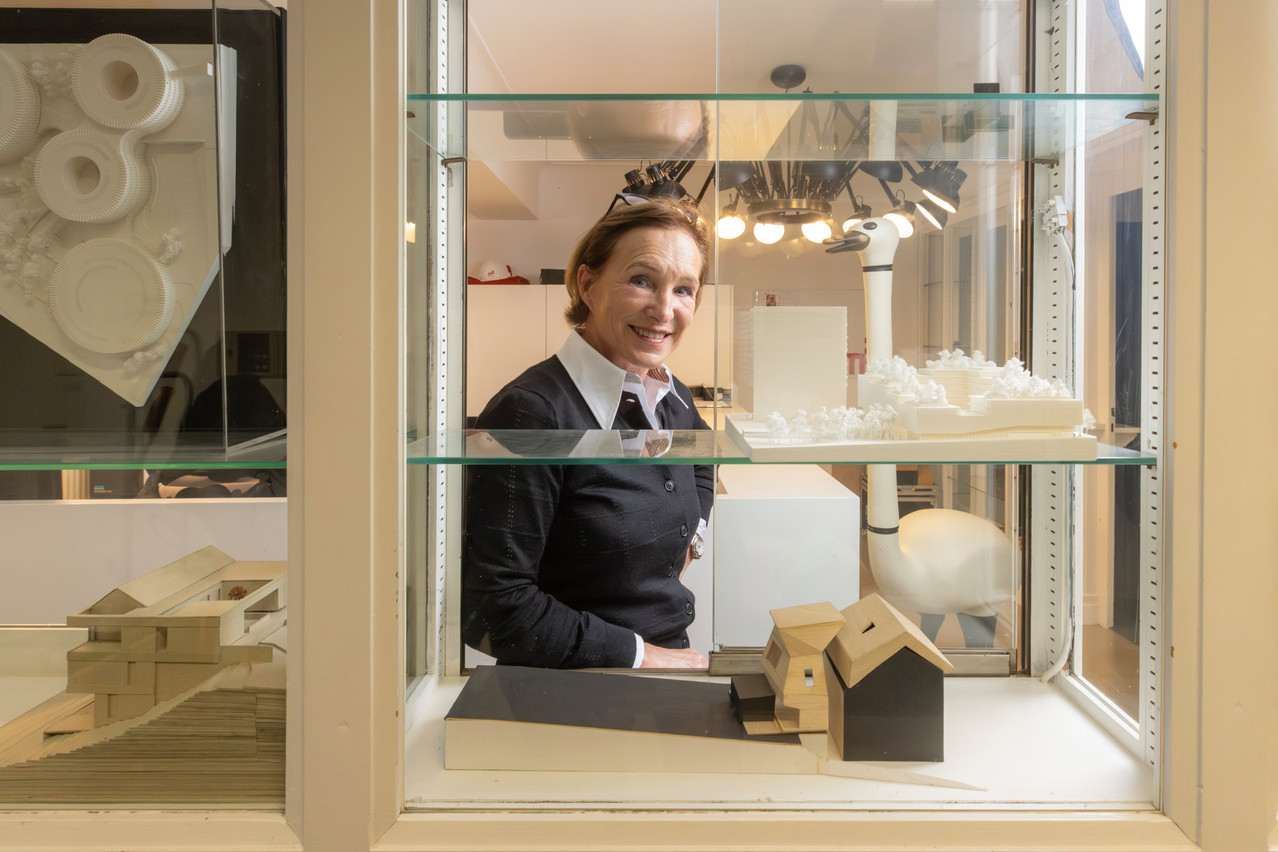
To our readers: we have decided to republish this interview with Marie Lucas (M3 Architectes), an architect who contributed to the evolution of architectural quality in Luxembourg.
Céline Coubray: How did M3 Architectes come into being?


Who were your first clients?
We had to be able to produce our first work, the one that would lead to the others. Some projects were entrusted to us by people we knew during our apprenticeship, who put their trust in us. Then we were able to access public commissions, initially for small projects. 20 or 30 years ago, you could still apply for architectural competitions. We grabbed this opportunity by the handful and jumped on the bandwagon. Fortunately, the small projects we have skilfully designed and developed, the competitions we have won and lost, and the confidence of a few clients, all point to a continuing influx of work to be carried out as a team.
And among these orders were several houses.
These are special orders, because the clients who place their trust in us will be living in our architecture, with a multitude of details to look after. It's a scale that we still like very much, and it allows for very dynamic contact with the client. Here, too, you need breath, stamina and rigour, so as not to lose the thread of the idea behind the concept.
Your first major project was the Rehazenter in Kirchberg. It was quite a daring commission, wasn't it?
The assignment was extremely comprehensive. In this project, everything was programmed, discussed, designed, ordered and handed over to the architect. And, of course, a building of this scale calls for increased collaboration with the engineers. You can't do architecture - and above all you can't build it - without taking an interest in the materials and broadening the scope of your skills. We hadn't built a functional re-education centre before the Rehazenter, just as we didn't have a hotel reference in the name of M3 Architects before building and transforming several of them. But when the opportunity arises, you have to go for it, push back the limits that others will soon set before you again.
Even so, this is often a prerequisite for winning public contracts...
Yes, and that's why, in these very restrictive situations, we have to work with other designers, architects, planners and engineers from other professions, in order to be relevant in our responses to the market. Within the agency too, we see M3 as a space that can accommodate different skills and personalities, who recognise both their limitations and their talents. You can't excel at everything you do. The key is to share goals and enthusiasm, to achieve at least one goal on each project. Because you need a minimum of satisfaction and pleasure from the work to withstand the challenges of everyday life, the worst of which is mediocrity.
Have you developed a working method?
You can't do architecture without a context, and every programme is a challenge. There is no such thing as a run-of-the-mill project. Workshops, storage halls and more technical programmes are all projects that have to be tackled head-on, questions that have to be answered, trade-offs that have to be made.
At Luca, the architecture foundation, I recently heard Jean-Christophe Quinton remind us that we can still and always act with optimism, because we have our resources as architects, characterised by the three cultures that drive us: the culture of action, the culture of otherness and the disciplinary culture.
But you still have to get your ideas across...
On a very concrete, non-speculative project, a smaller group of people will be able to agree more quickly on the place to be given to the added value provided by a massing, a material, a technique, an opening onto the public space. But on larger projects, the sheer number of players involved and the stakes involved in terms of risk and investment sometimes leave the architect, who is often at the end of the chain, without a voice and without resources. And yet this is the moment when he is asked to 'speak' loudest, by delivering images, because you can't talk architecture with an Excel spreadsheet.
You can't talk architecture with an Excel spreadsheet, but you can't talk architecture by just delivering pretty pictures.
It's obvious that in order to involve, federate and even enthuse, we need images that illustrate the ideas in their context, make them understandable and validate them. But we can and must ask ourselves whether speaking through images, with the associated narrative, or 'storytelling', is our only future as architects. Should involving and enthusing our customers involve a viral image, posted online on as many networks as possible? Where do the lies begin? For our team, the objective remains to be able to build what we design, right to the end, with all the pitfalls and potential liabilities that entails. The image, the initial promise, must contain its own chances of realisation.
There is an urgent need to create a new scale of values and bodies

Because what the images don't say are all the economic, construction and regulatory constraints.
Of course they do. And we regularly witness absurd situations as a result of ideological or administrative compartmentalisation. The abuse of regulations, certifications, approvals and labels undermines society's confidence in the rule of law, and the diversity of interpretations contributes to this. There is an urgent need to create a new scale of values and bodies capable of assessing them in complete political independence, particularly where housing programmes are concerned, which are so eagerly awaited but so slow to see the light of day.
Do you use artificial intelligence to help you in your work?
We've recently learnt to use artificial intelligence filters to test our renderings, to find out what our interlocutors and viewers might like. It's like having an external opinion, which is sometimes quite funny... and therefore reassuring in terms of our own mastery of the site, the issues and the creative proposals. In reality, what we enjoy most is seeing how the machine quickly 'spices up' our creations, always in a slightly similar way.
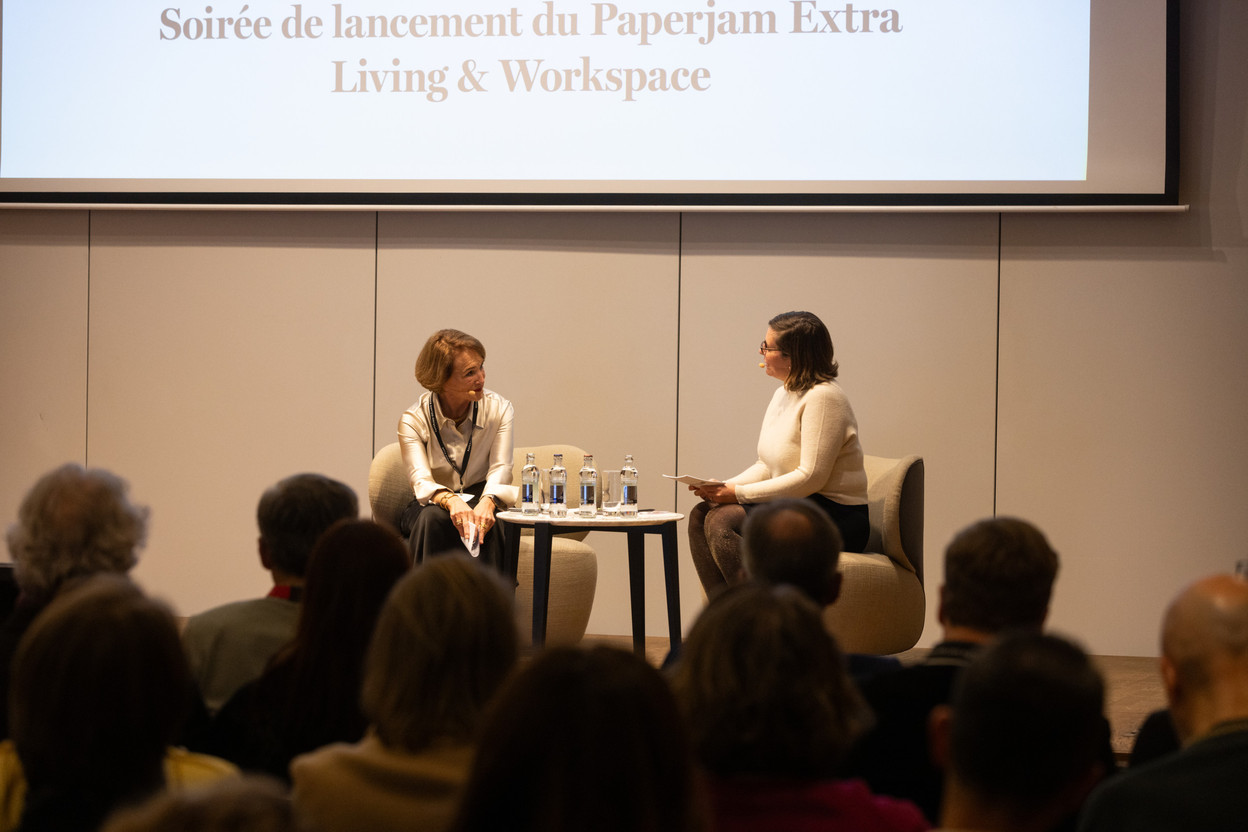
This interview was written for the Living&Workspace supplement to the December 2024 print edition of Paperjam, published on 20 November. Click here to subscribe to the magazine.
Is your company a member of the Paperjam Club? You can request an individual subscription delivered directly to your home or office. Let us know via club@paperjam.lu