
Many investors stressed that the growing dominance of a handful of large technology companies in the US stock market—and increasingly in other markets—has heightened risk and justifies reducing equity exposure. In The Fallacy of Concentration, a study published in the Financial Analysts Journal, Mark Kritzman and David Turkington argued that although market concentration has reached historically high levels, it does not necessarily imply greater risk.
Measuring concentration requires more than weights
The authors first showed that the US equity market has become significantly more concentrated. Using the “effective number of stocks” – a measure derived from the Herfindahl–Hirschman Index – they show that the S&P 500 is currently more concentrated than at any point since the late 1990s.
This trend is driven both by rising sector concentration, particularly in technology, and by increasing concentration within sectors themselves. Historical industry-level data extending back to 1926 reveal that today’s concentration is high but not unprecedented.
Diane Pierret, assistant professor of finance at the University of Luxembourg, argued that the analysis would have been stronger had it incorporated correlations between assets alongside concentration and volatility measures, as highly correlated holdings may provide fewer diversification benefits than their number suggests.
She noted that assets are increasingly correlated and that once “we have a correlation of one between the returns of two assets, it's as if we're investing in a single asset.” When the correlation between two assets reaches one, investors may be better off allocating entirely to the less risky asset, as diversification benefits disappear.
Buy-and-hold beats concentration timing
The central question is whether concentration increases risk. To test this, the authors constructed a “dynamic” strategy that reduces equity exposure when concentration rises and increases exposure when concentration falls (see Chart 1). The results are striking: over the long term, this strategy generated lower returns and higher volatility than a simple buy-and-hold approach.
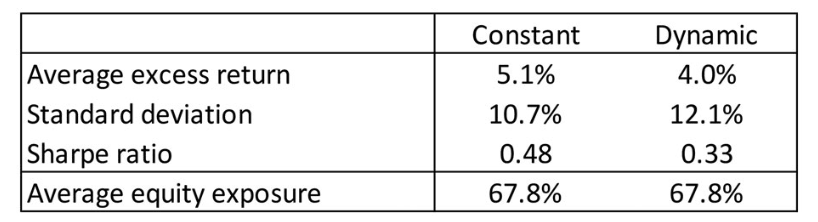
Chart 1: Return and risk of constant and dynamic strategies: January 1936 to June 2025. Source: Mark Kritzman & David Turkington (2026) The Fallacy of Concentration, Financial Analysts Journal, 82:2, 8-18, DOI: 10.1080/0015198X.2026.2640988
In the US market, the buy-and-hold strategy (“constant”) produced more than twice the wealth of the concentration-aware strategy while also exhibiting lower risk. Similar results were observed across major international markets, where attempts to reduce exposure in response to concentration generally harmed performance or produced negligible benefits (see Chart 2).
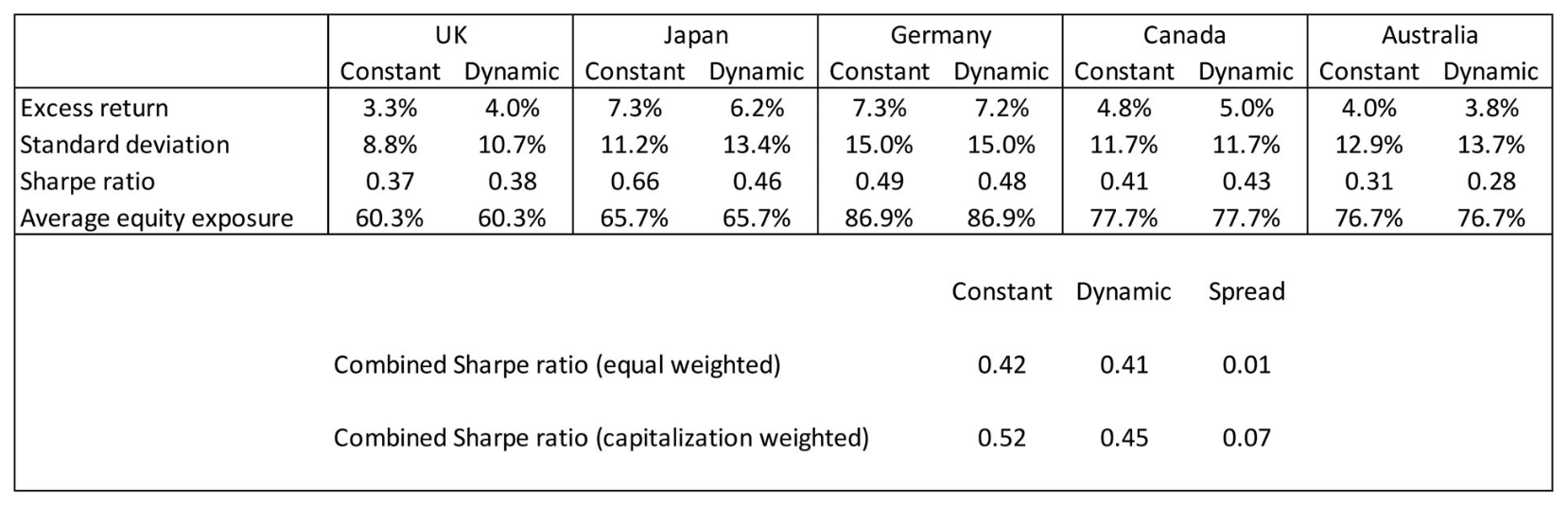
Chart 2; Global evidence of the effect of countering concentration: January 1983 to June 2025. Source: Mark Kritzman & David Turkington (2026) The Fallacy of Concentration, Financial Analysts Journal, 82:2, 8-18, DOI: 10.1080/0015198X.2026.2640988
ETFs may be driving market concentration
While the authors focused primarily on concentration metrics, Pierret argued that market flows deserve greater attention. She argued that passive ETFs may help explain the outperformance of large firms.
Because index funds allocate capital according to market capitalization weights, inflows are directed disproportionately toward mega-cap stocks, potentially creating a feedback loop that further increases their valuations.
Rethinking portfolio concentration risk
For wealth managers, the more important risk, when advising clients or managing discretionary portfolios, is not concentration itself but how it is measured, argued Pierret. Kritzman and Turkington showed that reducing exposure simply because a portfolio appears concentrated can lead to poorer outcomes.
A sound decision should consider not only portfolio weights but also asset volatility and correlations. Concentration assessed solely by holdings may be misleading and result in unnecessary reallocations with potentially negative outcomes.
Size, a greater risk driver than concentration
The study suggests firm size may be a more important determinant of risk than concentration. Contrary to the intuition that concentration in a few firms increases risk, the largest stocks generally exhibit lower volatility, a lower kurtosis – a measure of the likelihood of extreme outcomes -- and more favourable downside characteristics than smaller stocks.
However, Pierret noted that large vs. small companies’ analysis did report only on risk factors but provided no critical insights on performance and risk-adjusted performance, as measured by metrics such as the Sharpe ratio. The paper confirms that large-cap stocks tend to be less risky than small caps, but this is hardly a new insight. It is a well-established finding in finance, documented and widely recognised since the 1980s.
The study also found that portfolios concentrated in a handful of large-cap stocks exhibited risk characteristics similar to those of more diversified portfolios of smaller companies, even when both had the same aggregate market capitalization.
Big companies have built-in risk advantages
The authors offered several fundamental explanations for these findings. Large companies tend to be less risky because they are diversified across products, customers and geographies. They possess greater financial flexibility, superior access to capital, stronger governance structures and more experienced management teams. These characteristics offset any additional risk that might arise from concentration.
Concentration is not a market failure
The authors also advanced several conceptual arguments. Concentration is a natural consequence of successful growth and follows the power-law dynamics observed in many economic systems. The law of one price implies that a large company generating a given stream of cash flows is no riskier than a collection of smaller companies producing the same cash flows. Pierret said this helps explain why large-cap stocks tend to exhibit lower volatility.
Moreover, the efficient market hypothesis and the capital asset pricing model suggest that investors should hold the market portfolio as it exists rather than alter allocations simply because market weights have become concentrated.
Investors need a better risk framework
The authors concluded that investors should resist the temptation to treat concentration as synonymous with risk. While the US stock market is undeniably more concentrated than in recent decades, the authors argue that there is little empirical or theoretical evidence that this concentration makes the market inherently riskier.
Their final observation encapsulates the argument: “A company is a single legal unit. And a company is a single accounting unit. But a company is not a single economic unit. Therefore, company concentration does not equate to economic concentration.”
What about the Magnificent Seven?
Asked whether investors should overweight the Magnificent Seven relative to the S&P 500 following the group's year-to-date underperformance, Pierret said it was impossible to answer without considering three key variables: asset weights, volatility and correlations among the stocks.