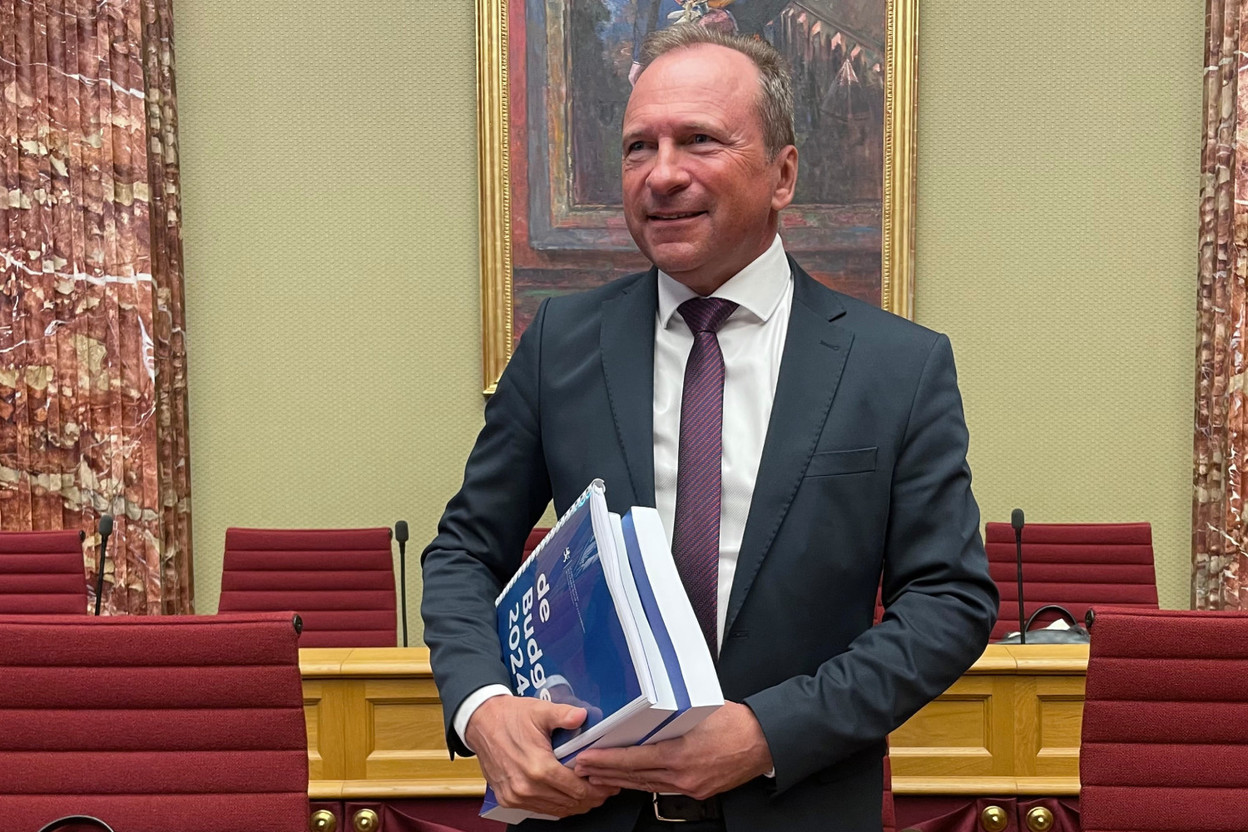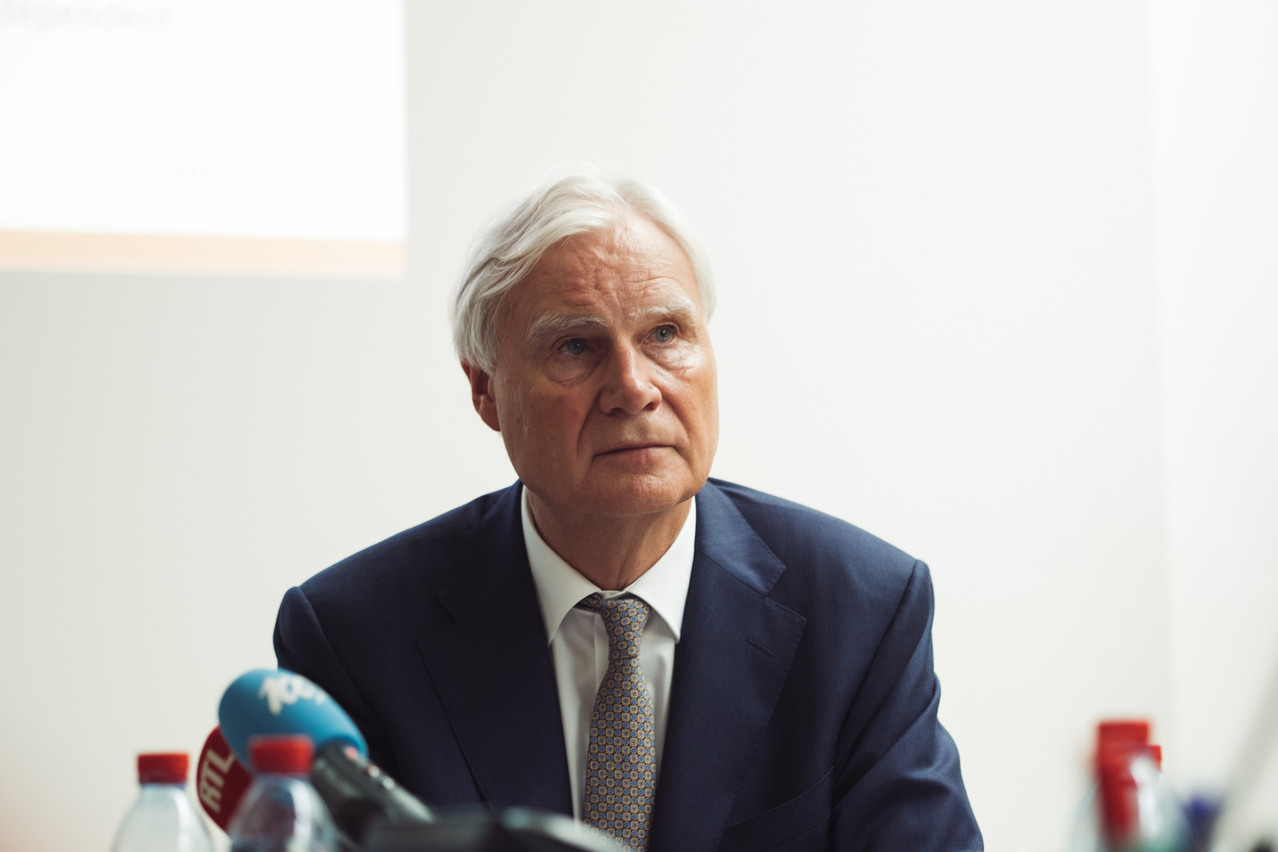
The National Council of Public Finances (CNFP) is the arbiter of elegance when it comes to budgetary governance. And, based on the latest public finance planning bill (PLPFP 2023-2027), it sees no exuberance in the government’s medium-term budgetary policy, i.e., up to 2027.
Which has not stopped the watchdog from worrying. “According to the figures in the PLPFP 2023-2027, the nominal balance of general government will remain negative throughout the period in question,” stated 
Bausch pointed to the climate in which Luxembourg is operating as an aggravating factor: “economic slowdown, persistently high inflation and tighter financial conditions”. This is compounded by a “structural” weakness in the economy, “the vulnerability of the financial sector to cyclical fluctuations,” and the crisis in the housing and construction sectors.
Budget balance still under control
“The situation is not dramatic, however,” Bausch added. While the medium-term objective of a nominal general government balance of 0% of GDP will no longer be observed from 2025 onwards, the gap will be limited to 0.32% of GDP. The nominal general government balance is expected to be -€987m (-1.2% of GDP) in 2024 and to stabilise in the medium term at -0.9% of GDP (or €921m). The central government deficit--€1.9bn in 2024 and €1.3bn in 2027--is expected to persist as a result of the measures taken by the government, namely the solidarity and protection measures taken in the wake of the covid pandemic and the war in Ukraine and, more recently, the measures taken by the new government to reduce the tax burden and support the construction and housing sector.
For the rest, the local government balance will remain in surplus until 2027, while the social security surplus will continue to widen to around €1bn by 2027. “The deterioration in the social security balance is an important factor to consider when assessing the long-term sustainability of public finances”, the CNFP said on Wednesday. If the social security balance remains positive, it will fall from a surplus of €1.055bn in 2023 to €261m in 2027.
Read also
Better spending control
These are fair balances, but they “are less favourable than the balances recorded in previous years,” pointed out Bausch. “However, the CNFP has already noted that historically, budget balances have systematically underestimated”.
On a positive note, the CNFP sees a balance developing between revenue and expenditure, with the former rising by an average of 5% against 4% for the latter by 2027. This low average rate of growth in expenditure “presupposes that measures will be taken to curb the downward rigidity of current expenditure”.
In passing, the budget watchdog welcomed the introduction for the first time in the 2023-2027 PLPFP of maximum amounts for central government expenditure. Bausch noted that this satisfies a demand that has been made for more than 10 years. “This new provision will enable the government to act to curb the downward rigidity of current expenditure, as recently announced by the finance minister. In addition, the CNFP will be able to assess compliance with the maximum amounts in future PLPFPs, so that any overspending will have to be explained.”
Sustainable debt
If the Frieden government refuses to increase the tax burden, its way out if its fiscal policy gamble fails would be to borrow. This is still possible looking at the figures alone.
On the debt front, even with an upward slope--from 2019 to 2023, the debt increased by €6.4bn to €22.2bn, or 26.5% of GDP, and it is expected to grow over the period 2024-2027 by €4.3bn to €26.5bn, or 27.3% of GDP--Bausch does not appear to be particularly worried. He weighed up the amount of assets held by public administrations, i.e., €29bn--theoretical financial assets that are largely illiquid, he admitted, with the exception of the stakes held in BNP Paribas and in the banking group’s Luxembourg subsidiary, BGL--against the assets of the main public pension fund FDC--around €24bn.
“While the current situation in terms of net public debt can still be described as relatively good, the challenges in the medium and long term will entail additional costs, such as those associated with an ageing population, housing, the energy and digital transition, mobility and defence.”
Originally published in French by Paperjam and translated for Delano