The property market appears to have left the period of severe turbulence behind it, although it has not yet fully regained its balance. Prices are rising again for older houses, whilst prices for older flats continue to adjust and the new-build market is showing the first signs of stabilisation. At the same time, the rental market remains under pressure, driven by rents that continue to rise.
Published on 24 July, atHome’s quarterly study – based on listings published on its portal – provides a snapshot of a market that is now evolving at different speeds. Five key figures help to illustrate the main trends of the second quarter of 2026.
1. +2.7%: prices for older homes are on the rise again
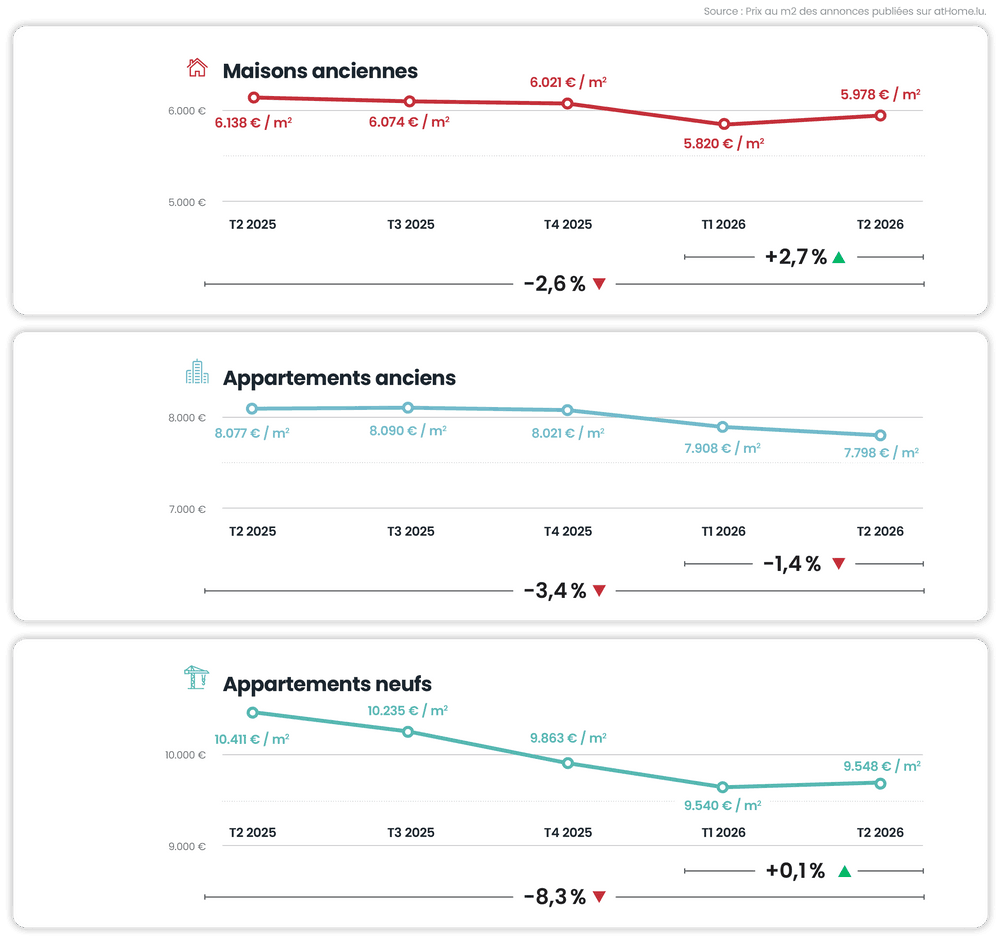
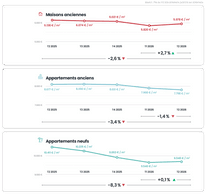
Listed prices for older homes have risen by 2.7% compared with the first quarter. This is the sharpest quarterly increase among the three categories analysed by atHome. The average price stands at €5,978 per square metre, compared with €7,798 for an older flat and €9,548 for a new-build flat.
This quarterly increase has not yet offset the year-on-year decline. Existing homes remain 2.6% cheaper than in the second quarter of 2025. Existing flats have seen an annual fall of 3.4%, whilst new flats have fallen by 8.3%. AtHome therefore points out that the various segments “continue to evolve according to distinct trends”.
2. +0.1%: prices for new-build properties have almost stopped falling quarter-on-quarter
New-build flats saw a 0.1% increase between the first and second quarters. Their average price rose from €9,540 to €9,548 per square metre. AtHome describes this trend as a ‘sign of stabilisation’ following several quarters of decline.
The annual figures, however, continue to show a downward trend. With a fall of 8.3% compared with the second quarter of 2025, new-build properties have seen the sharpest decline among the categories analysed. By way of comparison, prices for existing houses have fallen by 2.6% year-on-year, and those for existing flats by 3.4%.
3. +13.4%: house rents soar in a single quarter
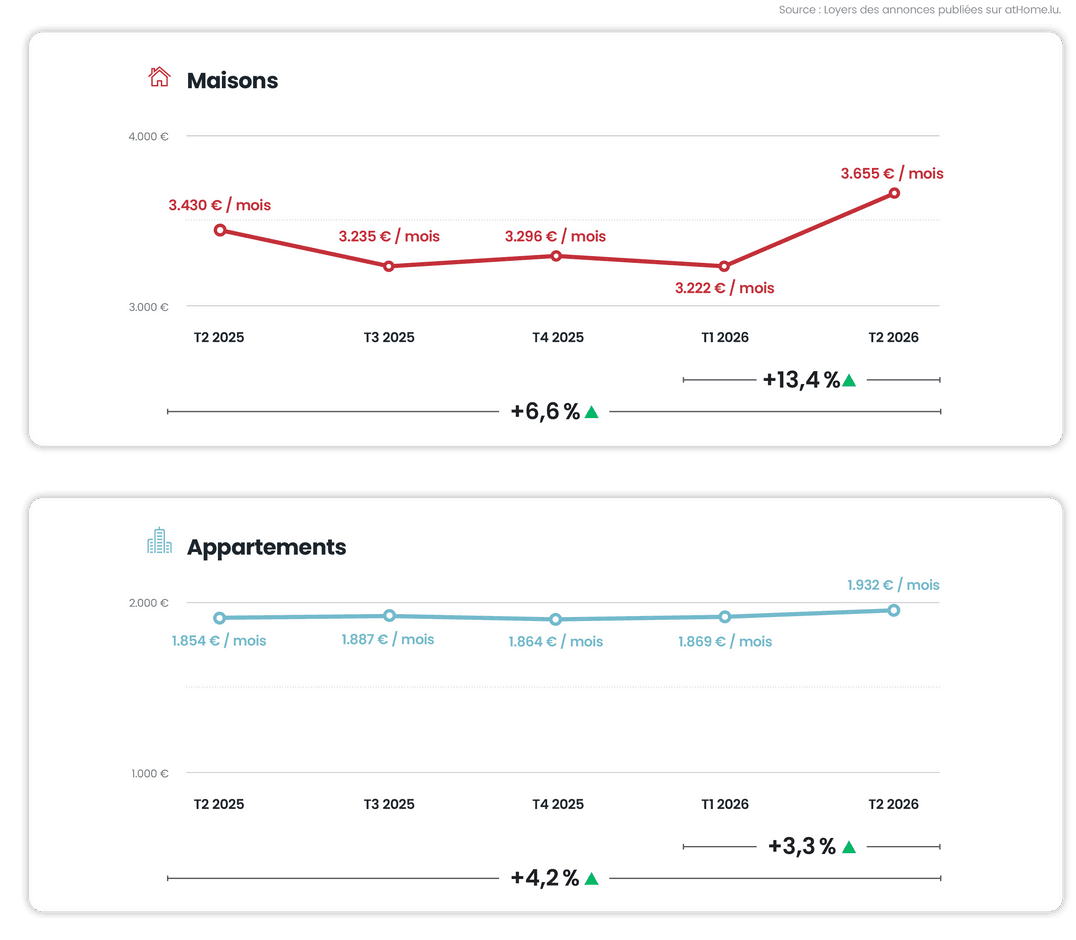
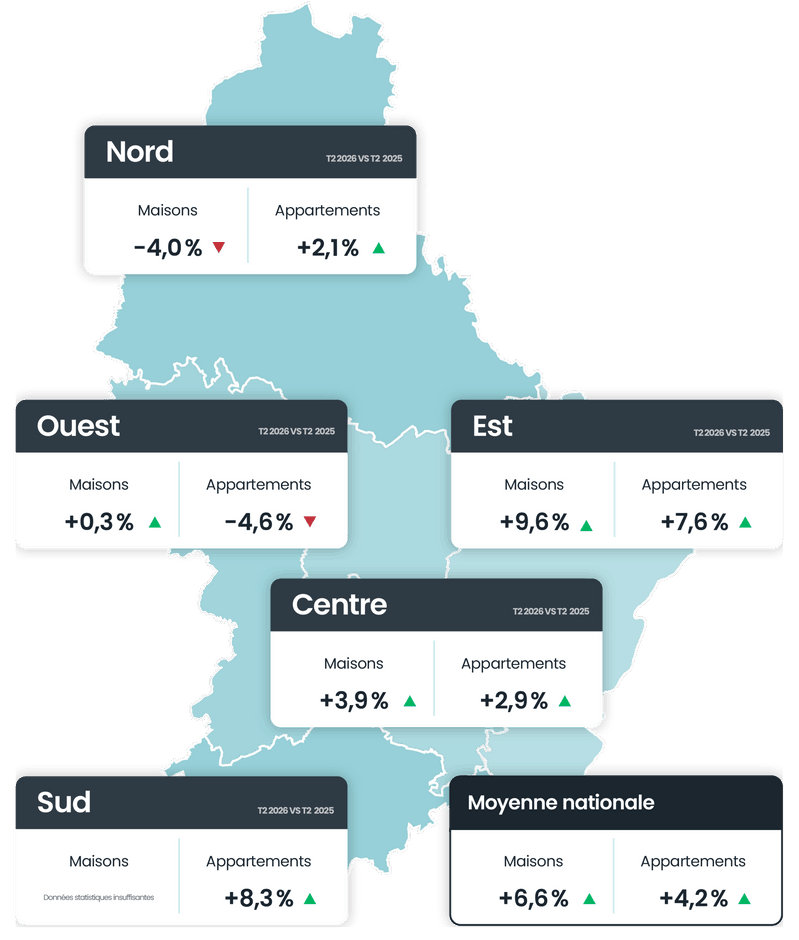
The sharpest rise identified in the study relates to house rentals. Asking rents have risen by 13.4% compared with the first quarter, reaching an average of €3,655 per month. The average rent for a flat stands at €1,932, following a quarterly increase of 3.3%.
This trend has continued over the past year, with a 6.6% rise for houses and a 4.2% rise for flats. AtHome believes that these developments show that “pressures remain on the rental market against a backdrop of sustained demand”.
4. +1.1%: the East stands out in the property sales market
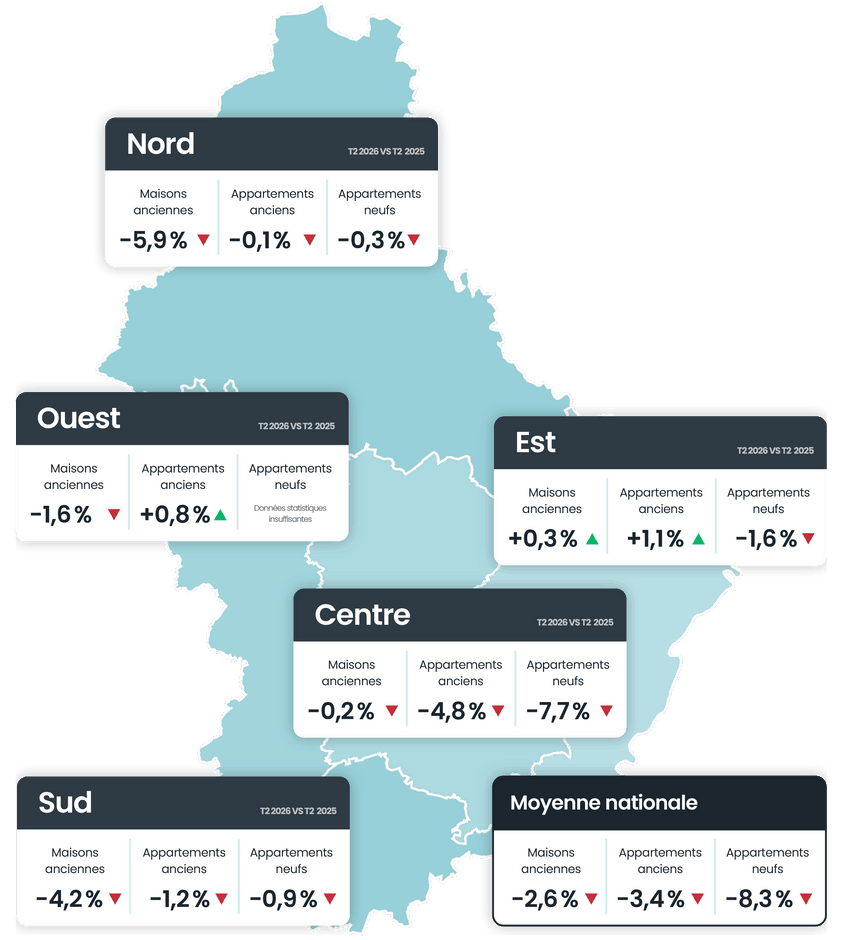
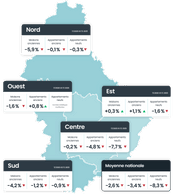
The East is the only region where prices for older houses and flats are rising simultaneously year-on-year. Older flats in the region have risen by 1.1%, whilst older houses have risen by 0.3%. New flats in the region, on the other hand, have fallen by 1.6%.
The North is showing a different trend. Prices for existing houses there have fallen by 5.9%, the sharpest regional decline for this category. In the Centre, existing flats have fallen by 4.8% and new flats by 7.7%. In the South, the falls amounted to 1.2% and 0.9% respectively.
Disparities are also evident in the rental market. Rents for houses have risen by 9.6% in the East, which has seen the highest increase for this type of property. The South leads the way for flats, with an increase of 8.3%. Conversely, rents have fallen by 4% for houses in the North and by 4.6% for flats in the West.
5. -8.3%: the new-build segment remains the one that has seen the sharpest year-on-year decline
The slight quarterly rise of 0.1% has not yet altered the annual trend for new-build properties. New flats cost on average 8.3% less than a year ago, representing the sharpest national fall among the categories analysed. This trend contrasts with the quarterly recovery in the market for existing houses and is fuelling questions about the pace of the recovery in residential construction.
Experts are talking about a ‘phase of normalisation’
Experts are observing a shift in the trend, though they do not portray the recovery as uniform. According to the managing director of Nexvia, 
According to him, rising interest rates are reducing households’ borrowing capacity and putting pressure on prices. He also cites moderate economic growth, international uncertainties and concerns about the impact of artificial intelligence on employment in Luxembourg as factors fuelling a wait-and-see attitude. Pierre Clément believes that the tax measures announced in July could support demand, particularly amongst first-time buyers.
The chief executive officer and managing director of Soludec, 
A recovery that does not put an end to the housing crisis
Julien Licheron, an economist at Liser and the Observatoire de l’habitat, believes that the market “appears to have moved beyond the most acute phase of the crisis”. He notes a recovery in transaction volumes, stabilising prices and improved financing conditions.
The economist warns, however, against confusing this trend with a resolution of the difficulties in accessing housing. “This return to normality must not, however, be confused with an end to the ‘housing crisis’,” he warns. In his view, “the pressures are not disappearing; they are simply shifting”. The recovery is based primarily on the existing housing stock, whilst new-builds are lagging behind.
The current low level of housing production could exacerbate tensions over the coming years. Julien Licheron has already observed that rents being asked in new tenancy agreements are rising faster than inflation. He believes that the crisis is becoming less apparent in the property sales market, but remains a factor in access to housing due to a shortage of supply.
A market survey conducted prior to the ‘Booster fir de Wunnengsbau’
The study sets out the market situation prior to the government’s announcement on 16 July of the ‘Booster fir de Wunnengsbau’. This package of measures is aimed, in particular, at supporting construction, investment in rental properties, home ownership and the development of affordable housing. AtHome states that its forthcoming studies will assess the “potential effects” of these measures on the market.