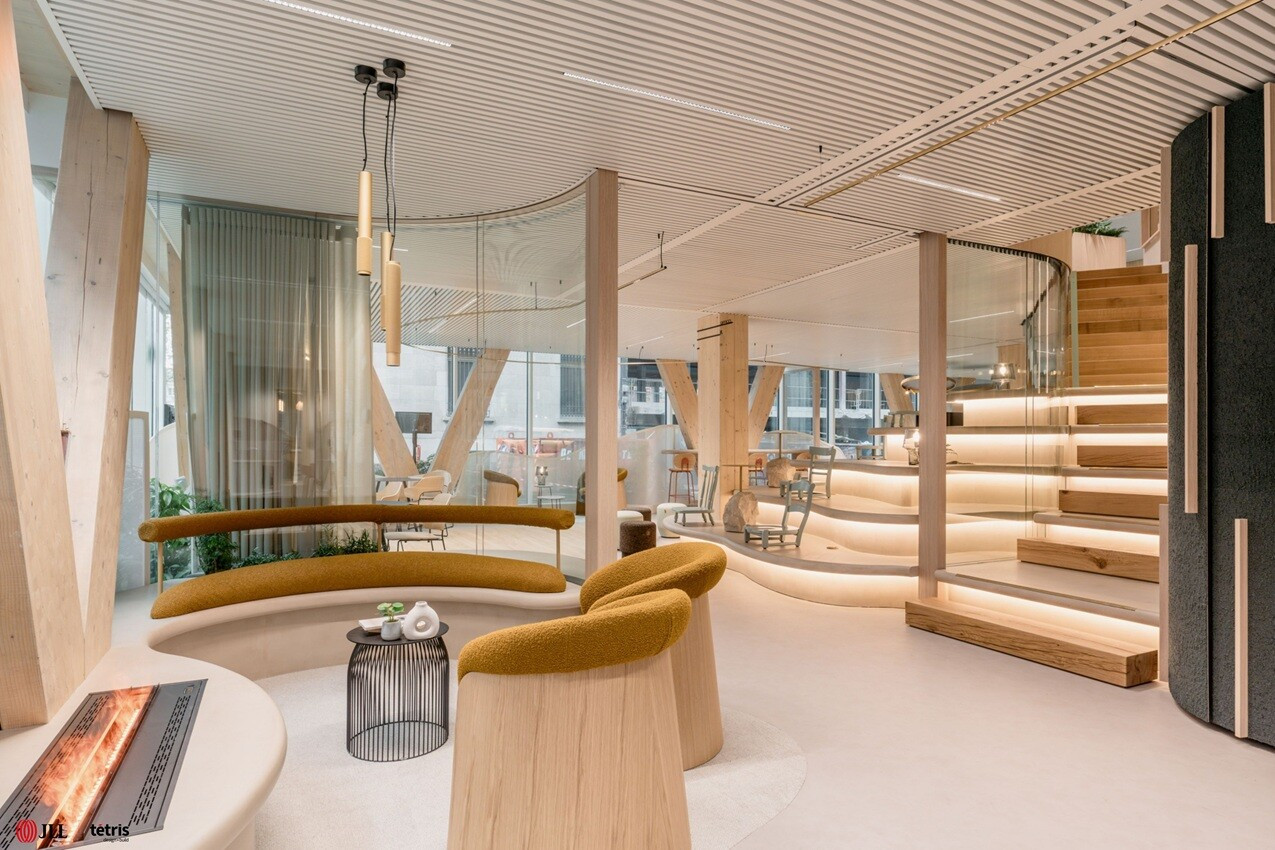
The paradox of commercial property: a strategic lever managed in silos
Property is one of the main cost drivers for businesses. Beyond the financial aspect, the working environment is a key factor in attracting talent, embodying corporate culture and stimulating innovation. However, the way in which these projects are managed can limit their full strategic potential.
A siloed approach, where expertise in strategy, leasing and construction is applied sequentially, creates disconnects. This fragmentation leads to friction, loss of information and inefficiency. The initial objectives become diluted, technical constraints are identified too late, and the overall vision struggles to materialise. In the era of hybrid working, this lack of fluidity is a barrier to performance.
The antidote to fragmentation: the single-team model
The solution is an integrated team model, where all areas of expertise collaborate from day one to foster an ongoing strategic dialogue. The needs analysis is data-driven, ensuring that real estate becomes a ‘competitive advantage’. This strategy then guides the selection of ‘the right space that works for your budget, your teams and your future’. The early involvement of project teams ensures a smooth execution with no surprises, as there is no disconnect between the terms of the lease and the reality of the construction.
A response to the challenges currently facing businesses
This integrated model is not merely a process optimisation; it provides a relevant response to the major challenges facing businesses today.
• Optimising a lease due to expire: Rather than simply renegotiating or seeking an alternative, an integrated team can provide a comprehensive recommendation that weighs up the financial, operational and strategic implications (relating to working practices, culture, etc.). This enables an informed decision to be made regarding the company’s future.
• The shift towards hybrid working: Adapting an office that has become inefficient is not simply a matter of removing workstations. It requires aligning property strategy (leases), design (creating an attractive destination) and technology to create an ecosystem that fosters collaboration and corporate culture.
• Optimising a multi-site portfolio: For companies managing multiple sites, an integrated approach enables the development of a comprehensive, data-driven strategy to reduce costs, improve space utilisation and align the entire portfolio with future objectives.
In short, integration transforms complex and fragmented management into a seamless and coordinated process. For businesses, this ensures that what was once a property-related constraint becomes a genuine driver of performance, capable of adapting to the challenges of both today and tomorrow.
For further information, please visit https://www.jll.com/en-belux/.
A full version of this article is also available in French.