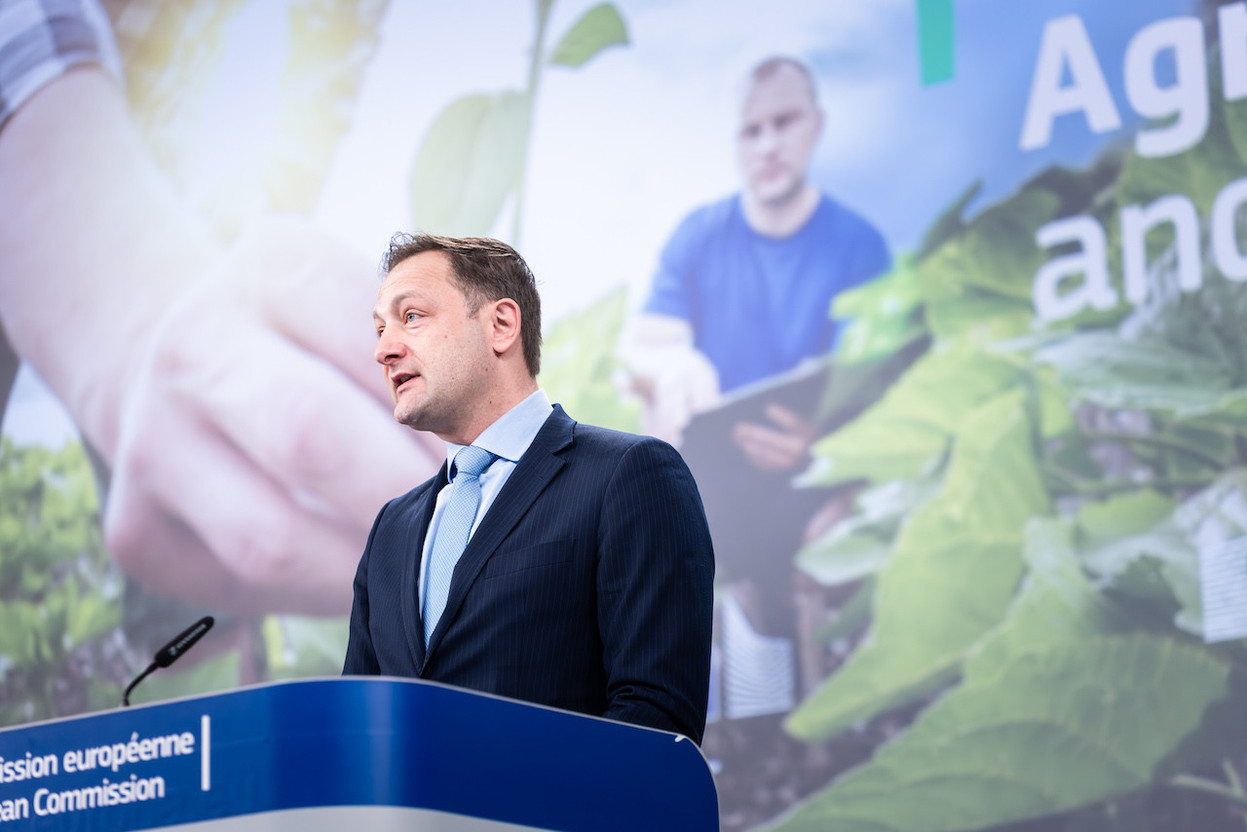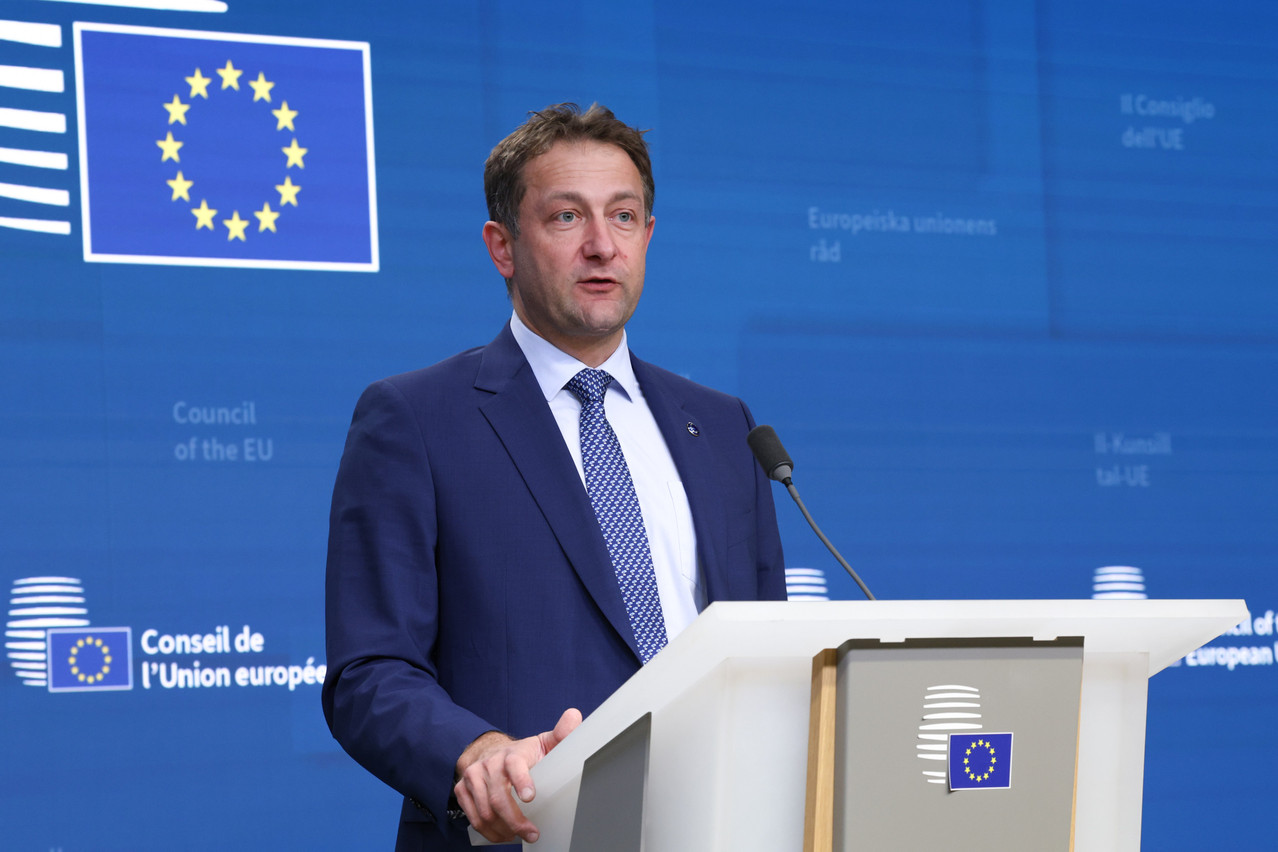
The meeting of the Agriculture Council of the European Union in Brussels on Monday did not produce any formal decisions, but it did reveal a growing gap between political communication and the transformations that the future post-2027 Common Agricultural Policy (CAP) could bring about. 
A few days ago, the European Commission published a draft of a new mechanism called "Dabis", for "Degressive Area-Based Income Support". This system would merge several current payments into a single payment per hectare, the amount of which would decrease above certain area thresholds. The principle is clear: a farm that exceeds certain thresholds would receive proportionately less than it does today. Martine Hansen explicitly estimated on Monday that almost 50% of young farmers in Luxembourg would be adversely affected by this approach. Several Member States have pointed out that degressivity could affect family farms that have had to expand in order to remain economically viable.
12% of farmers under the age of 40 only
This vulnerability is particularly marked among young farmers. Those who set up often do so on medium-sized or larger farms, due to the lack of available land in small areas and high investment costs. It is precisely these farms that cross the thresholds where degressivity would apply. On Monday, Hansen insisted on maintaining flat-rate aid for young people, but the European Commission's current proposal does not guarantee any budgetary reinforcement in their favour. At this stage, the European strategy for generational renewal is not accompanied by a clear obligation to increase the budgets earmarked for young farmers. European young farmers' organisations have already warned of a risk of contradiction between the political objectives and the financial structure.
This concern takes on particular significance in the light of recent statements by the European Commissioner for Agriculture, Christophe Hansen, who presented the "Strategy for Generational Renewal in Agriculture". In it, he points out that the average age of farmers in the EU is 57, and that only 12% are under 40, a situation he considers dangerous for European food security. He called on Member States to devote at least 6% of their CAP envelope to supporting young and new farmers, and announced the creation of a "starter pack" to facilitate setting up, with flat-rate aid of up to €300,000, investment, improved access to finance, and training and advice. He also stated that he wanted to target direct payments more effectively at young farmers. These commitments reflect an explicit political ambition, but their relationship with the future degressive mechanism and with the overall budget envelope has not yet been clarified, fuelling the reservations expressed by several delegations on Monday.
Another element addressed by the ministers on Monday, but in more general terms, concerns the simplification of the rules. The Commission's working documents include the idea of exempting farms of less than ten hectares from numerous controls. This is intended to reduce the administrative burden on the smallest structures, something that Martine Hansen has been supporting for several months as part of her plea for a more pragmatic CAP. But this simplification could accentuate the polarisation of the European agricultural sector: micro-farms would benefit from a significant reduction in constraints, while medium-sized family farms, which are often specialised and heavily invested, would remain subject to degressivity, environmental obligations and controls. In a country like Luxembourg, where the bulk of production is based precisely on these intermediate structures, this polarisation could become one of the main indirect effects of the reform.
Food security, an under-funded ambition
The Agriculture Council's discussions also showed that, despite the reservations expressed by several delegations on the calibration of degressivity and the need to take account of family farms or groups managed by several families - a point explicitly raised by Martine Hansen - the margin for political manoeuvre remains narrow. Going back on the central logic of Dabis would mean reopening the whole legislative proposal, which neither the timetable nor the budgetary balances make easy. The future financial framework of the European Union, in which the CAP becomes one of the components of a wider instrument, makes any substantial modification all the more difficult. The next Council meeting in December is likely to focus on technical adjustments, rather than a thorough overhaul of the logic of income support.
Luxembourg is not alone in its concerns. Austria, the Czech Republic and Belgium, as well as several Nordic countries, have all voiced similar concerns. On Monday, Martine Hansen also stressed the need to support European agricultural production, to preserve fair conditions of competition in trade with third countries and to take account of health, environmental and animal welfare standards in trade agreements. These positions are part of a broader framework in which food security is becoming a central argument, but in which the link between this objective and the CAP's financial tools is still uncertain.
In the coming months, the debate could refocus on degression thresholds, possible exemptions for family farms or compensatory mechanisms for young farmers. However, there is nothing to suggest that the European institutions are ready to call the basic architecture into question. For Luxembourg, the challenge is therefore not just to obtain a few technical adjustments, but to anticipate a redistribution of aid that could weigh disproportionately on the productive heart of its agriculture.