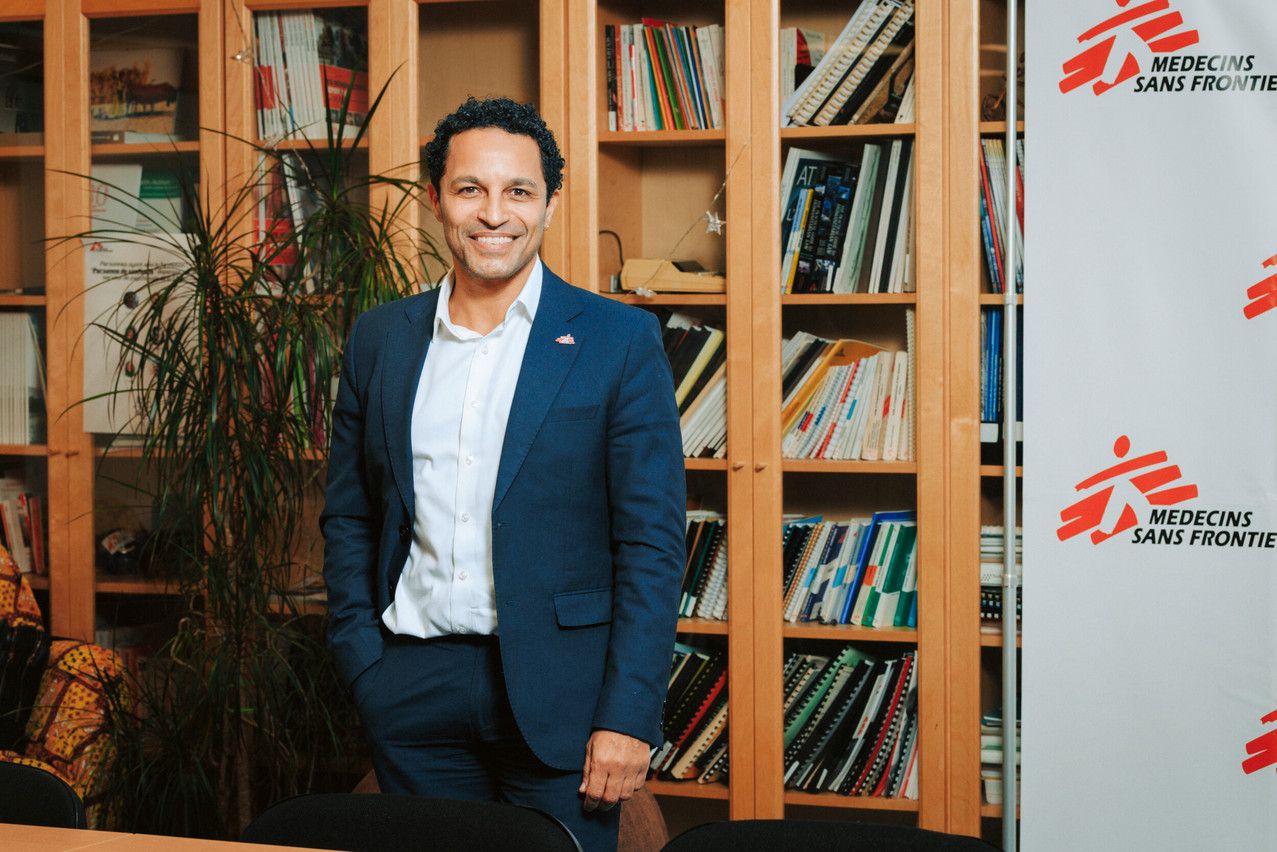
How did your journey lead you to Médecins Sans Frontières’ (MSF) international presidency?
Dr Javid Abdelmoneim. – “My parents are Sudanese and Iranian, and I grew up in Sudan until I was almost eight. I then moved to England, where I went to school and later studied medicine. During medical school, I discovered MSF through its campaign on access to medicines and did some brief volunteering. I felt I had found the organisation I wanted to work for. I graduated in 2003 and joined MSF in 2009, after starting my specialist training.
For several years, I alternated between the UK’s National Health Service and MSF. I also served on MSF UK’s board and as its president for four years, until 2021. I then worked with MSF’s Emergency desk and undertook some operational work for the World Health Organization. I was elected International President last year.
What does the role look like in practice?
“There are two main aspects. I chair the MSF International Board, which involves internal diplomacy, negotiation and work on our collective agenda. I also represent MSF externally. A section or an operational programme may ask me to visit because it has specific needs. A working day can therefore look very different in Geneva, Luxembourg or a camp in Darfur.
The internal work is complex because the various MSF entities are rooted in different societies and bring different perspectives. We share collective goals, but someone in Brazil will not necessarily see the world in the same way as someone in Japan or Luxembourg. We are also affected by wider social trends, including political polarisation and less nuanced public debate.
The medical act itself provides a very clear focus. Behind it are logistics, procurement, ethical processes, governance, patient safety and security. All that work needs attention so that we can deliver care.
You grew up in Sudan and returned there to work during the war. How did that experience affect you?
“It changed me. I had visited my father and family in Khartoum only three months before returning to find the city being devastated by war. I had worked in other conflicts, but this time the street names were familiar.
Most of our project staff come from the places where we work. They provide care while enduring the crisis themselves. Previously, I had always been the international staff member arriving from outside. During my second assignment in Sudan, international colleagues were not allowed to return for nearly a month. I was working as a Sudanese staff member and could stay. We continued as a Sudanese team, and seeing our impact on my own community was a very special experience.
The protection of civilians and their access to healthcare, food and water matter. The law matters.

The restrictions were also deeply frustrating. I know what MSF can deliver when our work is facilitated, but we faced obstacles that reduced our speed and impact. That is why facilitating humanitarian assistance remains a central message in my discussions with the authorities.
What do the administrative obstacles mean for a medical team in practice?
“Every country has laws and regulations. If we wanted to open a project in Luxembourg, we would need permits, licences and visas. The difficulty in Sudan is the number of layers, involving different levels of government, ministries and authorities across the conflict.
You may need separate permissions to move medicines, store them, move a vehicle and transport a particular person. Every checkpoint requires copies of those documents. Driving between Port Sudan and Khartoum can mean carrying large stacks of paperwork. An incorrect letter or a vehicle registration that does not match the permit can create a problem. Permissions for international staff can also be revoked because of developments on the front line.
I cannot speak to every authority’s intention. What is clear is the effect: people do not receive the medical care they need. We encounter similar obstacles in other conflicts where official authorities and armed groups control different areas, including the Democratic Republic of Congo and Myanmar.
How much room does MSF still have to operate in those conditions?
“Our success varies. We are still present in these places and providing care. But we also have to ask at what cost: how many staff are killed, abducted or detained; how many hospitals are attacked; how much of our supply chain is obstructed; and how many people can actually reach the services that remain.
Across many of the conflicts where we work, we are seeing increasing attacks on healthcare, civilians and civilian infrastructure. This is part of our discussions about Sudan, Palestine, Ukraine, South Sudan and Myanmar. The protection of civilians and their access to healthcare, food and water matter. The law matters. We are still there, but it is becoming more difficult, more dangerous and more restricted.
How do you approach the decision to suspend or close a project?
“We do close projects, and sometimes we temporarily suspend activities when insecurity becomes too great. But in many places, particularly fragile or conflict-affected settings, we are among the last organisations still providing care. Ministries of health may not be able to provide the full range of services people need.
That creates enormous pressure to find a way to stay. At the same time, we have a duty of care towards our staff and the population. Those responsibilities are central to the decision.
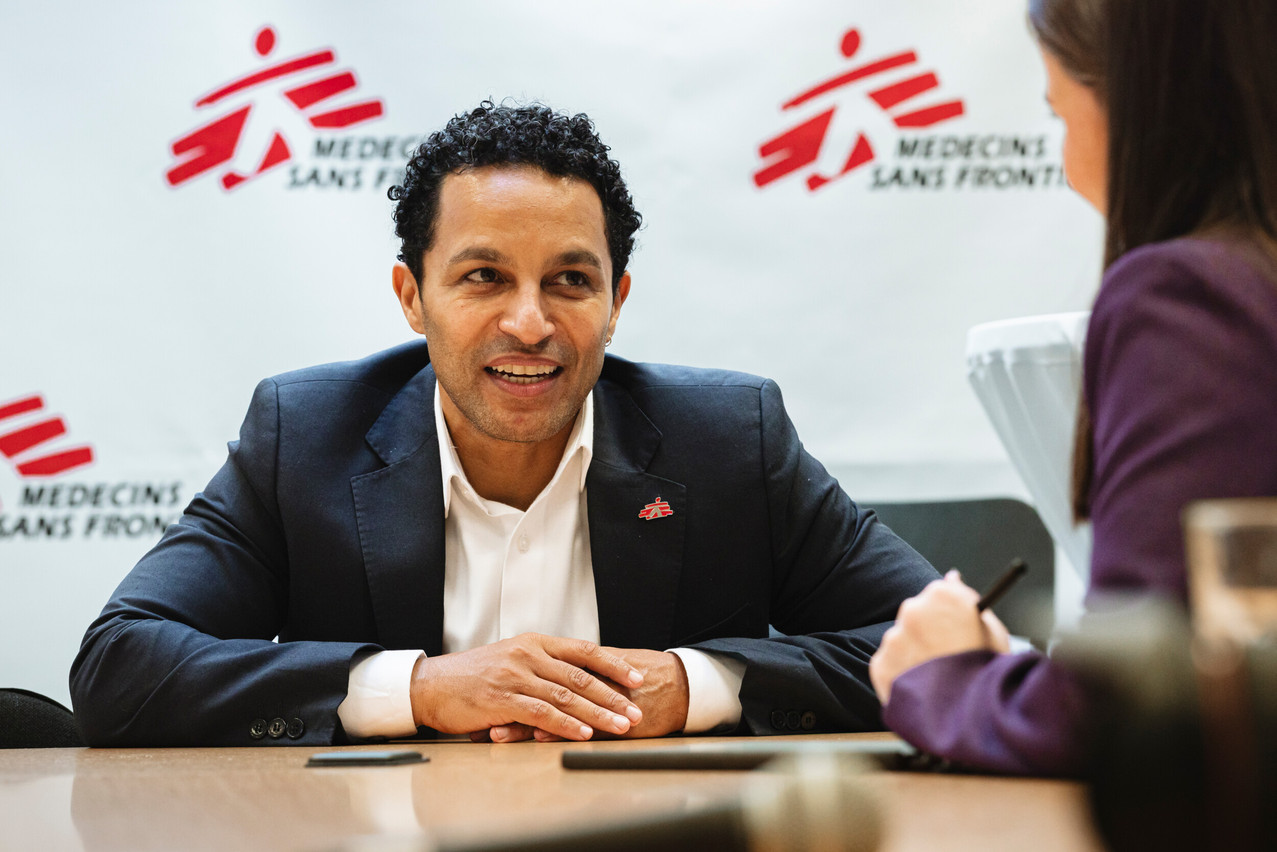
MSF’s International President stresses the importance of protecting civilians and maintaining access to medical care. (Photo: Julian Pierrot/Paperjam)
How have the cuts to US foreign aid affected access to healthcare in the countries where MSF works?
“The effects were immediate. Community organisations, international NGOs and parts of the UN system lost funding very abruptly. And this is not only about the United States: several European countries have also reduced aid while increasing defence spending. That is a worrying trend. Luxembourg’s continued commitment is welcome.
In camp settings where people depend on assistance, reductions in food distributions have direct consequences. Some cuts have also particularly affected sexual and reproductive healthcare. When women have less access to contraception and safe abortion care, we see the consequences in unsafe abortions and maternal deaths.
More broadly, we are concerned about restrictions on access to healthcare for LGBTQI+ people and to HIV and tuberculosis services. Political and ideological choices have consequences for health. That is why these issues concern MSF.
MSF relies largely on private funding. How do the cuts nevertheless affect your operations?
“We have not been directly financially affected by those funding cuts, but the indirect impact is significant. Other providers lose resources and we face gaps that we try to cover. In the Democratic Republic of Congo, for example, cuts affected the provision of medical kits for survivors of sexual violence, including supplies for HIV prevention and emergency contraception. We can try to respond, but we cannot fill the whole gap.
Therapeutic food is another example. Reduced food assistance contributes to malnutrition, while we provide the medical treatment. Products such as Plumpy’Nut, a peanut-based therapeutic food, are used in that treatment. When UNICEF can no longer provide the quantities we expected, we have to buy additional supplies. In the six months following the cuts, we had to spend an extra €500,000 in each of three projects on therapeutic food that had previously been provided through the UN system. That expenditure had not been planned.
We keep reserves and have some flexibility, but the pressure works in both directions: more people need treatment, and providing that treatment costs us more. With finite resources, that raises difficult questions about what else we can provide.
How does MSF decide where to direct those resources?
“Every project assesses the needs in the community each year, looking at the needs being met and those that remain unmet, then matching that assessment to the resources available. There is a continual adjustment at project level.
In countries where we have worked for decades, the question is often what has changed within that country: a new outbreak, a new exclusion from care or a front line moving into another area. The needs may involve maternal and child health, vaccine-preventable diseases, climate-sensitive diseases or care for survivors of sexual violence.
At organisational level, we are also looking at how health economics and outcome data can inform those choices. How can the resources available have the greatest impact? That remains work in progress.
Where is technology already making a practical difference?
“There are tools using artificial intelligence, including work on antimicrobial resistance and mapping malaria outbreaks. These are targeted applications of AI, rather than a systematic use across everything we do. One example is an offline smartphone tool that helps teams interpret antibiotic-resistance tests. It supports work in settings where connectivity is limited. Once a connection is available, results can also contribute to understanding resistance patterns. Antimicrobial resistance is a major threat, as is climate change. Both need attention alongside the conflicts dominating the headlines.
Narratives against gender equality, science and solidarity, and the political shift to the right, have consequences for health, particularly in fragile settings.
Technology can also help us reduce costs and our environmental footprint. We operate large vehicle fleets, so maintenance and vehicle choices matter. There are projects looking at hospitals, water use and other aspects of our operations. Across the movement, we support innovations with the potential to improve the way we work.
Why is independence so important to MSF, and what role do donors in Luxembourg play?
“For me, independence is fundamental. It comes from solidarity in the societies that support us: people who share a belief in human dignity and want to make our work possible. I see every donor as part of MSF. Luxembourg’s support is particularly significant for a country with such a small population. Actually, it has the highest level of donations to MSF per capita.
That independence is powerful. When I meet health ministers at the G20, I can explain that we are not asking them for money, but telling them what people need, based on what we see where we work. Bearing witness is a central part of MSF’s identity. It allows us to bring the needs of patients and communities directly into those discussions. Alongside the care itself, that is one of our most important contributions.
What do you most want the movement to remain focused on during your presidency?
“I want everyone involved in MSF, from donors to staff, to understand the period we are living through. We are seeing an erosion of respect for the rule of law, alongside greater discrimination and exclusion. Narratives against gender equality, science and solidarity, and the political shift to the right, have consequences for health, particularly in fragile settings.
We need to remain clear about our purpose. Humanitarian law and the protection of civilians are not optional. Attacks on healthcare are unacceptable. We have to maintain that position, including when the issues become politically contested. These are healthcare issues that political decisions have brought into our work. I want us to communicate that clearly outside the organisation, while keeping our focus on the communities we serve.”