Think Sphere is not yet promising any visible revolution in the application of Spuerkeess. Its initial work focuses on less spectacular areas: risk management, compliance and the efficiency of internal processes. The subsidiary will, however, be required to present its first results before the end of the year.
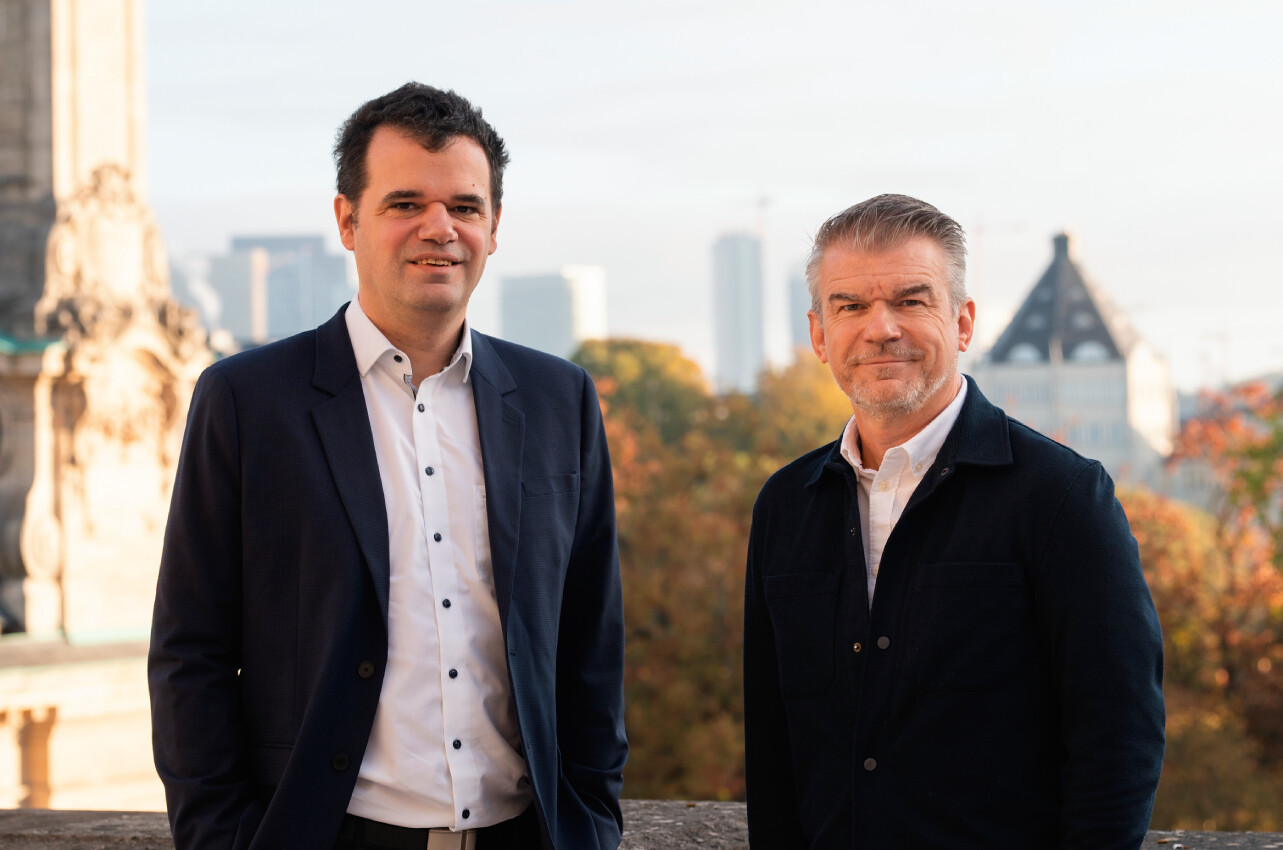
After announcing the establishment of this innovation company, Spuerkeess has now set out how it operates. Think Sphere is tasked with monitoring developments in the financial sector, selecting partners, building prototypes and assessing their feasibility before the bank decides to turn them into full-scale projects. Patrick Hennes joined the organisation on 1 October as head of innovation. He is responsible for leading the team’s work, which comprises eight people organised on a flat structure. 
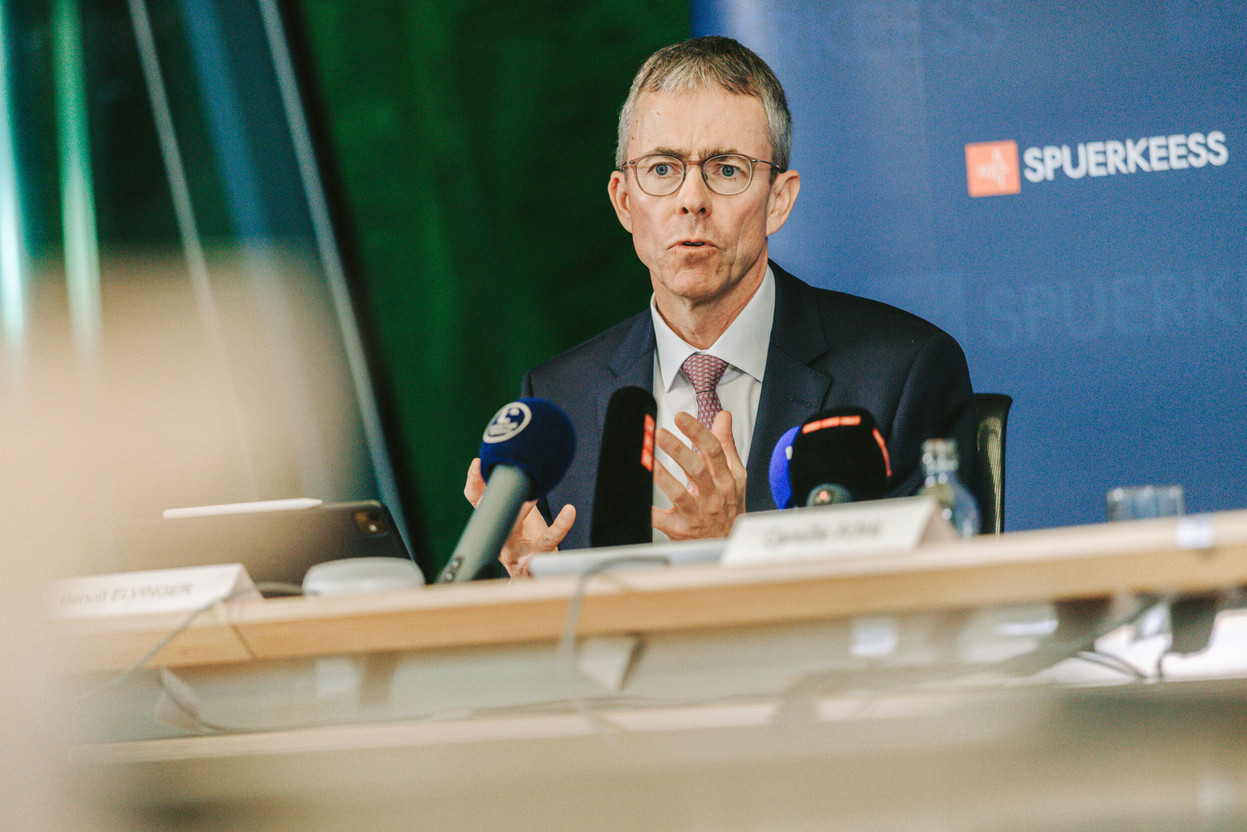
“Think Sphere is a tool the bank uses to explore new opportunities in collaboration with internal teams,” explains Jacques Pütz during an interview on Friday 9 October at the laboratory’s new premises in Bonnevoie. Spuerkeess set up this separate company to “speed up the analysis process and carry out ‘proofs of concept’”, whilst avoiding the need to involve the bank’s structures too early on.
Closeness to and distance from the Spuerkeess
The method must follow a specific sequence. The team identifies a technological or regulatory development, seeks out companies capable of addressing it, assesses the available solutions, and then builds a prototype. The project is only referred back to Spuerkeess once the initial technological, legal, regulatory and safety checks have been carried out. “We won’t succeed with everything, but this way we make mistakes in the laboratory rather than in projects within a bank, which involve significant operational costs,” summarises Jacques Pütz. The aim, therefore, is not to eliminate the risk of failure, but to shift it to an earlier and less costly stage.
There’s no point in doing anything fancy here if, in the end, it isn’t deployable.

Think Sphere will not, however, operate in a vacuum. Its team includes technical expertise as well as a member responsible for legal and compliance matters, but it will continue to consult with specialists from its parent company. “It’s not a completely separate entity. In terms of knowledge, we share a great deal,” insists Jacques Pütz. This close relationship should prevent the classic scenario of an attractive prototype that proves impossible to integrate into a bank. “There’s no point in coming up with brilliant ideas here if, in the end, they can’t be rolled out,” sums up the administrator. Think Sphere therefore aims to incorporate compliance, cybersecurity and architectural constraints right from the design stage.
Patrick Hennes brings to this initiative experience gained at the intersection of traditional fund management and digital infrastructure. Before joining Think Sphere, he headed up the servicing activities for digital assets at DZ Privatbank in Luxembourg. He had previously been Head of Transfer Agency Development & DLT within the same group and a director at PwC between 2015 and 2021. He dates this back to 2015 the start of his work on blockchain in Luxembourg. He subsequently took part in various committees and consultations organised by the ABBL and ALFI concerning developments in the regulatory framework. This dual experience should enable him to make an initial assessment of the technologies and their suppliers.
Candidates with proven experience
“I can already get an initial idea of what we’re going to do, and of the partners we’re going to select: will they, or will they not, fit within the regulatory framework?” he explains. Other team members are tasked with carrying out the same work on the technological, operational or commercial aspects. The subsidiary has deliberately recruited experienced professionals. “This isn’t a fintech start-up full of young people,” says Jacques Pütz. The team brings together people from banking, fintech and even Amazon, with the aim of introducing approaches to the discussions that differ from those developed within Spuerkeess itself.
Think Sphere will operate on the basis of three pillars defined by its shareholder. The first relates to digital assets. The second concerns integrated finance, that is to say, how to incorporate the bank’s services into customer journeys designed by third-party companies. The third focuses on operational efficiency, through solutions developed or provided by fintech and regtech firms.
Tokenisation isn’t the end goal. What matters to me, when we’re talking about digital assets, is the infrastructure.

Patrick Hennes’s expertise lies within the first pillar. However, he refuses to reduce digital assets solely to the tokenisation of a fund, a property or any other asset. “Tokenisation isn’t the end goal. What’s important to me when we talk about digital assets is the digital asset infrastructure.” According to him, this infrastructure must bring together several key components. The first is the digital currency used to settle transactions. Patrick Hennes cites Pontes and Qivalis in particular. The second concerns digital identity so that an investor is not forced to go through the administrative process on paper all over again to purchase an asset that is, after all, tokenised.
“It’s not enough simply to tokenise an asset if, at the start of the process, an investor or institution still has to fill in 30 pages just to be able to buy it. Why tokenise if I still have to use paper?” he asks. He is, therefore, advocating the development of a trusted digital identity that can be reused across different financial journeys.
From use cases to infrastructure
This strategy does not confine Think Sphere to retail banking. Spuerkeess positions itself as a universal bank, and the subsidiary must serve its four segments: retail, corporate, private banking and institutional clients. Tokenisation will initially focus more on institutional activities, whilst integrated finance could have a more direct impact on the customer journeys of retail clients or businesses.
Spuerkeess is already taking part in Qivalis, the digital bank currency project launched by a consortium of European banks. Jacques Pütz describes this involvement as a way of preparing the monetary aspect of future tokenised transactions. Think Sphere must now help to identify use cases that can justify this infrastructure.
“We need to define the use cases before we build the infrastructure,” he warns. The subsidiary’s role is, therefore, not to chase every latest technology, but to identify those that can meet a genuine need of the bank or its customers.
The project that is furthest along, however, lies elsewhere. Think Sphere is currently focusing on its third pillar: operational efficiency. Its initial research centres on risk management and compliance, rather than the features most visible to customers. According to Jacques Pütz, Spuerkeess has “hundreds of internal processes” that could be improved. Think Sphere must examine how fintechs or regtechs could take on certain highly specialised activities, without compromising quality or replacing the bank’s core systems.
We’ll be looking within the fintech and regtech sectors for those companies that excel in a very specific area of business.
Patrick Hennes describes financial institutions that are still built around monolithic architectures. His team will not seek to replace their core systems, but rather to potentially outsource certain tasks where a specialist provider is better placed to carry them out. “What we’ll be looking for, within the fintech or regtech market, are those providers that excel in a very specific area. We’ll test whether we can improve operational efficiency for such an activity and whether it can subsequently be integrated,” he explains. “But the core remains.”
First test run before the end of the year
Think Sphere will also need to assess the robustness of these partners. The subsidiary intends to supplement the technical analysis with legal, financial and security checks. “Assessing a start-up or a fintech company is not the same as assessing a company that has been in business for 25 years,” notes Patrick Hennes. Analysis frameworks must be put in place to select these suppliers. Think Sphere will also draw on Spuerkeess’s expertise when its eight staff members are unable to cover a specialised issue on their own. Patrick Hennes’s role will be to organise this collaborative research. “Initially, we’ll come up with ideas. Starting from the idea, we’ll carry out research, select partners and conduct PoCs [proof of concept, ed.]. That is our primary objective, across the company’s three pillars.”
He sees himself less as the head of a hierarchical structure and more as its facilitator. Team members will take part in international conferences and networks focusing on fintech, digital assets or stablecoins. They will then need to turn this research into use cases tailored to Spuerkeess.
The subsidiary does not present itself as either an independent start-up or a new tool intended for the financial sector as a whole. “Think Sphere is a company that works for Spuerkeess,” states Jacques Pütz. It may collaborate with Lhoft and other players in the ecosystem, but its remit remains to prepare the ground for its parent company’s future decisions.
The first test of this promise will come soon. Think Sphere plans to deliver an initial PoC before the end of 2026. The solution will focus on risk management, compliance or operational efficiency. New services aimed directly at customers will follow later. The subsidiary, established for an indefinite period, will then have to demonstrate that its prototypes can cross the boundary it was specifically created to bridge: the line between a rapidly tested idea and a service robust enough to be adopted by a regulated bank.