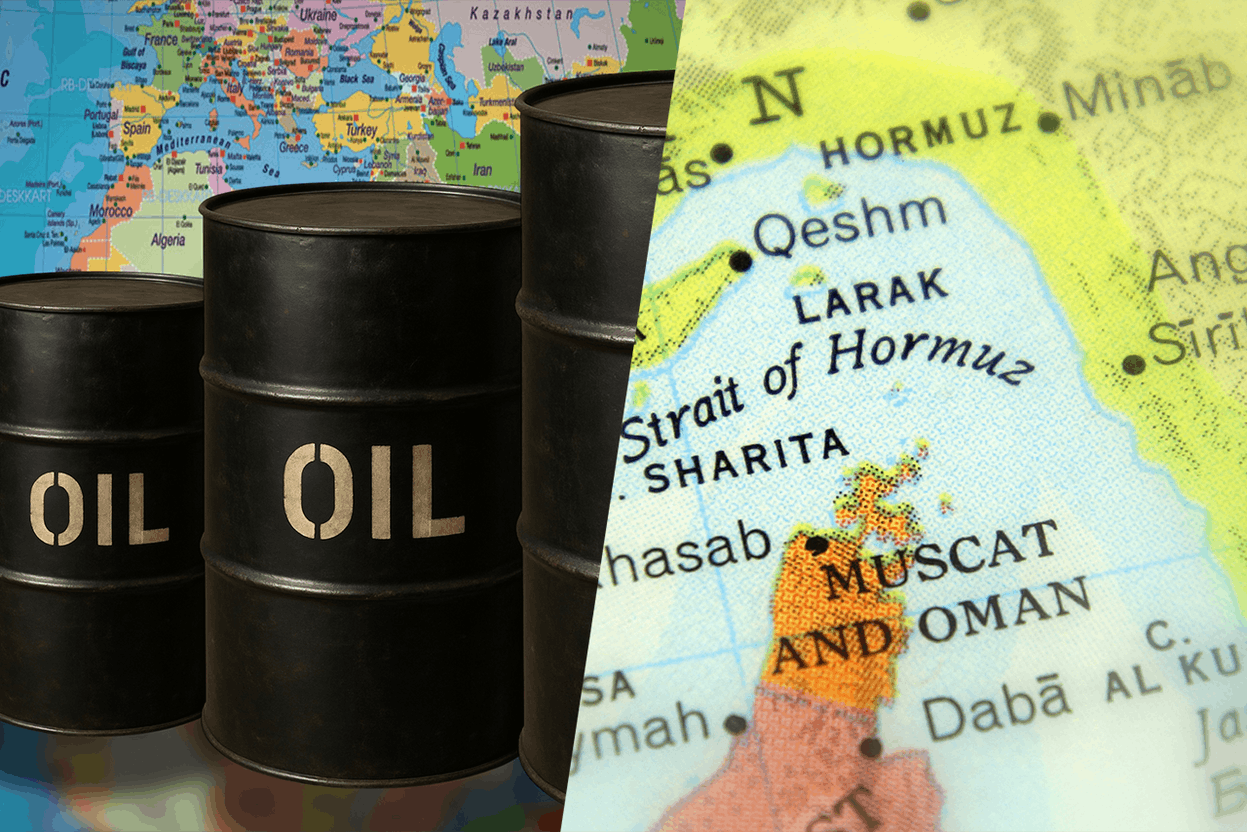
Minute after minute, journalists are darting their eyes over “marinetraffic”, the Kpler website fed with technology developed by Spire. They are trying to find out who has a ship stuck in or near the Strait of Hormuz and who is leaving this dangerous zone under threat from Iranian drones and missiles, since US President Donald Trump decided to play sheriff in Iran. Small triangles and dots in red, green or turquoise bear witness to a naval battle in the making for black gold.
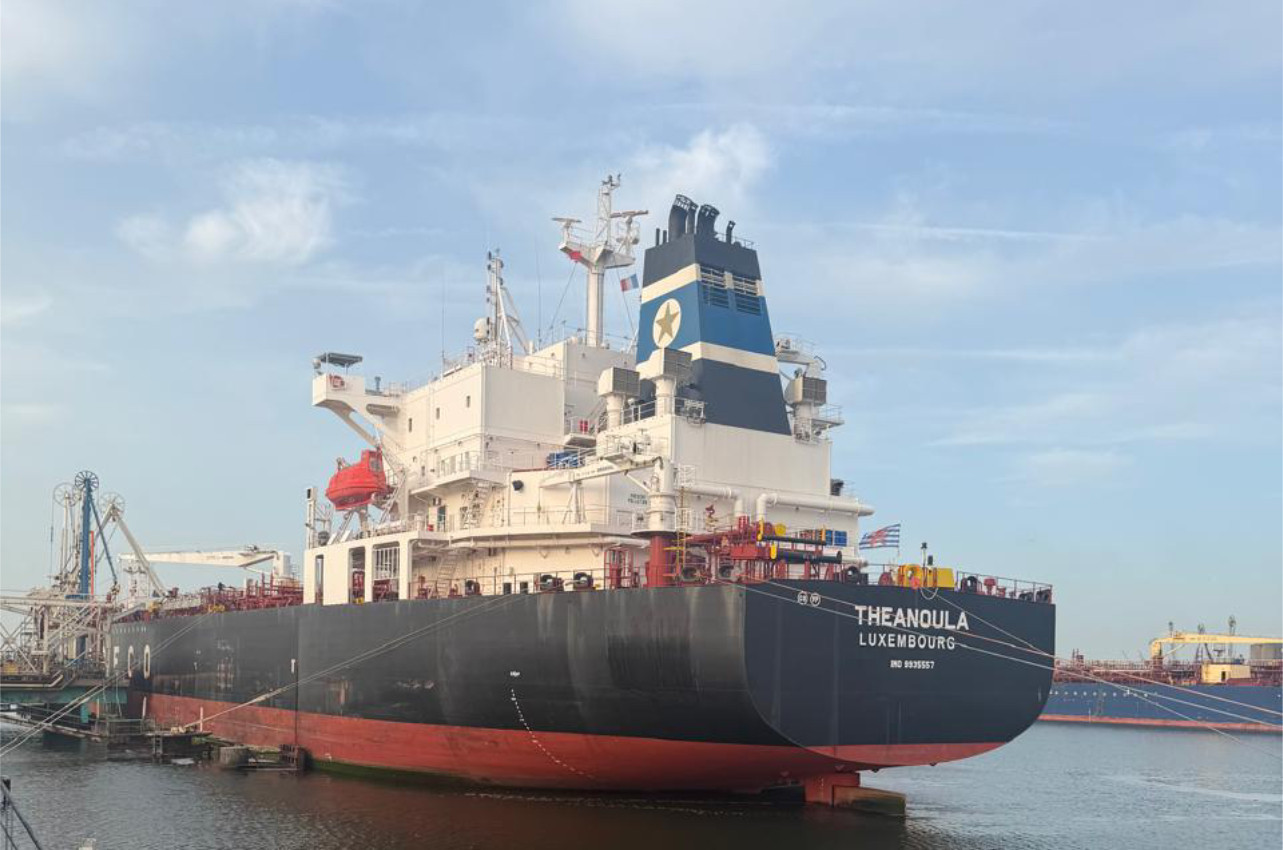
As for the Theanoula, this Tuesday 17 March it is following the Algerian coast towards Tripoli, the destination of its voyage. At the end of its 183 metres, a Luxembourg flag flies over this tanker for petroleum and chemical products. It is the second Greek vessel to have joined the Luxembourg maritime flag after, last October, the car carrier Sea Caryatis.
In this first case, Mediterranean Car-Carriers Line claims a strategic choice. “Registering our PCTC Sea Caryatis under the Luxembourg flag reflects our strong confidence that Luxembourg is a leading EU flag state when it comes to quality and professionalism. We are honoured that our Sea Caryatis is the first Greek-owned vessel registered under the Luxembourg flag. And we expect many other shipowners to follow suit. Cooperation with Stanley Maritime Luxembourg and the Commissariat aux affaires maritimes (CAM) has been perfect and our experience of the re-flagging process has been smooth and seamless, with no unexpected delays or problems.”
Two more Greek vessels already announced
At the time, 
The second movement, which took place recently, confirms this direction. The tanker Theanoula, operated by Super Eco Tankers Management, was added to the Luxembourg register in what its operator describes as a particularly smooth process. “We are very pleased to see Theanoula join the Luxembourg register. The transition process was managed efficiently and professionally, and we were impressed by the responsiveness of the administration and the clarity of the regulatory framework. Following this positive experience, we have already decided to proceed with the registration of a second vessel under the Luxembourg flag in the near future.”
This registration is only the first step.

Continuing on, Thierry Zois underlines the momentum underway: “We are seeing strong momentum among shipowners who are looking for a high-quality European flag, backed by a stable financial centre and a responsive maritime administration. This registration is just the first step, and we are convinced that the coming years will bring many more successes.”
Two more ships are expected to follow suit in early April and before the summer, suggesting that Luxembourg could capture a growing share of tonnage currently operated under other jurisdictions. How much tonnage? It’s hard to say. Around fifty? A hundred or so? Or more? In this small world, any positive experience is quickly known and shared. We shouldn’t overlook the fact that these shipowners then consider whether it might not be in their interest to repatriate their holding, operational and financial structures to the same country, an expected consequence.
A European movement towards quality
The Madeira International Maritime Registry (MAR), backed by the Portuguese free zone, has established itself in recent years as one of Europe’s most attractive flags, combining a competitive fiscal framework, low operating costs and great operational flexibility, particularly in terms of crew composition, attracting more than 1,000 ships. Unlike traditional flags of convenience, it also offers the legal certainty and recognition of a European Union (EU) flag, making it a credible alternative for international shipowners.
This rise has accelerated against a backdrop of tougher regulatory and environmental requirements, as well as increased pressure on the transparency of shipping structures. In this context, Madeira is capturing a growing proportion of European tonnage in search of a balance between economic competitiveness and compliance with EU standards, particularly from shipowners in southern Europe who have historically turned to non-European registers.
These developments are taking place in a European context marked by an increased desire to bring a part of the fleet controlled by European interests back under the EU flag. While a majority of this tonnage is still registered under non-EU flags, EU quality registers, including the Luxembourg register, are seeking to position themselves as credible alternatives, combining a stable regulatory framework, high standards and administrative efficiency.
For the Grand Duchy, whose register remains modest in size but geared towards specialised vessels with high technical requirements, these first Greek registrations are a full-scale test. If the dynamic is confirmed with the arrival of new ships, it could mark the beginning of a wider repositioning of the Luxembourg flag in the European maritime landscape. According to CAM’s latest annual report, 207 ships were flying the Luxembourg flag at the end of 2024, representing a tonnage of 1.47 million tonnes, with 177 companies and 15,314 seafarers, mainly Filipinos.