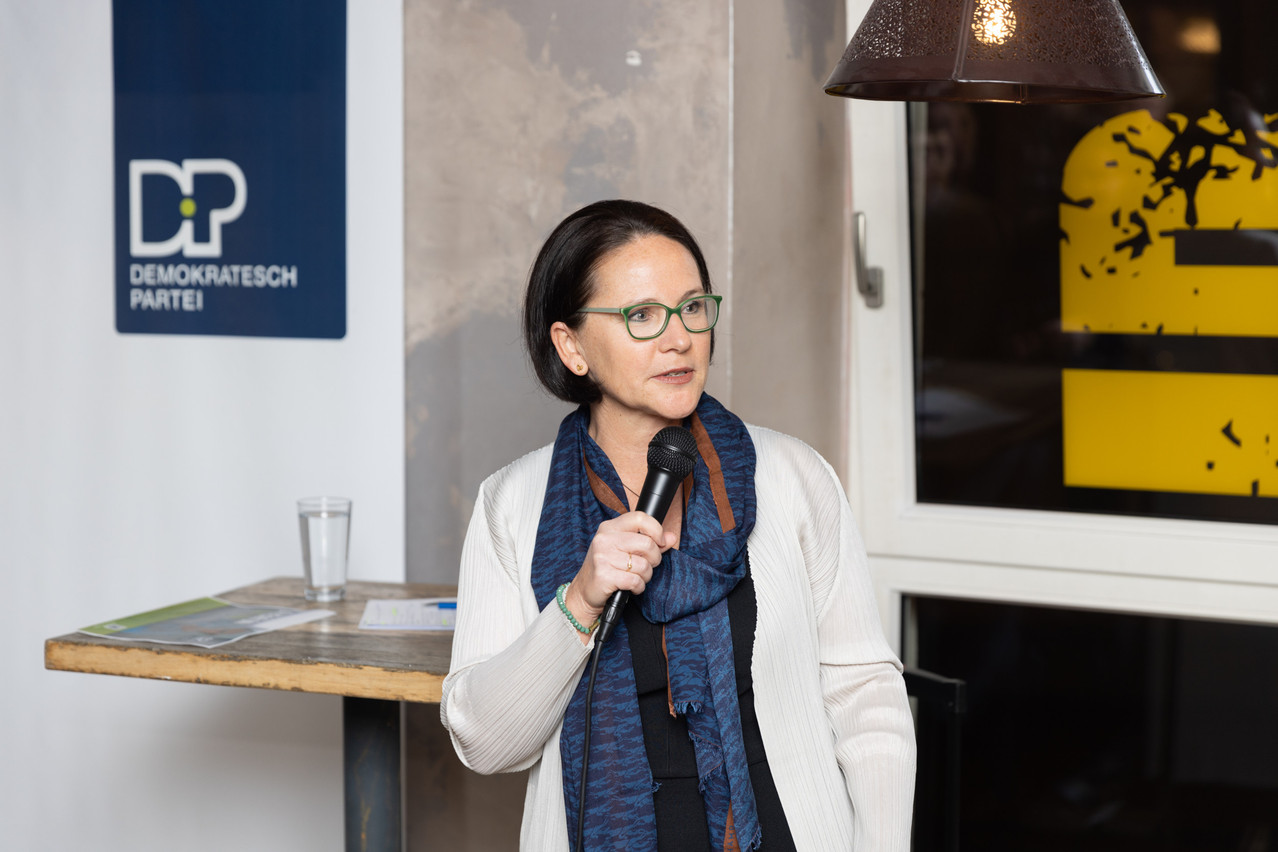
To make it easier for banks to dispose of unserviced loans accumulated on their books, a new law on the transfer of non-performing loans (NPLs) is set to come into force shortly. Introduced in March 2023 by the finance minister at the time, 
The aim of the law, which transposes a European directive, is twofold. The first goal is to protect borrowers by enshrining in law guarantees of transparency and respect for the rights of all parties concerned--borrowers, credit buyers and banks. The second goal is to create a ‘secondary market’ for NPLs.
This market will include specialised players better equipped to manage this type of debt. To this end, the text introduces into Luxembourg law the figure of ‘credit managers,’ a new type of professional in the financial sector, who will have to obtain authorisation from the Financial Sector Supervisory Commission (CSSF). The new framework should therefore enable banks to free up their balance sheets without affecting their capital ratios, while opening up new opportunities for the financial centre.
This issue is not particularly critical for the Luxembourg banking sector at the moment

From the point of view of the CSSF, “the objective is to offer banks more options when faced with a situation in which non-performing loans become significant,” says Claude Wampach, director in charge of bank supervision. “Private banks and custodian banks, which have a large presence in Luxembourg, are less likely to find themselves with a significant stock of NPLs. The law essentially targets banks involved in traditional financial intermediation, by providing them with a more structured framework for managing NPLs and the possibility of transferring or selling certain bad debts.”
He adds: “This issue is not particularly critical for the Luxembourg banking sector at the moment, and we hope that this will remain the case. This is a matter of transposing the European framework, aimed at harmonising practices within the single market and under the single supervisory mechanism.”
Read also
Currently, according to the CSSF, the share of NPLs in total lending in Luxembourg is “quite marginal”: around 1.5%, below the EU average of 1.9%. The volume affected by the law is even less significant, given that it applies only to loans issued in Luxembourg and held by Luxembourg nationals. The finance ministry therefore does not expect any significant volume of non-performing loan transactions in the immediate future.
Neither France nor Belgium have done so or intend to do so

To secure the business model for the NPL takeover and remove an obstacle to their sale, the government and the CSV-DP majority agreed to a request from the High Level Committee of the Financial Sector (or Haut Comité de la place financière): not to apply article 1699 of the French civil code in this context. This request provoked a barrage from the opposition.
What’s the problem? “The deactivation of this article in fact represents a guarantee of profit for purchasers of NPLs,” says 
A legal choice
Clement finds it “difficult to conceive of granting a profit guarantee to a company while at the same time weakening consumer protection”. He is also surprised that Luxembourg will deactivate this article, when “neither France nor Belgium have done so or intend to do so.”
“This is above all a legal choice,” explains the text’s rapporteur, 
Any measure aimed at boosting securitisation should be encouraged.

The adoption of the law, delayed by the national elections, will have taken more than a year. The Council of State issued three objections: two for incomplete transposition of the directive (wording issues), and one for potential interference by the legislature in a court of law. “We wanted, at one point, to introduce retroactivity that could potentially have had an influence on an ongoing legal proceeding. We therefore decided against this retroactivity,” explains Bauer.
What happens next? There is only one step between encouraging a secondary market in NPLs and relaunching securitisation--which is indeed the objective stated by Brussels. Securitisation is the pooling of various financial assets, such as mortgages, consumer credit or trade receivables, and transforming them into securities that can be traded on the financial markets.
The shadow of subprimes
Securitisation remains a sensitive subject, however, because it suffers from a bad image: these financial operations are at the root of the US mortgage crisis--the notorious subprimes--which were securitised and resold in total opacity, leading in September 2008 to the collapse of Lehman Brothers and the European debt crisis. Years later, the securitisation market had still not recovered.
Bauer notes a “new impetus” for securitisation after several sluggish years. “Any measure aimed at reviving securitisation should be encouraged,” he stresses. “But it is primarily up to the market to judge whether it is appropriate and to regulate itself.”
This article was originally published in French.