Since becoming director of Luxembourg’s contemporary art museum (Mudam) in 2022, 
“A Model is an exhibition that proposes a reflection on the role of the museum at the beginning of the 21st century,” says the description. “It reaffirms the need to think of the institution as a living place, sensitive and receptive to contemporary debates.”
For this second part, the group exhibition, Steinbrügge has invited artists to create new works that enter into dialogue with the works already in the museum’s collection. In this way, she is presenting the museum as a place to be activated rather than an accumulation of objects to be preserved. For example, paintings by General Idea are set against an installation of 12,000 pansies by Nina Beier and Bob Kil, questioning consumer society, the circulation of goods and a certain form of productivism--while Su-Mei Tse’s fountain “Many Spoken Words” is set against a work by Claire Fontaine.
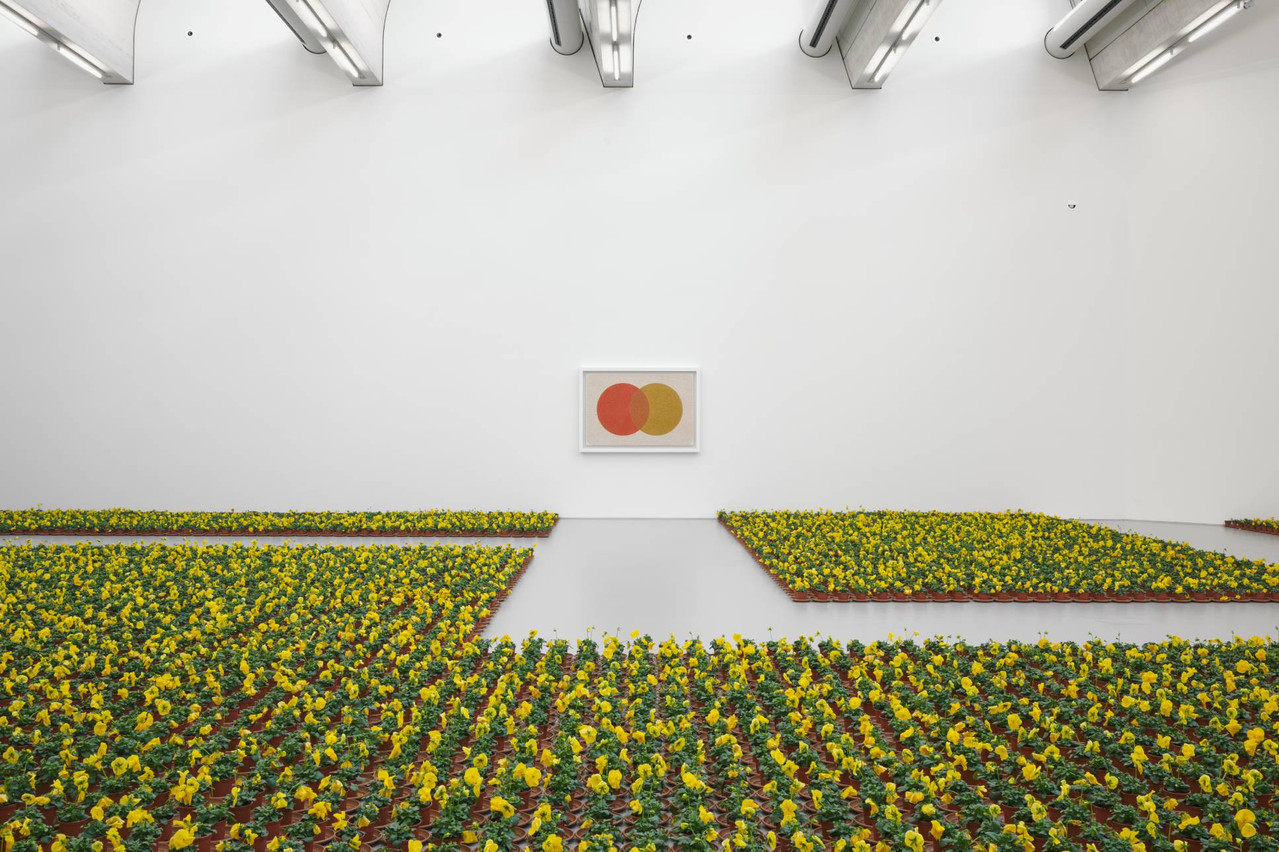
General Idea’s installation. Photo: Mareike Tocha
Looking at you
In 1968, a playground opened inside the Moderna Museet in Stockholm, a project by Danish artist Palle Nielsen that sought to question (and pick apart) the elitism of the art and museum world. Over three weeks, 33,500 people--22,000 of them children--visited the playground. This project, named The Model, forms part of the inspiration for the Mudam’s A Model, observable in how the museum is seeking to renew its commitment to the public.
Oscar Murillo’s installation in the main hall raises the question of visitor typology. Who dares enter the museum? On bleachers in front of a large screen, life-sized dolls “watch” videos about the history and very concept of a museum. These silent visitors call attention to your own role in being there. How do you--how does your own consciousness--make the museum?
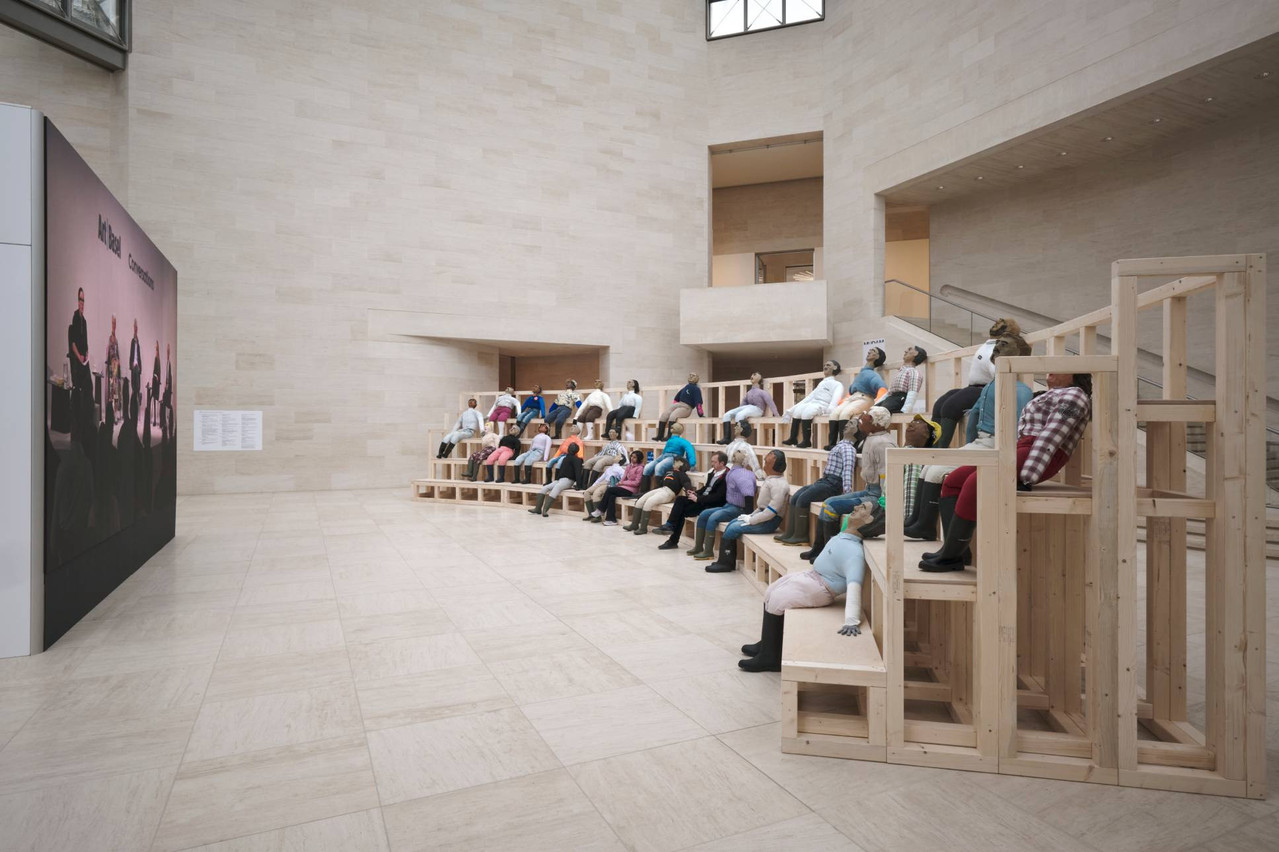
Oscar Murillo’s “Collective Conscience” is the first thing you see when you enter the exhibition. Photo: Mareike Tocha
Isaac Julien’s video installation “Once Again… (Statues Never Die)” interrogates colonialism and generates questions about the provenance of art, emigration and intellectual property, ultimately underscoring how museums can--must--enter into dialogue with problematic or mainstream historical narratives.
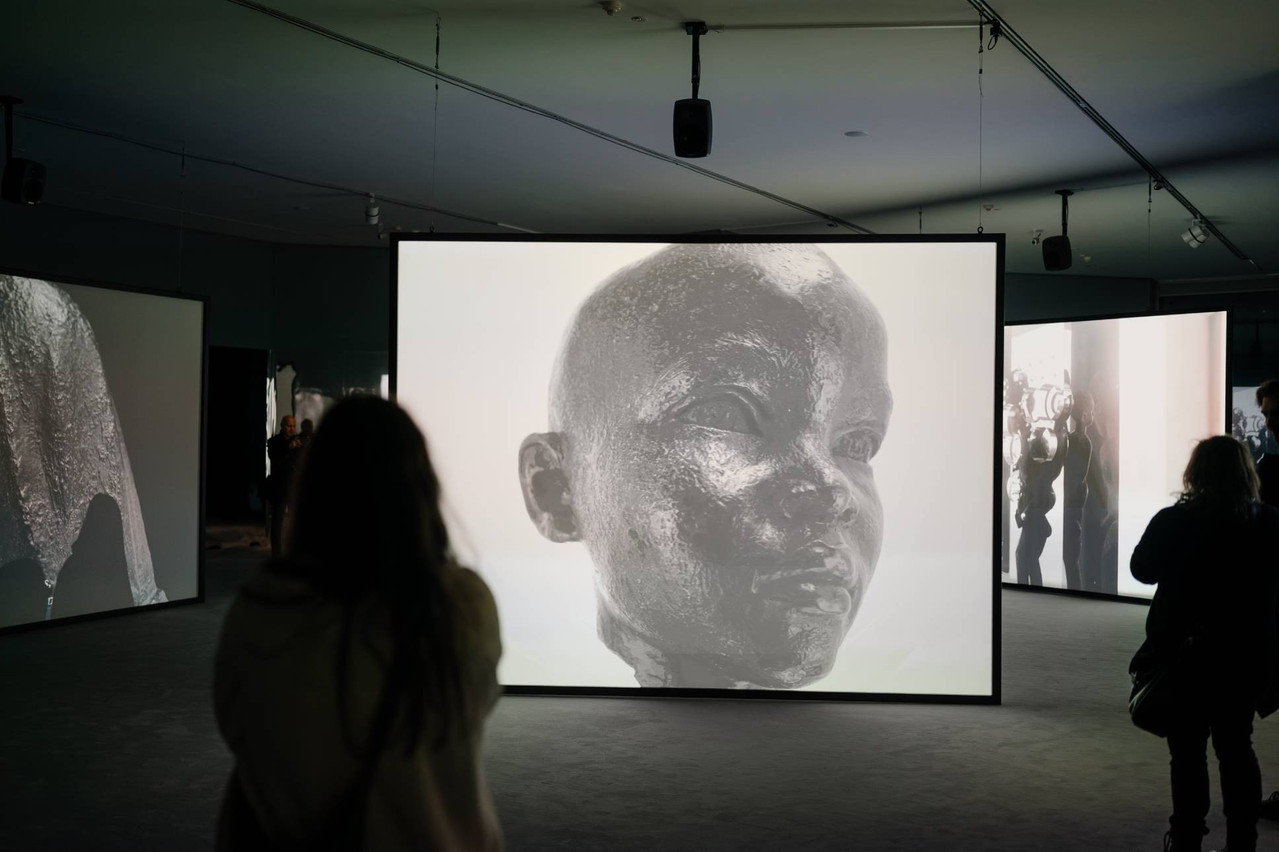
Isaac Julien’s “ Once Again… (Statues Never Die).” Photo: Marion Dessard
“The museum has a duty to reflect the thinking of contemporary society and to challenge its established beliefs,” says Steinbrügge. “The cultural landscape is changing: diversity is understood differently today, stories that were once inaudible are being heard, and history is being re-read in order to restore the rights of cultures and practices that were previously scorned or ignored. The recent pandemic has also changed attitudes, and social networks and new technologies can easily amplify or counterfeit information.”
Major donation
Finally, A Model is an opportunity to discover one of the works donated by the Gaby and Wilhelm Schürmann Collection: “Radical Feminist Pirate Ship Tree Sitting Platform” by Andrea Bowers. Twenty major works of conceptual art--mainly from the 1990s and 2000s--were donated to Mudam by the collectors, one of the largest donations since the museum was founded. Most are by female artists.
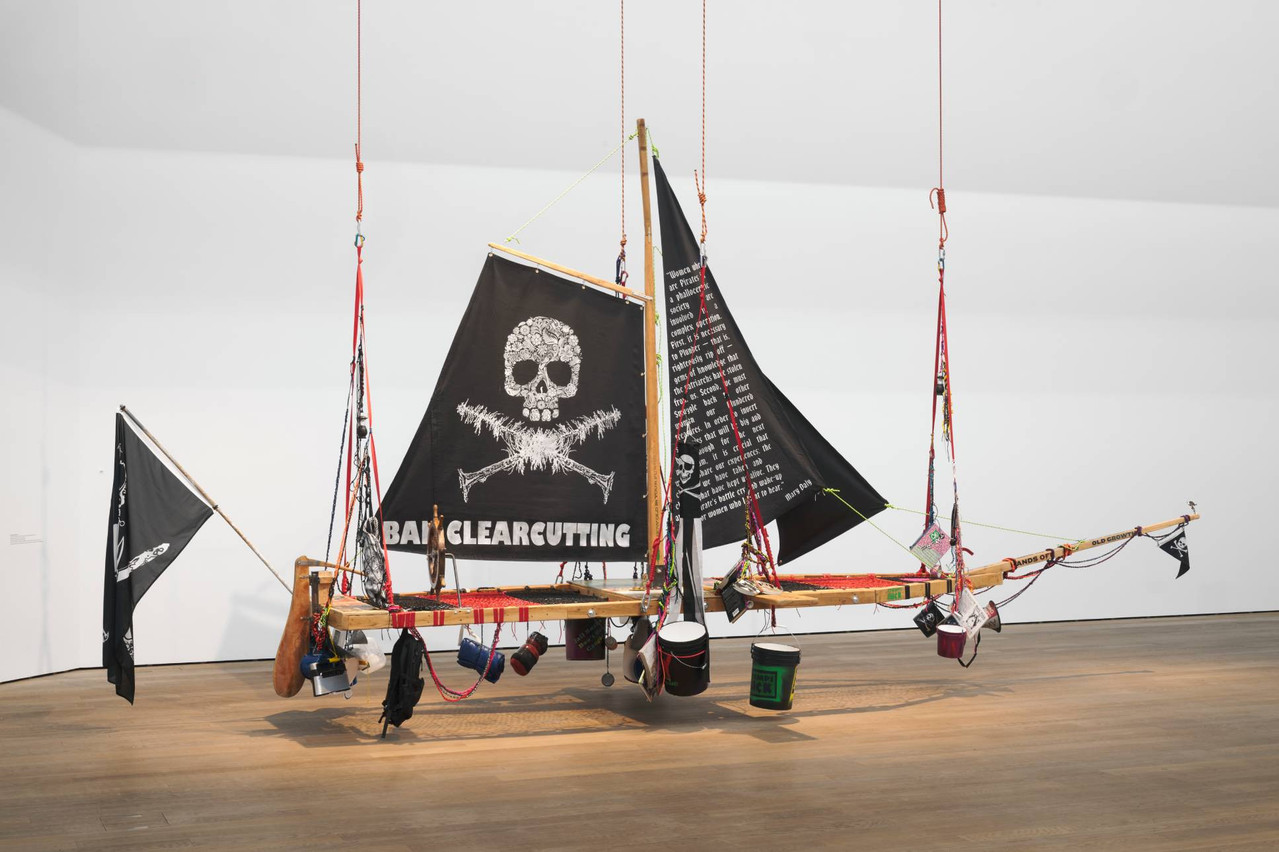
‘Radical Feminist Pirate Ship Tree Sitting Platform” by Andrea Bowers. Photo: Mareike Tocha
“What makes this donation so extraordinary is its exceptional quality,” says Steinbrügge. “These are historic works of art that we would not otherwise have been able to acquire. This donation, made possible by the support of the Collectors’ Circle, will have a major impact on the museum’s collection.”
This article was originally published in Paperjam. It has been translated and edited for Delano.