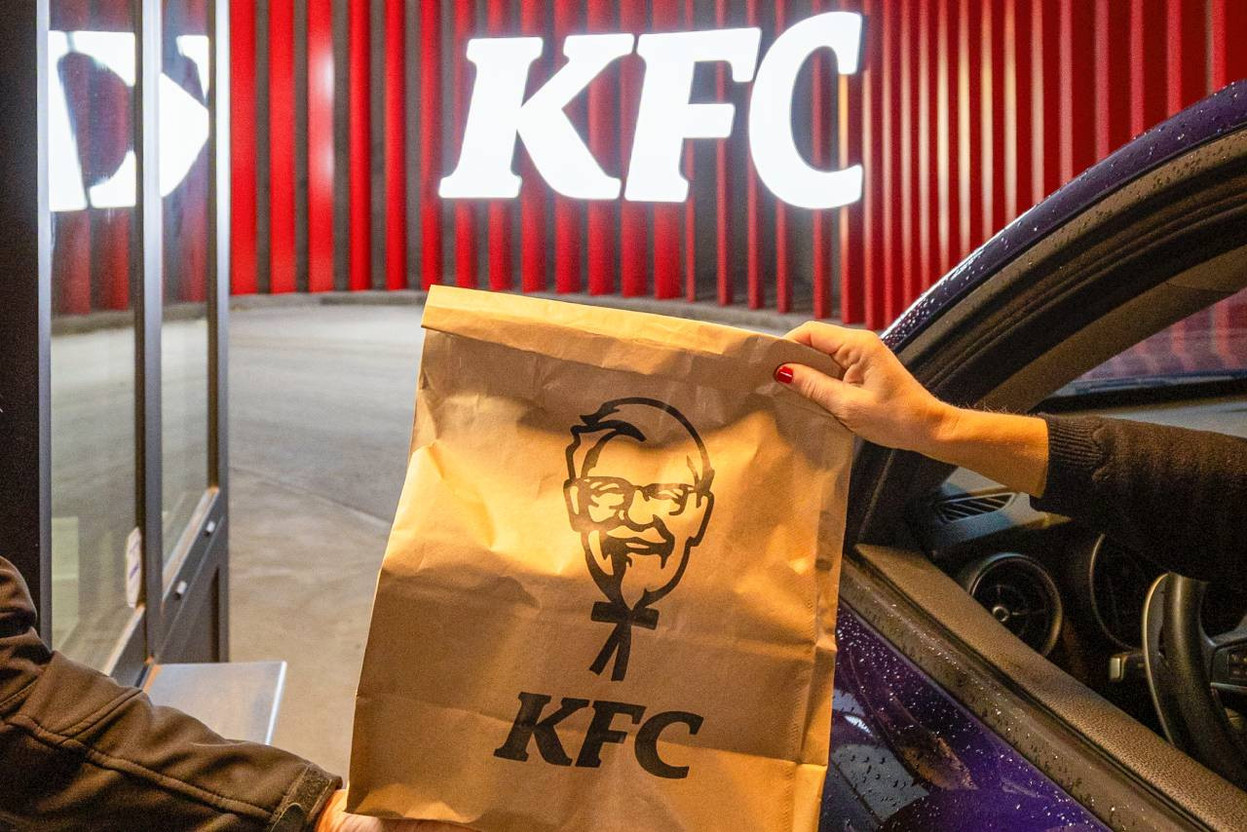
The finding is solidly supported by data from the Retail Report 2026, published this Monday morning. Since 2019, the number of fast-food outlets has risen by 43%, while the sales area of hard-discount chains has increased by almost 40%, a dynamic that is far greater than the demographic growth observed over the same period. These formats no longer simply complement the existing offer: they are becoming one of its key drivers. This dynamic is taking place against a backdrop of increasing pressure on the physical offer: by the end of 2025, the sales area per inhabitant had fallen to 1.58m², its lowest level since records began, due to the combined effect of demographic growth and the rise of online retailing.
This rise is primarily driven by usage. In a country with a high proportion of working people, a large number of cross-border commuters and severe time constraints, the value of time has become a major determinant of consumer choices. Fast food responds to this equation by offering standardised, predictable and immediately accessible formats, integrated into the daily rhythms of work and mobility. Similarly, hard-discount is part of a drive for efficiency, with a clear promise: controlled prices, a tight offer and a fast shopping experience.
A change in consumer priorities
Contrary to what is sometimes intuitive, this development does not reflect an impoverishment of demand or a general decline in living standards. Rather, it reveals a shift in household priorities, even in a country with high purchasing power. Rising housing, energy and service costs, combined with persistent inflation in certain product categories, are encouraging more rational choices when it comes to day-to-day spending. As a result, hard-discount is attracting a broader customer base than just the traditionally price-sensitive segments. Since 2019, the population has grown by around 10%, while the number of retail and catering businesses has grown at a much lower rate, confirming that the sector is entering a phase of relative saturation rather than expansion.
The rise of these formats also has a direct impact on the structure of the retail trade. Their profitability per square metre, their ability to absorb high property costs and their operational standardisation give them a competitive advantage at a time when sales area per inhabitant is falling and has reached its lowest level since records began. Conversely, specialist stores, which are more dependent on differentiation, advice and destination footfall, find themselves under pressure, particularly in segments exposed to competition from online shopping.
13.3% vacancy rate in town centres
Town centres provide a concrete illustration of this reorganisation. Although commercial vacancy rates have recently fallen, the relative share of retail trade is declining in favour of services and hotels and restaurants. However, this reorganisation still varies from one format to another, with the vacancy rate reaching 13.3% in town centres compared with 5.3% in shopping centres, a difference that automatically favours standardised chains capable of optimising their costs and floor space. Fast-food outlets, often perceived as peripheral to the traditional urban identity, are becoming an integral part of daily life, while competitively-priced food stores are helping to maintain a steady flow of shoppers. The function of the shop is changing: it is becoming less of a destination and more of a functional link in urban life.
This transformation nevertheless raises long-term questions. The increasing standardisation of what is on offer, the pressure on retail diversity and the place left to independent concepts raise questions about the ability of the retail fabric to retain its own identity. It also calls for a rethink of urban planning, the management of retail space and the link between economic attractiveness and quality of life.
At the end of the day, the rise of fast food and hard discount appears to be one of the clearest signs that Luxembourg's retail sector is entering a phase of maturity. More than a shift towards 'cheaper' or 'faster', it reflects a rational adaptation to new uses and a more constrained economic environment. Commerce is not disappearing; it is being reconfigured around time, price and efficiency, profoundly reshaping the ecosystem in which it operates.