How do you see the mobility sector in 2026, with the zero CO₂ emissions target set for 2030?

Which, precisely?
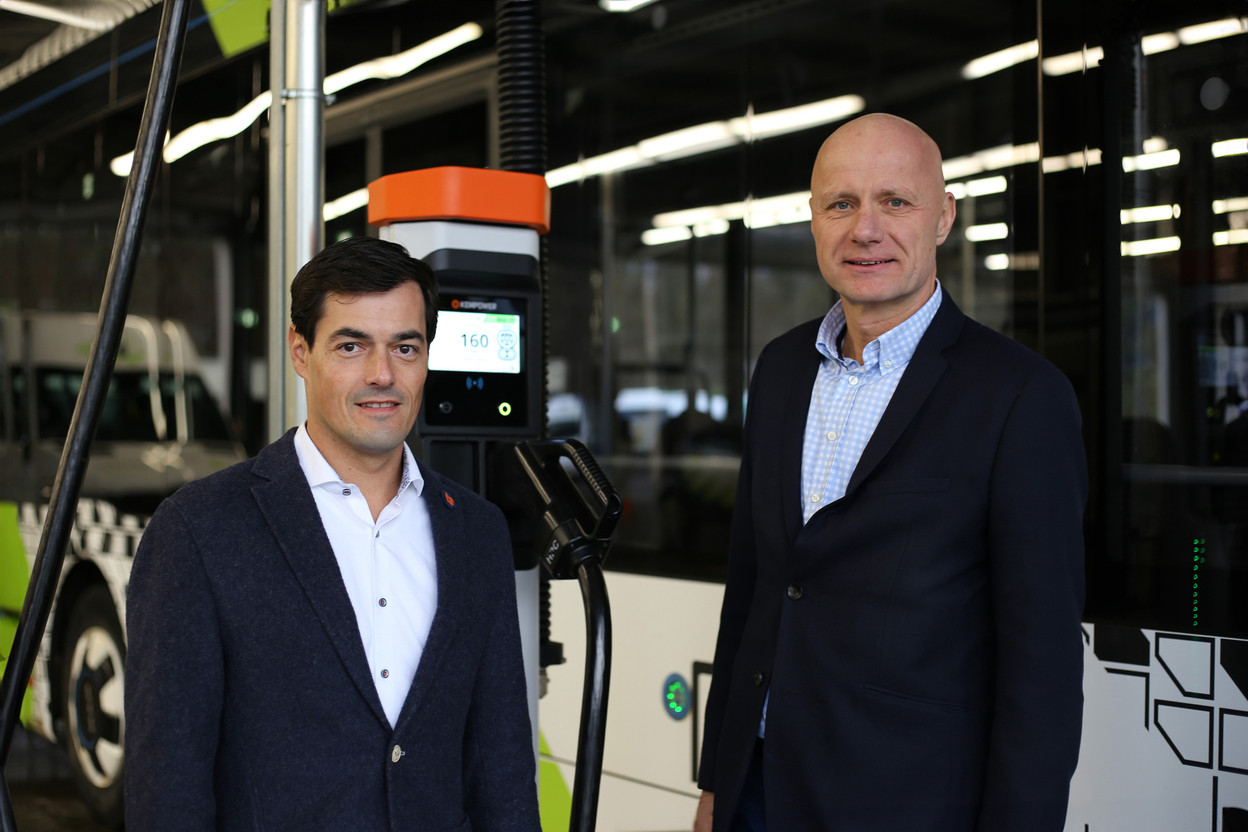
"With electric, we don't just have to manage the vehicles, but also the network. If we charged all 600 buses at the same time, the network would explode. So we need to think ahead: optimise charging, develop smart charging solutions, and equip our sites in the best possible way. 2030 is tomorrow.
Are you receiving financial support from the State for this transition?
"No, it's up to each operator to manage this. We do not receive any specific aid or subsidies for this transition.
Where does your electric fleet stand today and where do you want to go?
"Around 40% of our fleet is already electric. We plan to eventually reach 85 to 90% electric for the entire fleet by 2030 if the customer so requests. There will probably remain a proportion of services, such as certain local school transport services, where all-electricity will still need to be evaluated.
Electricity clearly seems to be the dominant technology under development.

Will hydrogen be part of the solution?
"Hydrogen will be an interesting alternative in certain cases, particularly for range, where it currently has an edge over electric cars. But this will remain a niche market. The production of green hydrogen is complex, and vehicle acquisition costs are even higher than for electric vehicles. At this stage, electric clearly seems to be the dominant technology under development.
Is this technological transformation changing the way you do business?
"Completely. The workshop infrastructure has changed and the jobs are evolving. We now have electricians within the company, and mechanics are concentrating more on rolling stock and electronics than on the classic engine. We have to train drivers and mechanics, adapt the workshops... We support our employees so that they develop and stay with the company. What I'm passionate about is being able to give them prospects.
You launched the start-up Fleetlab, a minibus fleet management software. What role does digital technology play in your vision of mobility?
"Fleetlab was born out of an observation: many digital mobility solutions were very end-user oriented, but forgot the operational aspect. With my background in the field, the idea was to combine what the customer expects today - flexible digital solutions - with a planning tool for the operator. This makes it possible to operate several services, combine them and guarantee the customer punctuality and quality, while using our assets as efficiently and cost-effectively as possible. Technology is a facilitator to optimise our production and offer a reliable, safe and quality service.
And artificial intelligence, how do you approach it?
"At the moment, it's mostly just discussions. I'm mainly looking at the HR impact: how this will structure the work of employees. What interests me most is designing an organisation where, thanks to AI or other tools, employees have the right information and the right framework to make more autonomous decisions. Our responsibility as managers is to design this organisation to attract and grow the best talent.
We therefore need to work on overall attractiveness, in the Greater Region and beyond, and offer careers and development prospects.
In this context, the issue of the attractiveness of Luxembourg and border workers is central....
"Yes, everyone is short of talent and fighting over the same profiles. So we need to work on our overall attractiveness, in the Greater Region and beyond, and offer careers and development prospects. For us, what counts is a genuine corporate culture, with respectful, local management that gives people responsibility and autonomy. It doesn't matter whether the person is a resident or a cross-border commuter: the most important thing is that they feel heard, that they develop and that they want to be part of this transformation.
The language issue also arises when recruiting drivers....
"Today, the standard for drivers is to master at least one of the country's three official languages. Eventually, I think English could be added, which would open up a new talent pool. In the offices, we are already very flexible: the natural language is often French, but more and more meetings are held in English. Languages should not be a barrier. On the contrary, this cultural and linguistic mix is a real asset."
On rail and on water
On a visit to Berlin on 19 November, Mobility Minister 
This article was written for the January 2026 issue of Paperjam magazine, published on 10 December. The content is produced exclusively for the magazine. It is published on the site to contribute to the full Paperjam archive. Click this link to subscribe to the magazine.