When and to what extent can we trust the output of large language models (LLMs)? How do we make them more trustworthy? What’s the difference between truth and fact?
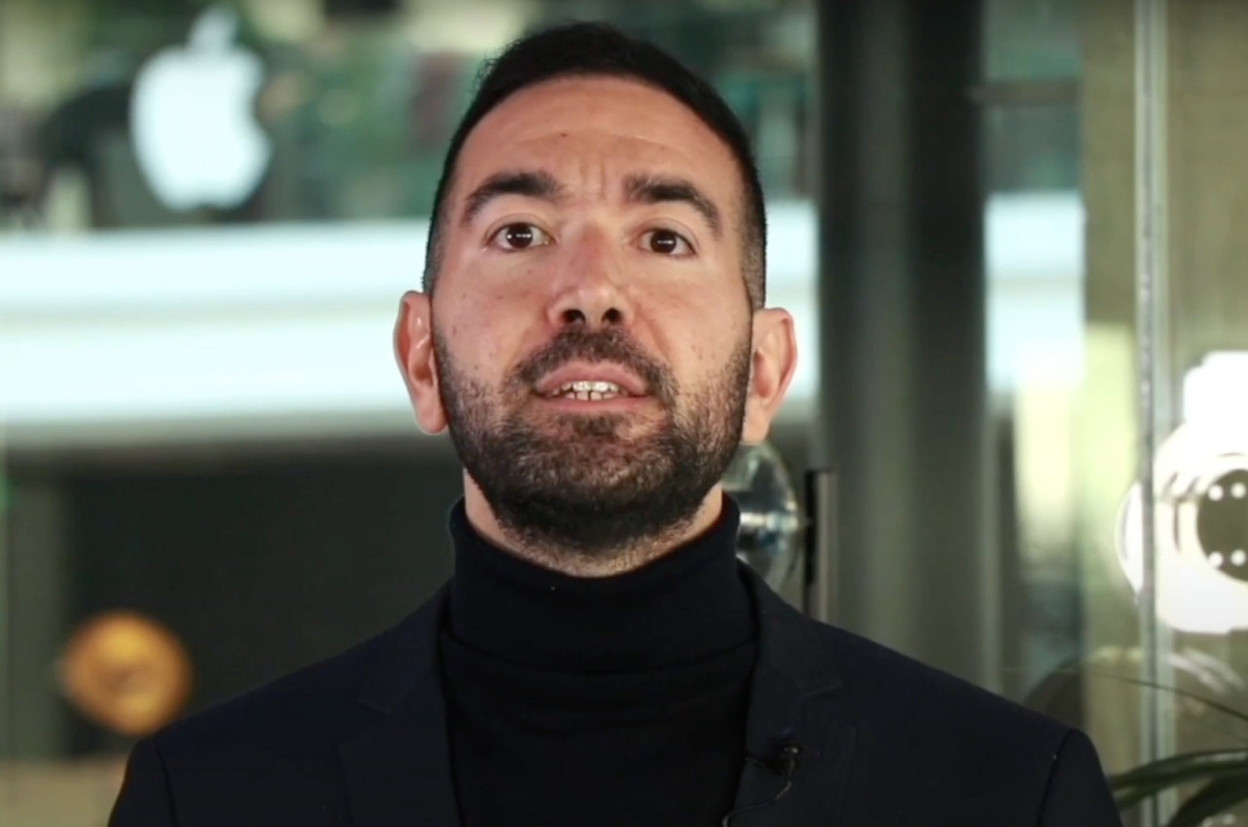
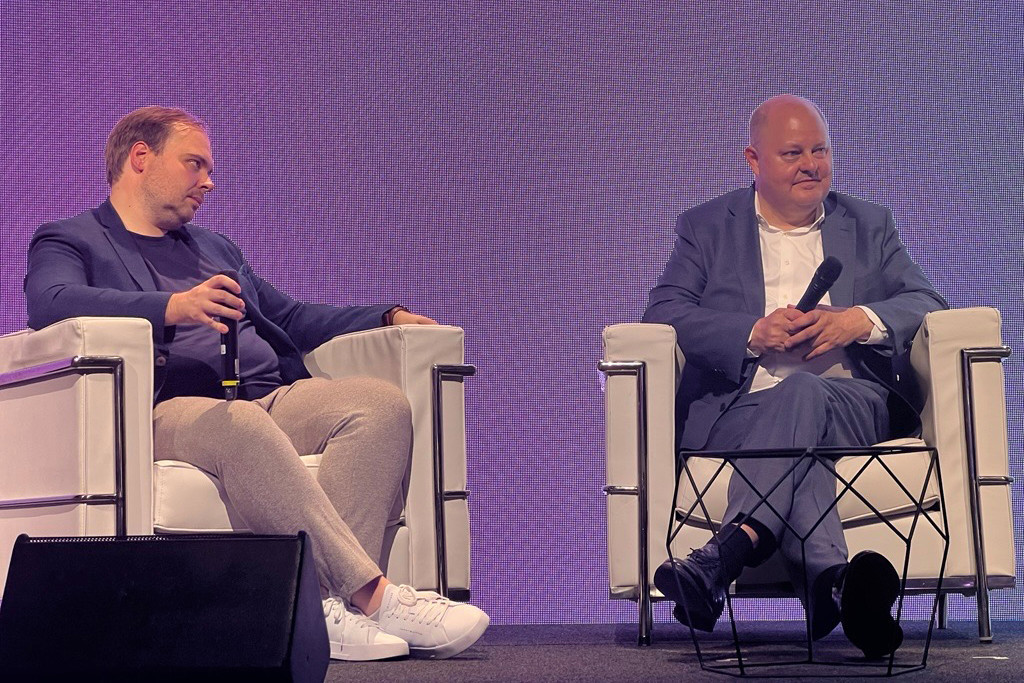
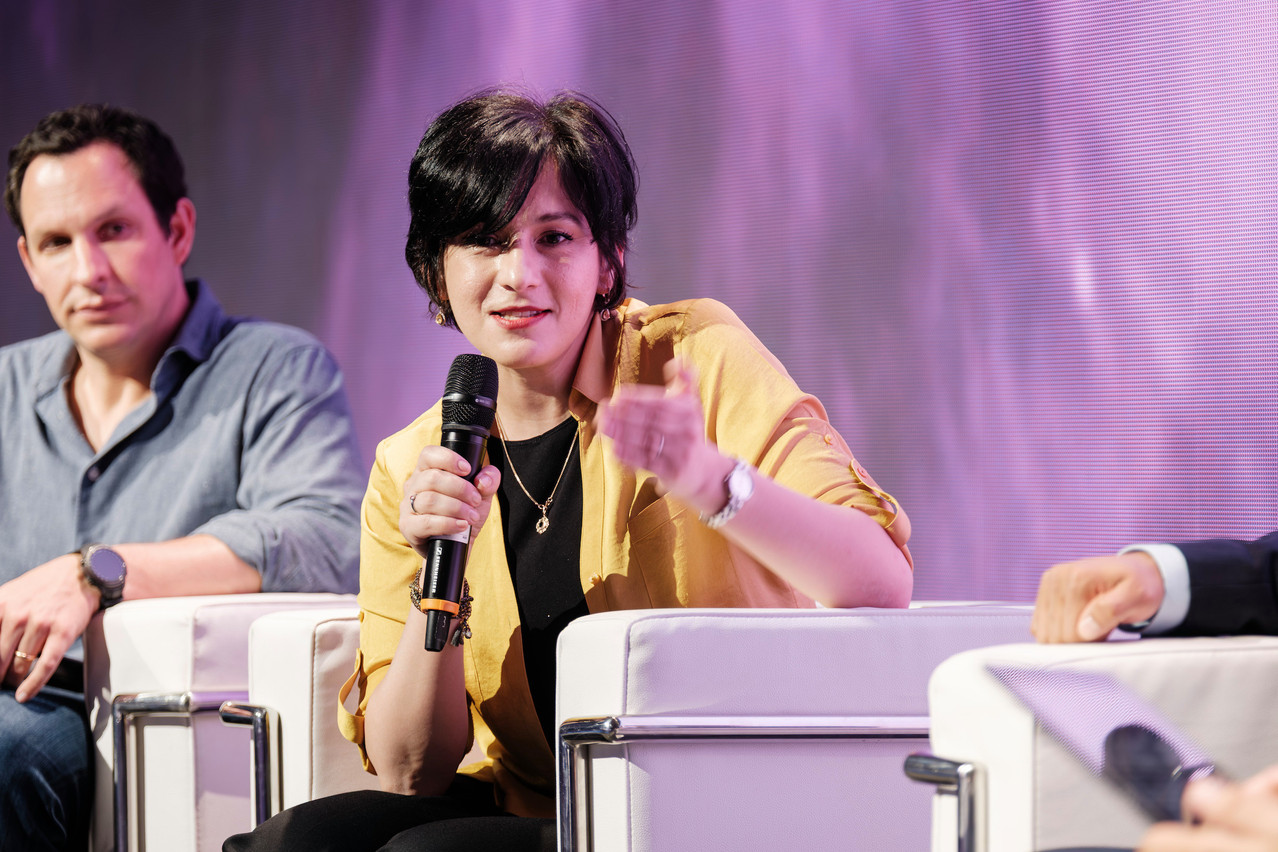
These were the questions informing a panel discussion, at the Nexus conference on 18 June, on the “crisis of truth” in AI. The panel followed on from a similarly themed keynote by Hilde Hardeman, director general of the Publications Office of the European Union.
In her remarks, Hardeman summarised the laundry list of LLM-related risks familiar to everyone: hallucination; bias and prejudice amplification; lapses in privacy and security; intellectual property violations; liability issues. Those amount to imperfections in the machine, while a compounding layer of risk comes in the form of malicious actors, i.e., the decisions by state and non-state entities to create and disseminate myths and disinformation that target humans as well as LLMs.
Disinformation is as old as humankind, Hardeman noted, but digital technologies have speeded and scaled up its reach, making it more dangerous than ever. And the efforts, said Hardeman, to feed AI tools with “data that are anything but trustworthy… is a real, very serious problem.”
You get out what you put in
The first bulwark against bad information is to ensure that good information is also present. For its part, the EU publications office exists to safeguard good information: its mission is to authenticate and publish laws, as well as to publish open data that it is findable, accessible, interoperable and reusable. “The enormous corpus we provide in 24 languages when it comes to law, meticulously curated and maintained, is of great value for AI,” said Hardeman. “It’s a dream for machine learning.”
Merely creating good information isn’t enough, however. Hardeman noted that the publications office must be “extremely cautious” when it comes to the tools and technologies they use for their services, and that they make a point of being transparent about their own use of AI. “Explainability is key.”
The publications office furthermore has to ensure that their data is accessible to LLMs. They try to exert their influence “through carefully designed mechanisms and protocols,” Hardeman said, to push their data to be “really accessed, really ingested by the machines.”
You cope with what you get
“If you build an AI in England and say, ‘what is the best tea in the world?’ it’s going to say Yorkshire tea. And if you have the same AI [but it’s] trained in Southeast Asia, it will say Indian tea, Assam tea. That’s the problem we face.”
This is how Sherin Mathew, panellist and CEO of AI Tech UK, explained the cognitive bias that LLMs have. For him, the response to the problem is, at least in part, that we need to expand our thinking on what “intelligence” actually means.
“AI is synthetic intelligence,” he said. “Not real human intelligence. It’s made. And do we trust human intelligence 100%? Are we 100% accurate all the time? It’s like… do you trust plastic or do you trust wood? Everything has its own benefits… and side effects as well. So we’ve got to take everything with a pinch of salt.”
Instead of trying to build a machine that has no bias, the panellists seemed to advocate an approach like Mathew’s, i.e., one of altering our expectations of LLMs.
“Nothing can be 100% right,” said Christophe Folschette, panellist and CEO of Nuwacom. “So it just needs to be 80% right. The rest is an optimisation problem and an iteration problem. That’s what’s happening with AI.”
It’s worth pointing out that such an approach is probably not viable in all areas of AI, like when a driverless car is checking for pedestrians.
Still, the panellists--prompted by a question from moderator Atreyam Sharma, vice president of Workshop4Me--acknowledged the difference between truth and fact, a useful distinction in parsing the output of LLMs and having Mathew’s grain of salt.
When training an LLM, said Mathew, “the question shouldn’t be the truth. It should be the fact. Because your truth is always your truth. My truth is my truth.” Likewise, the truth that an AI creates is its own, based on its resources and model. “What I’m trying to explain,” he said, “is that there is a fundamental lack of understanding of rights to intelligence.”
Seeking trustworthiness
Even as the panellists urged the public to change their own expectations, they also talked about the other side from which to attack the problem: making LLMs more trustworthy.
Folschette was formerly with Talkwalker, a “social listening” company that, he explained, concerns itself with giving trust scores to sources like journalists. “In AI, there needs to be something similar,” he commented. Because after the fact--i.e., analysing the output rather than the informing dataset--it becomes difficult. “You can do pattern recognition in the results, but it’s very tricky… there are so many aspects that come into it.”
That brought the discussion to the research interests of Djamila Aouada, acting vice director of the SNT at the University of Luxembourg. “There is this technical aspect to it,” she commented, “to basically assess whether it’s a real pattern or a fake pattern, in identifying whether it’s manipulated data. That’s one thing we should continue investigating. We’re finding solid solutions.”
Aouada further pointed out that this is a losing game, however. Not only do the people generating fake media far outnumber those working on detection methods, but truly getting to grips with the problem would require widespread consensus on an approach. “It’s a multi-dimensional problem. You have lawyers, you have big companies, multimedia companies--everyone should agree on a solution. Because we might have a technical solution, but if it’s not adopted everywhere…”
“It’s like having a phone,” she explained, “but it’s not working on a given network.”
“Everyone has to agree, and there should be a consensus. Then we will eventually have some kind of stability over the problem.” She added that this will be difficult to achieve, “but it’s the only way.”
Folschette made a comparison with early-days search engines, which didn’t yet have a system for ranking results based on trustworthiness. “I totally agree… that’s one dimension,” responded Aouada, adding that the idea of trusted sources should be combined with other elements in the AI platform’s decision-making process. “Ultimately,” she said, “you want to have a tag that says: ‘This is fake data, manipulated data.’ Or: ‘This is original data.’”
Which is also the stance of the EU. “I absolutely love the European AI act,” said Mathew. “Some people don’t agree with it, especially Silicon Valley guys. But one thing that I absolutely admire about the European AI act is it almost mandates that, if you made [something] with AI, [you have to] put it out there. It needs to say: ‘This is generated by AI, [this is] how the decisions were made’--and [this requirement you need to] physically implement in the design of the future AI technologies.”