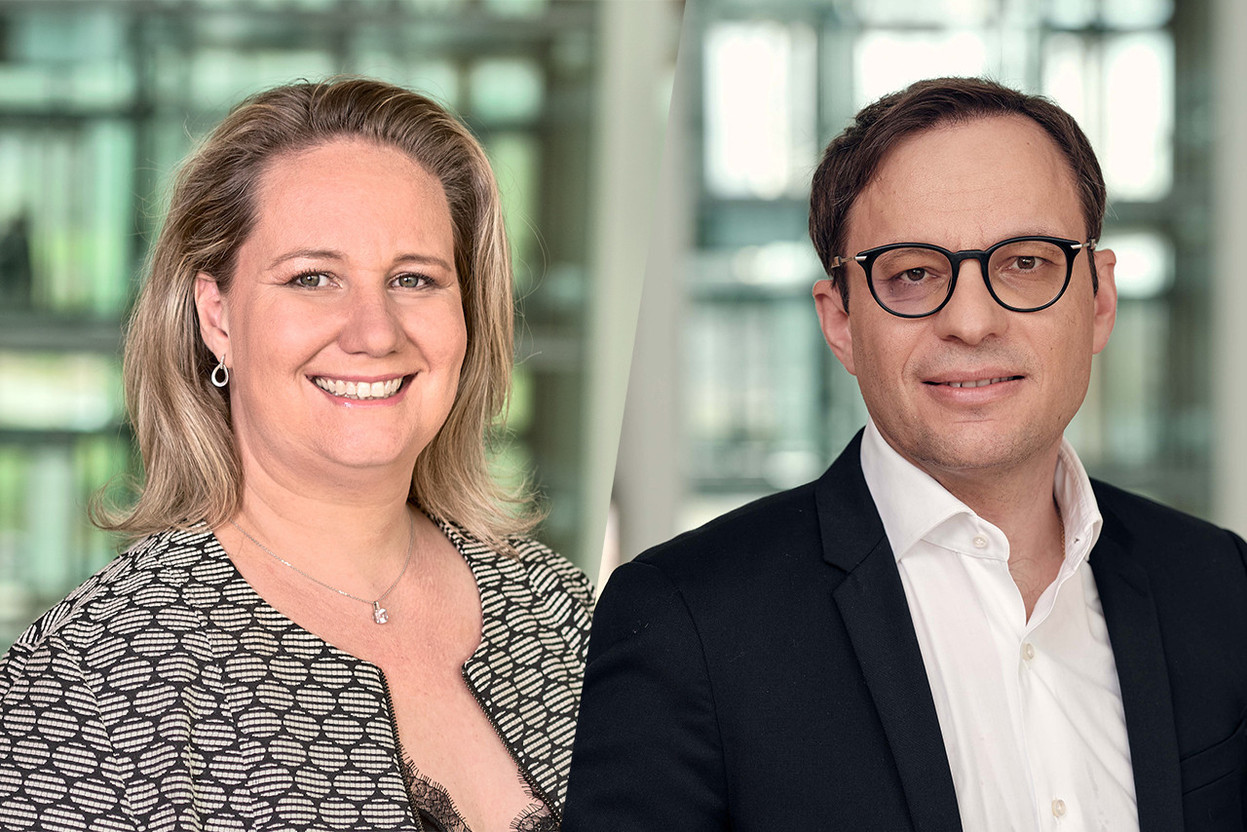
In the fast-evolving landscape of legal services, artificial intelligence is rapidly shifting from niche innovation to strategic cornerstone. Francesca Bennetts, partner at A&O Shearman and member of the firm’s Markets Innovation Group (MIG), offers rare insight--on the sidelines of the Nexus 2025 tech conference at Luxembourg’s LuxExpo--into how one of the world’s leading law firms is using AI to reshape legal practice, and what it means for the future of the profession.
Disruptive technology
Bennetts leads a multidisciplinary team combining lawyers, data scientists, technologists and developers. Their remit is clear: leverage cutting-edge technology to improve client service and operational efficiency. “We see ourselves as disruptors to traditional legal services,” Bennetts explains. “We want to improve the way we serve our clients and do our work using best-in-class technology.”
This disruption is no academic exercise. At A&O Shearman, AI is a “strategic priority”--Bennetts insists--and embedded across three core areas: traditional AI advisory work, bespoke technology development and internal deployment of generative AI tools. “We were the first law firm in the world to deploy generative AI at an enterprise level,” she notes, referencing the firm’s pioneering adoption of Harvey, an AI assistant, in late 2022.
Practical impact
Six months after Harvey’s rollout, the results are concrete. “We asked our lawyers: ‘Can we take Harvey away?’ Everyone said: ‘Absolutely not,’” Bennetts recalls. The tool, now used by over 5,000 lawyers globally, has processed more than a million queries this year. Lawyers report saving “two to three hours a week” on tasks such as drafting and summarising documents--a seemingly modest figure that scales impressively across thousands of users.
Complementing Harvey is ContractMatrix, a proprietary AI solution designed specifically for contract review. Importantly, it integrates safeguards to keep lawyers in the loop and protect confidential data. “The principle is keeping lawyers in the process--validating and checking the output,” Bennetts stresses.
Client curiosity and confidence
Clients, unsurprisingly, are highly engaged with AI’s role in legal work. “Everyone expects that we will be using it,” Bennetts notes, adding that the primary client concern centres on data security. “We have very detailed answers about how we keep their data safe,” she says, highlighting the firm’s robust InfoSec processes.
Beyond security, clients want to learn from A&O Shearman’s experience. Bennetts spends much of her time demonstrating ContractMatrix to clients and discussing use cases. “General counsels are incredibly busy but very interested--they want to understand how they could be using these tools internally,” she observes. “I don’t think there is any client of any law firm who is not interested in generative AI at the moment.”
This client interest is underpinned by trust. Bennetts acknowledges that being a Magic Circle firm “comes with a level of comfort” for clients, who view AI as an extension of trusted legal advice rather than a replacement.
AI’s effect on the legal workforce
One concern often voiced is whether AI will reduce the demand for lawyers. Bennetts is unequivocal: “I don’t think we are going to have a wholesale replacement.” Instead, AI will “make every lawyer much more efficient” by automating routine, administrative tasks--work “clients are not coming to us for.”
She recalls the evolution of legal work: “25 years ago, I had to compare documents manually. That no longer exists thanks to technology. That doesn’t make me a worse lawyer; it lets me focus on the substantive issues faster.” AI’s value lies in accelerating lawyers’ ability to address complex, high-value work.
Training the future lawyer
Looking ahead, Bennetts expects familiarity with AI tools to be a baseline skill for lawyers, comparable to knowing how to use Google. Her team’s pilot qualification programme exemplifies the hybrid professional she envisions: “One associate in my team has an engineering background and legal expertise. She spends six months in innovation, six months in funds, alternating, and will decide whether to specialise in tech or funds.”
This combination of domain knowledge and technical fluency is critical. “She’s like a secret weapon. We want lawyers who bring subject-matter expertise and ease with technology,” Bennetts says. “That’s the lawyer of the future.”
Path to agentic AI
While current AI and generative AI tools require active lawyer oversight, the future may see “agentic AI” systems that operate more autonomously. Bennetts’s team is already collaborating with Harvey to develop agentic AI products for clients, particularly for fund review workflows.
The concept is simple but powerful: clients upload fund documents, and the AI extracts key commercial, operational, legal and investment risks automatically. It can also run workflows, such as compliance checks or investment permissibility analyses, producing summaries for investment committees--all without direct lawyer input.
But Bennetts stresses the caveat: “There is a huge amount of legal work upfront--training the model, ensuring data accuracy. The success depends on how good we are at this foundational work.” Far from replacing lawyers, agentic AI will extend their reach and precision.
Changing invoicing expectations
AI’s growing role is also shifting client expectations around cost and value. Bennetts sees a dual approach: complex work remains on traditional billing models, while standardisable tasks lend themselves to fixed fees enabled by technology.
“When we pitch due diligence work, we give clients two numbers: a purely human cost and a technology-assisted cost,” she says. “We want to show clients the value and be transparent about where tech is used and how.” This flexibility not only differentiates the firm but also aligns with client demands for efficiency and predictability.
Bennetts’s experience assures that AI is not a futuristic threat but a present-day strategic imperative for elite legal practice. With robust governance, bespoke technology and a focus on human expertise, AI is simply a versatile tool that makes lawyers faster and more efficient.