1. A gap finally filled
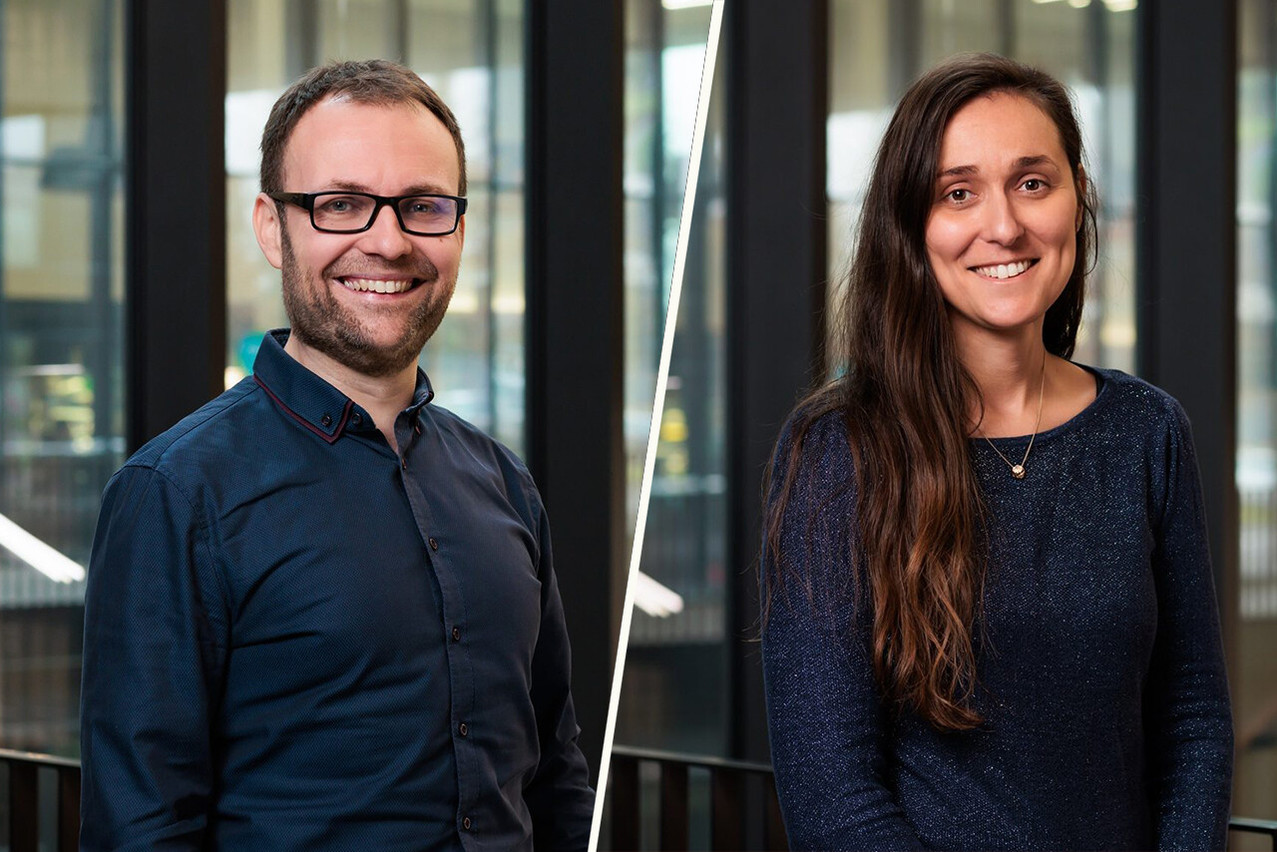
Until the start of this academic year, it was necessary to leave Luxembourg to undertake a full degree in actuarial science. This was an anomaly for a financial centre where insurers, banks, consultancy firms and the regulator rely heavily on these risk specialists. The new degree programme at the University of Luxembourg fills this gap. Its aim? “To strengthen the actuarial expertise available in the country in the long term,” explain Christophe Ley and Héloïse Labit, co-directors of the programme. Designed in collaboration with the Luxembourg Institute of Actuaries (Ilac) and supported by the Association of Insurance and Reinsurance Companies of Luxembourg (Aca) and the ministry of Finance, it attracted nearly 70 applications for 15 places. Fourteen students were ultimately selected. Mainly from the fields of mathematics and statistics, they make up the first international cohort, several of whom had previously studied in Luxembourg.
2. Half an answer
With 14 students, this first intake will only partially meet the sector’s needs. Catherine Cernesson, president of the Ilac, estimates that the financial sector needs “around 25 new actuaries a year”. Even if all of them were to become actuaries in Luxembourg, this cohort would cover only just over half of that figure. The University plans to launch a new intake each year and will be able to increase its capacity to 25 students, depending on market demand. The local talent pool will therefore gradually grow, whilst international recruitment will continue.
The shortage is mainly affecting the two ends of the market.
3. A two-tier shortage
But the shortage of actuaries is not limited to recent graduates. “The shortage tends to affect both ends of the market,” explains Catherine Cernesson. With a lack of candidates at the start of their careers, employers are already recruiting graduates in econometrics, applied mathematics or engineering, whom they then train in actuarial professions.
At the other end of the spectrum, experienced candidates are also hard to come by, particularly for the most technical roles or those involving a high level of responsibility. As a result, companies are still looking abroad for some of these skills. The master’s degree may gradually change the situation, but not immediately: its first graduates will also need to gain several years’ experience before they can take on these roles.
4. Beyond the figures
The role of the actuary has expanded. As well as calculating premiums, actuaries assess risks, calculate provisions and monitor companies’ solvency. “Programming and data analysis skills now play a significant role in actuarial practice,” emphasise the programme directors. The course will therefore combine actuarial science, finance, economics and data science.
5. Train to retain staff
Training actuaries in Luxembourg does not guarantee that they will join the local insurance sector. Until now, many have gone abroad to study, where work placements, professional networks and initial job offers could keep them there. “The main challenge is to attract or bring back these young talents,” insists Catherine Cernesson. The master’s degree reduces this risk, but graduates may also turn to banking, investment funds or consultancy. ILAC nevertheless expects the majority to choose the insurance sector.
This article was written for the supplement Insurance from the November 2026 issue of Paperjam magazine, published on 14 October. The content is produced exclusively for the magazine. It is published on the website to contribute to Paperjam’s comprehensive archive. Click on this link to subscribe to the magazine.
Is your company a member of the Paperjam Club? You can take out a subscription in your own name. Please let us know via club@paperjam.lu.