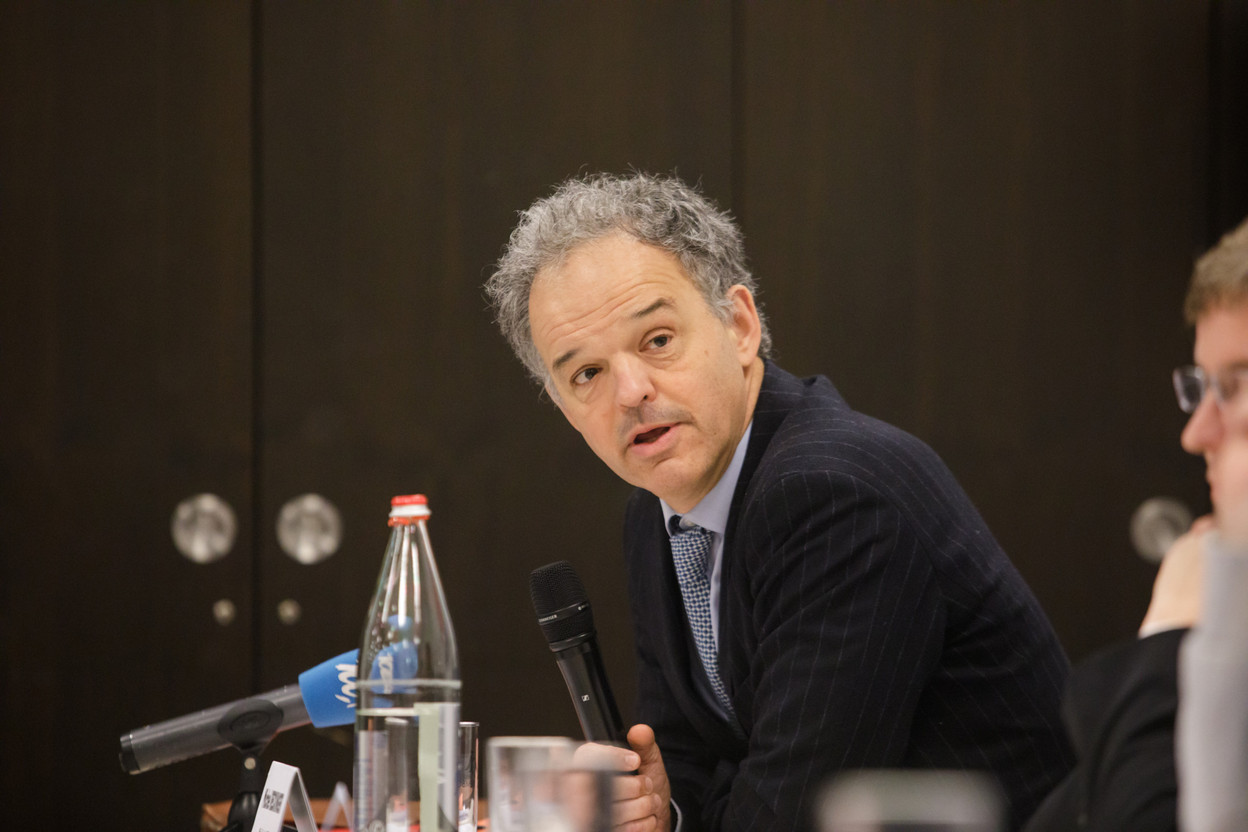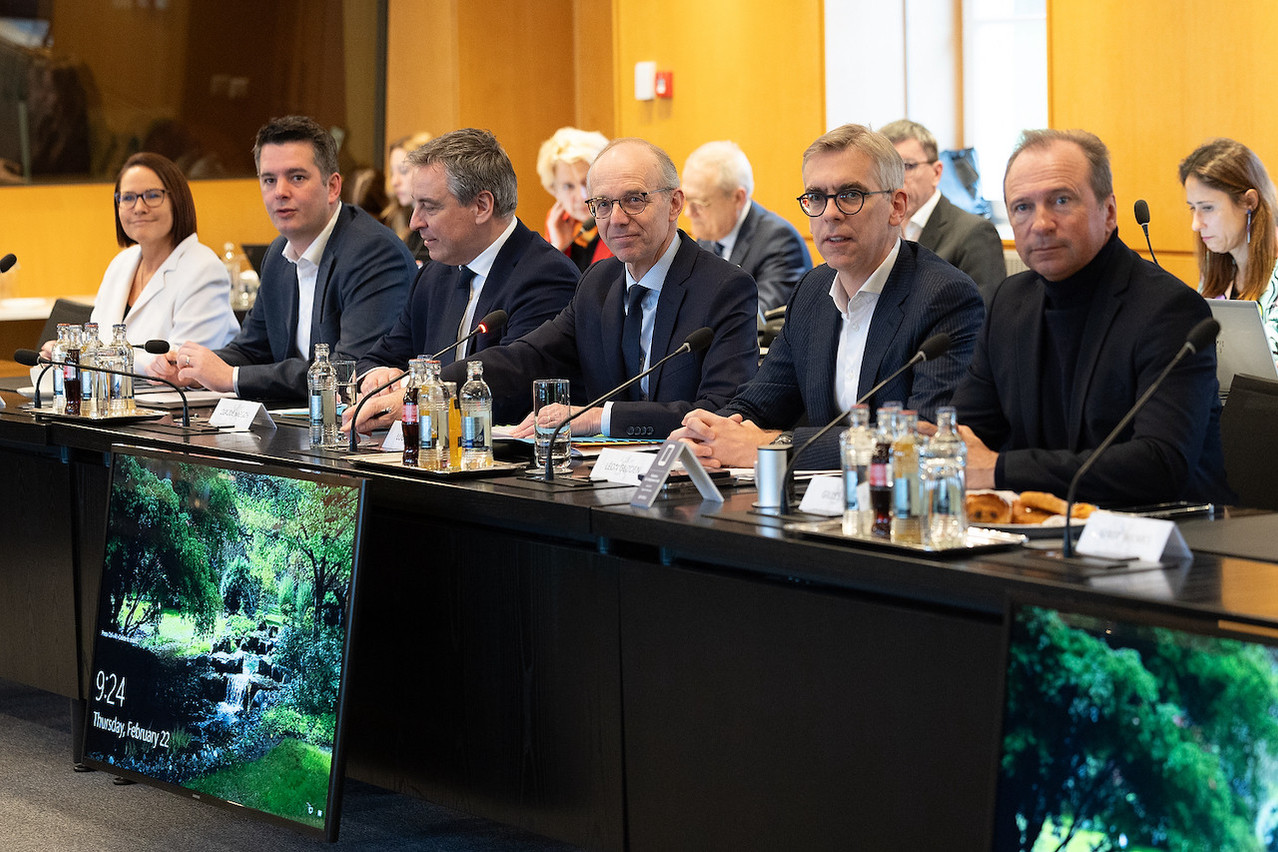
A housing roundtable held this week, part of the CSV-DP coalition agreement, was already the fourth stage in the new policy being pursued by the new government. It followed three series of measures: the declaration of a state of crisis for the construction sector, the tax support measures announced on 31 January and, finally, a €600m package to enable the government to invest in sustainable housing. “A package that could be revised upwards,” confided the prime minister, 
On Thursday, the aim was to find ways of building more and building faster. This twofold acceleration is intended to respond to a twofold crisis: that of the construction sector and that of housing. Frieden said: “We need to increase the supply of housing. In Luxembourg, we have an average of 12,000 extra residents moving to the grand duchy every year. So we need around 6,000 extra homes a year. It’s a huge national effort. The idea is to see how we can build more quickly by listening to all the parties concerned.”
Procedures, procedures
And the first obstacle identified by all the participants is that of administrative formalities. “Procedures that have become increasingly complex over the years, to the point where they have become a breeding ground for litigation. This morning’s discussions focused on how we can reduce a number of procedures that are currently preventing rapid construction.”
Among the avenues explored, Frieden mentioned three. Firstly, reducing the time within which planning permission must be granted or refused. Without setting a standard deadline--this will be discussed at working meetings between stakeholders, which will begin and last until the end of May--any delay would result in the application of a new principle: silence is equivalent to agreement. The prime minister also wanted to extend the life of a building permit by one year. At present, planning permission is valid for just one year. Under his proposal, this would be extended to two years. Finally, the aim is to eliminate the need for planning permission for simple “small” modifications to a building. These are all measures that will have to be discussed with the communes, stated Frieden.
Still on the subject of procedures, the government is seeking a new balance between its stated housing and environmental protection objectives. “We want to impose a principle of proportionality in the application of environmental rules.”
The government wants to discuss the relaxation of various financing criteria with the banking sector. In particular, the rule that a property project can only be financed if 80% of the housing units are pre-sold. The possibility of co-financing has also been raised, as has that of supporting the sector for players who may find themselves in a difficult situation. The regulator will be involved in these discussions.
Bilateral meetings
All these avenues will be explored in working groups and bilateral meetings with the relevant ministries. “A common line has emerged with [the local councils federation] Syvicol and the private sector, but a number of practical points need to be studied. That’s why the various players will be meeting again to provide us with conclusions by the end of May.” On the subject of public-private partnerships, for example, the ministry of finance will be looking into the possible shape of such agreements.
All these meetings are intended to lead to draft legislation or administrative decisions. “For all the points that fall within the sole remit of the government, I want us to reach concrete decisions before June", concluded the PM.
Originally published in French by Paperjam and translated for Delano