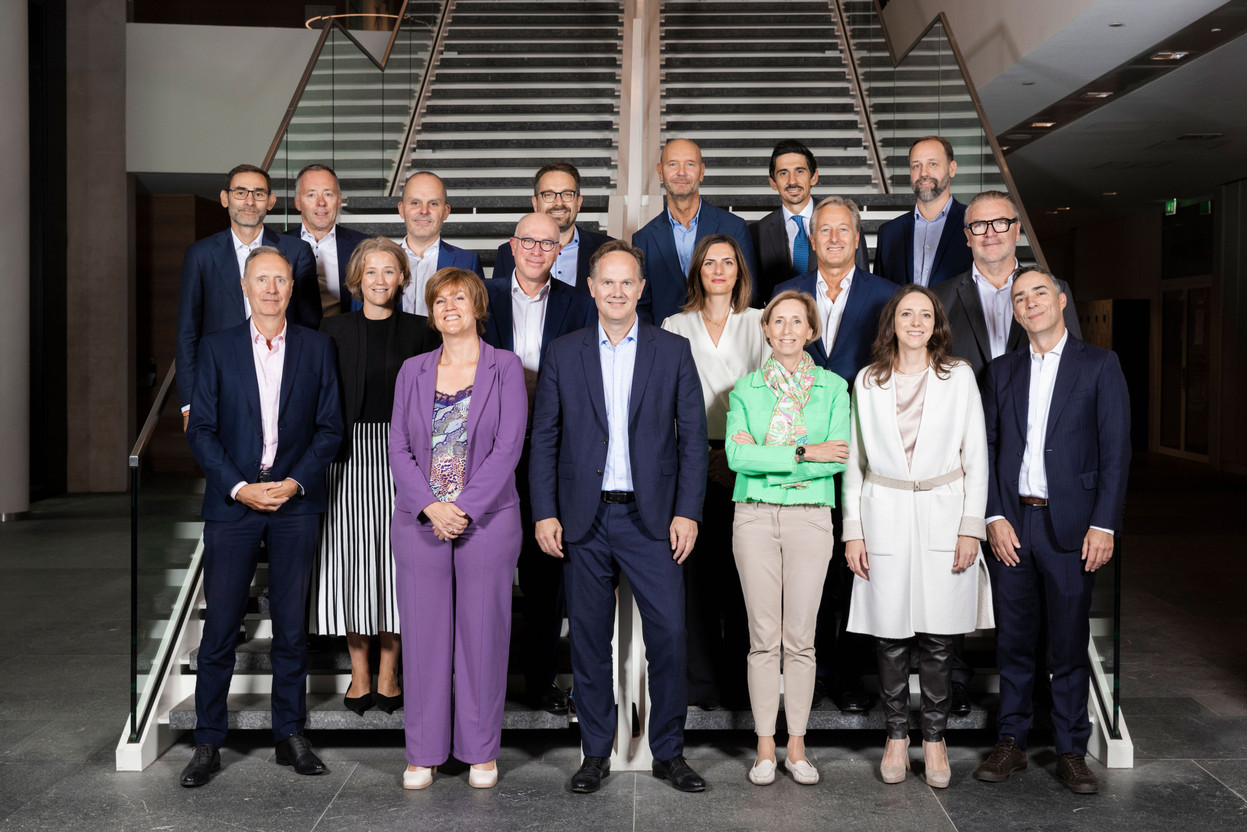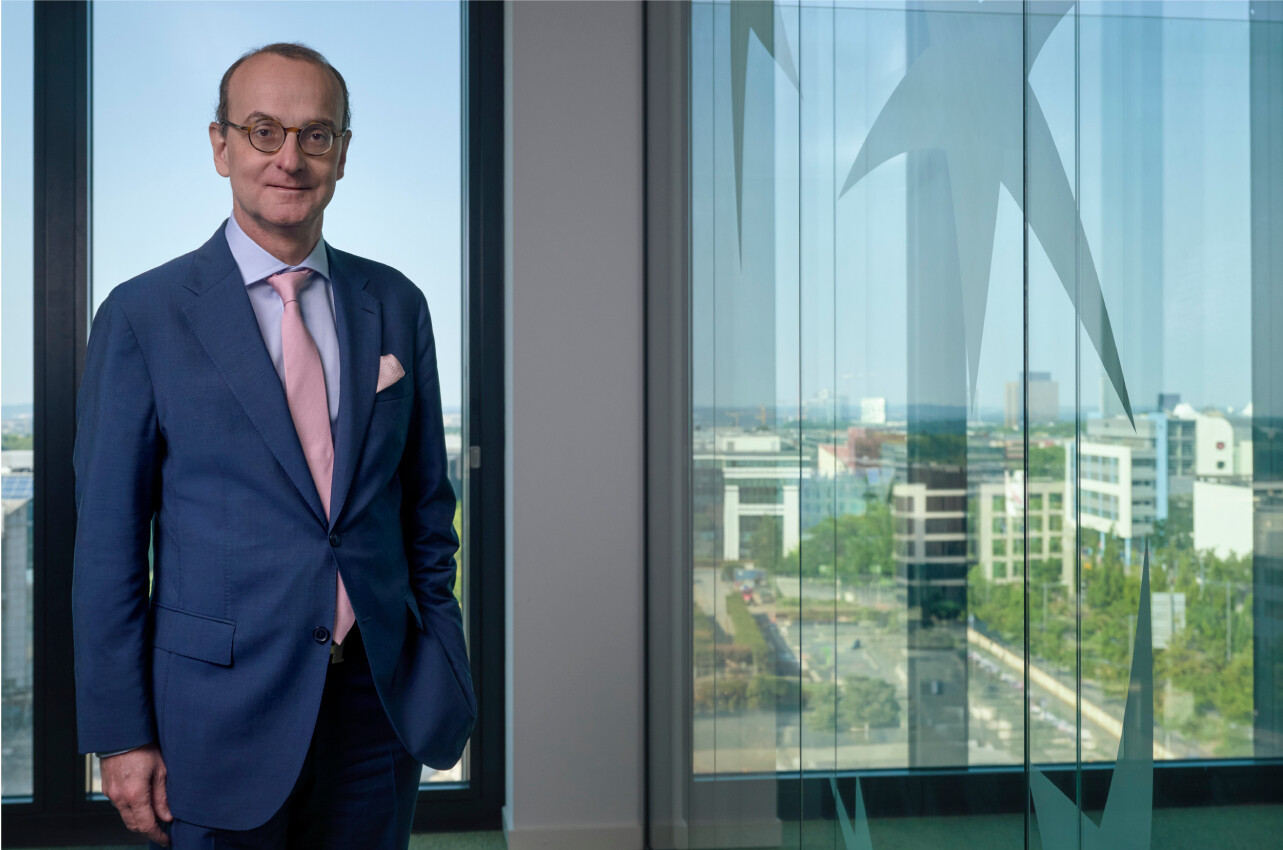
Before the summer, you took over as head of BNP Paribas’s Luxembourg branch and its Corporate and Investment Banking (CIB) operations in Luxembourg, as well as taking charge of Securities Services in Luxembourg, Ireland and the Channel Islands. You are already very familiar with Luxembourg. What path has brought you back here today?
Laurent Durdilly. – “At the time, I was involved in setting up Caceis Luxembourg following the split between the private banking and institutional financial services divisions. I joined BNP Paribas in 2018 to develop the private markets business, including in Luxembourg.
I am currently CEO of the Luxembourg branch of BNP Paribas, Head of CIB in Luxembourg and Regional Head of Securities Services for Luxembourg, Ireland and the Channel Islands. These three locations are major fund domicile centres, with a strong ‘alternative’ component: private markets in Luxembourg and the Channel Islands; and hedge funds in Ireland.
In Luxembourg, the traditional liquid fund sector continues to grow, but at a slower pace than the alternative sector: growth of around 3-4% in the former, compared with 15-20% in the latter; these figures are set out in the Monterey Insight reports, amongst other sources.
How are these three functions related?
“Private debt funds have often been portrayed as competitors to the banking sector. In reality, the major private debt managers have become significant clients of the banks. BNP Paribas has a highly international client base and works with the major Anglo-Saxon private markets managers, particularly in private debt. To support them globally, it is essential to have a presence in these fund domicile centres.
The expansion of our services in Luxembourg enables us to offer an integrated banking solution, encompassing securities services, financing and cash management. Private market managers are generally smaller organisations than large traditional asset managers. They focus on investment and fundraising and have smaller operational teams. They cannot afford to deal with multiple banking contacts.
Our aim is therefore to provide fund managers with access to the entire bank through a limited number of points of contact who are able to meet all their needs. Securities Services is one of CIB’s three main business lines, alongside Global Markets and Global Banking. We integrate all three into a seamless customer experience. Two of these locations (Luxembourg and Ireland) are also the preferred markets for the listing of ETFs, which represent a key growth priority for BNP Paribas.
Being able to manage them using the same team and the same platform provides clients with a consistent experience and consistent reporting, regardless of where the fund is domiciled.

What does this integration mean for your teams in Luxembourg?
“Our clients require a high level of expertise. Luxembourg has some excellent specialists in securities services and asset servicing, which we are complementing with expertise in financing and cash management. We also draw on the Group’s global infrastructure, platforms and back-office operations. For alternative investments, we use global platforms. A private debt or private equity fund can therefore be managed on the same platform in Singapore, Australia, Spain, Luxembourg or the United States.
This is important because these funds often comprise structures established in several jurisdictions. US vehicles may co-exist alongside Luxembourg, UK or French vehicles. Being able to manage them using the same team and the same platform provides the client with a consistent experience and reporting, regardless of the fund’s domicile.
If the platforms already exist, what is the main challenge?
“We must take a holistic approach to the customer, make full use of the synergies between our business lines, and give them access to the whole of the bank through a small number of points of contact. We also need to develop our skills. When I joined BNP Paribas in 2018, the Luxembourg branch had around 1,150 staff, of whom about 20 specialised in private markets. The total workforce is similar today, but 360 people work in private markets.
What sort of candidates are you looking for at the moment?
“We are expanding our team with people who have a background in accountancy and several years’ experience in an audit firm. We are also looking for engineers who are capable of modelling, developing in Python and understanding artificial intelligence. Private-sector processes are less standardised than those in the public sector. We are therefore looking for people who can model these processes and identify opportunities for automation. We have also established partnerships with educational institutions. This transformation of roles and skills must be managed gradually. It is essential to offer opportunities for career mobility and training to our teams.
Doesn’t automation lead to a reduction in the human element?
“To automate a process, you first need to understand it from start to finish. We need people who are capable of understanding a process in its entirety. In private markets funds, managers demonstrate almost limitless creativity, particularly when structuring products; this involves highly complex calculations.
These funds, which are based on bespoke contracts between fund managers and institutional investors, can no longer be managed in a reliable, secure or scalable manner using Excel. We have therefore opted for a single, comprehensive platform that provides reliable and highly detailed reference data, offers scalable calculation modules and delivers transparent reporting for full traceability at every stage of the calculation. To support this approach, we are strengthening our teams with engineering talent, in order to bring the necessary expertise to the automation and management of these complex models.
To what extent do you rely on external data providers?
“It depends on the activities. In regulated markets, it is common practice to work with data providers for prices and instruments. In private markets, the data is, by definition, private. We have to collect it ourselves. Data capture is therefore a major challenge. The information is often found in unstructured or partially structured documents. We have launched several projects to automate this collection, and the results are encouraging.
The same question arises for investors in funds, for whom we carry out KYC checks on behalf of our clients. Here too, we receive a large number of documents and are investing in platforms and tools capable of processing them.
A significant development now makes it possible to create ETF sub-funds within traditional funds. Luxembourg is very active in this area. Active ETFs also represent a new segment in which it is well positioned.
Do liquid markets and private markets require two different approaches to automation?
“These are two different approaches. For a money market fund, the processes are highly standardised. The aim is to identify anomalies and eliminate them. In private assets, standardisation is virtually non-existent. The challenge, therefore, is not to eliminate all exceptions, but to identify the common elements between them: what can be automated and what must remain flexible in order to preserve the ability to adapt. At both ends of the market, the segments that are growing are ETFs, where a very large proportion could be automated, and private markets, where human expertise remains crucial.
Why are private markets playing an increasingly important role in the financing of the economy?
“European countries are relatively heavily in debt. To finance future investments, we must therefore mobilise private capital. The growth of private markets can also be explained by this need to finance infrastructure, the energy transition and sovereignty.
In which sectors is Luxembourg gaining ground?
“Luxembourg has become the leading European centre for private assets. Its position is particularly strong in the private debt sector. Infrastructure and private equity are also growing very rapidly. The country boasts a dynamic ecosystem and stability, which are significant advantages. Diversity is one of the centre’s greatest assets. Our sector brings together more than 60 nationalities. English is the common language that enables everyone to understand one another: it is the new Latin.
Do you see any other areas of growth for Luxembourg?
“Luxembourg is also gaining market share in the ETF sector. Historically, Ireland was the preferred destination in Europe, particularly for major US asset managers. A significant development now makes it possible to create ETF sub-funds within traditional funds. Luxembourg is very active in this area. Active ETFs also represent a new segment in which it is well positioned. This is an opportunity that Luxembourg must continue to build on.”