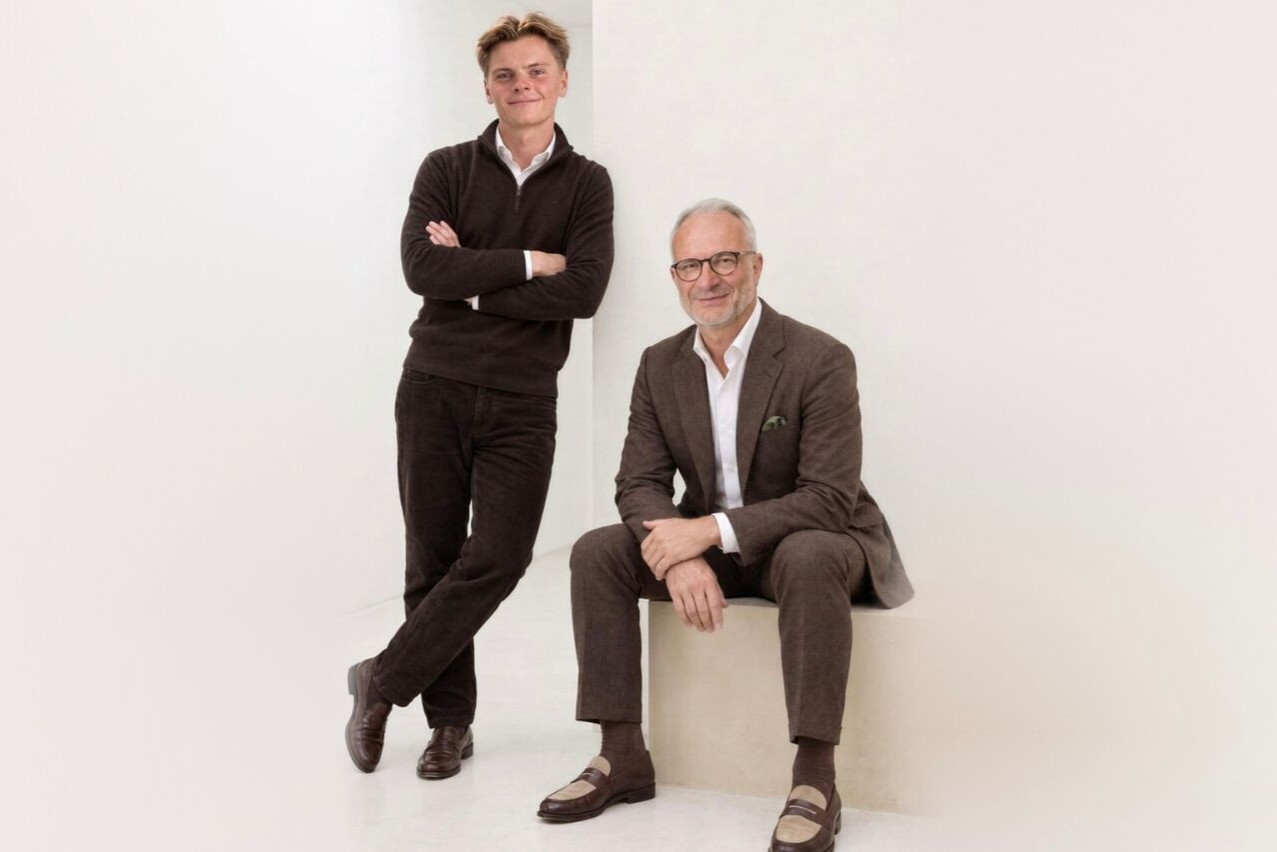
Since its launch on 19 October, the two founders have been delighted by the level of interest, which has exceeded their expectations. The first enquiries have come from SMEs, but also from large corporations that have already begun exploring AI – whether in their processes or through staff training – and are seeking external support to put it into practice. “Large corporations are asking themselves the same questions as SMEs: the discussion has begun, but they lack someone to guide them through the implementation process,” observes 
The creation of Naia addresses a real need: according to a 2026 Statec study, more than 90% of Luxembourg’s workforce could see their roles change as a result of AI. However, across Europe, only 17% of small businesses use AI, compared with 55% of large businesses (Eurostat, 2025).
A tool, not a substitute
For Naia, AI is only part of the equation. It can read, summarise and write faster than humans, but it cannot replace judgement, business expertise or an understanding of the issues at stake. Hence its tagline, “Meet the I in AI”, and the handwritten “i” in its logo: people remain at the heart of the process. According to a 2026 ECB study, European companies that make the most use of AI are more productive, without reducing their workforce.
Understand before acting
Naia never starts with a tool, but with an assessment. The agency then proceeds one task at a time, choosing the most useful tool rather than the most spectacular one, and measures the time saved – before and after – so that every manager can assess the results. Neither an AI guru nor a traditional consultancy: no off-the-shelf solutions, no jargon, no promises of revolution with every new model.
At Harlequin, for example, a global leader in dance flooring for the entertainment and events industries, the time taken to summarise a 25 to 100 page site report has fallen from 30 minutes to 3 minutes. Yet the technical director remains responsible for setting the framework and drawing conclusions. “An AI assistant can summarise a hundred pages in a few minutes. Knowing what to take away from it remains the job of a human,” explains 
Naia’s aim is not to make businesses dependent, but to make them self-reliant. Training plays a central role, as technology is only useful if those who use it know how to make the most of it. Furthermore, in Luxembourg, SMEs can receive funding for up to 70% of their project costs through the SME Package AI.
Two visions, one shared outlook
Naia was born from the meeting of two generations. Patrick Lesage has been supporting Luxembourg-based businesses through Takaneo for over twelve years; Thibault Sablon grew up with digital tools. One understands what businesses need; the other knows what AI can do. Their motto: “Less about AI, more about what you can do with it.”
Further information at www.naia.lu.