The project to construct administrative buildings for the European Stability Mechanism (ESM) and the state in Luxembourg-Kirchberg has reached a decisive stage. In its supplementary opinion of 27 March, the Council of State lifted its formal opposition, paving the way for the adoption of the bill, after several months of legal deadlock.
At the heart of the initial dispute was the structuring of the financing. In its opinion of 19 December 2025, the Haute Corporation ruled that the government's decision to combine the funding for the three buildings into a single overall package of €420m was unconstitutional. Such an approach did not comply with the requirement of speciality set out in Article 117(3) of the Constitution, which requires separate legislative authorisation for each major project involving a significant financial commitment by the state. The Council of State therefore required the cost of each building to be itemised.
The government has since revised its position. The amendments introduced at the end of January 2026 replace the overall envelope with a detailed breakdown of costs, with specific budgetary authorisation for each of the three buildings. This change is a direct response to the demands made by the Conseil d'État, which points out that the new system now makes it possible to clearly identify the specific cost of each building. Under these conditions, the institution states that it is "in a position to lift its formal objection in question".
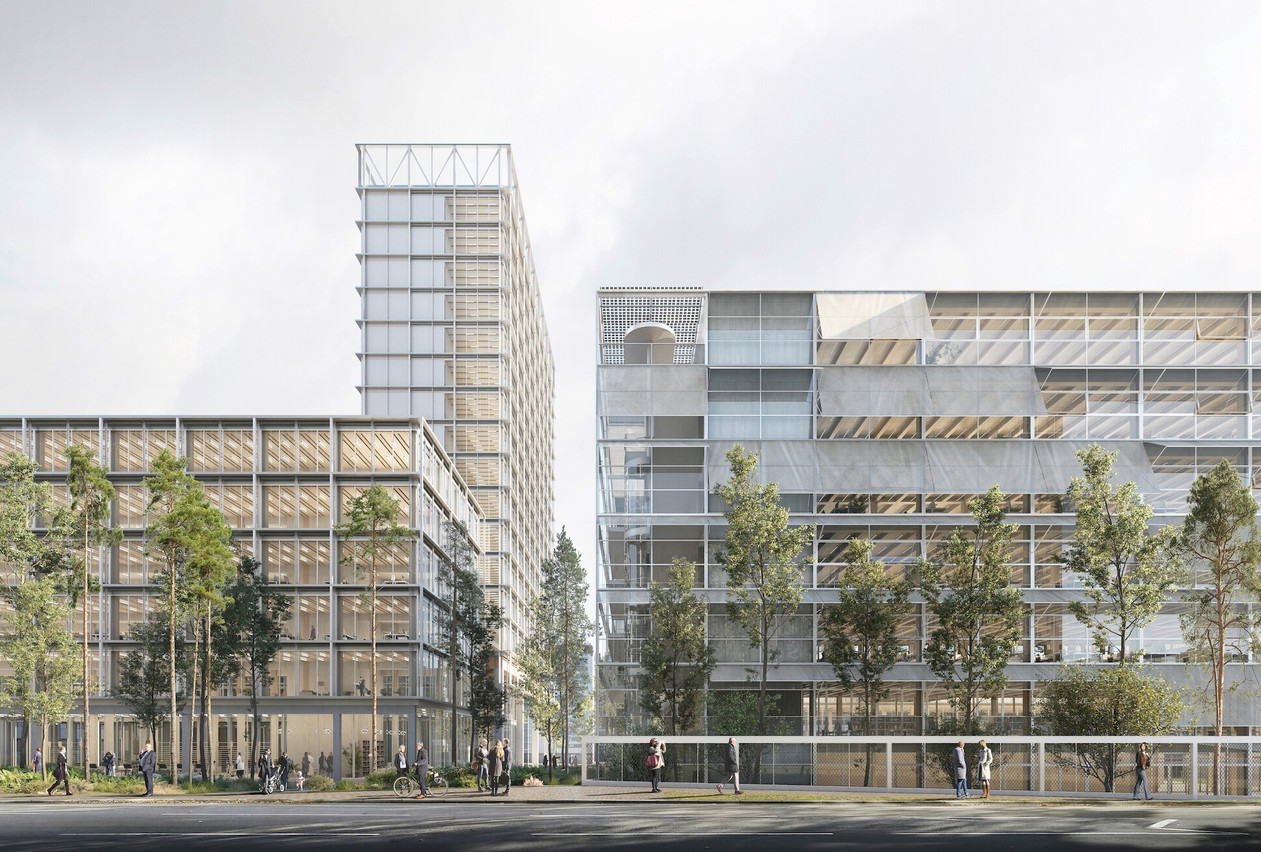
The project involves the construction of three separate buildings in Kirchberg: a building for the ESM, as well as two administrative buildings for the needs of the state, called "Lux" and "État", the latter two being linked by a common basement. The complex sits on a strategic 1.6-hectare plot in the heart of the European Quarter.
The ESM, from tenant to owner
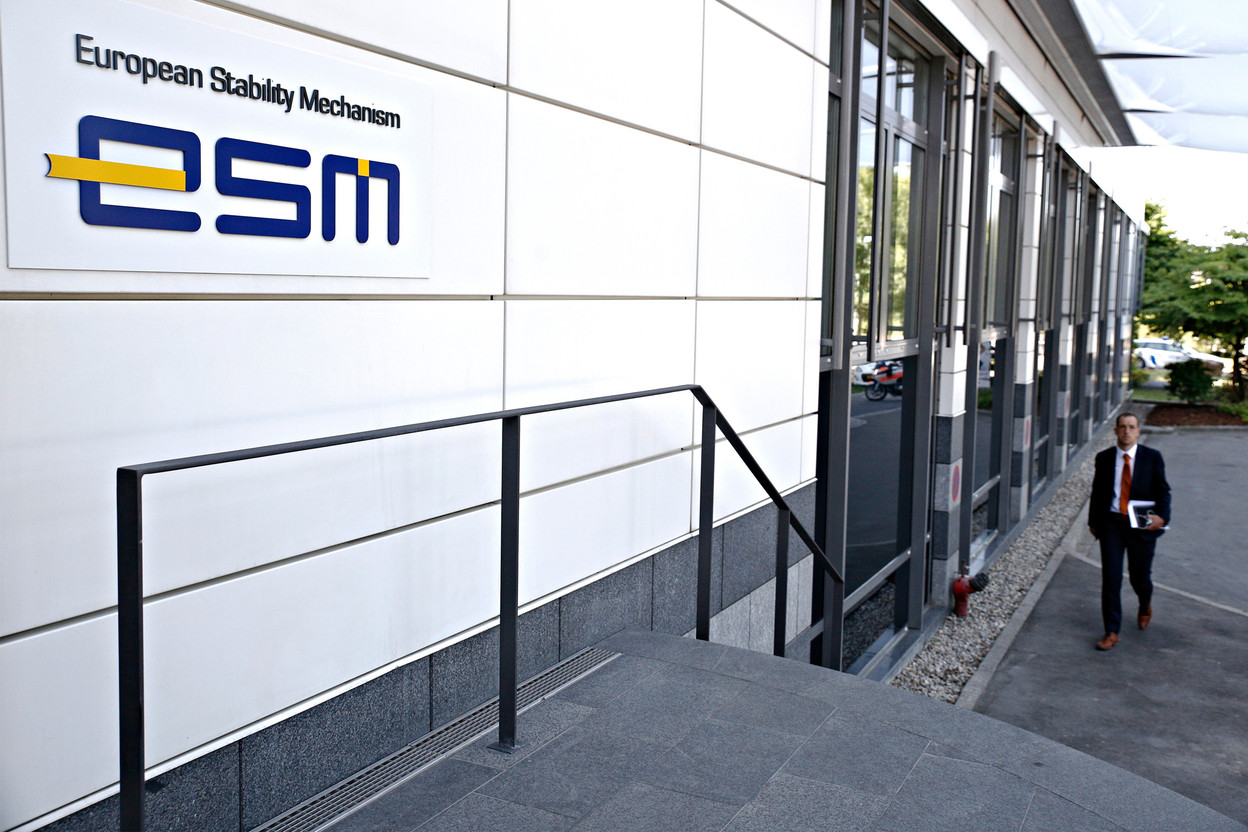
Beyond the legal correction, the project responds to a structural change in the ESM's needs. The institution, created in 2012 to safeguard the financial stability of the eurozone, currently occupies rented offices in Kirchberg. This building will have to undergo major renovations in the short term, making a move inevitable in the next few years. Against this backdrop, the Member States of the eurozone have approved the construction of a new headquarters in Luxembourg, following an in-depth feasibility study and market analysis.
The future ESM building is designed for around 20,000m² of gross floor area and 350 workstations. It will include office areas, meeting and conference rooms of various sizes, as well as specialised areas such as archives, IT and technical rooms, training areas, a library and catering facilities. The programme also includes special facilities, including a security pavilion, health areas and multifunctional zones, as well as a car park and logistics infrastructure. The complex is designed to host high-level meetings, including those of the ESM Board of Governors.
The choice to build rather than continue to rent is based on a clear financial rationale. The net present value analysis concludes that there will be substantial savings in the long term, compared with equivalent leasing. The project also provides ESM with a long-term property asset, reinforcing its institutional stability.
Three buildings, three ceilings
Environmental ambitions are another key aspect of the project. The new headquarters aims to be a zero-emission building, in line with European climate objectives, with high-level certification. This is part of ESM's overall strategy, particularly in terms of its extra-financial rating with international investors.
Financially, the overall cost of the project remains in the region of €420m, but it is now divided between the different buildings. The ESM building alone is capped at €137.2m, indexed to changes in construction prices. The envelopes of the other two buildings follow the same logic of individualised capping.
The arrangement adopted is based on a budget neutrality mechanism for the Luxembourg state. Expenditure on the construction of the ESM headquarters is authorised by the institution's member states, guaranteeing the reimbursement of the investment made by the state. The state thus acts as project owner under a framework contract signed in June 2024.
Beyond the real estate project, the dossier illustrates Luxembourg's positioning as an anchoring place for strategic European financial institutions. By consolidating the ESM's presence in Kirchberg, the government is following a long-term approach aimed at strengthening the country's institutional and financial attractiveness.
The lifting of the formal opposition, however, marks only one stage in the legislative process. The bill still has to be passed by the Chamber of Deputies. However, the main obstacle, which is constitutional in nature, appears to have been removed, enabling the government to move ahead with the operational implementation of a project with significant budgetary and strategic implications.