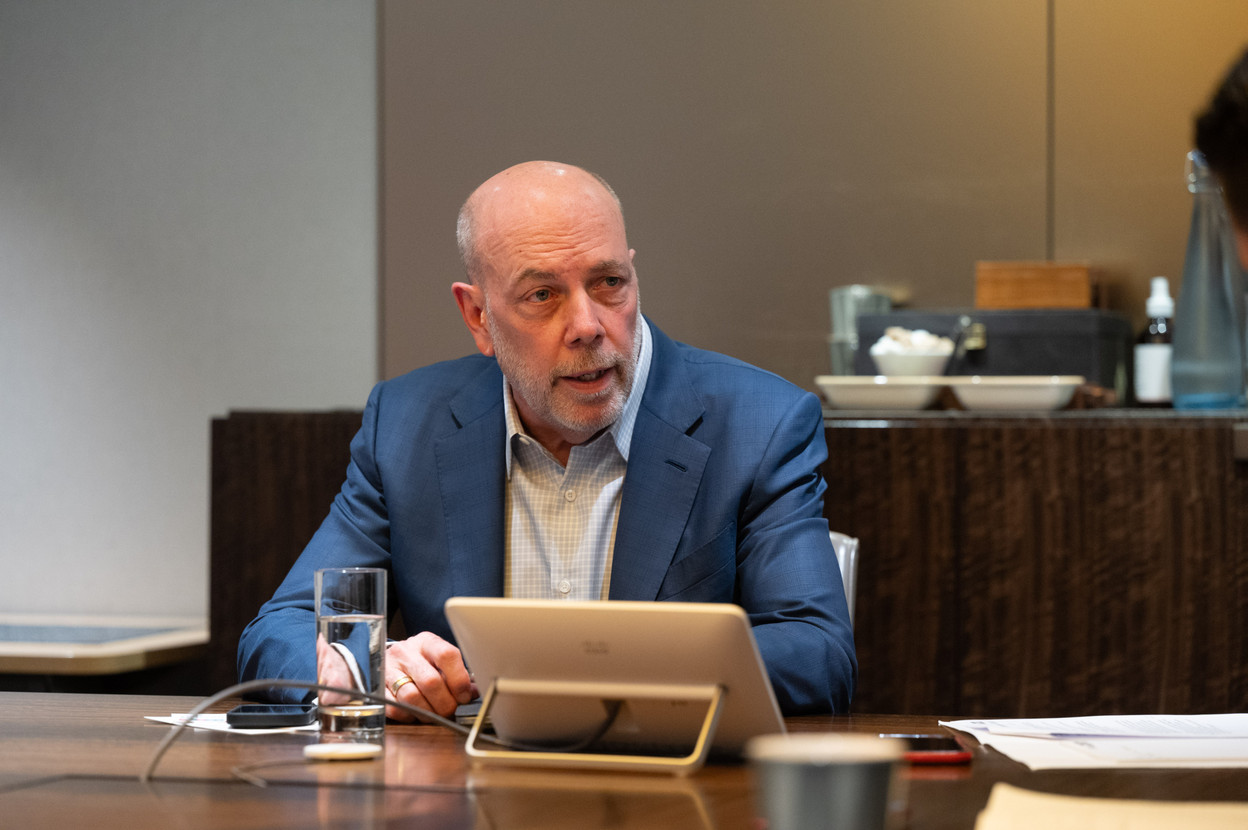
“We’ve got 14 clients across Europe, right, we cover excess of 60% of the assets across the European ETF markets. So, we’ve got a very good line of sight of what products have been launched, what our clients are doing and where we’re seeing the flows,” Ciarán Fitzpatrick, head of ETF servicing Europe at State Street Bank, told Delano during an interview.
In its recent “Global ETF Outlook 2024” report, the custodian bank, SSB, said the unwavering march toward higher assets under management in a growing number of ETFs (exchange-traded funds) globally but also in Europe, in particular.
Various shades of growth
SSB’s research revealed that European ETF flows accelerated to $156bn in 2023, up 75% from the previous year. As of February 2024, ETF assets under management accounted for $1.89trn with the equity segment estimated at $1.3trn, according to Fitzpatrick. SSB expects the market to grow above $2trn in 2024.
Fitzpatrick observed that fixed income was a leading driver of growth in 2022 but that the crown “went back to equity [+69% in 2023] for the majority of the products of Europe.” He noted that fixed income ETFs started being launched when yields were rising. Yet he thinks that relatively high yields environment will further support the fixed income segment (+22% in 2023).
Active ETFs growing faster than passive ETFs
Fitzpatrick observed that European active ETFs accounts for only $35bn out of $1.89trn, “that’s because it’s somewhat of its infancy.” Yet active ETFs have seen their share of growth increasing to 5% of flows against 1.8% in AuM.
The continent has seen the first large European based asset manager, Abrdn, “entering the European active ETF market in 2023.” It worth mentioning that the largest and dominating active ETF manager in Europe, J.P. Morgan Asset Management, has been offering European products, as reported in a previous Delano article, since 2017.
“The majority of new issuers looking to enter the European market that we see today are typically active managers starting with equity strategy as opposed to fixed income… more or less replicating what they’re doing [successfully] in the mutual fund space.” said Fitzpatrick. Yet he noted that “more established ETF managers” such as Ishares or DWS have launched fixed income ETFs given the yield attraction for investors.
It really highlighted that performance is still a key metric to an investor
Despite the ETF market being 80% institutional, Fitzpatrick heard from clients and at conferences that the retail space “is really now starting to grow” after 20 years of false starts.
Whether it is ETFs or mutual funds: performance matters
“Given the push for sustainable investments and that it is not all about performance,” Fitzpatrick would have expected a greater growth of ESG ETFs In Europe which accounted for only 32% of the flows against an earlier expectation of 60% in 2023, “the largest driver of flows in that year.”
“Regardless of the majority of products launched, the performance was down on ’22. So, it really highlighted that performance is still a key metric to an investor,” said Fitzpatrick. He concluded that “if a product isn’t performing, [investors] are more certainly less likely to invest in it.”
He expects flows in 2024 to be up over 2023 as “it’s still largely targeted that new products being launched are ESG related strategies,” despite the uncertain view on an adequate SFDR classification which will be further expanded. This is confirmed by the launches so far in 2024.
There’s definitely been alternative managers raising the question of, is ETF something we should be looking at?
He is expecting US asset managers with successful strategies to enter the European active ETF market. However, he thinks that these strategies would be classified as article 6 as the “US has a completely different view on ESG.” He thinks they will launch mutual funds or ETFs reflecting their flagship strategy or their “sweet spot” even if it means launching an article 6.
New entrants in the European ETF space
He noted that Pacer, a US ETF manager, is looking to introduce its “cash cow strategy,” which aims at “capital appreciation” by identifying “quality companies with a high free cash flow yield.” The other asset managers are Morgan Stanley and two or three US or “central European managers” looking to launch active ETFs.
Alternatives moving into ETFs or is it the other way around?
Fitzpatrick noted the ETF 1.0 started with the S&P 500. ETF 2.0 was about smart beta, “income targeting and value targeting.” ETF 3.0 is about active with a wider range of product such as derivatives that enable the use of buffer strategies or options to get income premiums.
ETF 4.0?
Not imaginable only 10 years ago given the low liquidity, Fitzpatrick noted that bank loans and even properties are moving into ETFs. “There’s definitely been alternative managers raising the question of, is ETF something we should be looking at?”
He admitted that “there has not been a huge amount of conversation” but he ”wouldn’t see why it wouldn’t be a potential solution to the next step.” It is probably fair to say that ETFs and private assets are starting to get to know each other.
This article was published for the Delano Finance newsletter, the weekly source for financial news in Luxembourg. Subscribe using this link.