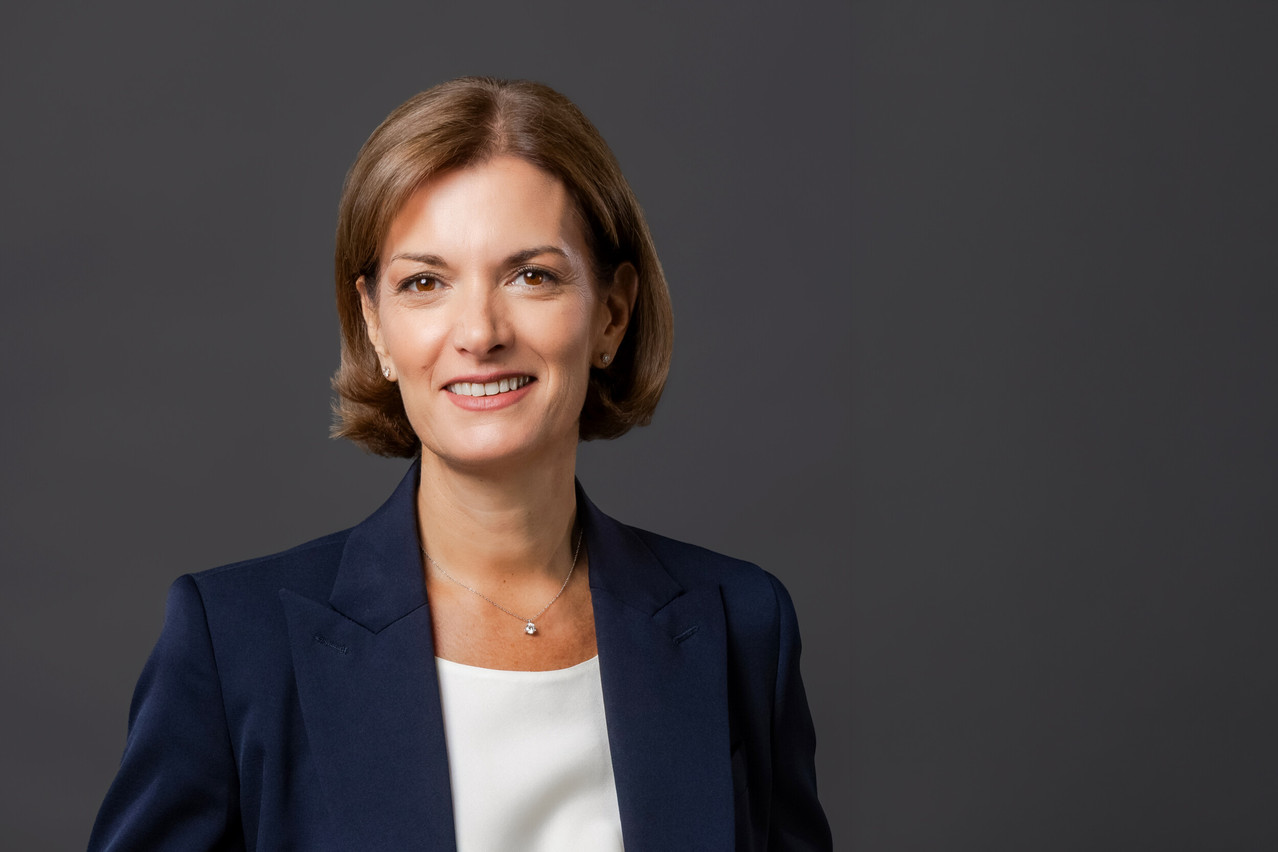
Europe has no shortage of savings. What it lacks, according to 
The objective is to make these securities easier to identify, compare and access, while encouraging European households to move beyond traditional savings accounts. “We need to channel more savings into productive investment in Europe,” Julie Becker explains, pointing to the financing needs associated with the climate transition, digitalisation and Europe’s strategic autonomy.
But the initiative also addresses another concern: the long-term financial security of European citizens, particularly their ability to build wealth and prepare for retirement.
Europe’s investment gap
For Julie Becker, Europe’s difficulty in mobilising household savings is not primarily a question of available capital. It is deeply rooted in culture. European welfare systems and pension arrangements have historically reduced the perceived need for individuals to take responsibility for their own investments, particularly compared with the United States.
“We lack an investment culture. We lack financial literacy as well in Europe,” she says. This lack of familiarity with financial markets can also undermine trust. Many individuals remain reluctant to invest in securities they do not fully understand.
Julie Becker points to Sweden as an example of how this situation can change. The country has developed a more active investment culture through financial education, tax incentives and institutional support for equity markets. According to her, Sweden has succeeded in bringing more than 500 companies to its equity markets over the past decade.
She highlights three contributing factors: financial education introduced at school, incentives encouraging households to invest, and the participation of institutional investors in initial public offerings.
For Europe, the lesson is clear: developing deeper capital markets requires more than creating new financial instruments. It also means changing how citizens understand investment and risk. In this context, Esag aims to contribute to the objectives of the European SIU by mobilising household savings more effectively and channelling them towards long-term investment in the European economy.
By improving transparency and accessibility, Esag seeks to help broaden retail participation in capital markets and make high-quality public debt instruments more easily accessible to individual investors.
Making bonds accessible
Esag represents LuxSE’s response to this challenge, beginning with an asset class in which the exchange has longstanding expertise: international bonds. The gateway brings together euro-denominated benchmark bond securities issued by triple-A rated European sovereign, supranational and quasi-sovereign entities with Triple A credit ratings.
To qualify, an instrument must meet specific eligibility requirements, including being euro-denominated, issued by an eligible triple-A rated public-sector issuer based in the EU, having an issuance size of at least €1bn and a minimum maturity of 12 months. Among the issuers featured are the European Union, the European Investment Bank, the European Stability Mechanism and several European sovereign issuers.
The platform allows investors to consult and compare key information, including bond prices, maturities and yields. However, Esag is not a direct investment platform. Retail investors cannot purchase bonds directly from the Luxembourg Stock Exchange. Instead, transactions must be executed through banks or brokers with access to its trading infrastructure, either directly or through connected intermediaries.
Banks hold the key
The success of Esag will therefore depend heavily on the willingness of banks to make these instruments available to their clients. Spuerkeess and Banque Raiffeisen have already committed to facilitating access to the initiative for retail investors. Interestingly, Julie Becker explains that the project did not originate from discussions with banks.
Instead, its development was initially driven by conversations with public-sector issuers, particularly the European Stability Mechanism and the European Union. The focus was on identifying ways to make European public debt more visible and accessible to private investors. Banks subsequently emerged as essential distribution partners. LuxSE is now in discussions with several other Luxembourg retail banks, although Becker declines to identify them while negotiations remain ongoing.
The objective is to connect more local banking platforms to the exchange’s trading infrastructure, enabling their customers to access European safe assets alongside other financial instruments. In the first phase of the Esag initiative, proactively expanding partnerships with banks across Europe is not a priority. For the moment, the exchange is prioritising discussions with Luxembourg-based banks. However, the exchange’s markets are already accessible to eligible members and brokers outside Luxembourg.
This distribution challenge is crucial. Making financial products visible is one thing; ensuring that investors can actually purchase them through their usual banking channels is another.
Triple A does not mean zero risk
Esag’s focus on Triple A-rated public debt is intended to provide access to instruments with relatively low credit risk. But Julie Becker is careful to distinguish credit quality from investment performance. A Triple A rating indicates a very low probability of issuer default. It does not eliminate other investment risks, particularly those associated with changes in interest rates.
When interest rates rise, the market value of existing fixed-income securities can decline, potentially generating losses for investors who sell before maturity. This distinction matters, as LuxSE seeks to make bond markets more accessible to individuals who may have little previous experience of investing in bonds. As a market operator, the exchange does not provide investment advice. Its role is to make relevant information available so that investors can understand the characteristics of the instruments and make informed decisions.
The gateway already displays prices, maturities and calculated yields, with additional functionalities planned as the platform develops. For Julie Becker, investor protection should not mean discouraging individuals from taking responsibility for their financial decisions. Instead, it requires giving them the knowledge and information needed to assess risk.
Financing Europe’s next generation
The launch of Esag also raises a broader question: how can Europe’s substantial household savings ultimately help finance its businesses, particularly startups and scale-ups? Despite the continent’s considerable financial resources, many European technology companies continue to face difficulties securing sufficient capital to expand internationally. Julie Becker acknowledges a particular shortage of growth financing. “We have some capital and funding in Europe for startups, but not enough for scale-ups, that’s for sure,” she says.
Once again, she identifies cultural differences as a major obstacle. In the United States, investment, entrepreneurship and financial risk are more frequently discussed within families and society. Business failure is also perceived differently. In Europe, she argues, failure can carry a lasting stigma, discouraging entrepreneurial ambition and risk-taking. This cultural dimension affects not only individual investors but also the broader financing environment for growing businesses.
However, Julie Becker does not suggest that Esag itself will become a venture capital investment platform.The gateway is designed specifically for European public debt, and there are currently no plans to extend it to private markets or startup financing. Its contribution is more indirect: encouraging individuals to become familiar with financial markets and supporting the broader development of an investment culture.
For Julie Becker, the priority is not necessary to invent additional financial products. What Europe needs, she argues, is not only innovation in financial products, but also investment solutions and financial instruments that individuals can access, understand and evaluate.
Education before speculation
The urgency of financial education is becoming increasingly apparent as younger generations gain access to new investment opportunities. Julie Becker points to the popularity of crypto-assets and prediction markets among younger investors, noting that these products can involve significant risks, warning that many may not always be fully understood and the risks involved. Rather than simply discouraging these activities, she believes schools should introduce financial education much earlier.
In her view, young people should begin learning about investment, diversification and financial risk at around 15 or 16 years old. This would help them develop the knowledge needed to distinguish between speculative opportunities and long-term investment strategies. The broader objective is to build a generation more comfortable with financial decision-making and better equipped to manage its savings.
Luxembourg’s next move
For LuxSE, Esag is only one element of a wider strategy to increase retail participation in capital markets.The second phase of the initiative will focus on expanding the number of eligible Triple-A-rated public-sector issuers and connecting additional banks to the exchange’s trading platform. Julie Becker mentions potential additions such as NRW.Bank and other highly rated public-sector issuers.
New functionalities are also expected to improve the experience of investors consulting the gateway. LuxSE believes its longstanding position in international bond listings gives it a particular advantage. The exchange currently lists approximately 56,000 securities issued by 1,700 entities from around 100 countries and claims a global market share of 32% in international bond listings. This established network of Sovereign, Supranational and Agency (SSA) and quasi-sovereign issuers provided the foundations for Esag.
Beyond bonds, Julie Becker also sees an opportunity for Luxembourg’s investment fund industry to contribute to the mobilisation of European savings. In particular, she identifies tokenised investment funds as an area in which Luxembourg could play a distinctive role. For now, however, Esag’s immediate challenge is more straightforward: converting a centralised catalogue of European public bonds into an investment opportunity that households can actually access through their banks.
And beyond technology, Julie Becker’s message is that Europe’s investment challenge will not be solved by financial infrastructure alone. It will also require a combination of financial education, better access to investment opportunities and a fundamental shift in how Europeans understand savings, investment and risk.

