You have a background in corporate finance and financial advisory – how does this experience influence the way you interpret, or even anticipate, the changes taking place at Deloitte?

Corporate finance has also enabled me to work across a wide range of areas within the firm and to gain a thorough understanding of our various business lines. Every transaction has tax implications, integration requirements, audit considerations and transformation challenges. As CEO, it is essential to have a thorough understanding of our various business lines.
You joined Deloitte in 2004 – what made you want to stay for so long?
“There are three main reasons why I have wanted – and still want – to stay at Deloitte. The first reason is the strength of the relationships within our organisation, as well as with our clients and service providers. These interactions are very important to me. Secondly, there’s the day-to-day learning – discovering new things, having to think differently and tackling new problems that need solving. Finally, there’s the idea of personal development – the opportunity to continually take on new challenges and take on new roles within Deloitte. This allows you to grow as a person and push yourself to new heights.”
I don’t see myself as the ‘big boss’. I see myself more as the guardian of our association’s unity.

Was leading the way and reaching the top of the pyramid your original goal, or was it a series of great opportunities?
“It was never a goal at the start of my professional career. It was an idea that gradually took shape in my mind as I progressed within the firm. At first, it was just an idea. Then it became a possibility, an opportunity, and finally a reality.
That said, I don’t see myself as the “big boss”. Being a managing partner means managing a group of nearly 200 partners; it’s very different from a traditional corporate structure where there’s just one boss. I see myself more as the guardian of our partnership’s cohesion. My role is to ensure that this collective moves in the same direction, in the best interests of our firm.
What mistake or lesson have you learnt from your journey?
“Mistakes are part of the learning process, especially when you’re starting a business. The important thing is to recognise them, learn from them and move forward.
More broadly speaking, what I’ve learnt from my own journey is that you have to appreciate it in its entirety. A career isn’t just down to a person’s skills, but also, in part, to luck and the opportunities that come your way. The lesson I’ve learnt is this: to recognise that we cannot control everything, to focus on the priorities, and to approach every situation with optimism.
We often hear people talk about the first 100 days. What is your aim for this crucial initial period?
“The management team has been in place since 1 June. Over the next three months, we will be working together to develop our strategy and objectives for the coming years. It is important that the partnership is aligned, that we are all moving in the same direction, and that everyone contributes, in their own way, to the future success of our firm.
What sort of leader do you definitely not want to become?
“I want to remain someone who is available and approachable to the partners and our teams. The risk in this sort of role is becoming isolated. I also want to remain active in the market and not take on a purely internal role; this is essential for staying in touch with the day-to-day realities of our clients and our Luxembourg ecosystem.
You are taking over from John Psaila. When we talk about succession, we often talk about continuity. Is that your approach, or do you want to bring about a change?
‘We need both: continuity in some areas, and change in others. There is a time for everything.
Our values and our teams are the reasons why this firm has stood the test of time. Our values have not changed and will not change: acting as leaders, serving with integrity, looking out for one another, promoting inclusion, and working together to make a measurable impact. They have served us well over the past few years. Our aim is simple: to make a difference that matters – for our clients, for our people, and for society. To help our clients succeed and to help our teams grow.
However, we will be changing the way we work on certain areas of growth: the technology and services we offer our customers, our engagement with our customers and the market, internal collaboration, and the development of our teams.
Deloitte Luxembourg has just come through a period of sustained growth. At this stage, is your priority to continue growing, or to make that growth more selective?
“Generating sustainable growth – not growth at any price, but growth that is sustainable in the long term – is essential for a partnership and for enabling the career progression our talent expects. It is therefore a priority to continue to grow. Market conditions (both global and local) are, however, more challenging: slower growth, rising inflation, significant geopolitical risks, and major technological advances. Achieving this growth means, more than ever, investing in relationships of trust with our clients, constantly creating new products in line with technological advances, and continuing to work on the competitiveness of our existing services. Protecting what we have whilst investing in the services and technologies of tomorrow is essential. Exporting our expertise beyond our borders is another key driver, which our recent European expansion will accelerate.
Your three competitors (the other Big Four firms) have chosen to leave the ABBL, but not Deloitte. Why are you staying?
“The ABBL has been a key forum for dialogue within Luxembourg’s banking and financial ecosystem since 1939. As a long-standing adviser to banks and financial institutions based in Luxembourg, our continued membership of the ABBL enables us to support Luxembourg’s appeal, the local ecosystem and its long-term stability as a financial centre.
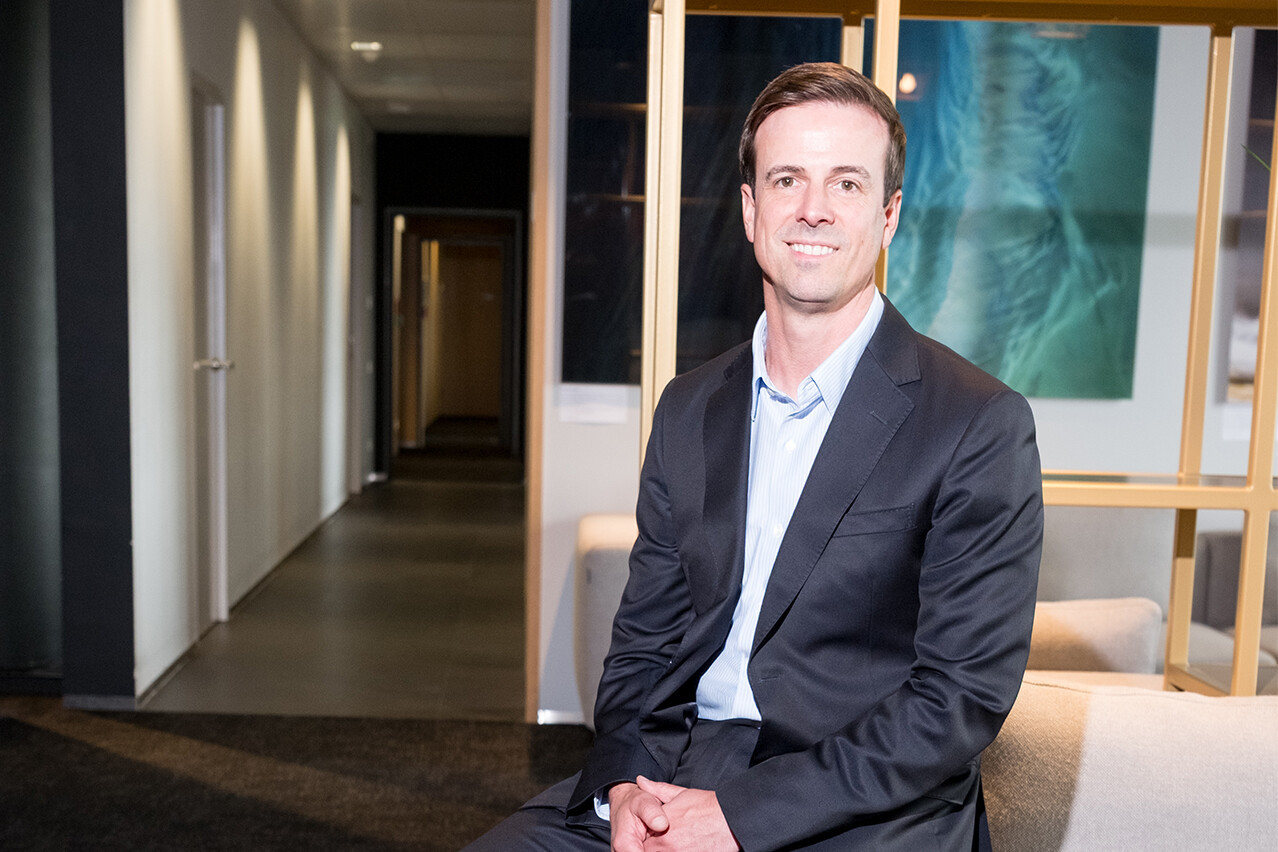
Joachim Heukmes advocates a balance between continuity and change, particularly in terms of working methods. (Photo: Patricia Pitsch/Paperjam)
Deloitte Luxembourg has announced gross revenue of 535 million euros for 2025. Which segments are still delivering real growth, and which business lines are under the most pressure?
“Our audit services, ‘Operate’ advisory and tax services for the financial sector, and transaction advisory services continue to show strong growth. Our transformation services have seen more moderate growth this year, but have demonstrated considerable resilience in a challenging market.
When you look at the financial sector from Deloitte’s perspective, what is the main risk you identify? And where do you see economic potential?
“Maintaining the country’s competitiveness is essential for attracting international players, and working to enhance its appeal is just as important for attracting the right talent. Cost control, streamlined processes and innovation – which enable the Luxembourg economy to evolve and diversify – are among the key factors for success. There are numerous opportunities that Luxembourg can capitalise on: the energy transition, the defence and space sectors, European resilience, and developments in the financial industry such as ‘digital assets’ or investment products. There are also strategic corridors to continue developing with certain high-growth countries around the world.
Deloitte has announced a new Emea structure, which will come into effect at the same time as your appointment. What, in practical terms, will this mean for Deloitte Luxembourg?
“1 June is a significant date, as it marks the start of the new financial year. The Emea launch, the announcement of the new partners and managing directors, and the announcement of Deloitte Luxembourg’s leadership team therefore all took place on the same day. I am truly delighted to be joining the Deloitte Emea Executive Committee as part of this journey. It is a privilege to help shape this next chapter for our clients and our people.
For clients, this means coordinated teams, faster decision-making, and solutions that reflect both global trends and local realities. For our staff, it means working in an environment where scale, collaboration and purpose come together. It will also enable us to pool certain strategic technological investments and take our expertise beyond Luxembourg’s borders.
How can we maintain Luxembourg’s local character within a more regional and integrated structure?
“Our priority remains the Luxembourg market. Emea will simply give us easier access to certain areas of expertise within the network, which we and our clients can draw on to accelerate local growth.
The Big Four are selling AI transformation to their clients. But how far have they actually got with their own internal transformation?
“We tend to use Deloitte as a testing ground before offering our clients tried-and-tested solutions. The transformation is well under way: we have overhauled our internal governance to make this a top priority, and every partner and every team has targets in this regard. Technology is evolving so rapidly that I believe this transformation will be an ongoing process.
Every firm is talking about AI. How has it already made a difference at Deloitte?
“AI enables us to focus on the efficiency and sustainability of our existing services, to transform the way our teams work by optimising our resources, and also to develop new products that we could never have imagined in the past. This creates a wealth of opportunities. We are investing heavily in transformation, change management and training.
In your view, what proportion of audit, tax or advisory work will actually be able to be automated? And is this already the case?
“We will continue to rely on a combination of people and technology. We need to know how to make the most of the best of both worlds and recognise that roles may change over time. Automation is nothing new – AI brings something new to the table.”
At this stage, our preference is to keep all our staff under one roof. We remain flexible on remote working, but we encourage staff to come into the office

The traditional model of law firms is sometimes based on training junior lawyers by assigning them repetitive tasks. If these tasks disappear, how will we train the next generation?
“The training of our staff is not limited to carrying out repetitive tasks. Our model is based on our ability to develop the experts of tomorrow. Technological advances will change the way our teams learn and deliver our services to our clients. This will also affect the way our staff gain experience and expertise, for example by emphasising critical thinking, review and observation of current experts.
Following several scandals affecting the audit profession in recent years, what has actually changed in the Big Four’s risk culture?
“The cases that have shaped the profession in recent years have had a real impact – not just in regulatory terms, but also in terms of culture and reputation. The issue of ‘tone at the top’ is no longer merely theoretical: today, it is reflected in concrete processes for continuous quality improvement, strengthened risk governance, better protection of the profession’s independence and a carefully calibrated risk appetite.
At Deloitte, we continue to invest significantly in all of these initiatives. But beyond the processes themselves, what has changed is the collective realisation that a reputation is built over decades and can be lost in a matter of weeks. This is deeply ingrained in our day-to-day decisions and in our corporate culture.
Restructuring often serves as an indicator of the economic reality. What early warning signs are you seeing at the moment?
“Our restructuring business is performing well, particularly in the area of alternative investment funds: some are experiencing performance issues, whilst others are reaching the end of their lifecycle without having been able to dispose of their positions due to a lack of market liquidity. The property sector in Luxembourg also remains challenging for the time being, which is creating opportunities for refinancing and restructuring.
Young talent wants purpose, flexibility and rapid career progression. But flexibility seems to be on the wane. What is your view on this?
“Our global survey – now in its 15th edition – reveals that Generation Z and millennials are seeking to progress on their own terms, prioritising stability, skills and wellbeing over growth at any cost. They want to build a solid foundation before making major decisions, and their ambition is tempered by a desire for a manageable workload, clear support and accessible pathways to success. Deloitte Luxembourg remains a top choice for many graduates, as well as for many expatriates who choose Luxembourg as their new home. We take this responsibility seriously and monitor these trends closely.
At this stage, we are prioritising keeping all our staff under one roof to foster collaboration and mentoring. We remain flexible on remote working, but we encourage staff to come into the office, as we see this as an opportunity for them.
What are you unwilling to promise young talents because it would be untrue?
“There are no taboo subjects. We discuss risks with our teams openly: this is essential for building trust. What can we really promise? That we will continue to invest in our people and adapt to their needs.”
A rewarding career means something different to everyone. Some join Deloitte to become technical experts, others to lead teams, and others still to build something new. All of these are valid. No one path is more legitimate than another. My job is not to define what a rewarding career looks like, but to make this firm a place where everyone can find their own path.
In practice, this comes down to three things. Firstly, the quality of management: the most decisive factor in a career is the manager you work with on a day-to-day basis; we will therefore continue to invest in this area. Secondly, looking out for one another on a day-to-day basis: recognition that isn’t limited to appraisal day, a manager who notices an employee’s hard work, a partner who says thank you, and successes celebrated together. These little things really do matter. Finally, a genuine commitment to everyone’s development, especially at the start of their career. We are all different, and we can all find meaning in what we do. This is what we will continue to build at Deloitte Luxembourg.”