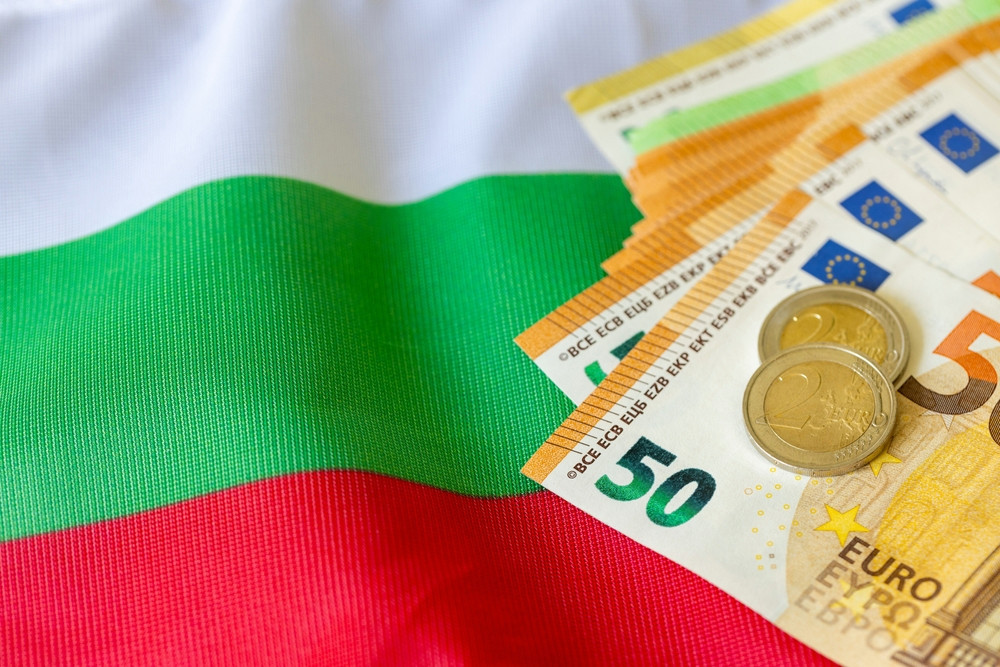
Bulgaria will become the 21st country in the eurozone on 1 January 2026. The conversion rate has already been set: 1 euro = 1.96 Bulgarian leva (BGN). From that date, payments in euros and leva will coexist for a month, before the euro becomes the sole legal tender on 1 February 2026.
To avoid any confusion - or opportunistic price rises - consumers will see all prices displayed in leva and euros from August 2025 until August 2026. This is a key period for easy comparison and checking that the conversion is correct. The Bulgarian authorities have undertaken to strictly monitor the application of the official rate.
The impact on banks is also immediate: Bulgarian establishments will have access to liquidity from the European Central Bank (ECB), which should facilitate payments, withdrawals and the granting of loans. From now on, interest rates will follow directly the decisions of the ECB, in which the Governor of the Bulgarian National Bank will participate. As its president, Christine Lagarde, pointed out in an ECB press release, Bulgaria will thus have “a voice and a vote” within the eurozone.
A degree of flexibility that will not go amiss for residents of Luxembourg, where getting your hands on cash in currencies other than the euro is sometimes an obstacle course, as the Grand Duchy is not exactly a paradise for local bureaux de change.
Until when can Bulgarian leva be exchanged?
If you travel frequently to Bulgaria and have some local currency left over, no worries.
Until 30 June 2026, leva notes and coins can be exchanged for euros free of charge at commercial banks and some post offices in Bulgaria. Thereafter, between 1 July and 31 December 2026, exchange will continue to be possible in these establishments, but charges may apply. After this period, exchanges will continue to be possible without time limits and free of charge at the Bulgarian National Bank. Finally, it should be noted that, from 1 January to 2 March 2026, the other national central banks in the eurozone will also offer free exchange of leva banknotes, up to a limit of BGN 2,000 per person per day.
Six EU countries still outside the eurozone
The European Union still has several Member States outside the eurozone. These are Denmark (Danish krone), Sweden (Swedish krona), Poland (złoty), the Czech Republic (Czech koruna), Hungary (forint) and Romania (leu).