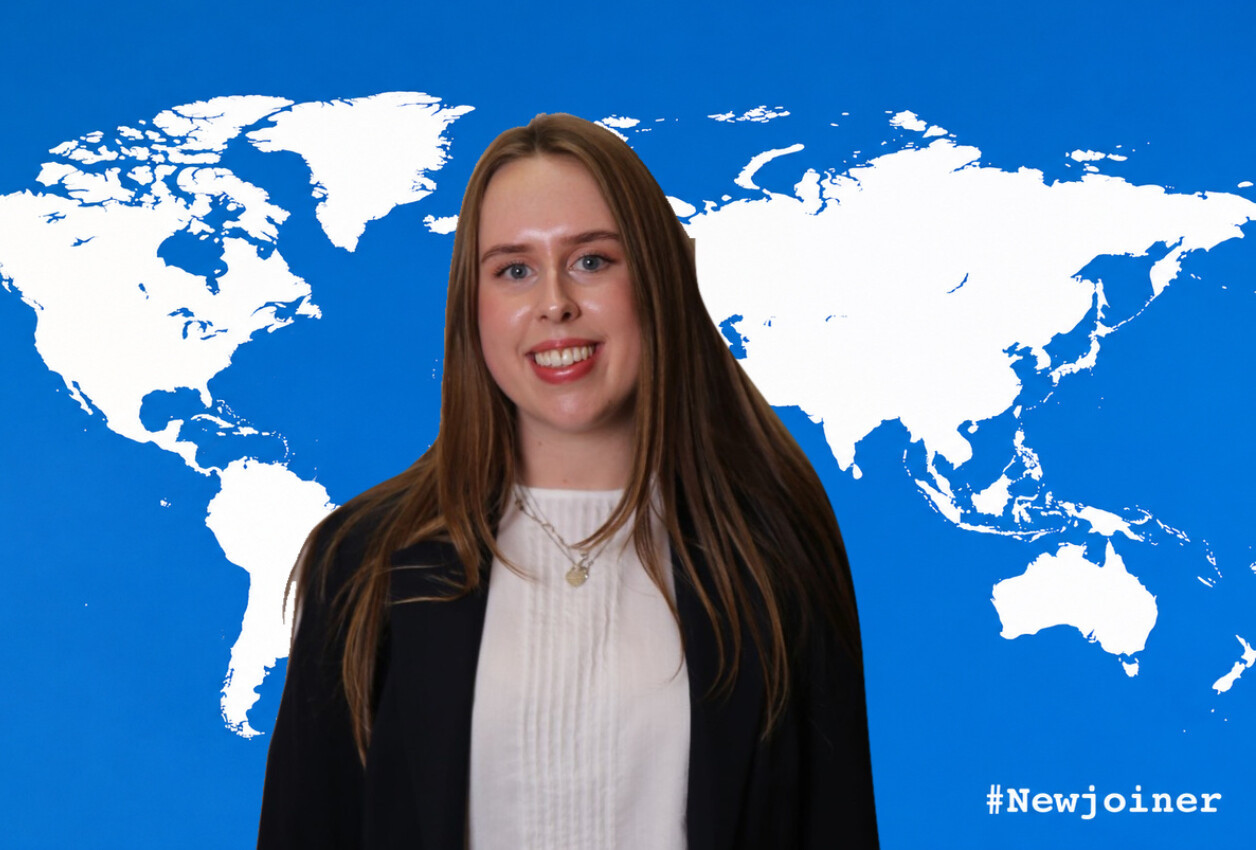
Paperjam: Please, introduce yourself.
Eleanor Maidstone. – “I’m Eleanor, I’m 24 and I’m from England. I moved to Luxembourg in December 2025 and started working here in January 2026. I work in audit, although I actually studied languages at university. I’m still relatively new to Luxembourg.
How did Luxembourg become an option?
“It was very random. I didn’t really know anything about Luxembourg apart from the fact that it was on the map, somewhere between France, Germany and Belgium. A couple of years ago, I wanted to go somewhere for New Year’s Eve. Some friends had studied here and said: “Go to Luxembourg. It’s really cool, it’s safe.” I looked on Skyscanner and the flights were cheap.
So I came here on a complete whim, not really expecting to fall in love so much that I’d want to live here. It had everything a capital city has, without the additional chaos of somewhere like London. That really drew me in. I came back a few times afterwards, including for the National Day weekend, which was a really great time to see Luxembourg.
My year abroad during my degree had already planted the idea of living outside the UK, especially while I was young and had that flexibility. I thought it might be a Spanish-speaking country, but here we are! After my first visit, I started sending applications in Luxembourg as well as the UK, just to see what would happen.
You studied languages. How did you find your way into audit?
“Networking took me much further here than I think it would have in London. Looking at my CV, the fact that I’d studied Spanish and didn’t have finance experience might have been off-putting. But people were really open to talking to me, and that helped my application get further.
I was a little nervous about getting a visa, but the whole thing was very smooth.

In the UK, it’s quite common to study different subjects and then go into a graduate job in another field. Here, I noticed that almost everybody around me had studied audit, finance, economics or business, so I did feel a little out of my depth. At the interview, I was honest: I didn’t have all the qualifications yet, but I was willing to learn. I asked what I could do to prepare and stocked up on textbooks before starting.
How did the practical side of moving go?
“I was a little nervous about getting a visa, but the whole thing was very smooth. My employer had a helpful team dealing specifically with those questions, as well as useful links for finding accommodation.
I’ve also found it easy to get help when something goes wrong. I discovered that my apartment number was incorrect on my contract, and I’d already given that information when registering my residence. I thought: “Oh my gosh, so many legal complications are about to happen.” I went to the commune, took a ticket, got an appointment within about ten minutes and they fixed it. Things like that make living here so much easier.
And finding somewhere to live?
“That was quite a challenge. The housing market is pretty tough. It’s not just finding somewhere, but convincing a landlord that you can afford it. I was starting on a junior salary, and even when I found places I could afford, landlords had their own requirements. Luckily, I knew well ahead of time that I’d got the job, so I had time to get organised. But it wasn’t the easiest.
Has the cost of living matched your expectations?
“London and Luxembourg are both expensive, but I feel I’m paid more fairly here in relation to what I need to spend. Some graduate salaries I looked at in London were very low compared with the monthly costs.
Of course, it depends on your job, sector and seniority. But for me, there’s a better balance here. Free public transport makes a big difference too. Not having that additional expense every month really helps.
What about making friends?
“I was a little worried, because people say it’s not as exciting as London. But one of the reasons I was drawn here was precisely that it isn’t as chaotic. I don’t need to be out every single night. That’s not me. I was lucky to start work with a few other people my age, so that was an easy bond. Then you meet friends of friends and get invited to things.
Within a few days of arriving, I’d also joined the Oxford alumni network and went to a Christmas dinner where I met loads of people. For me, it’s been a combination of researching what groups are out there and things happening naturally through work.
Have you mostly connected with other British people?
“Actually, I don’t have that many British friends here, apart from some people in the alumni network. My friends are very international. One thing I wasn’t expecting was how many Spanish people there are. It’s nice to feel that my degree isn’t going to waste and that I can still practise my Spanish!
Which languages do you use day to day?
“I applied for an English-speaking position, and English is the business language where I work. In everyday life, I haven’t felt held back either. I speak English and Spanish, I’m learning Portuguese, and I’m trying to learn French, although I’m not as good as I want to be. It’s a work in progress.
Having studied languages, I’m quite conscious of the importance of learning one rather than expecting everybody to speak English. I’m a bit embarrassed that I still rely on it so much. But whenever I’ve needed administrative help, there’s been an English speaker who could help me.
Does Luxembourg feel like home already?
“Definitely. It has everything I need. It has the city feel, but also a village feel at the same time, which I really like. I still wish the supermarkets were open later. During my busy season, I could finish work at 7.30pm and then think: “Oh gosh, I still need to go to the supermarket.”
But I do feel at home. I see people who want to settle down and have a family, and others who come for a few years before going somewhere else. There’s space for both.
There’s always a new place appearing on my Instagram. Even though Luxembourg is small, I never really run out of options.
Has anything else about life here surprised you?
“How quickly I was able to get medical help. I had an accident at a Pilates class this year: I fainted and damaged my teeth. I was taken to hospital and saw a dentist on a Sunday within an hour of the accident. I was very lucky.
What do you miss about England-and what would you miss here?
“The British meal deal! At lunchtime, students and workers go to the supermarket and get a sandwich or another main, a snack and a drink together for a really good price. I haven’t found an equivalent here. There are great baguettes, don’t get me wrong, but I miss those deals. And M&S. I’m a massive M&S fan.
From Luxembourg, I’d probably miss public transport most. It makes such a difference to be able to get on a bus without thinking about paying, and everything is in good condition.
What would you change to make life better for young newcomers?
“I’d like to see more graduate programmes of the kind you find in London, where people come out of a bachelor’s degree and join a two-year rotational programme. Starting at the same point helps people bond.
Some junior roles I saw here asked for a master’s and three to five years of experience. That means people aren’t necessarily coming in at the same stage. I think more opportunities specifically for new graduates would be beneficial, including for meeting people and forming friendships.
Can you see yourself staying?
“At the moment, I’m really happy here. I don’t have any immediate desire to leave. I’m not far from the UK, which is a comfort, and there are lots of opportunities. Getting your foot in the door is the first thing. Now I’m here and part of different communities, that’s really nice. But I’m also going with the flow and seeing where life takes me.
And finally, your verdict on the food and weather?
“The weather isn’t really different from the UK, so that wasn’t a shock. That’s one positive! And there are so many restaurant options. I’ve noticed that food is a real way people bond here. In the UK, plans might revolve around going to the pub; here, a lot revolve around a meal, which I can’t complain about. There’s always a new place appearing on my Instagram. Even though Luxembourg is small, I never really run out of options.”