
Before we analyse the responses from our CIOs, could you tell me what the current state of play is regarding the strategic integration of generative AI in Luxembourg? I’d like to know the source.
Chatbot. – “Adoption is growing, but the figures do not yet indicate whether AI is integrated into business processes. In 2025, 33.5% of Luxembourg companies reported using at least one AI technology, compared with 20% across the EU. Eurostat measures AI here in the broadest sense, not just generative AI: the usage rate is therefore not sufficient to prove a strategic transformation.
Based on the responses provided, what is holding back the transition from pilot schemes to full-scale implementation?
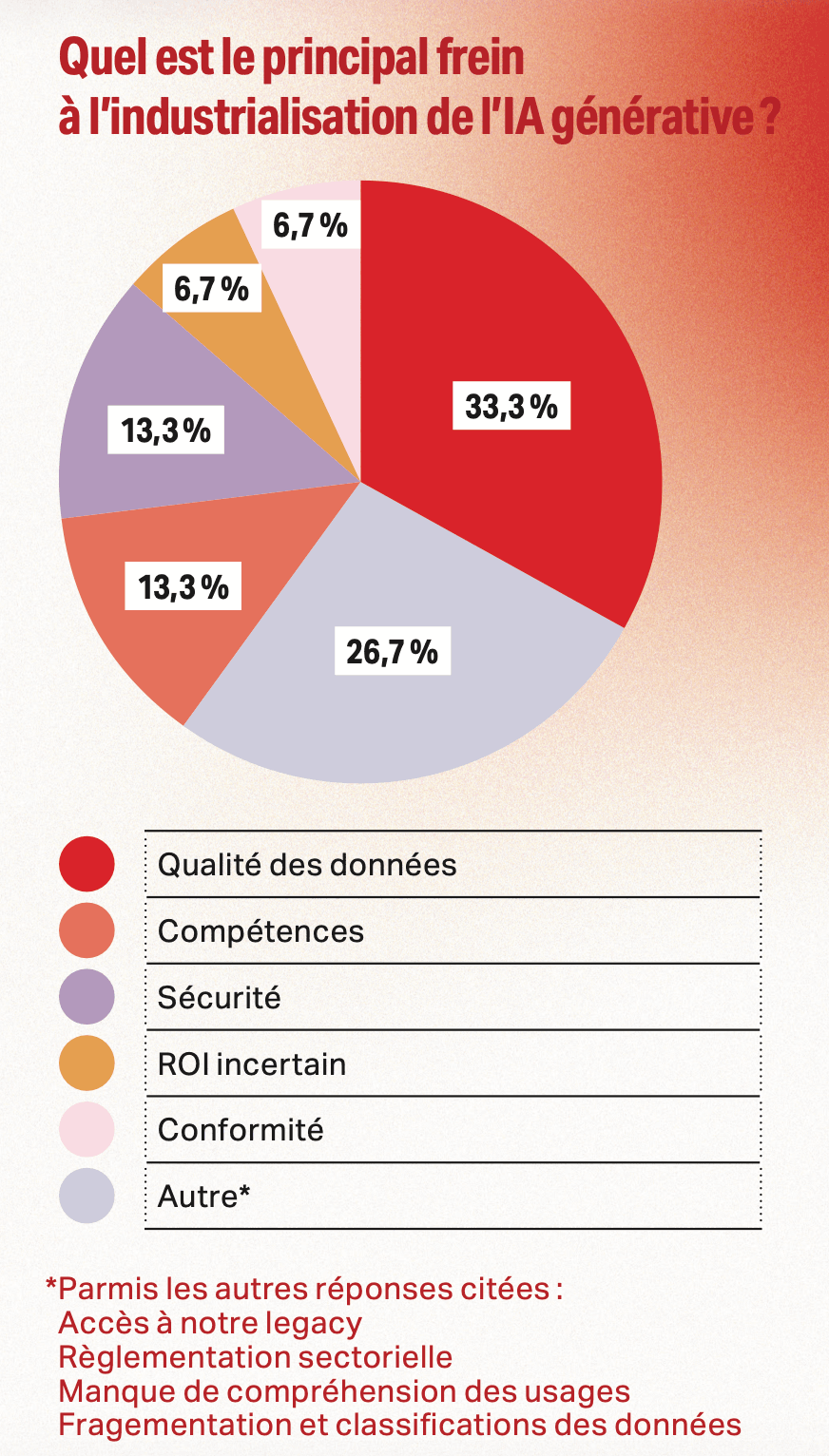
“CIOs cite access to legacy systems, integration with the rest of the information system, sector-specific regulations and group governance. Added to this are fragmented, poorly classified or inconsistent data. One respondent sums up the prerequisite: ‘How could you use a technology in a productive way at a high level if you don’t understand and control the basics?’
Is data quality the real key issue?
“This is one of the cornerstones. Without controlled access to reliable and correctly classified data, an agent may speed up a task whilst increasing the number of errors or unwanted exposures. Strategic integration therefore often begins with work that is less visible than the chatbot: mapping data, clarifying access rights and managing interfaces with legacy systems.
Who decides when a use case is ready for deployment?
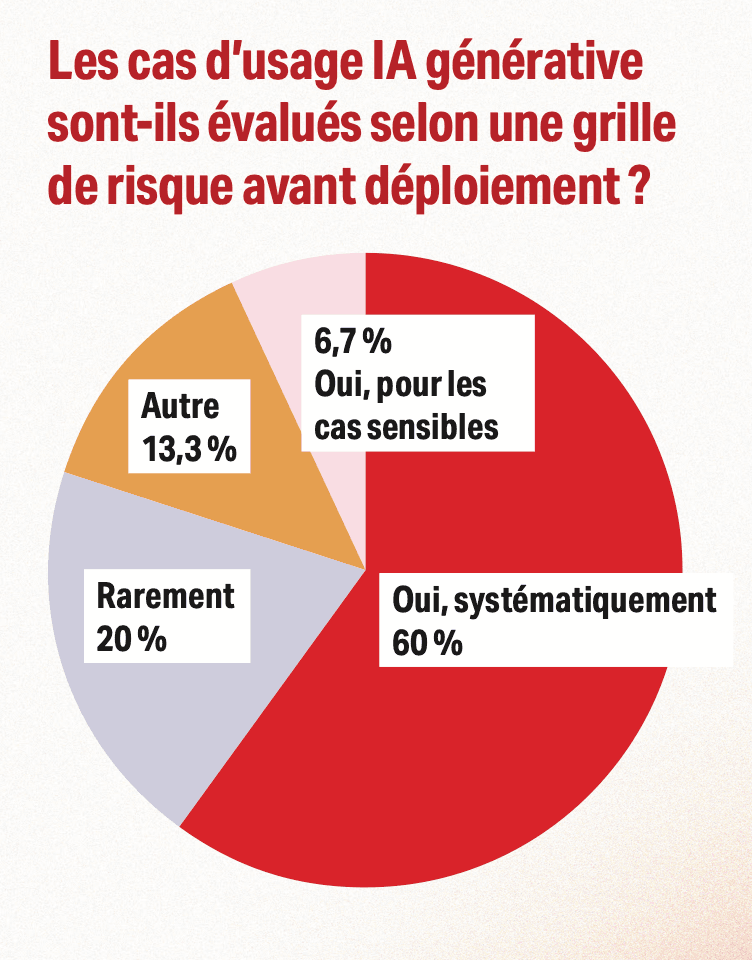
“Several respondents describe a robust governance framework, sometimes organised around a ‘clearing house’, with a systematic risk assessment for generative AI. Others are still in the process of defining their policy; for one respondent, such an assessment ‘would be a good idea’. Levels of maturity therefore remain varied, including in terms of the formalisation of decisions.
Is there a risk that governance could slow down innovation?
“CIOs tend to describe safeguards designed to make experimentation possible: secure environments, pre-approved tools and reusable rules. A ‘hub-and-spoke’ model centralises standards whilst allowing business units to test use cases. Within a company, general access is limited to Copilot 365; other solutions are subject to stricter governance.
How can we check whether productivity has actually increased?
“The responses emphasise integration into projects and processes, rather than the tool itself. Some teams bring together IT and business expertise within a ‘tribe’; others start by identifying use cases, experimenting, training staff and involving stakeholders at an early stage. IT supports the business units, clarifies responsibilities and manages access to data.
How does the regulatory timetable affect Luxembourg-based companies?
“The AI Act also applies in Luxembourg. Since 2 February 2025, organisations have been required to take measures to ensure that their teams have control over AI. The AI Omnibus, which came into force on 27 July 2026, has postponed certain deadlines: the rules relating to high-risk systems in Annex III will apply from 2 December 2027, and those relating to regulated products from 2 August 2028. The additional time does not replace the need for governance or preparation.
How can you turn a test into real productivity gains?
“The CIOs surveyed focus primarily on detailing their governance and support mechanisms; they provide few comparable figures. To establish the value of a use case, it is therefore necessary to measure the ‘before’ and ‘after’: time saved, quality, necessary rework, total cost and risks. The number of agents deployed, on its own, is not an indicator of transformation.”
This article was written for the December 2026 issue of Paperjam magazine, published on 18 November. The content is produced exclusively for the magazine. It is published on the website to contribute to Paperjam’s comprehensive archive. Click on this link to subscribe to the magazine.
Is your company a member of the Paperjam Club? You can apply for a subscription in your name. Please let us know via club@paperjam.lu.