On 13 October, the doors of the Osaka 2025 World Expo closed after six months of excitement and more than 28 million visitors. By focusing on architecture that can be dismantled, saves resources and is designed to be entirely reused, Luxembourg won the sustainability prize awarded by the Bureau of International Expositions.
A pavilion designed for a second life
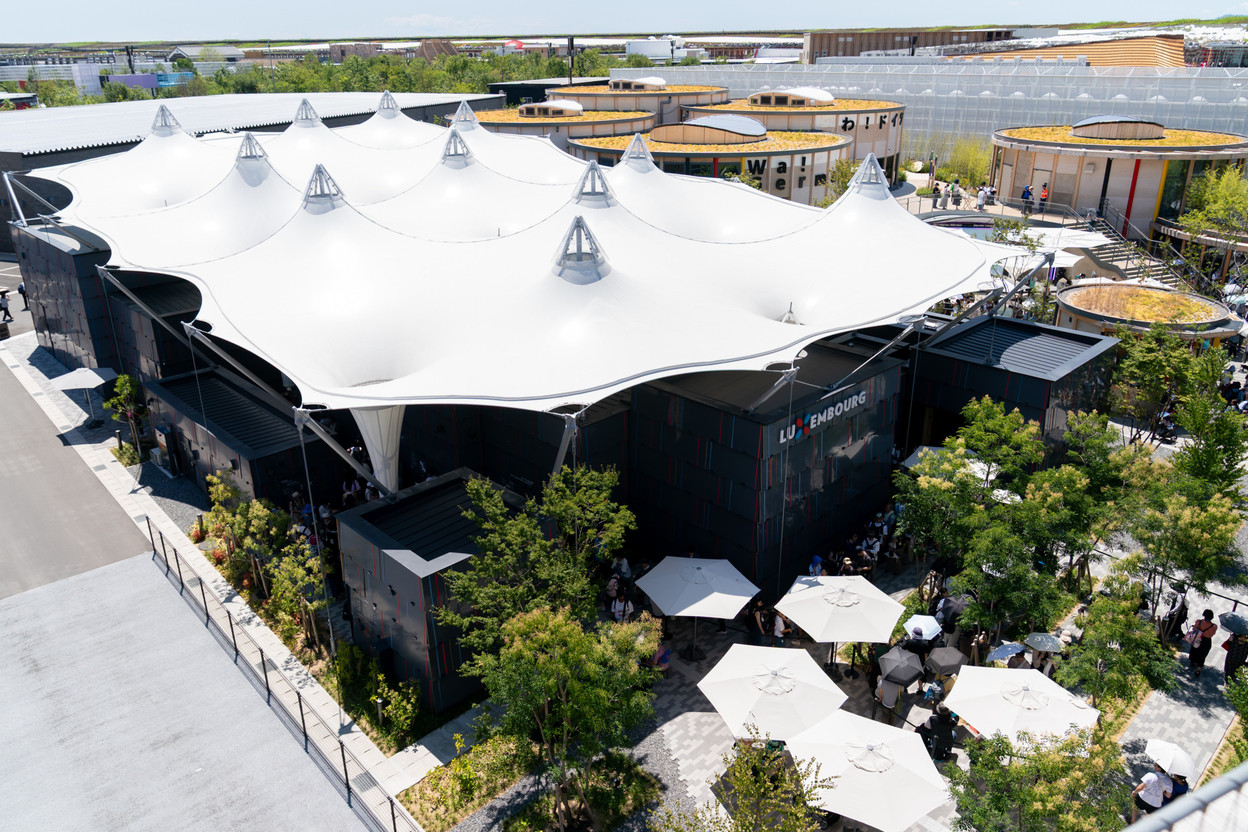
Thought up by architecture firm STDM, the Luxembourg pavilion in Osaka embodies circularity right down to its deconstruction. The modular concrete blocks will join the Nesta Resort Kobe, a theme park located near the city of Kobe, the membrane roof will be transformed into leather goods by the Japanese brand Seal, and the exterior panels will be reused by Shinko Construction Co, Ltd. Each element therefore has a second life.
There remains the economic question: is this model viable? Luxembourg, which has invested several million euros in this venture, hopes to recoup some of its costs through the resale of components. But have all the parts found buyers? And can sustainability, in this context, really rhyme with profitability? Contacted by Paperjam, the Ministry of Foreign and European Affairs, Defence, Cooperation and Foreign Trade says that a full assessment will be made in the coming weeks.


28 million visitors
The Osaka World Expo 2025 came to a close on 13 October, after six months and more than 28 million visitors. On the artificial island of Yumeshima, the Luxembourg pavilion welcomed some 378,000 visitors between April and October. Designed by the STDM architectural firm according to the principles of the circular economy, it was built around the theme "Doki Doki - The Luxembourg Heartbeat", a three-part staging that presented the country through its diversity, its spirit of innovation and its landscapes.
In addition to its architectural aspects, Luxembourg's participation in Expo was part of a wider strategy of economic and diplomatic promotion. The GIE Luxembourg, which brings together the State and the Chamber of Commerce, oversaw the construction and operation of the pavilion while coordinating several economic missions focusing on the space, health and technology sectors. The event also provided an opportunity to showcase national know-how, through companies such as Cargolux, Virtual Rangers and Artec3D, as well as more cultural aspects, such as traditional crafts or the gastronomy brought to life by students from the Luxembourg Hotel and Tourism School.