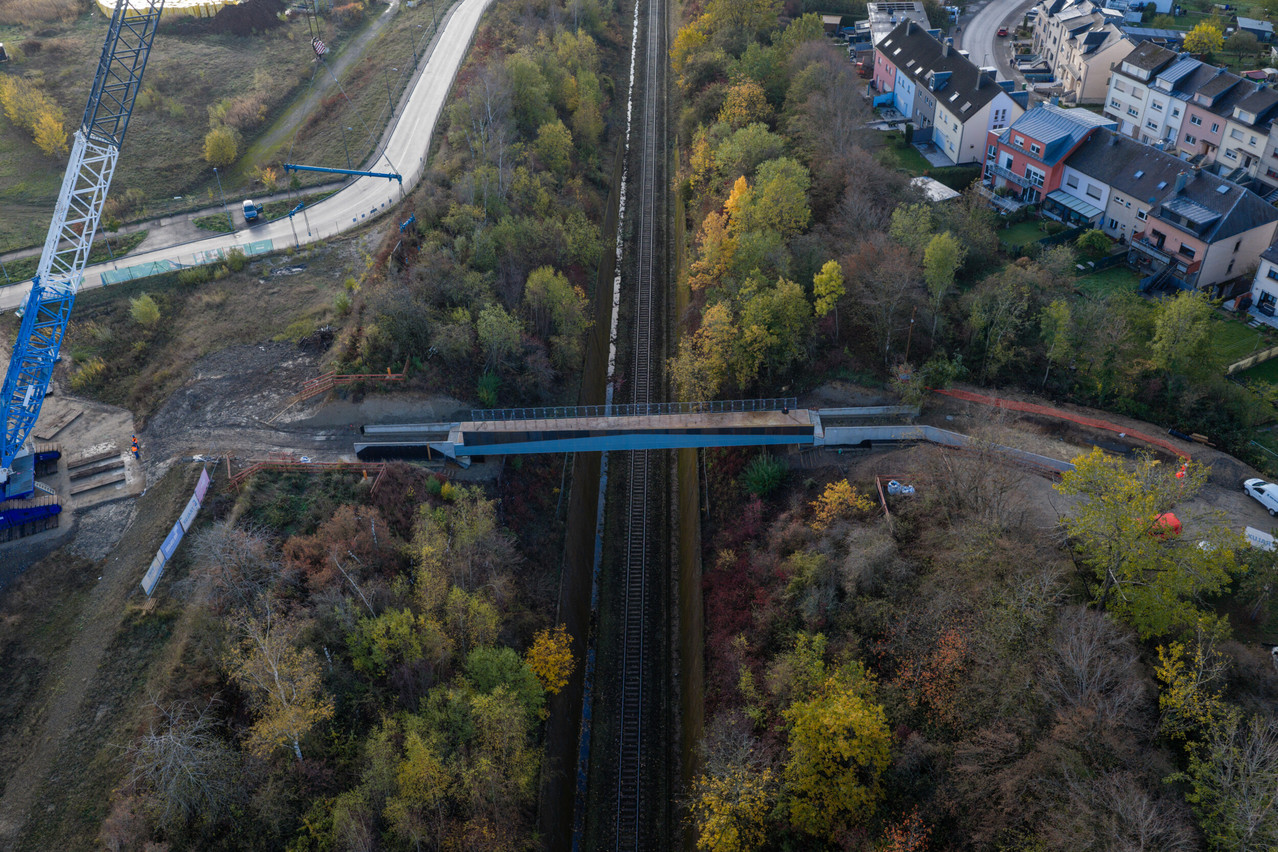
To symbolise the birth of a neighbourhood, a foundation stone can be laid. In Belvie, this will take the form of a footbridge. Measuring 34 metres long and 4.50 metres wide, the steel structure is designed to allow pedestrians and cyclists to travel between Belvaux and Belval’s newest major development. It is a relatively short structure, but one that already gives an indication of how Agora intends to shape the area: by establishing links with its surroundings before residents move in.
The lifting operation, announced for this Wednesday 28 October by Agora and Tralux Construction, involved the use of a 750-tonne crane to lift the 105-tonne footbridge onto its permanent supports. Originally scheduled for Saturday 24 October, the operation had to be postponed by four days due to the forecast strong gusts.
This first visit to the building site serves as a reminder of a simple rule: even with several months’ preparation, the weather is the deciding factor.
A two-way connection
For this neighbourhood, where sales began this year, the footbridge is intended to make everyday journeys easier and more efficient. From Belvaux, it will provide more direct access to Belval’s facilities, its park, its railway station and the blast furnace terrace. In the other direction, future residents of Belvie will be able to reach the centre of Belvaux, with its shops and amenities.
Belvie is not being built next to Belvaux, but alongside Belvaux.

This reciprocity lies at the heart of the developer’s message. “Belvie is not being built next to Belvaux, but alongside Belvaux,” says Yannick Quevedo, Managing Director of Agora, in the joint press release issued by the two companies. “Even before the first homes are built, we are establishing the link that connects the new neighbourhood to the existing fabric of the municipality of Sanem,” she says enthusiastically.
The issue therefore goes beyond simply providing access to future housing developments. It is also about giving current residents a new way to get around the area on foot or by bike (or by running, provided they’re wearing suitable trainers). For Agora, this connection also serves as a selling point for Belvie’s property developments.
The installation of a 105-tonne footbridge is an event in itself – a highly technical operation.

A few hours of lifting, months of preparation
On site, this urban vision takes the form of a very practical project. The ground must be prepared, a heavy-duty crane installed and the movement of a 105-tonne structure to its supports organised. All this must be carried out within a weather window that meets the requirements of the lifting plan.
“The installation of a 105-tonne footbridge is an event in itself, a highly technical operation. It requires meticulous preparation and close coordination between all the teams involved,” emphasises 
The company is carrying out the works on behalf of Agora, the client. The architectural design was entrusted to Agence Ter, whilst SGI is responsible for the technical design and supervision of the works. Sarens is responsible for lifting and installing the structure. The project also involves specialists in inspection, safety, waterproofing, guardrails and lighting.
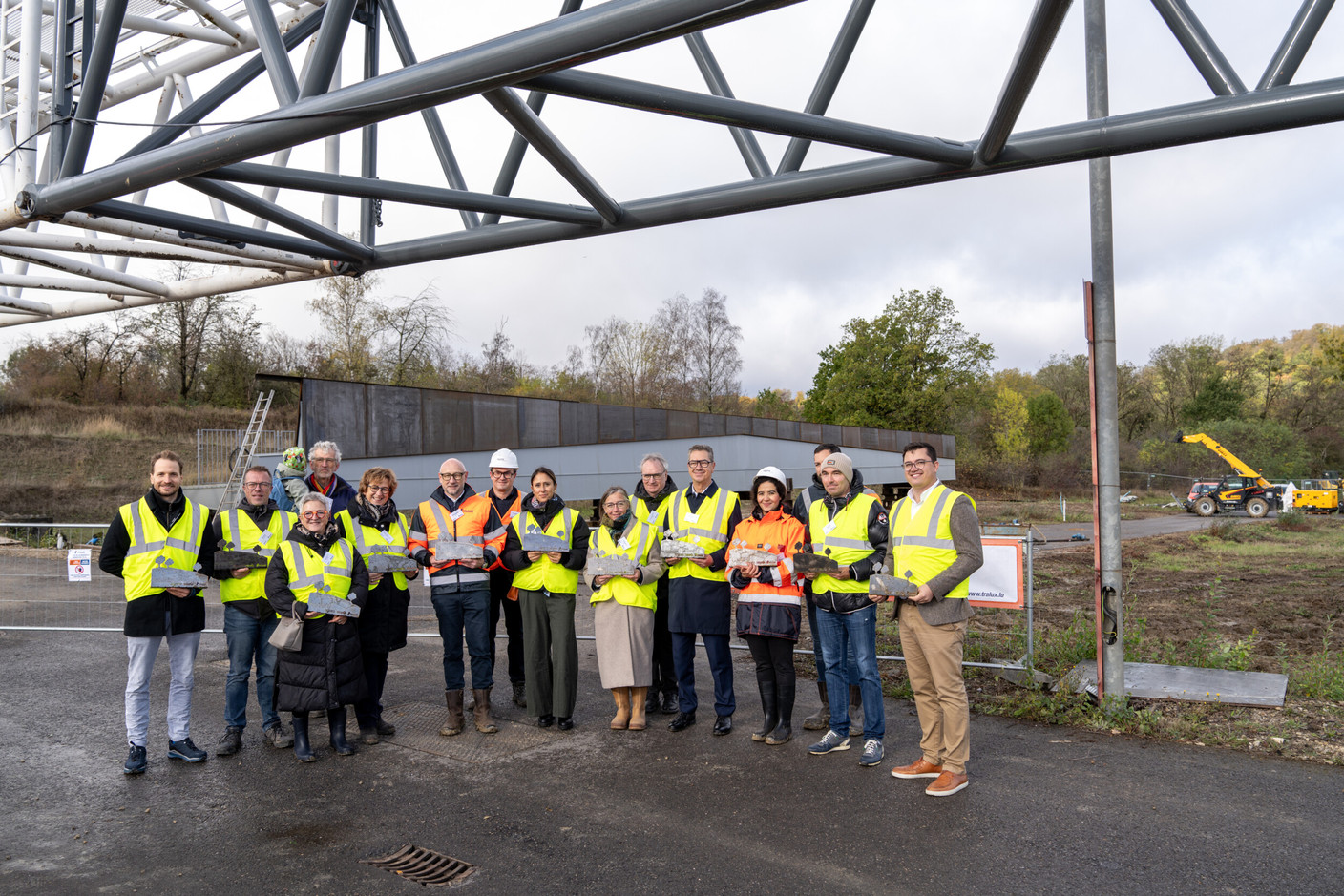
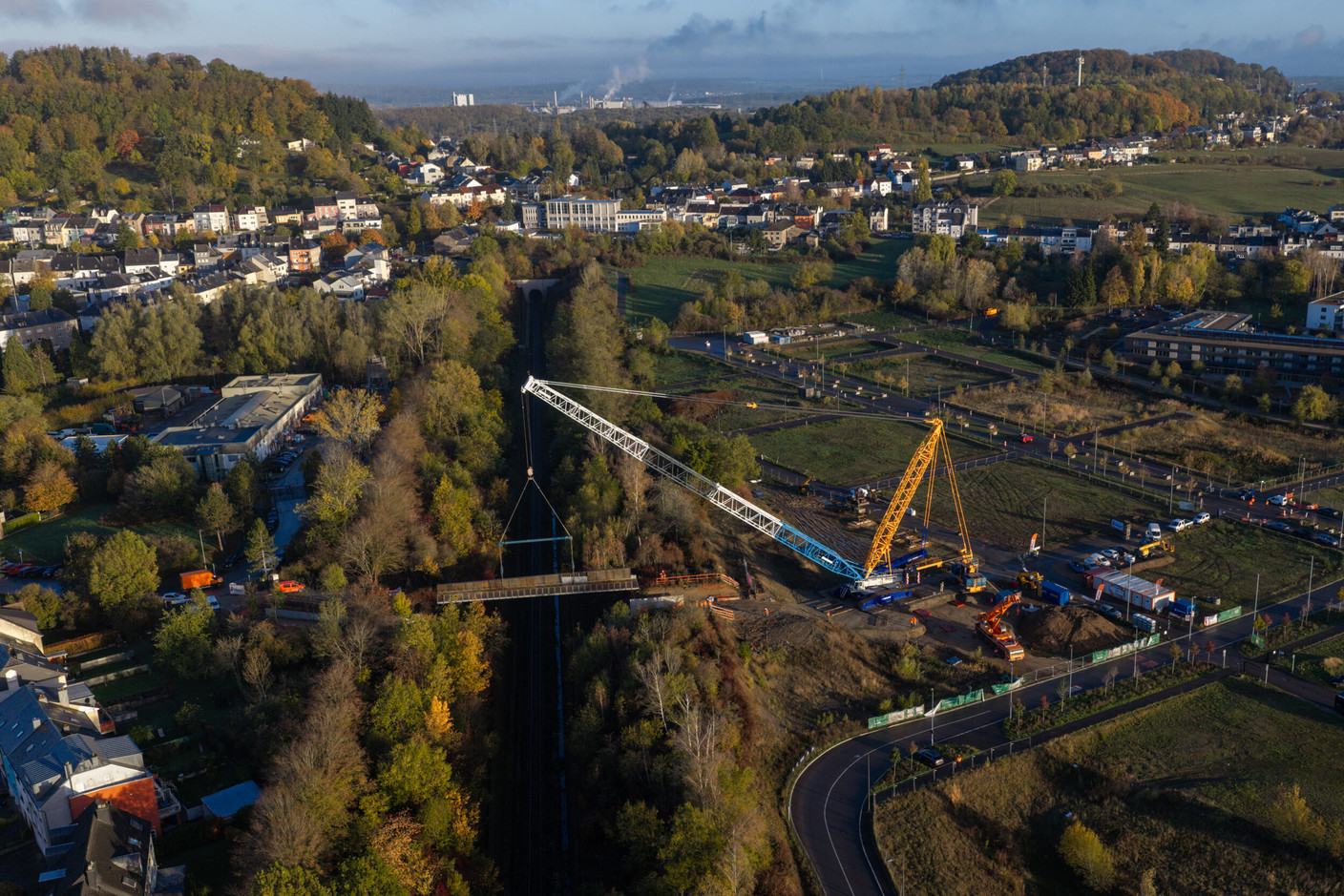
This coordination naturally began before the crane was erected. Since last winter, the contractors have been working with the local council on access routes, the space required for the equipment, lifting plans and public safety.
“On the day itself, the operation lasts a few hours, but in the run-up to it, there are months of coordination between around ten organisations,” explains 
The postponement of the operation highlights the constraints involved in the preparations. The gusts forecast for 24 October meant that the lift could not be carried out under the required conditions. “You can’t control the weather on the day of a 105-tonne lift,” says 
The neighbourhood yet to be built
Although the installation was spectacular, it does not mean the link will open immediately. The teams must now continue with the earthworks, connections and other preparations required for it to become operational. The published timetable sets 18 December 2026 as the completion date for the works, which began on 13 April. Once completed, the footbridge will be taken over by the municipality of Sanem, which will be responsible for its management and maintenance.
In the context of Belvie, it marks the start of a longer-term development. The development of the neighbourhood’s infrastructure is scheduled to begin in 2027. The housing and other elements of the scheme will gradually bring this new area to life.
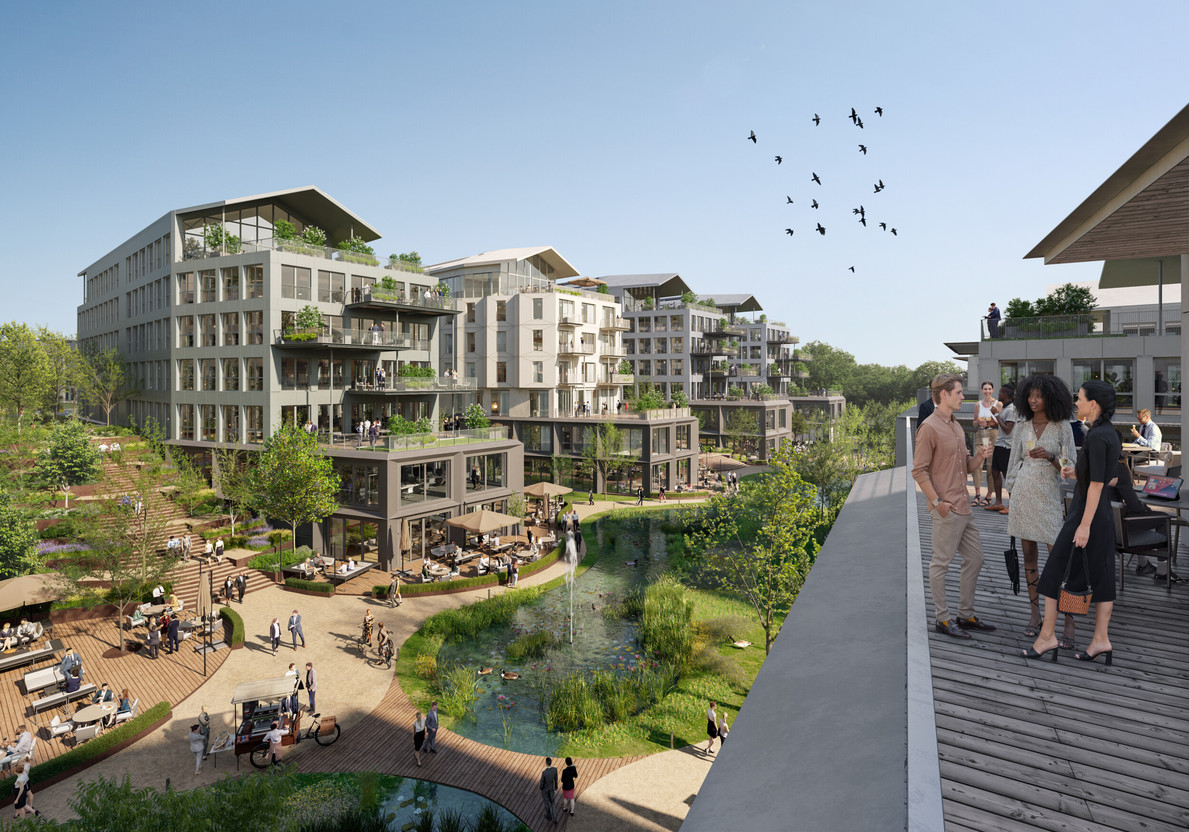
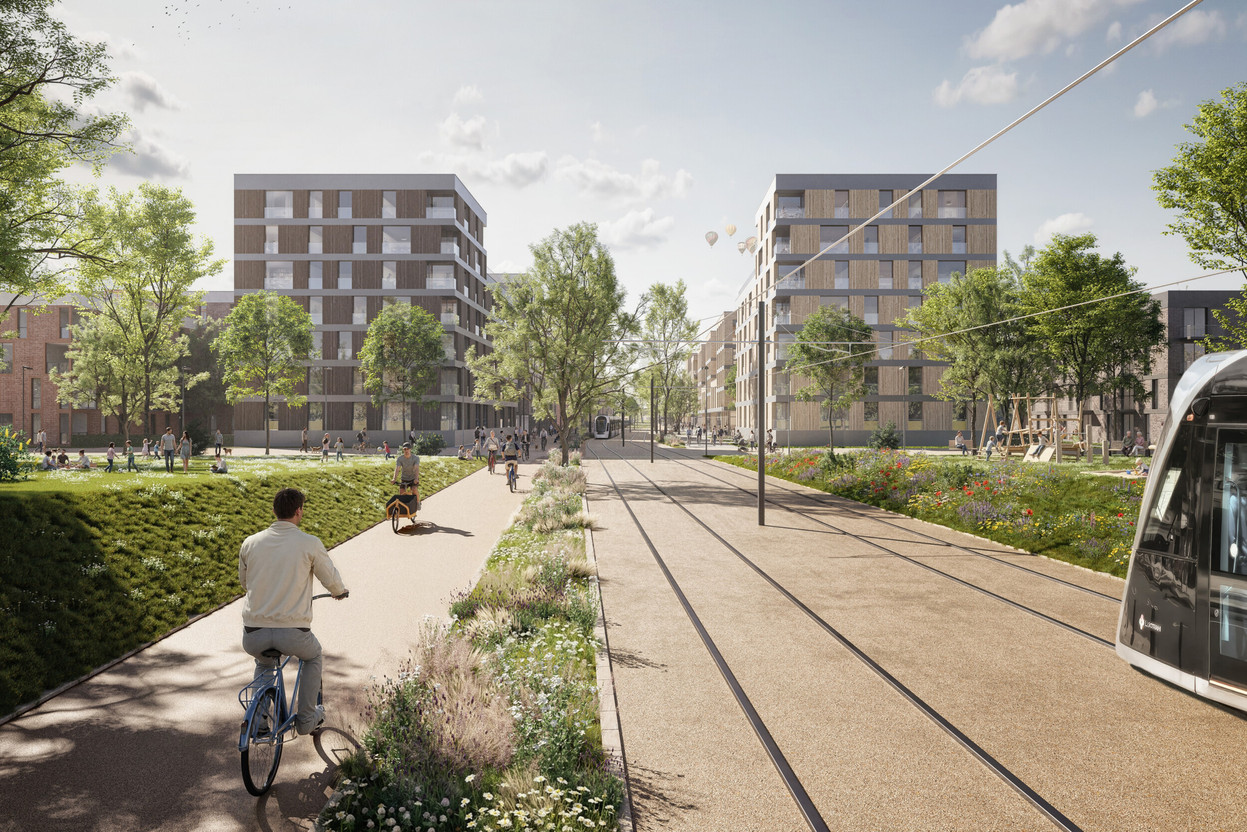
Agora promises controlled density, a variety of housing types and quiet streets, as well as the exploration of new housing models. The footbridge forms part of a broader mobility concept, combining intermodality, transport hubs and the continuity of pedestrian and cycle routes. Its value will therefore also be measured by the quality of the routes that extend from it in both directions.
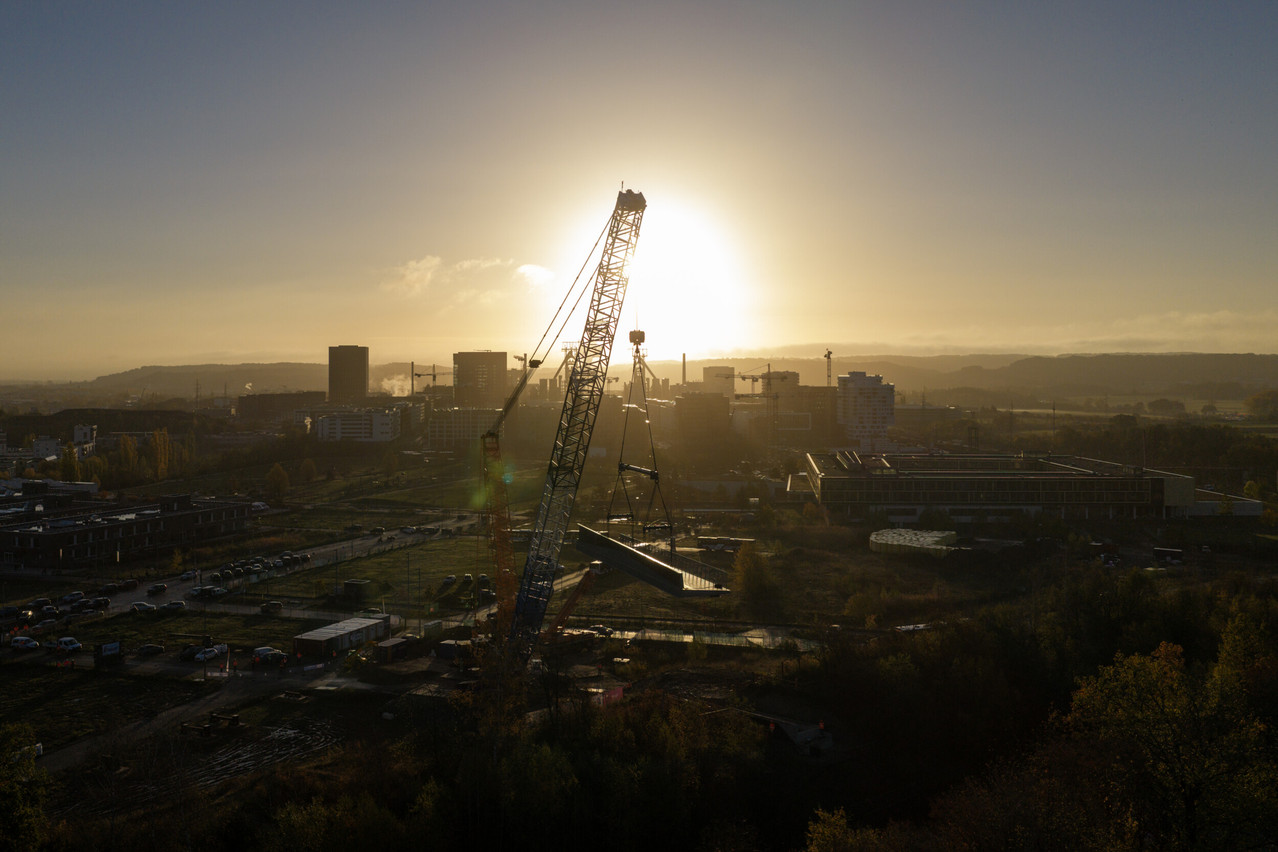
For Bruno Théret, vice-chairman of Agora’s management board, this footbridge ties in with the site’s history: “Steel has shaped Belval’s history; it is also shaping its future.” (Photo: John Oesch)
Steel: from the industrial site to the residential neighbourhood
In Belval, the choice of steel has particular significance. Agora, a company owned equally by the Luxembourg State and ArcelorMittal, has been leading the regeneration of the former steelworks site for over 25 years. Its 120-hectare development area is set to eventually accommodate up to 10,000 residents and create some 25,000 jobs.

For future users, the bridge’s value will lie in its everyday uses: getting to a shop, heading to the station, going to the park or cycling through the neighbourhood. Following the deployment of a 750-tonne crane and months of preparation, it is precisely this ease of movement that will ensure the footbridge becomes an integral part of daily life in Belvaux and Belvie.