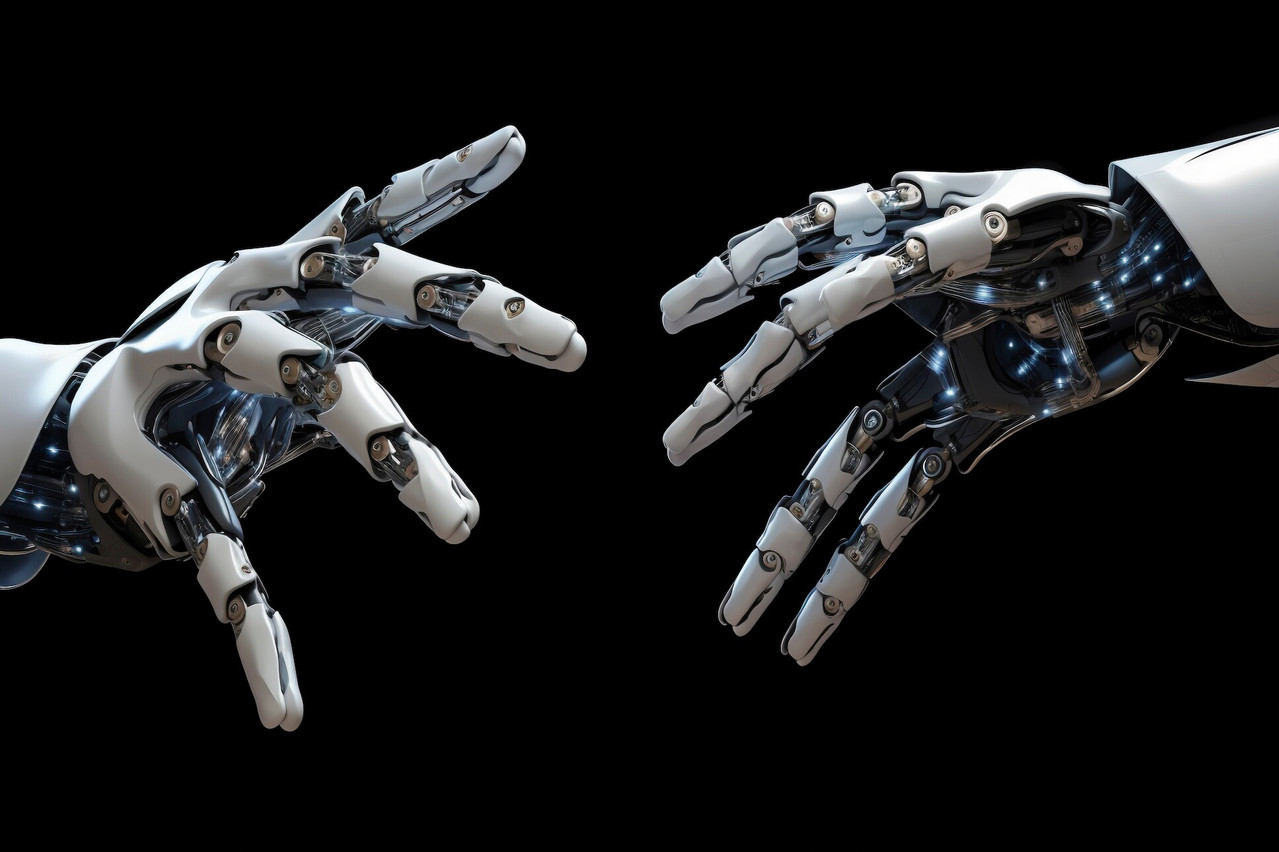
Unlike traditional robots fixed to production lines, humanoid systems are built for variable tasks: moving parts, supplying workstations, or carrying out maintenance. The global humanoid market, valued at under €1 billion in 2024, is projected to reach around €32 billion by 2033. Over the longer term, some analysts suggest humanoids could become as commonplace as cars.
The near‑term role of humanoids is not to replace skilled workers but to absorb physically demanding, repetitive roles that are increasingly hard to fill. In our ageing economy, that distinction matters.
Over the last century, global life expectancy has more than doubled to around 73 years, while the median age has risen from about 20 in 1970 to over 30 today. For the first time in human history, people aged 60 and over now outnumber children under five.
Across Europe, Japan and increasingly China, retirement rates are rising faster than labour-force participation, creating skill shortages even during periods of weak growth. In this context, automation—including the rise of humanoids — is best understood as a technology‑driven response to persistent labour scarcity.
Consider the automotive industry. For decades, carmakers were among the world’s most advanced users of industrial robots, but those systems thrived in tightly controlled, repetitive environments. Today’s challenge is different. Plants are becoming more flexible, product cycles shorter, and workforces harder to staff.
German manufacturers — long the backbone of Europe’s industrial model — are grappling with exactly this tension. As production becomes more complex and demographic pressure intensifies, interest is growing in robots that can move, adapt, and operate in spaces initially designed for humans.
Tesla provides a different but equally instructive case. Beyond its role as an electric vehicle manufacturer, Tesla is positioning itself as a robotics company, using its factories as live testing grounds for physical AI. Its humanoid robot, Optimus, is already performing basic tasks inside Tesla’s own facilities.
The logic is straightforward: if a car factory can train autonomous systems to navigate complex environments, manipulate objects, and learn from experience, those capabilities can be reused across logistics, manufacturing, and beyond. For Tesla, robotics is therefore a long‑term extension of its automation and AI stack.
The same logic is visible at scale in logistics. Amazon’s warehouses now deploy over 1 million robots, nearly as many as people, and productivity per employee has risen dramatically over the past decade. Robots handle movement, sequencing, and storage, while humans increasingly focus on supervision, exception handling, and system optimisation.
For investors, the key insight is that physical AI is emerging as infrastructure, not a single product cycle. The opportunity set therefore spans sensors, semiconductors, batteries, simulation software, and broader industrial platforms.
Crucially, this is a long‑term investment theme anchored in fundamentals. Europe’s ageing population, Germany’s industrial labour constraints, and the global push to reshore strategic manufacturing all point in the same direction. As populations grey and labour becomes scarcer, the question is no longer whether humanoids are necessary but where they will become economically viable first.
---
Alexandra Spasov is a Funds Solution Analyst & Thematic Research Specialist at Quintet Private Bank. The statements and views expressed in this document are those of the author as of the date of this article and are subject to change. This article is also of a general nature and does not constitute legal, accounting, tax or investment advice.
More information on Quintet Private Bank website.