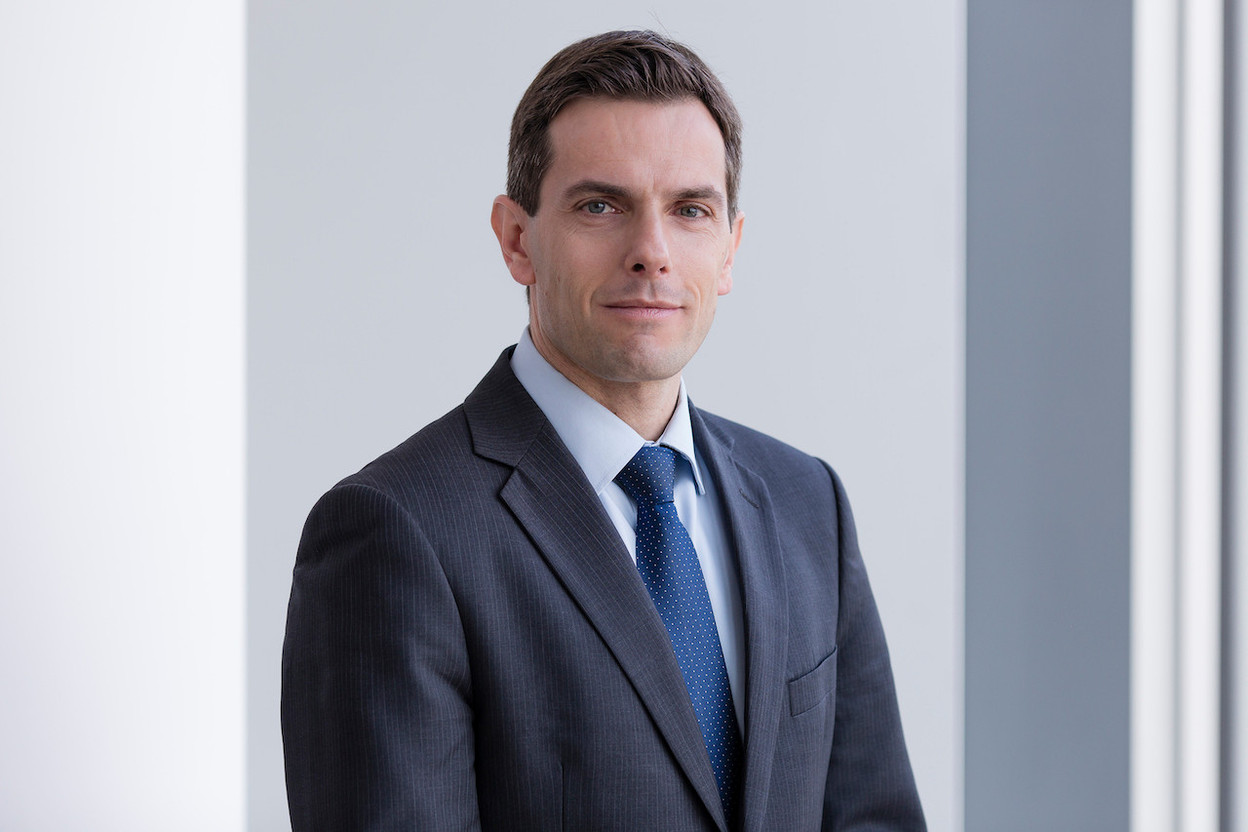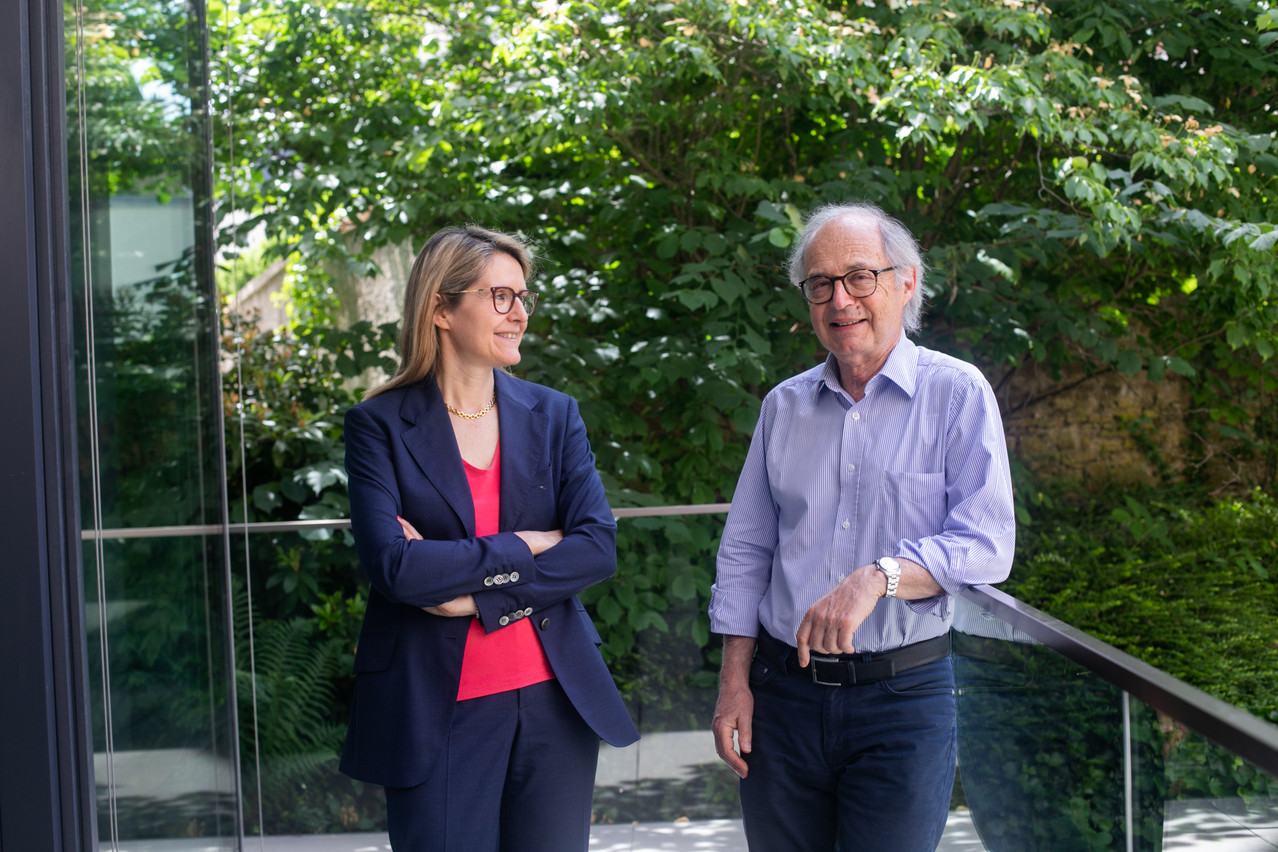
Anton Brender, chief economist, and Florence Pisani, global head of economic research at the asset manager Candriam, are not betting on a recession or on inflation remaining at a high level. But they do believe that the next few months will be turbulent for the economy and will result in increased volatility in markets that will structurally no longer be able to offer the level of return that investors have been accustomed to over the past 15 years.
Marc Fassone: Between declining growth, soaring inflation and the return of geopolitical risks, what will be the key words in the markets in the coming months?
Anton Brender: The first word that comes to mind is ‘turbulent’. In the US, we are entering a phase of deceleration. This is the objective of the Federal Reserve, which hopes to achieve a cruising speed of growth of less than 2% for the US economy by the end of the year. This is the scenario for a soft landing. The plane has just landed, but the monetary authorities realise that the runway is shorter than they thought and that the plane is going a little faster than they thought. Hence the slightly harder-than-expected braking. And when you brake harder in a plane that is still going quite fast, you have things falling off...
Our bet is that the crash can be avoided and that a soft landing is possible. This will shake things up, there will be a bit of emotion... This will be reflected in the markets by an increase in volatility. We’ll have to wait four to five months to be sure that the soft landing is successful.
Florence Pisani: It will also be turbulent in Europe. The eurozone is in the process of emerging from 10 years of accommodative monetary policy. For the [European Central Bank], the first challenge is to normalise its rates without sovereign rate differentials widening between northern and southern Europe, especially with Italy. The ECB must avoid fragmentation.
The second challenge is to preserve growth. High inflation--we are at nearly 8%--is a drain on purchasing power in a context where salaries are not rising very much. Real income is falling in many European countries, despite government measures. This weighs on consumption and, in turn, on business investment.
A third risk to European growth is the Russian gas issue. If the valves were closed, we would fall into recession.
Brender: The situation will also be turbulent in China. There is a slowdown that is desired by the authorities. The same authorities who have been tackling the real estate bubble, but who have been surprised by the resumption of the pandemic which has led to lockdowns. The authorities do not want activity to decelerate too quickly, so they would have to stimulate it. China is doomed to see its growth slow down. It is written. The working population is starting to fall, as is productivity per job. The authorities’ target of 5.5% growth will not be met. Unless the property bubble is inflated further. This is something Beijing does not want. In our view, Chinese growth will always be higher than that of the United States, but it will tend towards 4% and 3%. This is not insignificant, but it is still lower than what we have seen in recent years.
Very low growth rates compared to what we’ve seen in recent years, inflation like we haven’t seen since the 1980s: is the market ready for this new paradigm?
Brender & Pisani: Growth is not that low, considering the demographics and the degree of development of the different countries. But it is true that the American and European economies are close to their potential. This can be seen in the employment figures.
Brender: We also think that inflation is not doomed to remain as high as it is today. In the current inflation in the US and Europe, the ‘cyclical’ components of commodity prices and the logistical problems associated with the end of the pandemic are transitory. And for the time being, the wage component, the only important one because it is around it that a dynamic is set in motion, is only present in the United States. It is on the other side of the Atlantic that the battle against inflation is being fought.
The central banks know that they cannot do anything about the rise in oil and gas prices. Except to kill activity. On the other hand, they know that the economy has to be slowed down enough for wages to stop rising so fast. Wages are rising at around 5% in the US. The Fed wants to get to 3.5%. At the beginning of March, when it started to unveil its rate hike schedule, it gave itself two to three years to get there. And I think it will not compromise. The Fed’s bet is that the price of oil will come down, that the supply chain situation will normalise and that covid will disappear.
Brender & Pisani: For us, the economic landscape that is taking hold is one of ‘normally’ lower growth and inflation that is going to be around 2% in two to three years. Until then, it’s going to be a bumpy ride.
Isn’t the war in Ukraine already threatening this scenario?
Brender: It is true that the world has not only changed economically. Geopolitics is once again a determining factor. It became so even before the war in Ukraine. Since the Trump years, globalisation as we knew it has been called into question. We are witnessing a reconfiguration of world trade that will be a source of volatility and inflation. In addition, states will become much more interventionist in strategic sectors such as energy supply. As a result, companies will be put on the spot. All this creates a less simple and less open environment than in recent years.
‘Vigilance’ will also be a key word. You don’t want to go just anywhere, because the world is getting more dangerous.
So these two years will be more complicated on the markets?
Brender & Pisani: Yes, the key word will be ‘volatility’.
What should an investor expect if they are used to constantly rising returns in recent years? Should they lower their expectations and look for new sources of return?
Brender & Pisani: Both.
Pisani: We are coming out of a period of about fifteen years that was extremely favourable for investors thanks to low rates. A simple equity-rate portfolio worked. With the rise in interest rates, weaker growth potential than in the past and increased volatility, in order to preserve the return, we will have to diversify, compose a portfolio that goes in several directions.
Brender: The ‘safe’ investor must keep in mind that there are no miracles. In today’s world, returns are going to be relatively low because the growth of our economies is going to be relatively low. That doesn’t mean that there won’t be some stocks that will stand out, but it will be a more difficult environment for investors.
Pisani: You have to accept, in these circumstances, that the expected returns over the next few years will be lower.
Originally published in French by Paperjam and translated for Delano. This article was published for the Paperjam + Delano Finance newsletter, the weekly source for financial news in Luxembourg. Subscribe using this link.