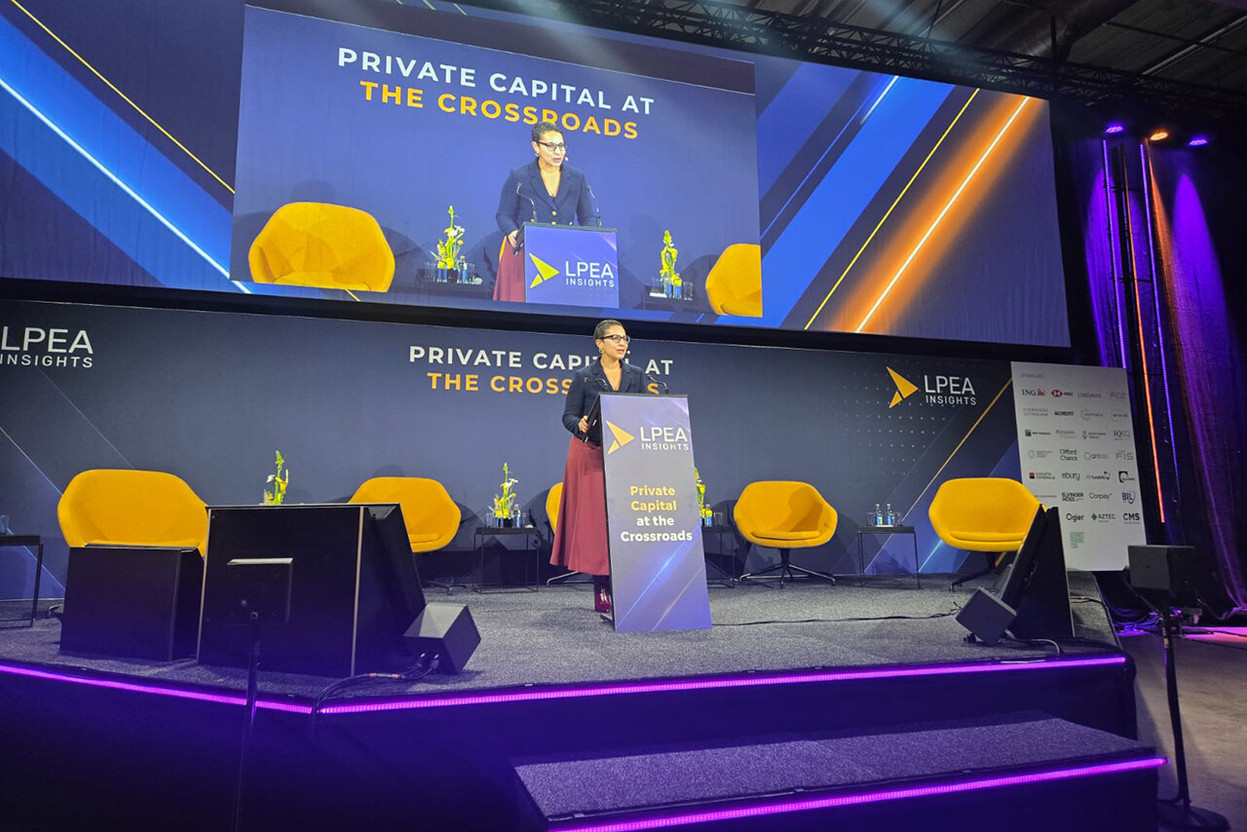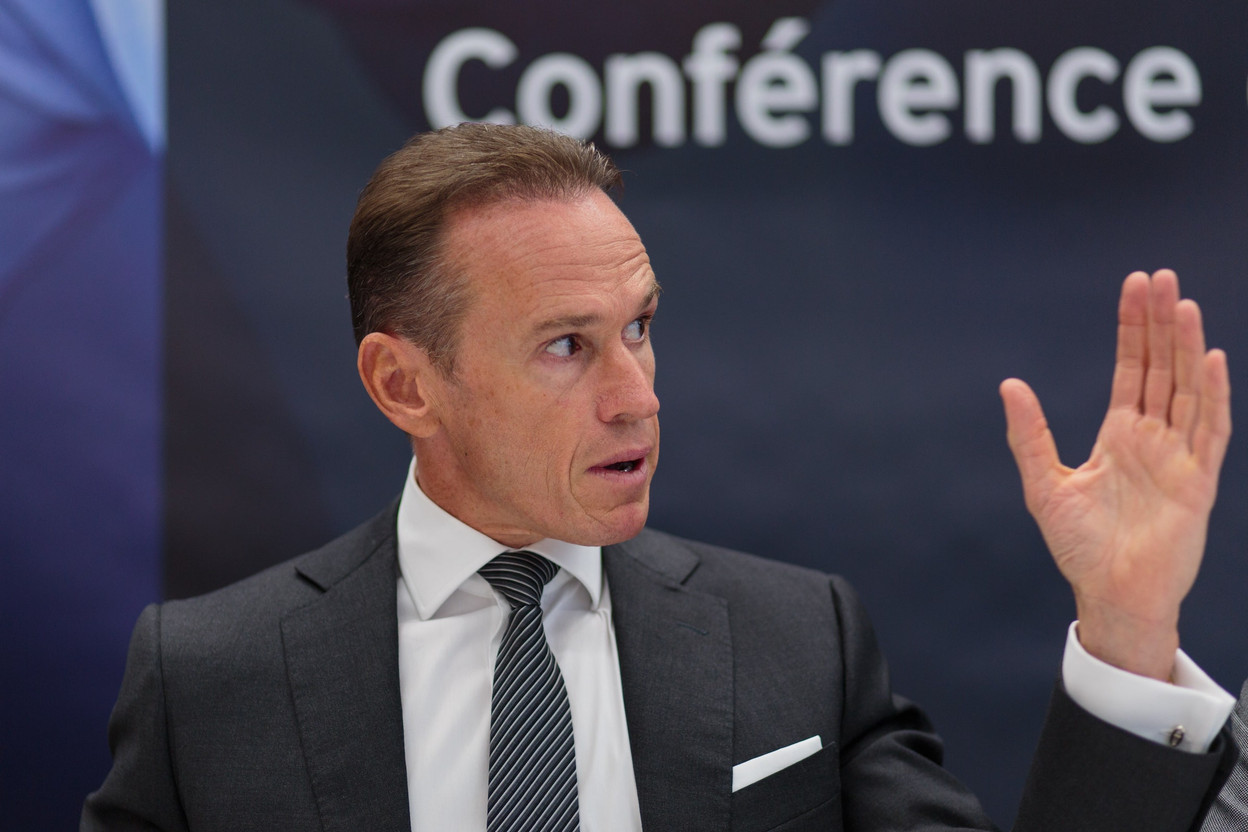
In its 272nd issue, Paperjam delves into the world of private equity, an industry that has become indispensable to Luxembourg’s financial centre. Through interviews with 15 key players, the magazine analyses the inner workings, key issues and challenges of this ecosystem.

How would you define private equity?
Alain Kinsch. – “It involves providing both capital and expertise to a company that is not listed on the stock exchange in order to enable it to grow, whether by improving its cost management or by expanding its sources of revenue through product or market diversification. Private equity can apply just as much to your local bakery as it does to a company with 10,000 employees. What they both have in common is a desire to grow without access to the stock market. In Europe, 30,000 companies are financed by private equity, compared with around 6,000 that are listed on the stock market.
You began your career in the financial centre in 1995. What has changed since then?
“At that time, nobody knew what private equity was. As for Luxembourg-based private equity funds, there were barely thirty of them: that was nothing at all. We had what are known as intra-Community acquisition structures, used in particular by private equity funds – mostly American or British – to make acquisitions in Europe. The major players in private equity were therefore very familiar with Luxembourg, but mainly in relation to intermediary structures.
The strategy at the time was to attract private equity investment funds themselves (and not just intermediary structures) by offering fund vehicles tailored to this sector. The aim was to persuade them to base their funds here. Thus, in the late 1990s, the first initiatives of this kind emerged, with a view to building our Luxembourg toolkit. The Sicar Act in 2004, followed by innovations roughly every three years (SIF, the Luxembourg LLP with SCSp, Raif, etc.). In 2010, we established the LPEA, which I had the pleasure of co-founding with 
The fact that Luxembourg has established a strong position in the private equity sector is the result of this entire transformation process and of what the country does best: bringing people together around a table to create a framework tailored to the market. After that, it’s pure and simple marketing: endless roadshows – around ten a year – to raise awareness of our financial centre.
Of the 20 largest private equity firms in the world, 18 now have a physical presence in Luxembourg.

How significant is private equity today in terms of assets under management and growth?
“Today, this amounts to €1,000bn. That is a huge figure: around 20% of all assets under management in Luxembourg. Private equity is experiencing absolutely phenomenal growth, at around 40% per annum over the last four years. Of the 20 largest private equity firms in the world, 18 now have a physical presence in Luxembourg. It is an entire industry, an ecosystem that falls within the category of alternative investments.
How many people work in this industry in Luxembourg?
“Around 1,000 people work there directly, that is to say, they manage these investments. But there are also indirect jobs – all those linked to the sector: in banks, with service providers, in law firms… Around 10,000 people work in the alternative investments sector.
Please share with us a figure that you think is indicative of the private equity sector in Luxembourg.
“Across the entire private equity fund sector in Europe, more than half are Luxembourg-based funds, whereas 25 years ago we had none at all. Within the value chain, we distinguish between the back office, the middle office and the front office.
What do these concepts cover?
“The front office comprises those who decide where to invest and who execute the transactions. The middle office is not on the front line: the people who work there draft contracts, structure financing and carry out controls and compliance tasks. Finally, the back office comprises those responsible for accounting and tax returns. In Luxembourg, we started with the back office, then added the middle office.
But isn’t the front office missing?
“This is a sector we haven’t yet managed to attract here. Professionals tend to be based in major centres, such as London, New York or Paris. For a 28-year-old looking to build a career in this field, Luxembourg isn’t immediately the first choice. Things are changing now, particularly where international schools and flight connections are concerned: these are important factors. Nor were there any tax incentives until the recent introduction of the carried interest scheme. That was necessary. But we are no longer the only ones to have this type of scheme.
I think it’s important to always try to move up the value chain, with key decision-makers based here [in Luxembourg].
What are the current trends in the sector?
“There is a real trend surrounding the issue of substance. Previously, this was mainly a tax-related matter: it was necessary to have substance in the countries where the legal structures were established. Today, it is also a regulatory issue. The debate surrounding the establishment of Esma in Paris illustrates this.
Having decision-making capacity in Luxembourg would, therefore, strengthen the financial centre. I believe it is important to always strive to move up the value chain with genuine decision-makers based here. If we continue to be as ambitious as we have been in the past, I am convinced that we will succeed.
By when?
“We need to set ourselves a timeframe of around ten years to build a genuine ecosystem around the front office. It can’t be done in a year or two, but we need to start now.
So, does private equity in Luxembourg not directly finance the real economy in Luxembourg?
“Yes, 99% of the money invested in Luxembourg private equity funds is not deployed in Luxembourg, but is instead deployed all over the world, largely in Europe.
There is a great deal of talk about regulation in the financial sector. In private equity, is this more of an asset or a hindrance?
“Private equity funds were not regulated until the introduction of the AIFM Directive. This was originally a directive on hedge funds, designed to protect investors from funds deemed too risky. Taking a very liberal approach, one could argue that we do not need regulation, since these products are aimed at people who know what they are doing – professional investors. They would, therefore, simply have to protect themselves. However, nowadays, I believe that this argument no longer holds water.
You no longer need to be a millionaire to invest in a private equity fund. You can do so with €100,000.
Why?
“Firstly, we have seen that private equity funds can be poorly managed and saddle the companies they acquire with excessive debt. Secondly, these days, you no longer need to be a millionaire to invest in a private equity fund. You can do so with €100,000. We are therefore dealing with a group of people who may be more vulnerable, and it is important that they are afforded a certain level of protection.
Furthermore, private equity has been so successful that we are seeing a proliferation of players in the sector. Not all of them can be good. It is therefore very important that this sector is regulated, as this ensures that everyone adheres to minimum quality standards. In doing so, I believe it also protects the sector itself.
Where do you see Luxembourg’s competitive advantage in the private equity sector?
“Firstly, there are Luxembourg’s traditional advantages, which apply to just about everything: the ability to plan for the future on the basis of a clear and stable legal and tax framework. This stability is very important. The second advantage is, I would say, Luxembourg’s size. We are so small that people work together. We are also very agile: we know how to deal with French people, Germans and so on. Finally, our toolkit is also a competitive advantage.
When assessing the health of the sector, are assets under management and the number of funds still the only relevant indicators?
“Yes, these are the key indicators for a financial centre or a country. But what also matters are the funds’ commitments and performance. However, a fund’s performance does not really correlate with its domicile.
We need to automate this work, quickly and efficiently, because otherwise another financial centre will do it.
What will be the “game-changers” for the Luxembourg private equity sector in the coming years?
“Quite clearly, data and AI. In these areas, Luxembourg will be able – and indeed must – play a genuine role. To maintain and strengthen its current position, it will need to be at the cutting edge: how can a private equity fund use AI to improve its performance?
Today, many processes are still carried out manually and could be automated, particularly reporting to investors. I co-manage a private equity fund myself and I can see just how much work it involves. We need to automate this work, quickly and efficiently, because otherwise another financial centre will do it.
But it goes further than that. When you manage a fund, you need access to data and the ability to analyse it in order to know what decisions to make. Here too, AI can help to bring the data together to form a data lake, and then analyse it.
Imagine you had to draw up a private equity-focused strategy for the coming years. What would be the first steps you would take?
“I believe we already have a very good set of tools at our disposal. In the short term – over the next 12 to 24 months – I would place particular emphasis on promoting what we already have. Not through newspaper adverts, but rather through face-to-face meetings, roadshows and visits to other financial centres to raise our profile.
The second part of my strategy would focus on investment in AI and data: this is a key priority. Finally, I would add addressing the few issues that have already been identified, for example, by making it easier to open bank accounts.
Key figures
18/20. Of the 20 largest private equity fund managers in the world, 18 are based in Luxembourg.
220. This is the number of investors and fund managers active in private equity, venture capital, debt and infrastructure who are members of the LPEA.
No. 2. Luxembourg is the world’s second-largest investment fund centre, with €7,766bn in assets under management.
1,200. This is the number of career opportunities identified amongst the vacancies in private equity and venture capital.
44%. This is Luxembourg’s share of European private equity and venture capital funds.
This article was written for the November 2026 issue of Paperjam magazine, published on 14 October. The content is produced exclusively for the magazine. It is published on the website to contribute to Paperjam’s comprehensive archive. Click on this link to subscribe to the magazine.
Is your company a member of the Paperjam Club? You can apply for a subscription in your name. Please let us know via club@paperjam.lu.