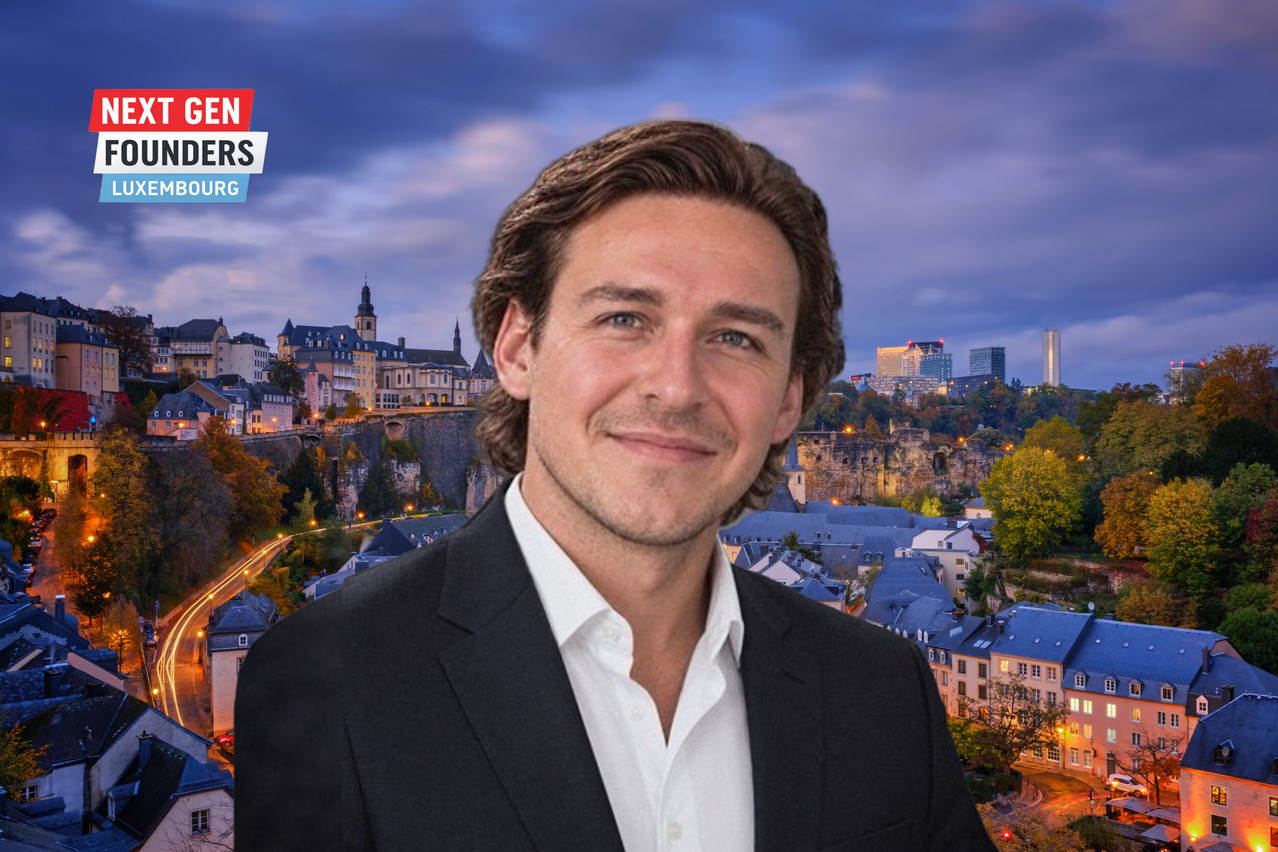
Mathias Estevez-Nousiainen wanted to become an architect, like his father. In the end, it was in the expat accommodation in Shanghai that he built up his business. He has already experienced early success, the collapse of his business during the Covid pandemic, and the need to start afresh.
A Franco-Luxembourger, born in Brussels to an Ecuadorian-Finnish father and a French mother, he arrived in Luxembourg at the age of two and grew up there. “My parents were entrepreneurs. At home, that was the norm.” In Brussels, he was trying to find his way between architecture, political science and communications. After an internship in Togo, some contacts advised him to explore China. His university happened to be offering an exchange programme in Shanghai.
He left in 2016 for six months. “I felt as though I was living life at a thousand miles an hour. In China, an idea becomes a trial within a week and a business within a month.” He likes the way the network works. “It’s easy to swap contacts on WeChat. Whereas in Europe I’ve sometimes seen contacts being jealously guarded, I discovered a sense of pride in connecting people.”
After failing my architecture degree, I found myself renovating flats with architects and designers!

At the end of the exchange, he told his parents that he wanted to stay for a year to learn Chinese. They encouraged him and supported him financially. He attended 18 hours of classes a week, then went on to do a Master’s degree in International Business at Shanghai Jiao Tong University. “The language was a barrier, but also a gateway to the culture.”
“Without realising it, I was my first client”
With little support on their arrival, some students have bad experiences with accommodation or lose their deposit. Mathias offers to act as a liaison for schools in Shanghai, in return for a fee. “I’d collect irons and other bits and bobs from friends who were leaving to sell them on to new arrivals. The idea was to help them settle in, but also to introduce them to China.” The community was formally established under the name ‘Clan’ in 2018 and has grown to around 5,000 expats. “What I’ve set up is the service I would have liked to have had when I first arrived.”
Housing became the service generating the most revenue. Mathias put students in touch with a local estate agency, which paid him commission. He joined the agency as an intern in 2017, took on more responsibility, and then bought shares with his family’s support. In 2018, he took over the franchise for Le Milu, a guide to settling in for French people in Shanghai, which he ran until 2022. “The guide opened doors for me to consulates, associations and senior figures, which are difficult for a student to access.”
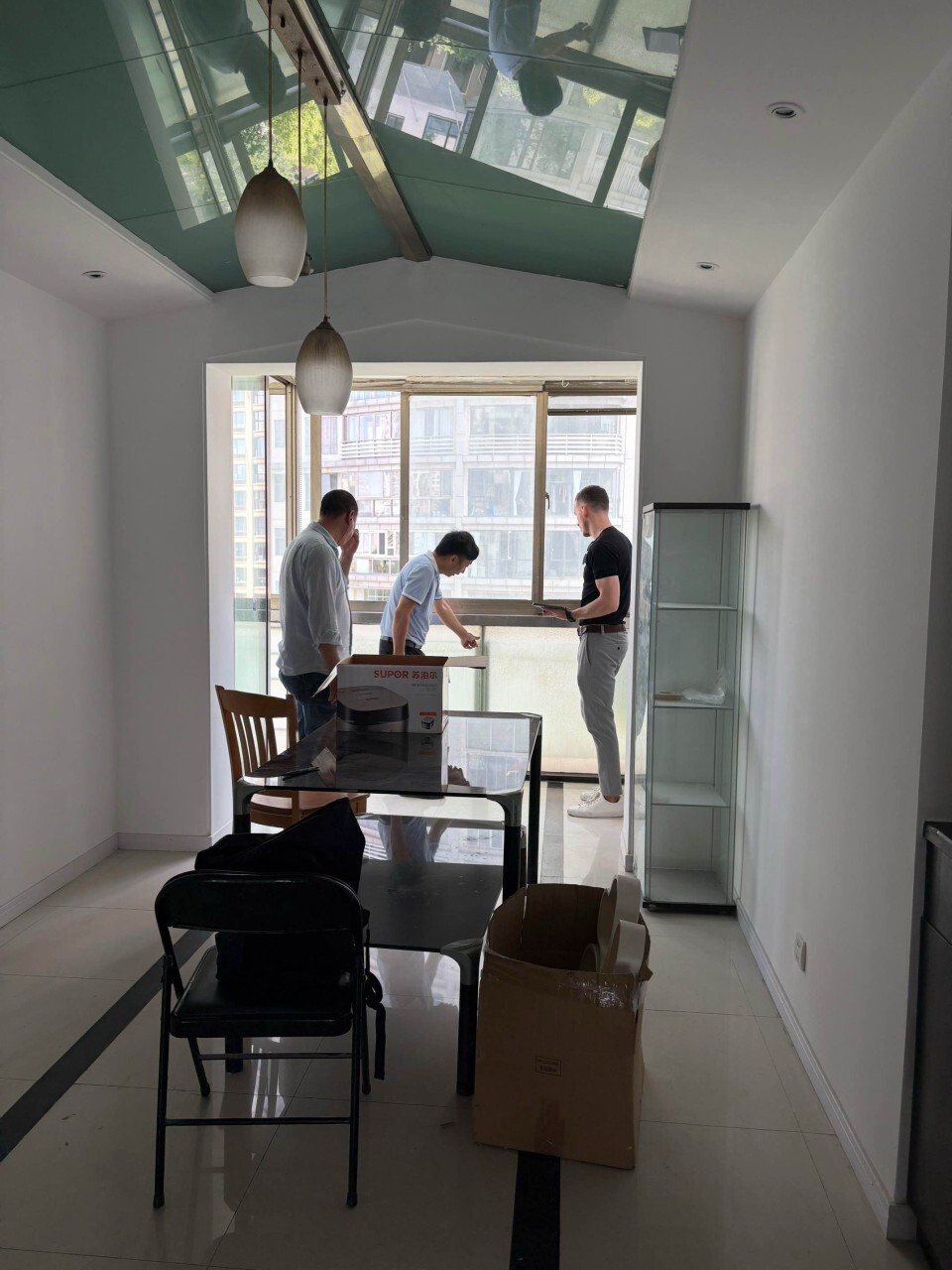
The property sector is based on two models. The agency finds accommodation in return for a commission. The second model, known as ‘baozu’, involves a greater commitment from the company. ‘We rent an apartment for five to ten years, renovate and furnish it at our own expense, and then sublet it.’ Some of the properties are converted into co-living spaces, with private bedrooms and communal areas. “The rent is still payable even if the property is empty, and we bear the risk.” In 2019, the business comprised around 50 flats and 200 rooms. “After failing my architecture degree, I found myself renovating flats with architects and designers!”


Empty flats, rent to pay
In 2020, the risk of ‘baozu’ suddenly became a reality. With Covid, tenants left very quickly. Properties were left empty, but nearly 100,000 euros in rent remained owed to landlords each month. “We had to terminate the tenancy agreements and lost the money we’d invested in the renovations. Business has collapsed.”
Mathias found himself faced with a decision that also affected his personal life. “I had to choose between returning to Luxembourg and rebuilding my life there. More experienced entrepreneurs encouraged me to stick it out.” He stayed. “I stayed in China for three years, from 2020 to 2023, without returning to Luxembourg. If I left, I risked not being able to come back.”
Together with a former colleague, he relaunched an agency in 2020 under the name Here. The target clients are now long-term expats and employees of large companies. The business operates on a leaner model, with no long-term rental properties, no office and low running costs. “The business provided work for a team, but didn’t always allow me to pay myself a salary.” He therefore joined, on a parallel basis, a wage-portage start-up, which employs staff on behalf of foreign companies without a local legal entity.
We deliberately keep things lean. Every euro we earn is reinvested to help the group grow, and my own remuneration follows this approach.
Having become the founder’s right-hand man, he played a part in the company’s rapid growth. In the space of a year, the team grew from around 25 to about a hundred people. “That experience equipped me for what lay ahead.” He went on to take up a consultancy role at Acclime, providing business services across several Asian markets. “It made me want to expand into the property sector beyond Shanghai. Here continued to operate with the team on the ground.”
‘Together, we can go further’
To drive Here forward whilst he was involved in other activities, Mathias opened up the company to outside investment. Alex and Sophie became partners and continued to develop the business. “Alone, we go fast; together, we go further. The key is to surround yourself with the right people: partners with complementary skills, and above all, who share our values.’ The resumption of international arrivals helped rebuild the customer base. “Here’s real turnaround came in 2023, with the return of students and expats. The business has been profitable ever since.”
Here helps expatriates find accommodation and, in partnership with other organisations, offers relocation services, assistance with visa applications and help with finding schools. It works with private individuals, businesses and relocation agencies. “Here is now the go-to service recommended locally by numerous institutions, companies, universities and associations.” It now supports more than 1,000 clients a year. Including its earliest projects, Mathias says the company has assisted more than 10,000 people over the past decade. The company has expanded into Beijing, Guangzhou, Shenzhen and Chengdu, as well as Hong Kong.
It has also resumed renting flats on long-term leases to renovate and sublet them. By the end of 2026, Here plans to return to its pre-Covid level with around 50 flats under management, ranging from co-living spaces to high-end accommodation for expatriate families. Funding is based on contributions from the founders and their families, followed by cash flow generated by the business, with no bank loans. In 2025, the creation of Here Group was accompanied by the arrival of new partners. “We have reinvested around 1 million euros in the renovation and development of our apartment portfolio.”
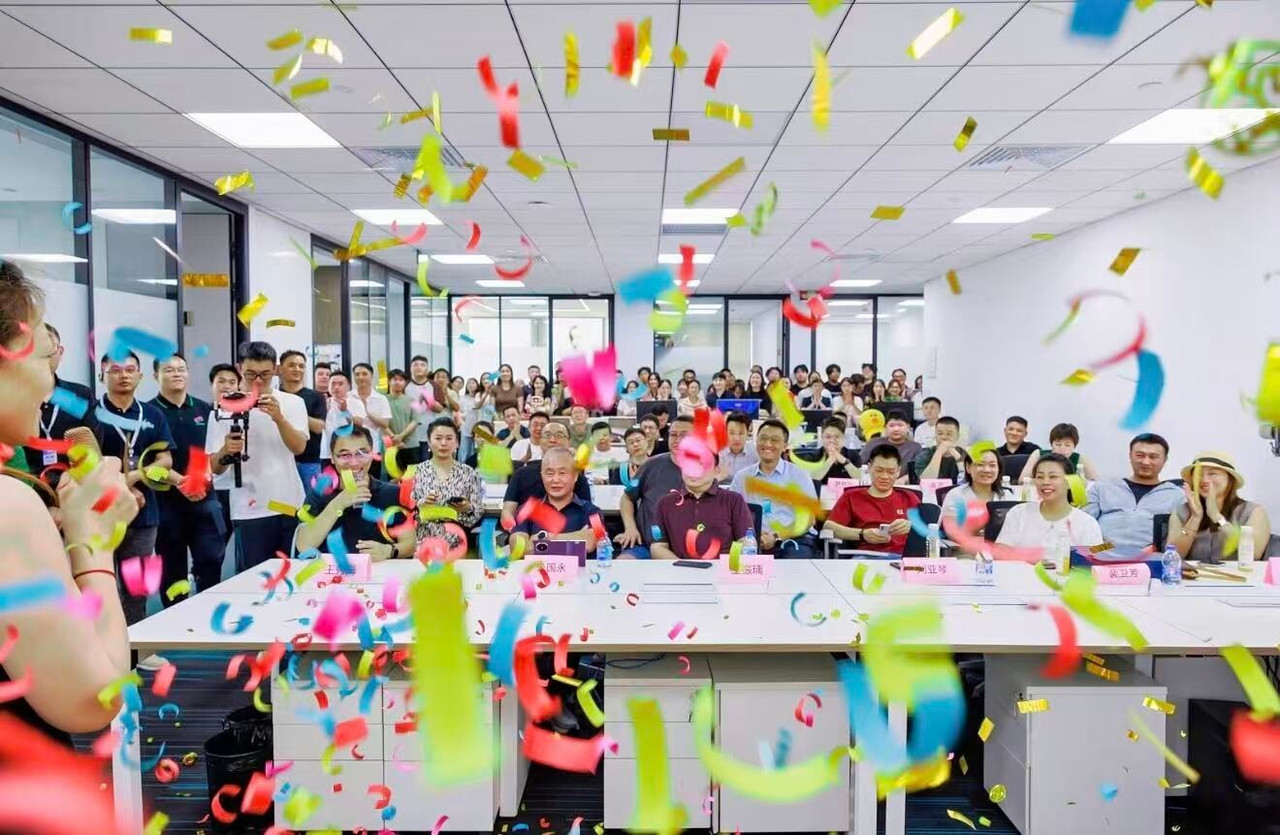
The Here team at its offices in Shanghai, which it shares with a Chinese partner with whom the company carries out some of its property-related activities. (Photo: provided by Mathias Estevez-Nousiainen)
For 2026, Mathias forecasts turnover of around 2 million euros, including agency business and rent. The group has around ten employees and works with around twenty freelancers worldwide. The total number exceeds 150 people when including the teams of the Chinese partner, with whom Here shares its headquarters in Shanghai and conducts part of its business as a joint venture. “We deliberately keep things lean. Every euro earned is reinvested to grow the group, and my own remuneration follows this principle.”
The same need, beyond China
“After Covid, I wanted to avoid being dependent on a single city and a single type of client.” The founders of Studcasa are already sending him students looking for accommodation in Shanghai. Their platform connects international students with local estate agents to help them settle abroad. “I initially supported them as a consultant. Within a year, they had built up a network of some 25,000 contacts across around 300 destinations. It was the same need, just on a different scale.”
Together with his partners, Mathias took over Studcasa in 2026. “Studcasa is our gateway to students from all over the world.” The platform is free for students, but relies on commissions from professionals. “When a match leads to a signed tenancy agreement, the estate agent pays Studcasa. The business covers its costs, but generates little profit. Here remains the business that generates the bulk of our revenue.”
In Luxembourg, I am finding a tight market where supply is failing to meet demand, whether for rentals or property sales, and in both the short and long term. This is exactly the kind of environment we learnt to operate in in Shanghai.
Another initiative, Insidoor, connects expats with people who know their destination city to help them find accommodation and settle in. “The network already has insiders in around twenty cities, including Luxembourg, Paris, Madrid, Mexico City, New York, Tokyo and Dubai.” The aim is to expand Insidoor through company-owned or franchised branches and local partners. The funding for this next phase has yet to be finalised. “We could continue using our own resources, bring in investors or join forces with a larger group.”
Luxembourg in the plans for 2027
Ten years after leaving, Mathias also hopes to set up a business in the Grand Duchy. “We’re planning to open an agency in Luxembourg in 2027. It would deal with lettings, but mainly with buying and selling.” He recognises familiar challenges there. “In Luxembourg, I’m seeing a tight market where supply doesn’t meet demand, whether for rentals or property sales, in both the short and long term. This is exactly the kind of environment we learnt to operate in in Shanghai,” he explains. “When I was younger, I didn’t feel capable of starting a business in Luxembourg. Today, I want to bring to the country what I’ve learnt in a market as demanding as Shanghai.”
His journey has given him experience, but he is also aware of the personal cost. “Ten years in China is like a crash course. I lost a certain light-heartedness there, but gained a great deal of clarity. At 33, I feel as though I’ve lived several lives as an entrepreneur.”
“What still motivates me to carry on is building, bringing people together and helping them.” He now wants to support more young entrepreneurs, by discussing their business models, sharing contacts or considering ways to fund them. “People reached out to me when I had nothing to offer in return. Today, my door is open to anyone who wants to build something.”