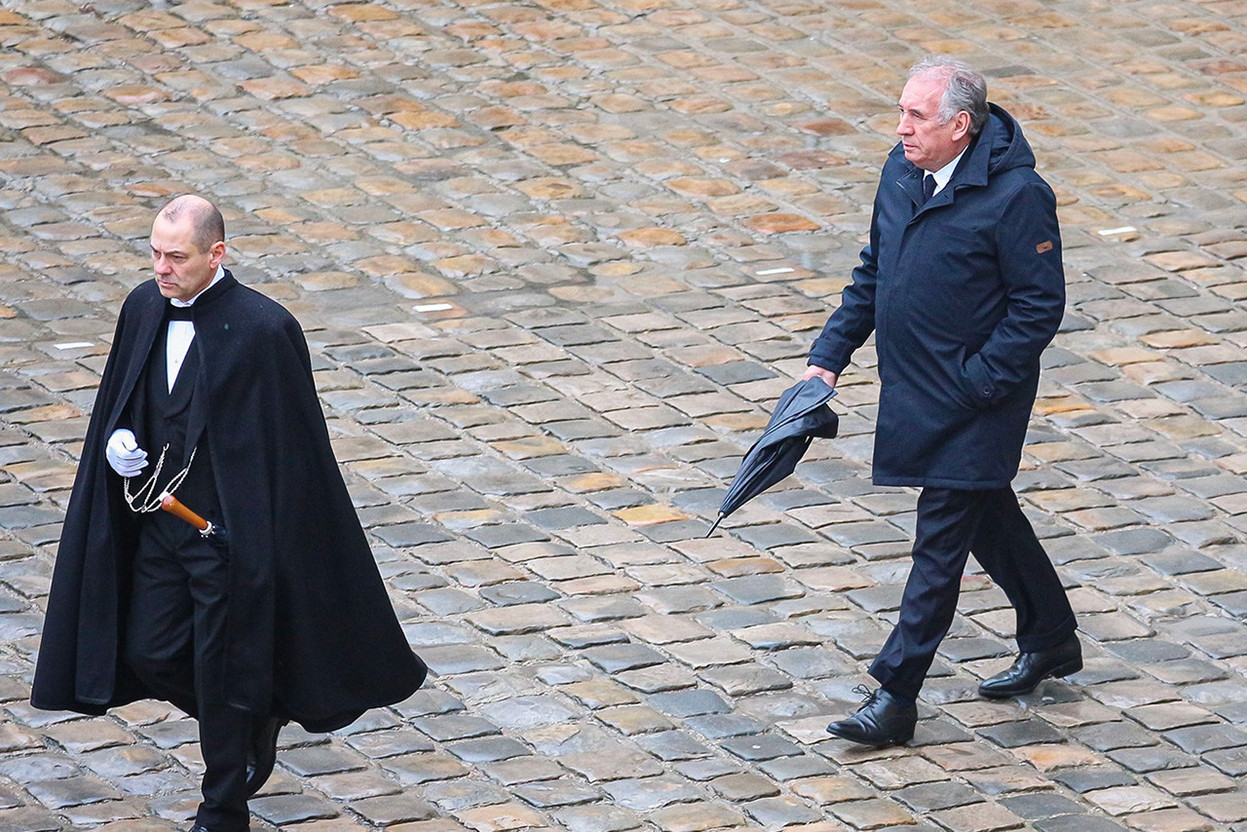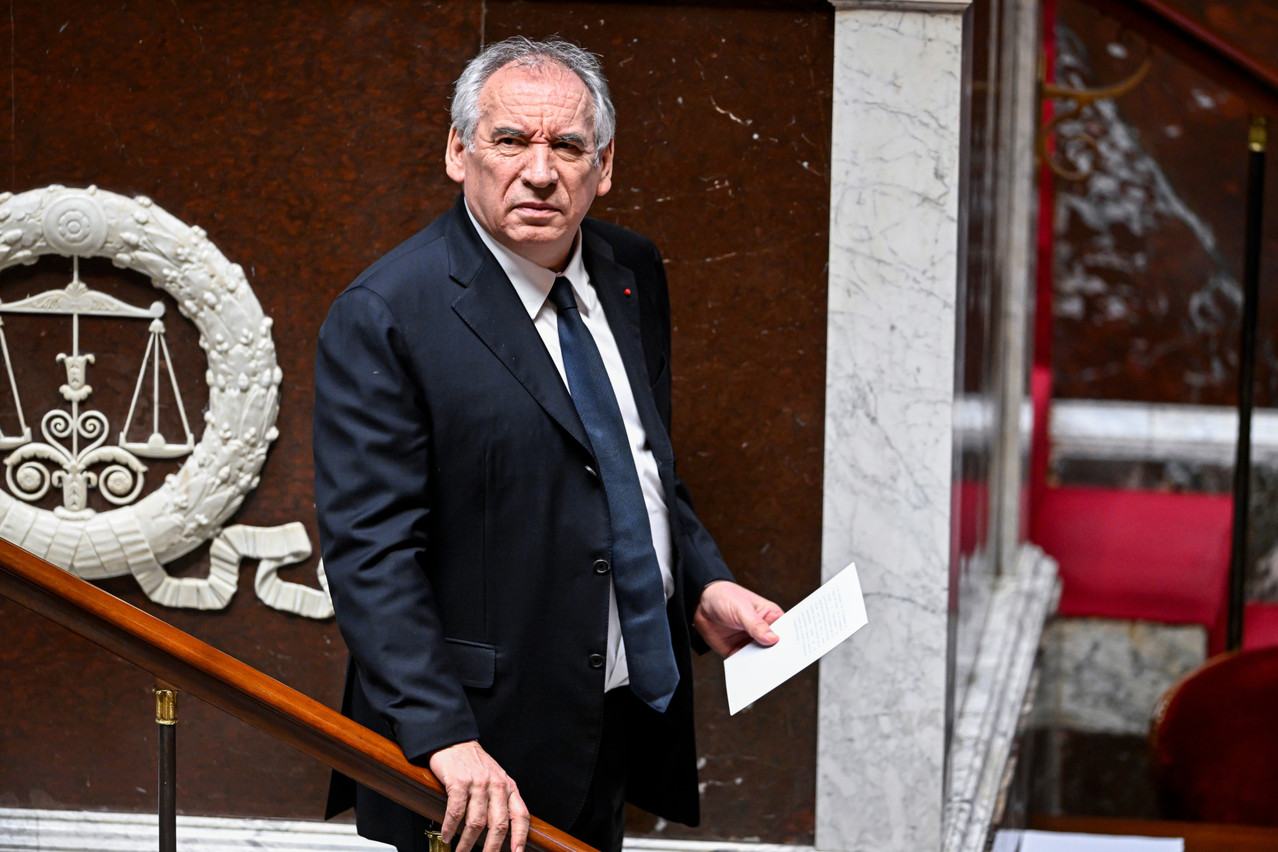
Two weeks after pledging confidence in his government, François Bayrou was toppled on 8 September by the National Assembly (194 votes in favour, 364 against). He thus becomes the first prime minister of the Fifth Republic to fall on a vote of confidence.
On 9 September, at around 1:30pm, he left Matignon to hand in his resignation to Emmanuel Macron at the Élysée Palace.
While the outcome was expected, it is nonetheless historic. Less than a year after Michel Barnier’s censure, Bayrou is the second prime minister in a row to be forced from office, accentuating the instability born of the surprise dissolution in June 2024.
In his address to MPs, the Modem chair described a sickly France, referring to a public debt of €3.415bn “as we speak.” According to him, the state, its public services and its social model are now under threat, to the point of describing its “prognosis as vital.”
He denounced the habit of successive governments of financing current expenditure on credit, pointing out that “the majority of our creditors are foreign.” The growing burden of debt repayment would represent, he insisted, “totally unproductive compulsory expenditure”: “Our country works, believes it is getting richer and every year is getting a little poorer.”
A shared concern
The print minister detailed the scale of the burden: €67bn in interest to be paid in 2025, €75bn in 2026 and up to €107bn in 2029. Eventually, debt servicing alone would absorb 3.2% of GDP, making it the state’s biggest budget item, ahead of education and defence. By way of comparison, France only generates around €50bn in additional wealth per year. Back in July, the Cour des Comptes called for a turnaround in public finances by 2026.
The rating agencies are also becoming increasingly pressing. On 28 February, Standard & Poor warned that a downgrade of France’s credit rating was possible “if the government fails to reduce its large budget deficit further over the next two years.” In an attempt to halt this spiral, Bayrou presented a €45bn savings plan in July, including unpopular measures such as the abolition of two public holidays.
A truth welcomed but rejected
“You have the power to overthrow the government, but you don’t have the power to erase reality,” he said in his final plea. “I wanted this litmus test… the greatest risk was not to take it.” While some, such as the chair of the Horizons group, Paul Christophe, acknowledged his “courageous diagnosis,” the majority of MPs rejected his proposals. Even among his supporters, the vote of confidence was often given reluctantly. “Some will vote in favour without enthusiasm, and that will be my choice,” thus acknowledged the chair of the Republican Right, Laurent Wauquiez.
The Élysée Palace announced on Monday evening that Macron “has taken note” of the failure of the Bayrou government and “will appoint a new prime minister in the very next few days.” Speculation is rife. Among the names mooted are Sébastien Lecornu (armies), Gérald Darmanin (justice), Catherine Vautrin (labour and health), Éric Lombard (economy), Xavier Bertrand (LR, president of Hauts-de-France) and Jean-Yves Le Drian, former minister of defence and foreign affairs.
But the opposition rejects this “Macronist casting” outright. Jordan Bardella (RN) is calling for a dissolution of the assembly, or even a new presidential election: “I don’t see how anything healthy could emerge otherwise.” Mathilde Panot, president of the LFI group in the National Assembly, has announced that a motion of impeachment against Emmanuel Macron will be tabled at around 3pm.
On the left, the Socialist Party has said it is ready to govern with its allies. “If he is concerned about the interests of the French, if he doesn’t want to leave it to the far right to embody the only alternative, let him come and get us,” the president of the PS group, Boris Vallaud, called out to Macron. On the right, Bruno Retailleau warned that Les Républicains would “under no circumstances” consider supporting a Socialist prime minister.
The fact remains that, in the absence of an agreement between irreconcilable oppositions, a compromise will have to be found to allow the country to adopt its budget, as Renaissance Secretary General Gabriel Attal reminded us.
This article was originally published in French.