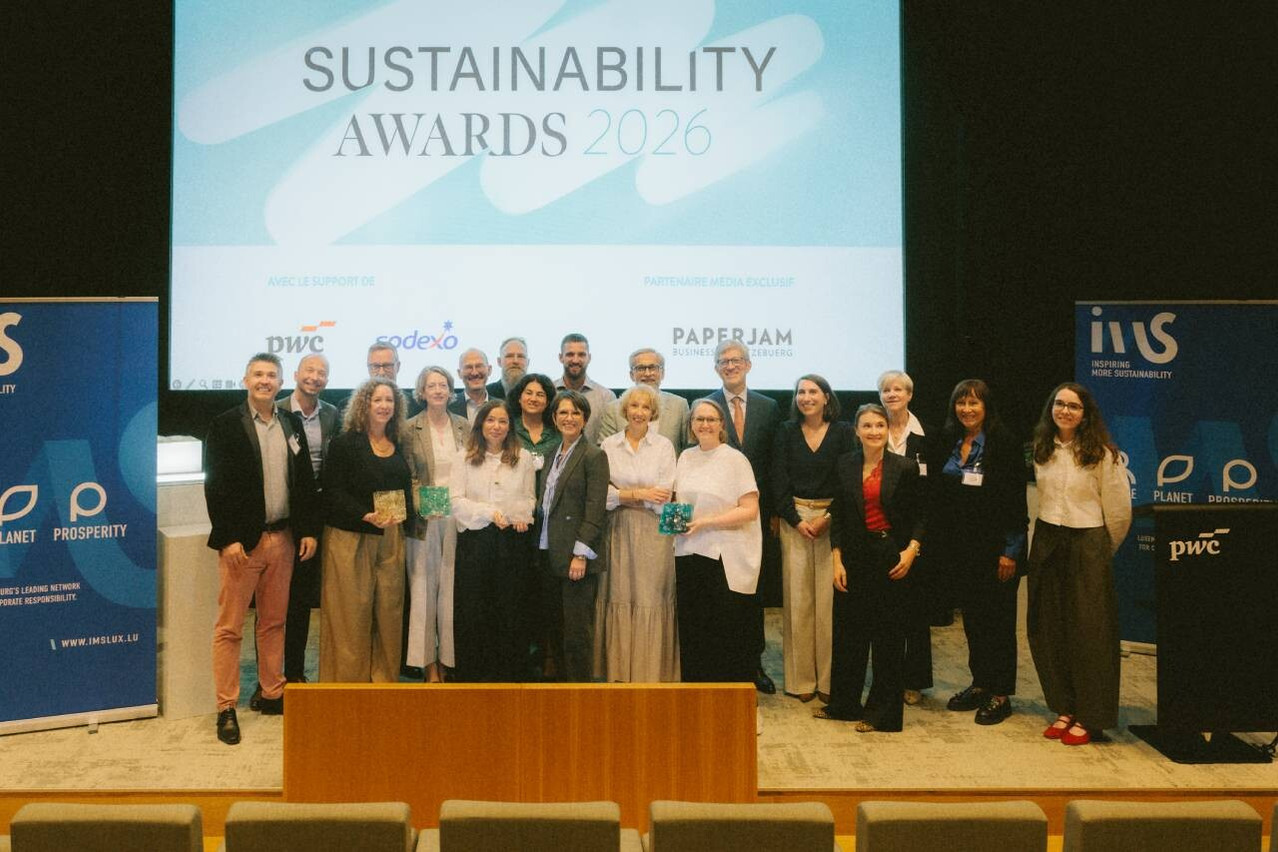
Seniors helping schoolchildren, land accommodating both farming and electricity generation and an industrial filter finding a second life: the Sustainability Awards 2026 recognised several approaches to sustainable development. IMS Luxembourg’s ceremony took place on Monday 5 October at PwC in Gasperich, with four awards in the “People”, “Planet”, “Prosperity” and “Sustainability Team” categories.
This edition attracted 36 entries from private companies, public institutions and associations. A preliminary jury selected three finalists per category before a nine-member jury chose the winners. Assessment criteria included the initiatives’ impact, innovation, potential for replication and integration into a long-term approach.
Paperjam was the event’s exclusive media partner. PwC hosted the ceremony, while Sodexo provided the catering.
The Prime Minister 

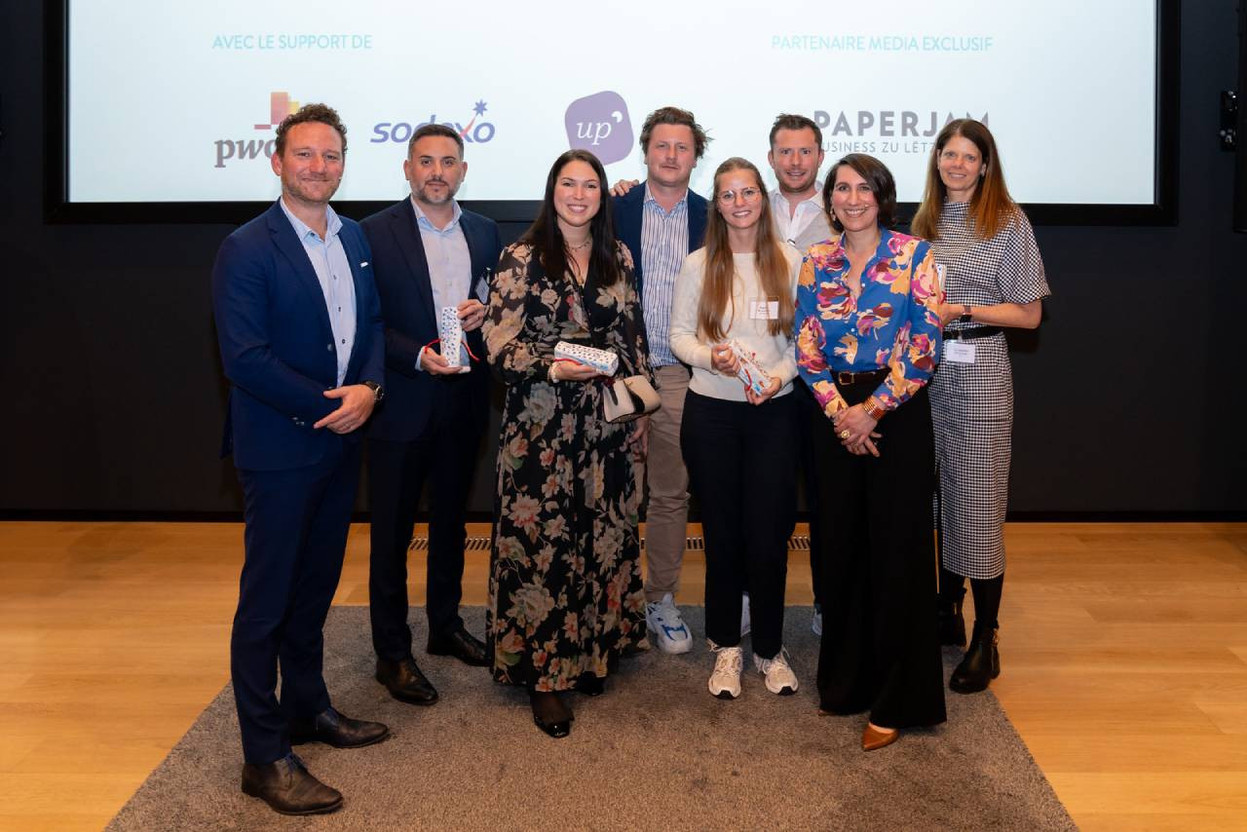
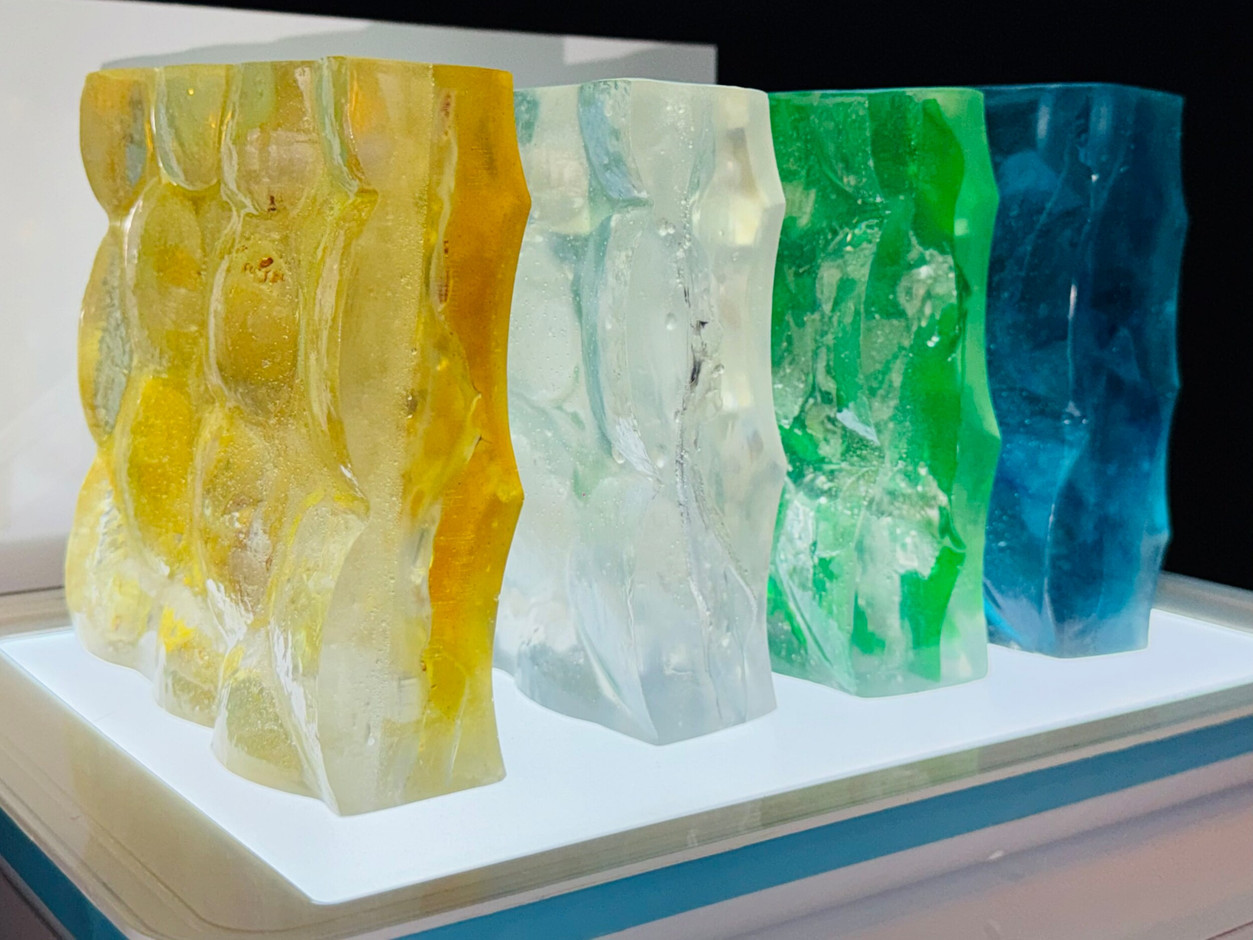
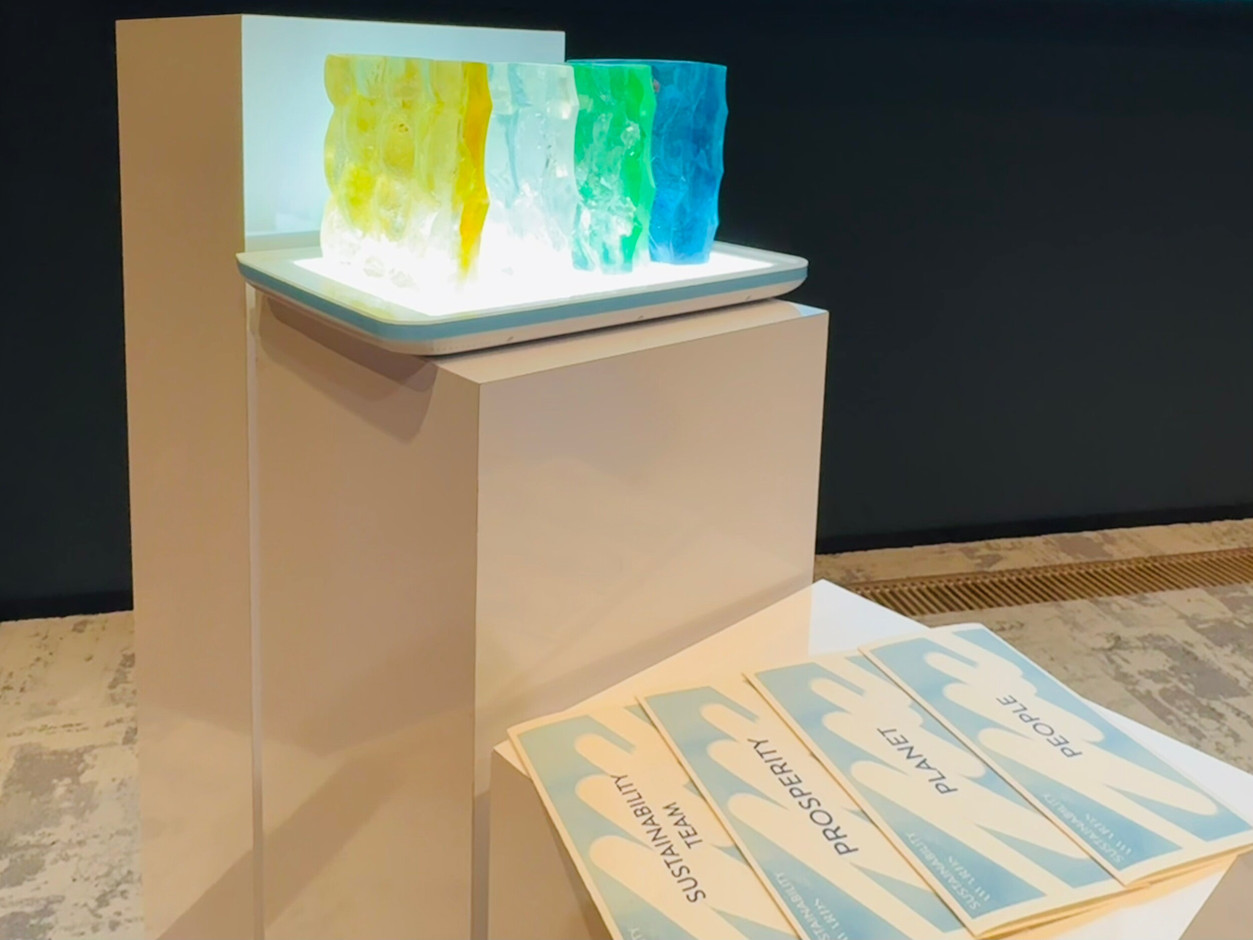
The four trophies were created by the artist Charlotte Payet using plastic bottles. Their shapes allow them to be fitted together like pieces of a jigsaw puzzle, illustrating how different contributions complement one another to build a more sustainable society.Photo: Julian Pierrot/Paperjam
The winners
People: MEC brings generations together
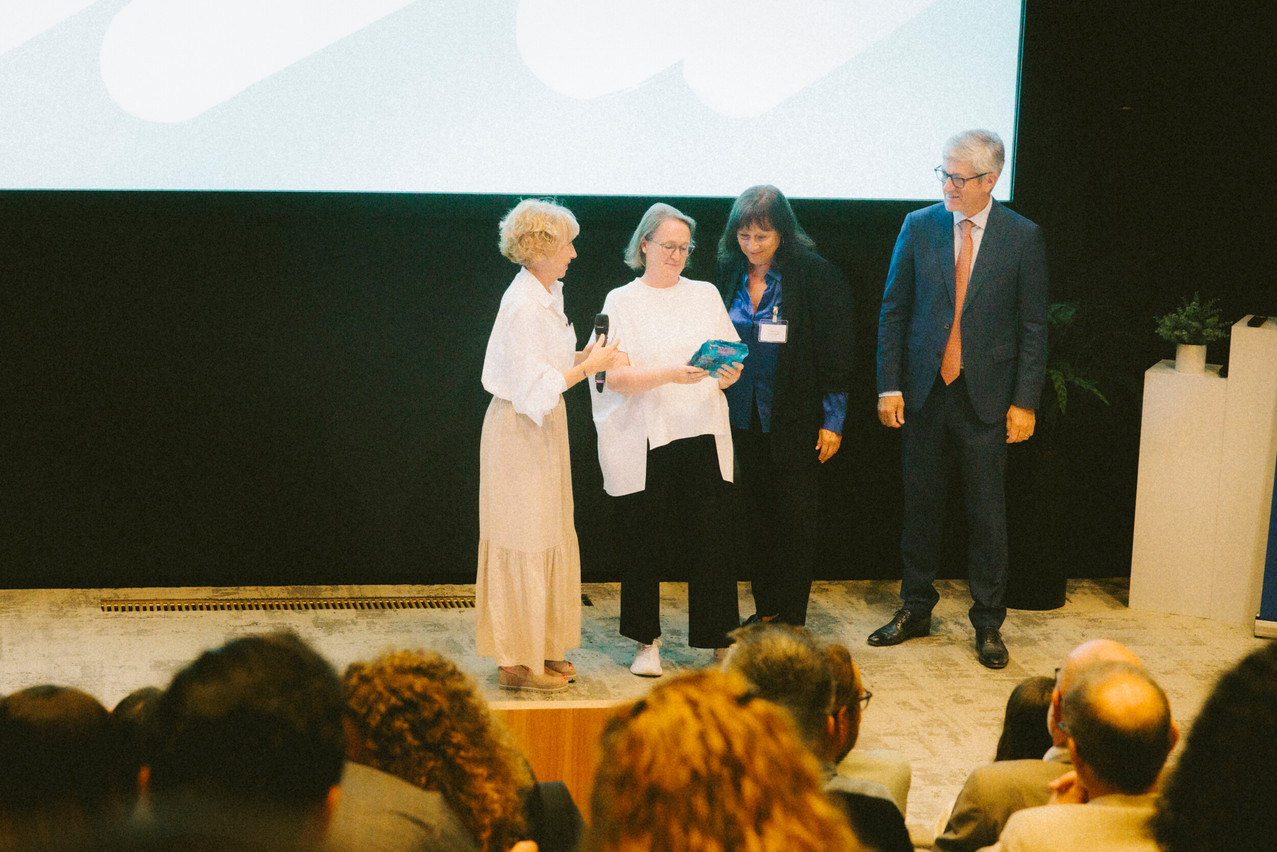
Mec won the “People” award for Super Senior, a homework support programme involving 100 seniors who help 410 children across 31 municipalities. Photo: Julian Pierrot/Paperjam
The Mouvement pour l’Égalité des Chances pour tous (MEC) won the award for “Super Senior”, a service connecting seniors with primary schoolchildren to help them with homework at home. Seniors undergo selection and training before joining the programme, which the association offers at an affordable price.
The initiative meets two needs: supporting children’s learning and giving seniors an activity that values their knowledge. Parents and teachers also contribute to the children’s support. According to figures announced at the ceremony, 100 seniors help 410 children across 31 municipalities.
Planet: Enovos combines farming and solar power
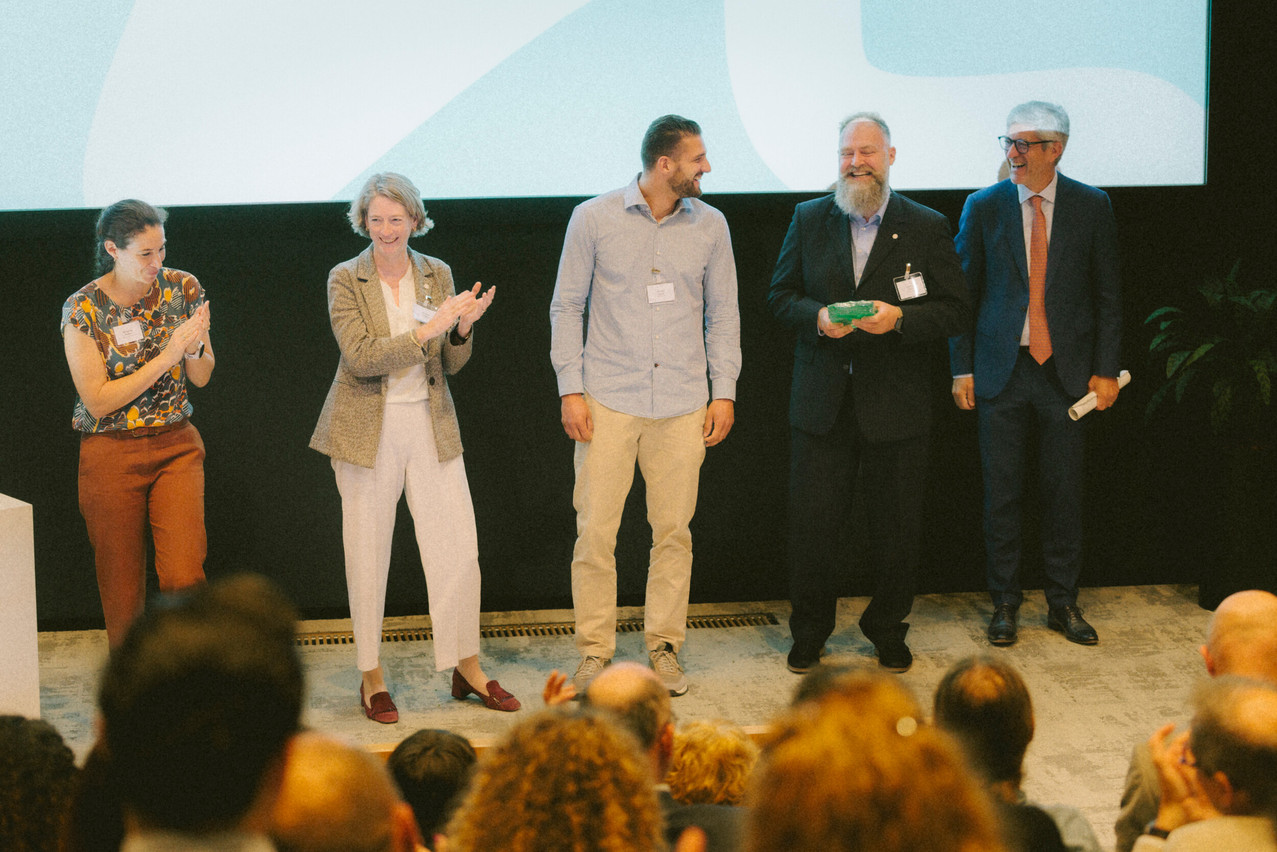
Enovos won the “Planet” award for Powering Land Twice, which combines renewable energy generation, farming and biodiversity conservation on the same land. Photo: Julian Pierrot/Paperjam
Enovos won the award for “Powering Land Twice”. Its principle is to combine renewable electricity generation and farming on the same land while incorporating biodiversity into site planning.
Installations vary according to agricultural activities. Some combine solar panels with poultry farming; others support the conversion of intensively farmed land into grazing areas. Vertical photovoltaic panels also allow crops to grow between the rows. The project further includes a site combining solar and wind power. The jury praised this approach to integrating energy, agriculture and land use.
Prosperity: Callisto manages energy at neighbourhood level
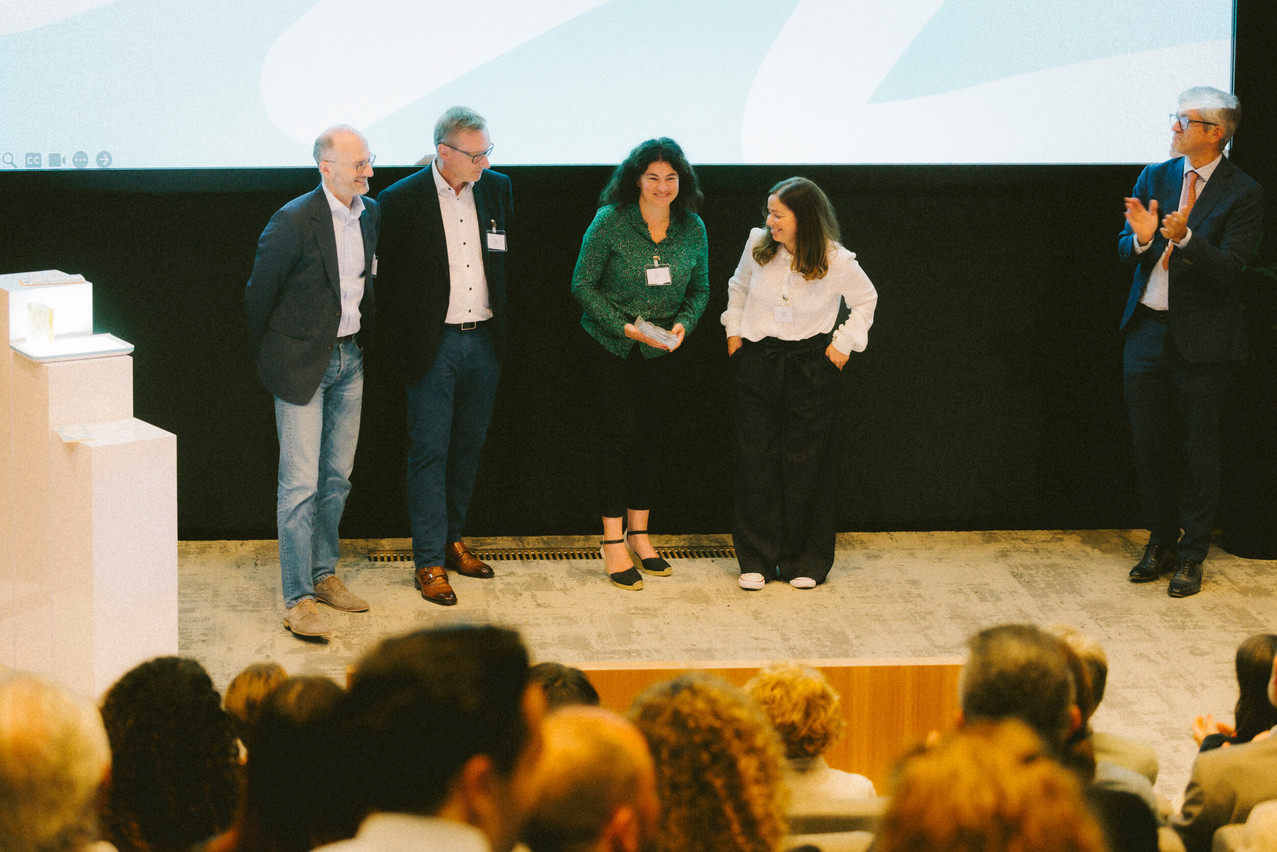
Callisto won the “Prosperity” award for its model of low-carbon neighbourhood energy systems, first implemented at Rout Lëns. Photo: Julian Pierrot/Paperjam
Callisto received the award for a partnership between Iko Real Estate, LuxEnergie and Encevo. Their joint venture handles the design, financing, construction and operation of low-carbon energy systems for entire neighbourhoods.
The first application is at Rout Lëns in Esch-sur-Alzette. The model combines an energy network, geothermal energy, heat pumps and photovoltaic installations to meet heating, cooling and electricity needs. Self-consumption, electricity sharing and smart monitoring complete the system.
Long-term contracts govern operations. The approach aims to make the system economically viable and suitable for replication in other neighbourhoods, two aspects highlighted by the jury.
Sustainability Team: ArcelorMittal reuses an industrial filter
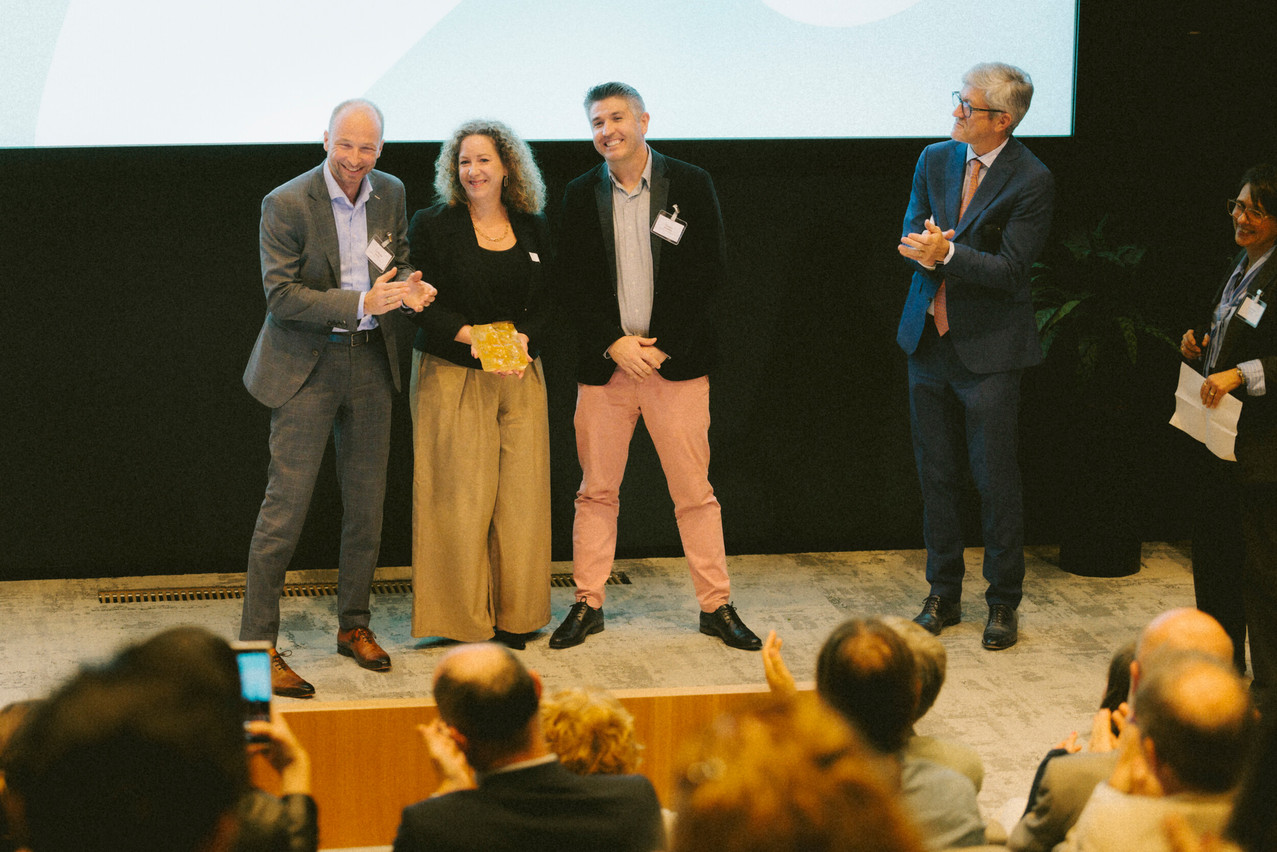
ArcelorMittal won the “Sustainability Team” award for reusing an industrial filter in Differdange, a project that reduced fugitive emissions by 80%, according to its presentation. Photo: Julian Pierrot/Paperjam
ArcelorMittal won the award for an initiative combining dust reduction and equipment reuse in Differdange. In this urban setting, the project aimed to capture fugitive emissions at source to improve air quality around the site.
The teams gave a second life to a baghouse filter from Florange in France. They organised its dismantling, transport to Luxembourg, refurbishment and adaptation to the plant’s needs. This choice limited the manufacture of new equipment and shortened implementation times.
The project involved the environmental, engineering, maintenance and production departments alongside industrial and institutional partners. According to its project presentation, the investment totalled €5.5 million and fugitive emissions fell by 80%.
Satgana receives the Jury’s Favourite distinction
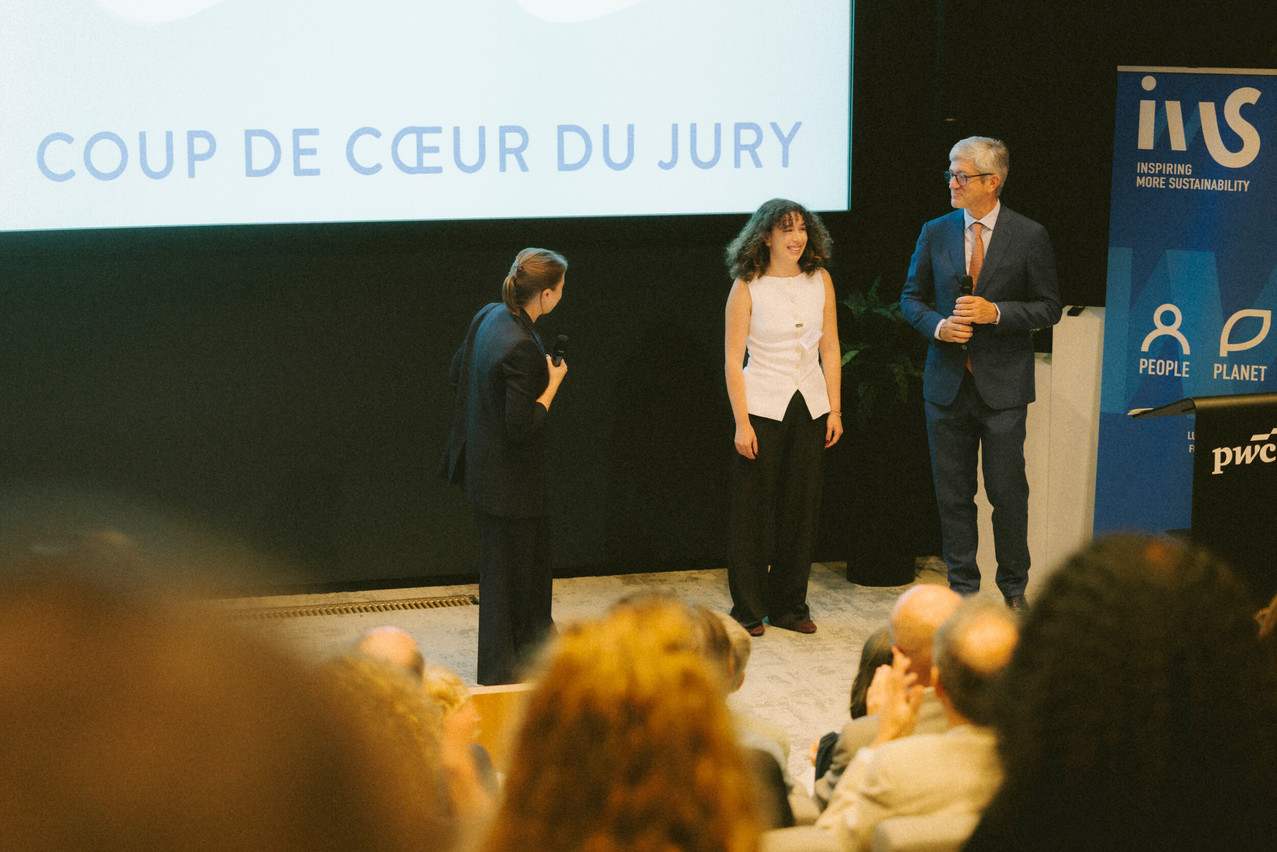
The jury awarded its Favourite distinction to Satgana, a venture capital fund supporting start-ups developing climate solutions in Europe and Africa. Photo: Julian Pierrot/Paperjam
The Jury’s Favourite distinction went to Satgana, a venture capital fund established in 2020 and certified as a B Corp. It finances and supports early-stage companies developing climate solutions in Europe and Africa, including industrial decarbonisation, the circular economy and clean infrastructure.
The jury highlighted the results of its portfolio companies, which comprise 30 start-ups across 16 countries. According to figures announced at the ceremony, their activities created 502 sustainable jobs, avoided 2,500 tonnes of CO₂ emissions and recovered 10,400 tonnes of waste.
A special mention for Zabka Group
Zabka Group received a special mention for its food waste reduction and employment inclusion initiatives. The jury referred in particular to a programme helping young people from disadvantaged backgrounds enter employment.
These initiatives primarily operate in Poland. Christian Scharff explained that their impact outside Luxembourg meant the entry did not meet the competition’s local impact requirements. The jury nevertheless chose to give them visibility because of their potential for replication.