How do you explain the delay in reimbursement which is currently four to six weeks compared to two to three weeks before?
Christian Oberlé: The volume is very high at the moment, it is three times higher than normal. The number of boxes containing the claims is 220, compared to 70 before the current period. The CNS is working to keep the delay to a maximum of six weeks, or even to shorten it. There is a double impact that explains the volume: the seasonal impact and the impact of covid-19, so we believe that these delays will soon decrease. We are continuing our digitalisation process, in the short term via scanning, but in the medium term via automatic immediate payment. In the course of the spring we will return to more normal delays, around two to three weeks.
What does digitalisation change?
It brings a much faster processing speed. We are already seeing this with the continuous improvement of our scanning process, first with the acquisition of additional scanners and then with better automatic retrieval of the scanned data. As a result, we are able to maintain constant processing times despite a much higher than normal level of activity.
How many employees are there in the illness and maternity benefits department?
There are almost 130 people in this department, out of the 540 employees at the CNS. This is the main department of the CNS that takes the largest part of the workload.
Recruitment took place last year?
We started recruiting across the entire CNS last year looking to hire almost 40 people. We have adapted the job descriptions to the future functioning of the CNS. So we have opened up positions that sometimes require quite advanced skills and specialised expertise, in areas that will help us to take the digitalisation turn and that will serve us when we are digitalised.
Do you have difficulties in recruiting?
For certain positions, it is complicated. In recent years, we have significantly changed our approach and we have more and more profiles from other sectors. The working environment of the CNS is also very varied, with very different fields of intervention. In addition to a good basic training, it would be ideal if new recruits already had a good knowledge of Luxembourg social security, which is very specific. For our legal department, for example, it is very difficult to find lawyers who are well trained in social security.
Once we have implemented automatic payment, the way we work will change.

So one of the CNS's major projects is the digitalisation of its services?
Yes, we are working on it in parallel with our daily work, which sometimes takes a lot of internal resources, especially the most experienced people. A certain number of people newly recruited or still to be recruited will be dedicated to new CNS jobs, such as the support and management of strategic projects or the implementation of a more agile organisation. We also need legal experts, or specialists in the field of the fight against abuse and fraud.
What will digitalisation change in the field of fraud?
Once we have implemented automatic payment, the way we work will change. Today, we are in a system that applies automatically, and when the CNS receives doctors' fee statements from patients for reimbursement or other documents in the framework of reimbursement, the CNS checks the reimbursement request against the legal, statutory or conventional rules. The CNS agents must therefore carry out verification work in relation to each claim for reimbursement. When automatic payment is implemented, this will change, all the rules will be parameterised in a rules engine and the rule checks will be automated, without human intervention.
Reimbursement will be decided within a few hundredths of a second on the basis of automated checks by the rules engine, which will check and make the reimbursement automatic to the doctor after the patient has validated that he or she was indeed at the doctor's office and that he or she has benefited from the coverage indicated on the fee statements or other types of documents. There will be no prior control as we do at present, and as could also theoretically be done with a third-party payer.
What will automatic payment change in your organisation and the way you work?
We will no longer intervene in the circuit, so we have to review all our rules, for which automation is sometimes very complex, if not impossible. For example, if the reimbursement or the rate of reimbursement depends on whether or not the patient has seen another doctor before, this information does not yet necessarily exist in our system, so an automatic check within a few hundredths of a second is impossible. So there are rules that we will keep, and others that we will not.
There are thousands of rules to be reviewed and we do not limit ourselves to studying whether the rule is manageable by a rules engine, we also look at whether a rule, which may have its historical reason, still makes sense today and, if necessary, we cancel it or modify it with the statutory adaptations that prove necessary. So there is a whole legal analysis to accompany the digitisation project to see if the legal framework, the statutes, possibly the texts, the nomenclature, etc. need to be adapted. This is one of the reasons why it is a project that takes time. But it is a major project to modernise the CNS and we have been working on it for two years.
We were concerned because as the project progressed we realised its enormous complexity and we wanted to have a transitional phase to solve a number of problems

Last October you launched the first phase of the digitalisation--the transfer of documents via a digital platform. How many doctors have created their account on the platform?
We currently have about 90 doctors on the platform. This is less than we had hoped for, but we are happy to have launched it already in mid-2021 in an accelerated reimbursement version before putting it into production in 2023, as originally planned.
What were the reasons for this?
We were concerned because as the project progressed we realised its enormous complexity and we wanted to have a transitional phase to solve a number of problems before the production launch of the automatic payment system.
It is not only the large number of complex changes that create potential problems, but the automatic payment system will also lead to significant changes for health professionals and insured persons. There may be problems with the doctors' software, with data transmission or with our rule engine, which is something completely new for the CNS. This is why we wanted to take this intermediate step with the accelerated reimbursement. This allowed us to see that updating doctors' software is not easy, the software publishers have to adapt their software and doctors have to be convinced to use a new version of their software.
When we contacted the software publishers to make an initial analysis, we found that their systems are not necessarily ready to communicate with the outside world from a technological point of view. Or from a security point of view.
Are you concerned that this will delay the entry into force of the automatic payment system?
No, it won't delay the production of the system regarding the CNS, but it may lengthen the period needed to deploy new versions of medical software prepared by the software publishers. The sooner we start implementing and testing data exchange solutions with doctors, the smoother it will be to update doctors' systems after the third-party payment goes live in mid-2023.
Are doctors reluctant to enter this digitisation process?
I don't think so, I think what they are interested and it is an easy transition for them, and we need to work to help that happen. One of the ways to do this is to work closely with the software publishers. And, of course, we also need to move quickly with the release of other digital solutions. The automated payment is just one element in a whole digital health ecosystem that we want to put in place.
There will always be expertise on the part of the employees, but the whole workload of encoding, handling paper documents, checking data and cross-referencing information will decrease significantly.

The shared medical file (dossier de soins partagé – DSP) is also an important project for the CNS, what are the latest figures?
Currently, the number of open DSPs is 954,286. 497,961 are active with at least one document. 1,879 DSPs have been closed at the patient’s request, so the closure rate is 0.19%. The number of shared documents is 6,152,754.
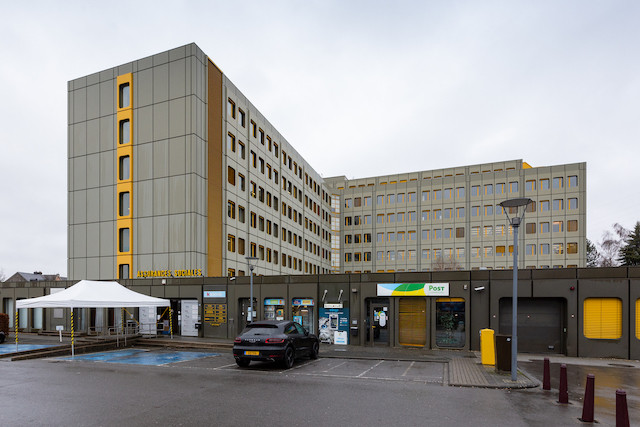
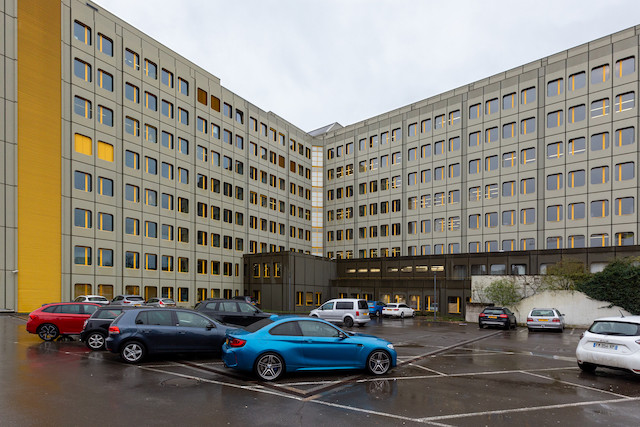
The new CNS building near the Luxembourg City train station will also soon be operational? Normally, it should be operational in the second quarter of 2023. This is a very important project for the CNS because we have already thought about the infrastructures to serve what we are putting in place, both in terms of digitalisation and the implementation of an agile organisation at the CNS and the development of a new way of working. Because digital technology will gradually change the nature of the work of CNS employees.
What does that mean?
There will always be expertise on the part of the employees, but the whole workload of encoding, handling paper documents, checking data and cross-referencing information will decrease significantly. In return, the service to the insured person will become much more important, which is necessary because the services are becoming more targeted and complex. For this type of more transversal work, we will gradually supplement our silo organisation with an organisation that promotes teamwork, the exchange of information and facilitates access to information for the insured.
Our employees will be trained in the expectations or needs of a more policyholder-centred organisation. In order to keep the organisation agile, we need to create the necessary framework so that they can develop their own initiatives and move towards a new way of working together. And we have designed the infrastructure in our new building with this in mind. We will no longer have the small closed offices, but we will set up collaborative surfaces around which will be grouped different types of meeting places to work in the form of projects or co-creative workshops, but also spaces allowing isolation for work requiring concentration.
Will teleworking remain an important part of your organisation?
Yes, there will always be room for more teleworking. We went up to three days a week during the pandemic, but I think that’s a bit too much, because we want to foster collaborative work, exchange and protect the very present corporate culture of the CNS. But we should be able to offer one or two days of teleworking per week depending on the position of the employees. For us, the experience of teleworking during the pandemic is positive, we have not seen that someone working from home is less efficient than if they were in the office.
So the CNS is working on several fronts at the same time?
Yes, three internal axes are evolving in parallel: the organisation of the CNS, digitalisation and the provision of the appropriate space for it. The idea is to facilitate change for our employees. We can’t do one without the other, so it’s true that it’s an ambitious project, but now is the time to evolve.
This story was first published in French on Paperjam. It has been translated and edited for Delano.